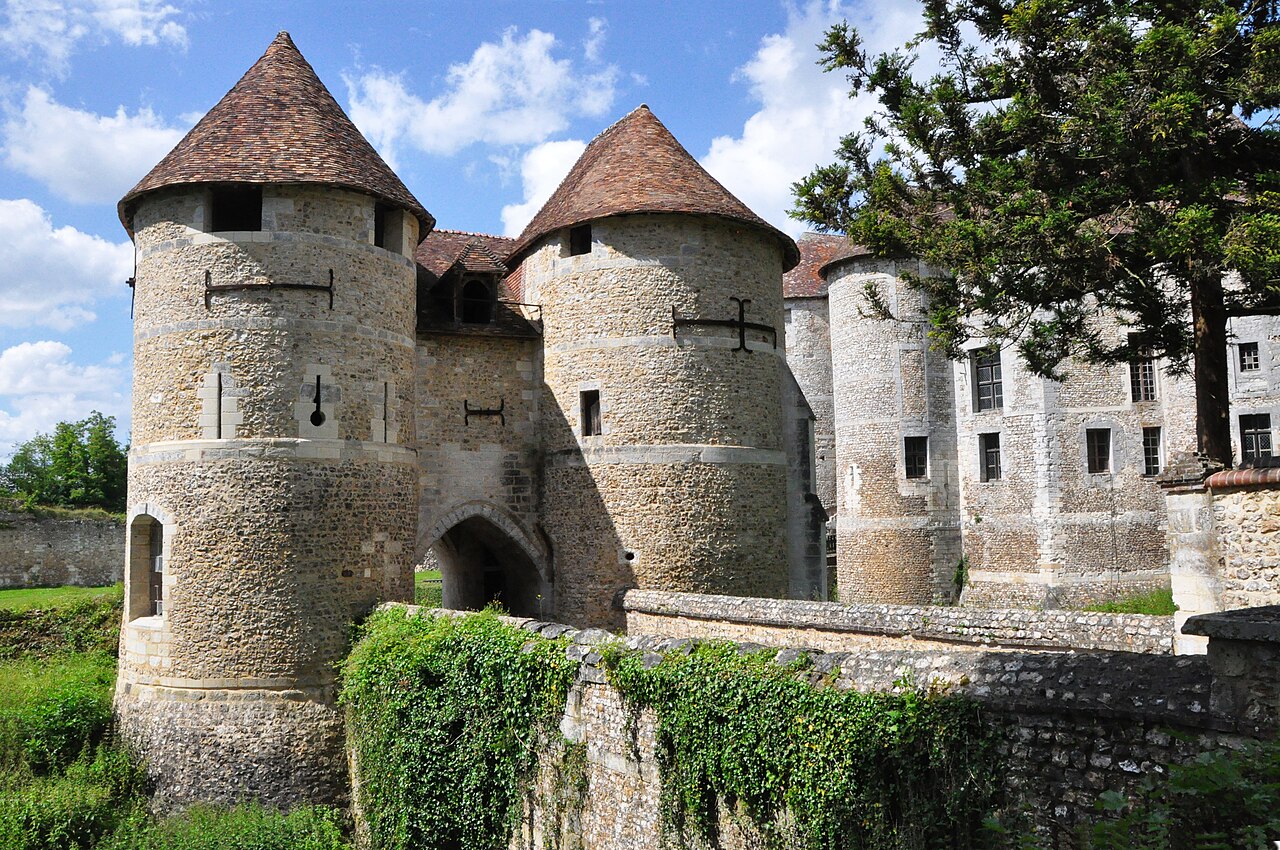
Château de Fougeret
The Château de Fougeret is a notable medieval hill castle situated in Queaux, France, overlooking the Vienne Valley from a commanding 38-meter-high cliff. Its origins trace back to the early 14th century, first documented in 1337, with the site likely named after the noble family of Fougères or Fougeré. The castle's strategic location provided significant control over the surrounding valley and river routes, especially during the turbulent Hundred Years' War.
Medieval origins and strategic importance
Construction of the château began in the 15th century under the ownership of the Frotier family. Designed primarily as a rural fortress, the château's architecture reflects its defensive purpose, featuring three round towers framing the main corps de logis and two additional towers nearby. The fortress was built to oversee and protect the valley and river, crucial for controlling local trade and military movements during the late medieval period.
Throughout the Ancien Régime, the château served as a seat of high justice, highlighting its administrative role within the feudal system. This function emphasized the château's importance beyond military defense, acting as a center for local governance and legal authority.
Architectural features and stylistic evolution
Medieval elements
The château retains several key medieval architectural features, including brattices—overhanging defensive platforms used to protect the walls—and original cellars and sarcophagi that suggest earlier burial or commemorative practices on the site. Two mullioned stone windows with vertical stone bars survive from the original medieval construction, providing insight into the castle's early design.
A particularly notable interior feature is the stone spiral staircase in Gothic style, distinguished by a tracery railing reminiscent of the famous staircase at Château de Chambord. This staircase combines both functional and ornamental qualities, showcasing the craftsmanship of the medieval masons.
19th-century restorations
During the Second Empire in the 19th century, the château underwent extensive restoration under the Robin-Médard family. These renovations included adding an extra floor and redesigning the window arrangements, introducing a blend of eclectic neo-Gothic and troubadour styles. The interior decoration from this period features richly painted ceilings, wall frescoes, wood paneling, and a mosaic floor that reflect the family's wealth and social status.
The large Gothic stone fireplace remains a monumental centerpiece within the château, its sculpted details exemplifying medieval craftsmanship preserved through the centuries.
Historical transitions and social significance
Following the French Revolution, the château's then-owner fled, and the estate was acquired by Louis-François Bonaventure, the local mayor. This marked a shift from the château's feudal and military functions to a more domestic and administrative role.
In the early 20th century, under Paul Robain, the château became a cultural and social venue favored by Catholic and royalist circles. It was associated with prominent figures from the Action française, a nationalist and royalist political movement, including Charles Maurras. This period positioned the château as a hub of aristocratic and bourgeois social life linked to political and religious conservatism.
Landscape and grounds
The château is set within a 10-hectare park beside the river, featuring star-shaped pathways and an arboretum with New World species such as American walnuts and giant sequoias. This landscaped setting enhances the estate's natural beauty and reflects 19th-century landscaping trends.
An original icehouse (glacière) is preserved on the grounds, historically used for storing ice and perishable goods, underscoring the château's self-sufficiency and domestic sophistication.
Preservation and modern restoration efforts
After decades of neglect and abandonment, the château was purchased in 2009 by Véronique Geffroy and François, who initiated substantial restoration work to halt deterioration. These efforts aim to preserve original elements while stabilizing the structure, maintaining the château's historical and architectural integrity.
In 2010, the Château de Fougeret was officially recognized as a historical monument, securing its status as a protected heritage site. Ongoing restoration continues to reveal and conserve the château's diverse architectural layers, from medieval fortifications to 19th-century neo-Gothic embellishments.
Frequently asked questions (FAQ)
- How do I get to Château de Fougeret?
- Château de Fougeret is located in Queaux, France, accessible by car or public transport. If you are driving, the castle is situated near major routes, making it easy to find. Public transport options include regional trains and buses that connect to nearby towns.
- What is the historical significance of Château de Fougeret?
- Château de Fougeret dates back to the 19th century and is known for its neo-Gothic architecture and rich history. The castle is often associated with local legends and has been a site of cultural importance in the region. Its unique design and storied past make it a fascinating destination for history enthusiasts.
- When was Château de Fougeret built?
- Château de Fougeret was constructed in the late 19th century, specifically between 1890 and 1900. The castle reflects the architectural styles of that era, showcasing intricate details and grandeur. Its construction marked a significant period in the local history of Queaux.
- Is it possible to visit Château de Fougeret year-round?
- Yes, Château de Fougeret is open to visitors throughout the year, although hours may vary seasonally. It is advisable to check the official website or contact the castle for specific opening hours before planning your visit. Special events and guided tours may also be available at different times of the year.
- Can I take guided tours of Château de Fougeret?
- Absolutely! Guided tours of Château de Fougeret are available, providing visitors with in-depth knowledge about the castle's history, architecture, and legends. Tours are typically led by knowledgeable guides who can enhance your experience with fascinating stories and insights.
- What are the ticket prices for visiting Château de Fougeret?
- Ticket prices for Château de Fougeret vary depending on the age of the visitor and whether you opt for a guided tour. Discounts may be available for children, seniors, and groups. It's best to check the official website for the most up-to-date pricing information.
- What is the best time to visit Château de Fougeret?
- The best time to visit Château de Fougeret is during the spring and early autumn months when the weather is pleasant, and the gardens are in full bloom. Additionally, visiting during weekdays can help you avoid larger crowds often seen during weekends and holidays. Special events may also be held during these times, enhancing your experience.
- Are there any nearby attractions to visit along with Château de Fougeret?
- Yes, there are several nearby attractions that visitors can explore, including beautiful parks, historical sites, and charming villages. The region is known for its picturesque landscapes and other historical castles, making it a perfect area for a day of sightseeing. Be sure to ask at the castle for recommendations on local points of interest.
- Is Château de Fougeret accessible for visitors with limited mobility?
- Château de Fougeret strives to be accessible for all visitors, including those with limited mobility. There are provisions in place to assist guests, but it is advisable to contact the castle in advance to discuss specific needs and ensure a comfortable visit. The staff is committed to providing an enjoyable experience for everyone.
Information
Website
Visit websiteSources & official resources
Verify the information above using these authoritative references.
Loading map...
Visitor reviews
No reviews yet. Been here? Write the first review and help other travelers!
Write the first reviewVisited this castle? Share your experience
Your review helps other travelers and adds first-hand knowledge to our encyclopedia.