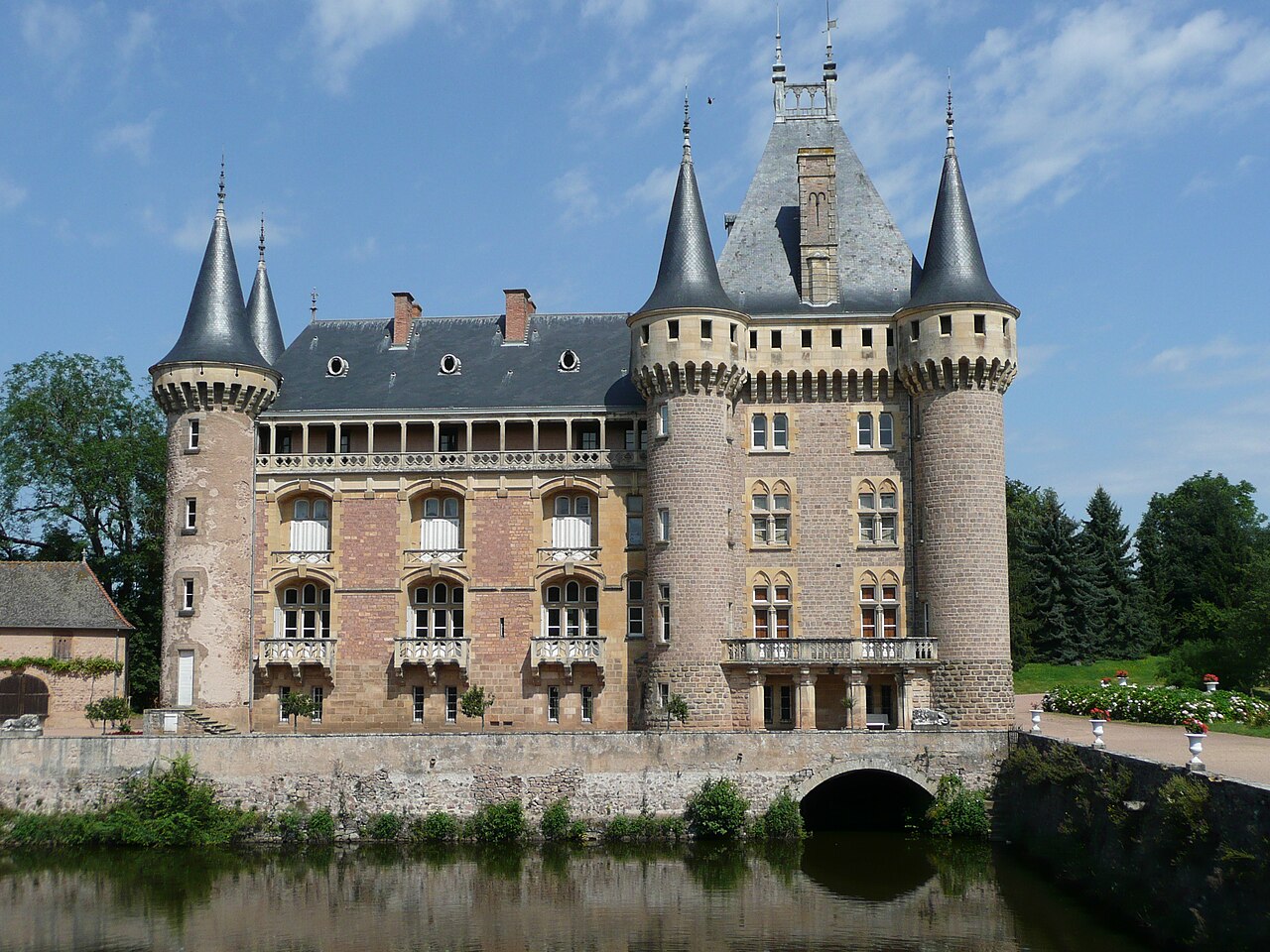
Château de Drée
The Château de Drée stands as a remarkable example of 17th-century classical architecture nestled in the region of Hauts-de-France. Located in the commune of Curbigny, this hill castle was constructed on the site of an earlier fortified house known as La Bazolle, reflecting a transition from medieval fortification to a more refined noble residence. Its history is deeply intertwined with prominent French noble families and the evolution of aristocratic estates during the early modern period.
Historical context and ownership lineage
The château's construction began between 1620 and 1623, initiated by Anne de La Magdeleine, lady of La Bazolle, and wife of François de Bonne de Créqui, the 3rd Duke of Lesdiguières. This period marked a shift in French noble architecture from defensive strongholds to more elegant country estates, emphasizing comfort and status. Although construction was interrupted by Anne's death, the project resumed later in the century, culminating in much of the main structure that survives today.
Ownership passed through inheritance to Catherine de Neufville de Villeroy in 1703, who was married to Louis de Lorraine, Count of Armagnac and Grand Squire of France. The Lorraine family's stewardship lasted until 1748, when the château was sold to Étienne de Drée. Under Étienne's ownership, the château's interiors were completed, and the estate was elevated to a marquisate in 1767, adopting the Drée name linked to his ancestral lands.
The estate changed hands multiple times throughout the 19th and 20th centuries, including ownership by the Countess of Tournon-Simiane from 1837 and later the Prince of Croÿ-Rœulx, a Belgian noble, until 1993. In 1995, Ghislain Prouvost acquired the château and undertook extensive restoration efforts. Its designation as a historic monument in 1959 has helped preserve its architectural and cultural heritage.
Architectural features and layout
The château is characterized by its distinctive layout of three U-shaped wings arranged to form a rectangular plan, a design typical of 17th-century classical architecture. Each wing is accentuated by corner pavilions, contributing to the building's balanced and harmonious appearance.
The eastern façade is particularly notable for its central avant-corps projecting outward with three bays. At ground level, a portico supported by two rows of four columns each rests on Attic-style bases and is topped with capitals adorned with animal motifs. Above the portico, a stone balcony with balustrade is accessible through three rectangular French doors framed by columns featuring intricate foliage carvings.
A prominent cornice supported by modillions crowns the balcony, above which rises a low wall topped with a grand cartouche displaying the Tournon-Simiane family coat of arms. This heraldry is quartered, featuring azure fields with golden fleurs-de-lys, red fields with a golden lion, and areas decorated with towers and fleurs-de-lys, flanked by two seated lions facing inward. The northern and southern façades of the eastern pavilion wings slightly project beyond the adjoining wings, adding depth and complexity to the château's composition.
The western façade, facing the park, contrasts with the eastern front by featuring a simpler design with a central avant-corps topped by a pediment, emphasizing symmetry and classical restraint.
Inside, the château boasts a large white salon distinguished by wood-paneled walls and a rococo-style ceiling decorated with motifs such as rural trophies, floral bouquets, and garlands, reflecting the artistic tastes of the 18th century.
Outbuildings and estate features
Among the château's notable outbuildings is an octagonal dovecote (colombier) featuring a central potence, a pivoted wooden beam used to access the 805 nesting holes. This dovecote symbolized the seigneurial right to breed pigeons, corresponding to over 400 hectares of land during the 17th century. In the 18th century, it was repurposed as a prison, serving primarily as a deterrent.
The estate's gardens are laid out in the French formal style, with terraces and carefully arranged plantings that have earned the designation of "Jardin remarquable", recognizing their historical and botanical significance.
The château grounds also include remnants of a fortified farm surrounded by moats, within which are a kennel and poultry house complete with a basin for washing hunting dogs, underscoring the importance of hunting activities on the estate.
A stone icehouse remains on the property, historically used to store ice harvested from nearby frozen ponds during winter. The ice was preserved year-round by sealing the structure, adding water periodically to maintain a solid block, and insulating it with straw. This practice continued until the Second World War.
Cultural and historical significance
The Château de Drée exemplifies the evolution of French aristocratic residences from fortified medieval structures to elegant classical châteaux. Its architectural features and estate elements reflect the social status, economic power, and lifestyle of its noble owners across centuries. The dovecote's transformation into a prison and the preservation of hunting facilities illustrate the multifaceted functions of such estates beyond mere residence.
Recognized as a historic monument since 1959, the château remains a valuable cultural asset, offering insights into 17th and 18th-century French noble architecture, estate management, and aristocratic traditions. Its restoration and preservation efforts ensure that this heritage continues to be accessible and appreciated by future generations.
Frequently asked questions (FAQ)
- How do I get to Château de Drée?
- Château de Drée is located in the Burgundy region of France and is accessible by car or public transport. The nearest major city is Mâcon, which is about 30 kilometers away. You can use local buses or taxis to reach the castle from surrounding towns.
- What is the historical significance of Château de Drée?
- Château de Drée dates back to the 16th century and is an exemplary representation of Renaissance architecture in France. It has been a residence for various noble families and has played a role in local history, showcasing the evolution of French architecture and culture over the centuries.
- When was Château de Drée built?
- The construction of Château de Drée began in the early 16th century and was completed in the following decades. The castle has undergone several renovations throughout its history, preserving its architectural beauty and historical importance.
- Can I visit Château de Drée year-round?
- Yes, Château de Drée is open to visitors throughout the year, but hours may vary depending on the season. It is advisable to check the official website for the most current opening hours and any seasonal events that might affect visitation.
- Why is the architecture of Château de Drée unique?
- The architecture of Château de Drée is characterized by its elegant Renaissance style, featuring intricate stonework and beautifully landscaped gardens. The castle's design reflects the grandeur of its era, making it a fascinating site for architecture enthusiasts and history buffs alike.
- Is it possible to access Château de Drée with limited mobility?
- Yes, Château de Drée strives to be accessible to all visitors, but certain areas may pose challenges due to their historical nature. It is recommended to contact the castle in advance to inquire about specific accessibility options and accommodations available for those with limited mobility.
- What are the ticket prices for visiting Château de Drée?
- Ticket prices for Château de Drée vary depending on age and group size, with discounts available for students and seniors. Check the castle's official website for the latest pricing information and any special offers, such as family tickets or group rates.
- What is the best time to visit Château de Drée?
- The best time to visit Château de Drée is during the spring and early fall when the weather is mild and the gardens are in full bloom. Additionally, the castle hosts various events throughout the year, which can enhance your visit, so consider planning around those dates.
- Are there any nearby attractions to Château de Drée?
- Yes, there are several attractions near Château de Drée, including the picturesque village of Tournus and the historic town of Cluny, famous for its abbey. Visitors can also explore the beautiful Burgundy wine region, which offers numerous vineyards and charming countryside views.
Information
Website
Visit websiteSources & official resources
Verify the information above using these authoritative references.
Loading map...
Visitor reviews
No reviews yet. Been here? Write the first review and help other travelers!
Write the first reviewVisited this castle? Share your experience
Your review helps other travelers and adds first-hand knowledge to our encyclopedia.