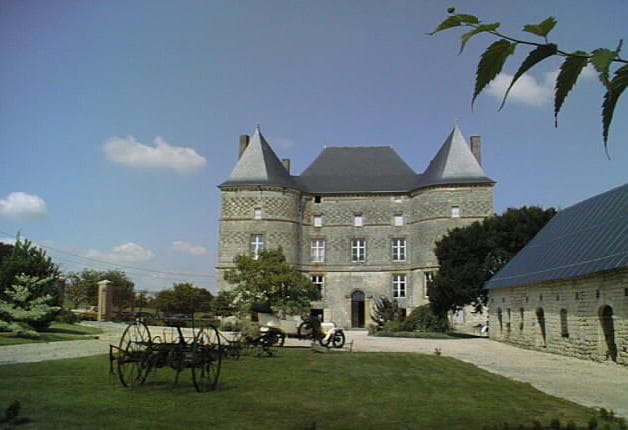
Château de Doumely
Château de Doumely stands as a remarkable example of a 15th-century fortified castle nestled in the scenic countryside of Porcien, within the commune of Doumely-Bégny in Hauts-de-France, France. This castle, with its distinctive architectural features and rich history, offers a vivid window into the military and residential life of the late medieval period. Its strategic location on a hill provided natural defensive advantages, further enhanced by man-made fortifications that have evolved over centuries.
The castle is renowned for its four teardrop-shaped defensive towers, a rare architectural form in France that provided defenders with enhanced visibility and minimized blind spots. These towers are a transitional design between the large artillery towers of the late 15th century and the more advanced bastion-style fortifications that emerged in the 16th century, influenced by Italian military architecture. Originally, these towers overlooked a now-filled moat, which once encircled the castle, adding a crucial layer of defense.
Historical background and evolution
Early origins and medieval construction
The site of Château de Doumely has origins dating back to the 13th century, when initial foundations were laid. However, the main structure visible today primarily dates from the 15th century, with some modifications extending into the 16th century. The castle was constructed by local feudal lords who sought to establish a stronghold that combined both military and residential functions. Notably, Tristan de Failly, who inherited the castle in 1569, is believed to have been responsible for significant construction and modifications during the late 16th century, reflecting the evolving needs of its occupants.
Architectural and functional changes through centuries
By the late 17th century, the castle underwent architectural modifications that mirrored the changing nature of warfare and domestic life. Defensive features such as moats were partially filled in, and openings were created in the façade to allow more light and air, transforming the castle into a more comfortable residence. In the early 18th century, substantial agricultural outbuildings were added, including a large barn measuring approximately 45 meters in length. This barn was designed to support extensive farming operations, housing livestock, fodder, and machinery for processing agricultural products, signaling the castle's transition from a purely military fortress to a working estate.
Architectural features and defensive design
Teardrop-shaped towers and fortifications
The castle's most striking architectural feature is its four teardrop-shaped defensive towers. This uncommon design allowed defenders to cover a wide field of fire and reduced blind spots, which was a significant advantage in the era before modern artillery. These towers represent a transitional form of military architecture, bridging the gap between medieval artillery towers and the later bastion fortifications that became prevalent in the Renaissance period.
Moats, walls, and internal layout
Originally, Château de Doumely was surrounded by a water-filled moat that enhanced its defensive capabilities. Although the moat has since been filled in, its former presence is a key aspect of the castle’s defensive planning. Above the walls, the castle featured a covered wall-walk or "chemin de ronde," which allowed guards to patrol safely along the battlements, though this feature is currently inaccessible due to restoration needs.
The castle's exterior combines sharply jointed stone and patterned brickwork, creating a distinctive and robust façade. Inside, the castle once contained multiple levels and chambers, some of which were destroyed or altered over time due to changing uses and structural decay. Restoration efforts have aimed to preserve and reconstruct these elements to maintain the castle’s historical integrity.
Military and agricultural significance
Roles during the world wars
During the First and Second World Wars, Château de Doumely served several important military functions. It was used as an advanced command post, a field hospital, and occasionally as a prison. These roles left tangible marks on the castle, including inscriptions on the walls made by soldiers and personnel stationed there, which serve as poignant reminders of the castle’s involvement in 20th-century conflicts.
Agricultural estate transformation
The addition of the large barn and other outbuildings in the early 18th century signaled a significant shift in the castle’s function towards agriculture. The barn, with its 45-meter length, was designed for practical purposes such as sheltering livestock, storing fodder, and housing equipment for processing crops. This setup reflected a near-industrial scale of agricultural production for the period, illustrating the castle’s adaptation to economic and social changes beyond its original military role.
Restoration and preservation efforts
By the late 20th century, Château de Doumely had fallen into a state of ruin. The current owner acquired the castle and undertook extensive restoration work to stabilize and revive the structure. Key restoration efforts included reopening filled-in moats, uncovering façade openings, and reconstructing destroyed internal floors. These efforts have been crucial in preserving the castle’s architectural and historical value.
In 2017, new owners continued the restoration process, focusing on reorganizing the interior spaces and renovating the façades. These projects aimed to complete by late 2021, ensuring the castle’s preservation for future generations.
Since December 21, 1984, Château de Doumely has been officially protected as a historic monument. Its main façades and roofs are classified for preservation, while the façades and roofs of the adjoining outbuildings, including the large barn, hold secondary inscription status. This legal protection underscores the castle’s cultural and architectural significance in the region.
Public access and cultural activities
The castle is actively promoted by the association Les Amis du Château de Doumely (Friends of the Château de Doumely), which organizes guided tours and educational seminars about medieval life. These activities provide visitors with an immersive experience into the castle’s history, architecture, and the daily lives of its former inhabitants.
Visitors can explore the castle’s exterior fortifications and learn about its unique defensive features, although some interior areas remain under restoration and are not accessible. The association’s efforts help maintain the castle as a vibrant cultural site, linking the past with the present and fostering appreciation for medieval heritage.
Frequently asked questions (FAQ)
- How do I get to Château de Doumely?
- You can reach Château de Doumely by car or public transport from nearby towns. The nearest train station is in Montluçon, from which you can take a bus or taxi to the castle. Parking is available on-site for those driving.
- What is the historical significance of Château de Doumely?
- Château de Doumely dates back to the 15th century and is known for its rich history and architectural beauty. It served as a residence for local nobility and has played a significant role in the region's heritage. The castle's preservation allows visitors to step back in time and appreciate its historical context.
- When was Château de Doumely built?
- Château de Doumely was constructed in the late 15th century, showcasing the architectural styles and building techniques of that era. Over the centuries, it has undergone various renovations, preserving its original charm while adapting to modern needs. The castle stands as a testament to the history of the region.
- Can I take guided tours of Château de Doumely?
- Yes, guided tours are available at Château de Doumely, providing visitors with an in-depth understanding of its history and architecture. Tours are conducted in several languages and typically last about an hour. It’s advisable to book your tour in advance, especially during peak tourist seasons.
- Why is Château de Doumely considered an architectural gem?
- Château de Doumely is celebrated for its stunning blend of Gothic and Renaissance architectural styles. Its intricate stonework, majestic towers, and beautifully landscaped gardens create a picturesque setting. The castle's design reflects the wealth and status of its former inhabitants, making it a must-see for architecture enthusiasts.
- Is it possible to host events at Château de Doumely?
- Yes, Château de Doumely offers facilities for hosting various events, including weddings and corporate gatherings. The castle's enchanting atmosphere and beautiful surroundings make it a perfect venue for special occasions. It’s recommended to contact the administration for details on booking and available services.
- What are the opening hours for Château de Doumely?
- Château de Doumely is open to visitors from April to October, typically from 10 AM to 6 PM. During peak tourist season, extended hours may apply. It’s best to check the official website for the most current information regarding opening times and any holiday hours.
- What are the ticket prices for visiting Château de Doumely?
- Ticket prices for Château de Doumely vary based on age and group size. Generally, adult tickets are priced around €10, with discounts for students and children. Family passes and group rates may also be available, so it’s worth checking the official site for the latest pricing details.
- When is the best time to visit Château de Doumely?
- The best time to visit Château de Doumely is during the spring and early autumn months when the weather is mild and the gardens are in full bloom. These seasons offer a pleasant atmosphere for exploring the grounds and enjoying guided tours. Summer can be busy, so consider visiting during weekdays for a quieter experience.
- Are there any nearby attractions to Château de Doumely?
- Yes, there are several attractions near Château de Doumely, including the picturesque village of Bégny and beautiful walking trails in the surrounding countryside. The region is rich in history, with other castles and historical sites within a short drive. Exploring these nearby attractions can enhance your visit to Château de Doumely.
Photo gallery

Information
Loading map...
Visitor reviews
No reviews yet. Been here? Write the first review and help other travelers!
Write the first reviewVisited this castle? Share your experience
Your review helps other travelers and adds first-hand knowledge to our encyclopedia.


