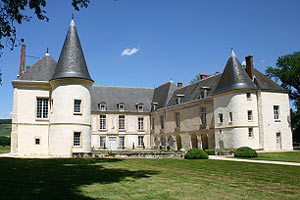
Château de Dormans
The Château de Dormans is a historic estate located in the town of Dormans, France. Its origins date back to the 14th century when the estate was first established by Jean de Dormans. The Dormans family maintained ownership of the castle until the 16th century, marking several centuries of noble residence and regional influence.
The castle's current architectural appearance primarily reflects the 18th century, a period during which the main classical building was constructed. This era saw the transformation of the estate into a more refined and stately residence, embracing the post-Renaissance architectural style characterized by symmetry, proportion, and restrained decorative elements. Notably, during the 18th century renovations, two of the original four corner towers were restored, preserving elements of the medieval fortification while integrating them into the classical design of the château.
Historical origins and early ownership
The 14th-century foundation of Château de Dormans is attributed to Jean de Dormans, a noble figure whose family played a significant role in the region. The estate initially served as a fortified residence typical of medieval noble families, combining defensive features with domestic functions. The Dormans family retained control of the property through the late Middle Ages and into the early modern period, witnessing the gradual evolution of castle architecture and regional politics.
Architectural evolution and 18th-century transformation
By the 18th century, the château underwent substantial rebuilding and modernization. The main building was erected in the classical architectural style, which was prevalent in France during this period. This style emphasized symmetry, classical orders, and a harmonious façade, moving away from the fortress-like characteristics of medieval castles.
The restoration and partial rebuilding of two corner towers during this time reflect an architectural dialogue between the château's medieval past and its 18th-century refinement. These towers, originally part of the castle's defensive system, were adapted to fit the aesthetic and functional requirements of a noble residence rather than a military stronghold.
Architectural features and layout
The château's layout centers around the main classical building, which likely includes a grand entrance, reception rooms, and living quarters arranged in a balanced and orderly fashion. The surviving corner towers add vertical emphasis and historical character to the otherwise classical composition.
The estate's setting in Dormans, a town in the Champagne region, situates it within an area known for its historical castles and noble estates. The château's architecture reflects both local traditions and broader French architectural trends of the post-Renaissance period.
Preservation and current status
Today, Château de Dormans stands as a well-preserved example of the transition from medieval fortification to classical noble residence. The combination of 14th-century origins and 18th-century renovations offers valuable insight into the architectural and social history of the region.
The château remains a point of interest for visitors and historians alike, illustrating the layered history of French noble estates and their adaptation over centuries. Its classical façade and restored towers continue to embody the estate's enduring legacy.
Frequently asked questions (FAQ)
- When was Château de Dormans originally built?
- The Château de Dormans was originally established in the 14th century by Jean de Dormans and his family.
- What architectural style characterizes the current château?
- The current château primarily reflects 18th-century classical architecture from the post-Renaissance period.
- How many corner towers does the château have?
- Originally there were four corner towers, but only two were restored during the 18th-century renovations.
- Is Château de Dormans well preserved?
- Yes, the château is well preserved, showcasing both its medieval origins and 18th-century classical renovations.
Loading map...
Visitor reviews
No reviews yet. Been here? Write the first review and help other travelers!
Write the first reviewVisited this castle? Share your experience
Your review helps other travelers and adds first-hand knowledge to our encyclopedia.