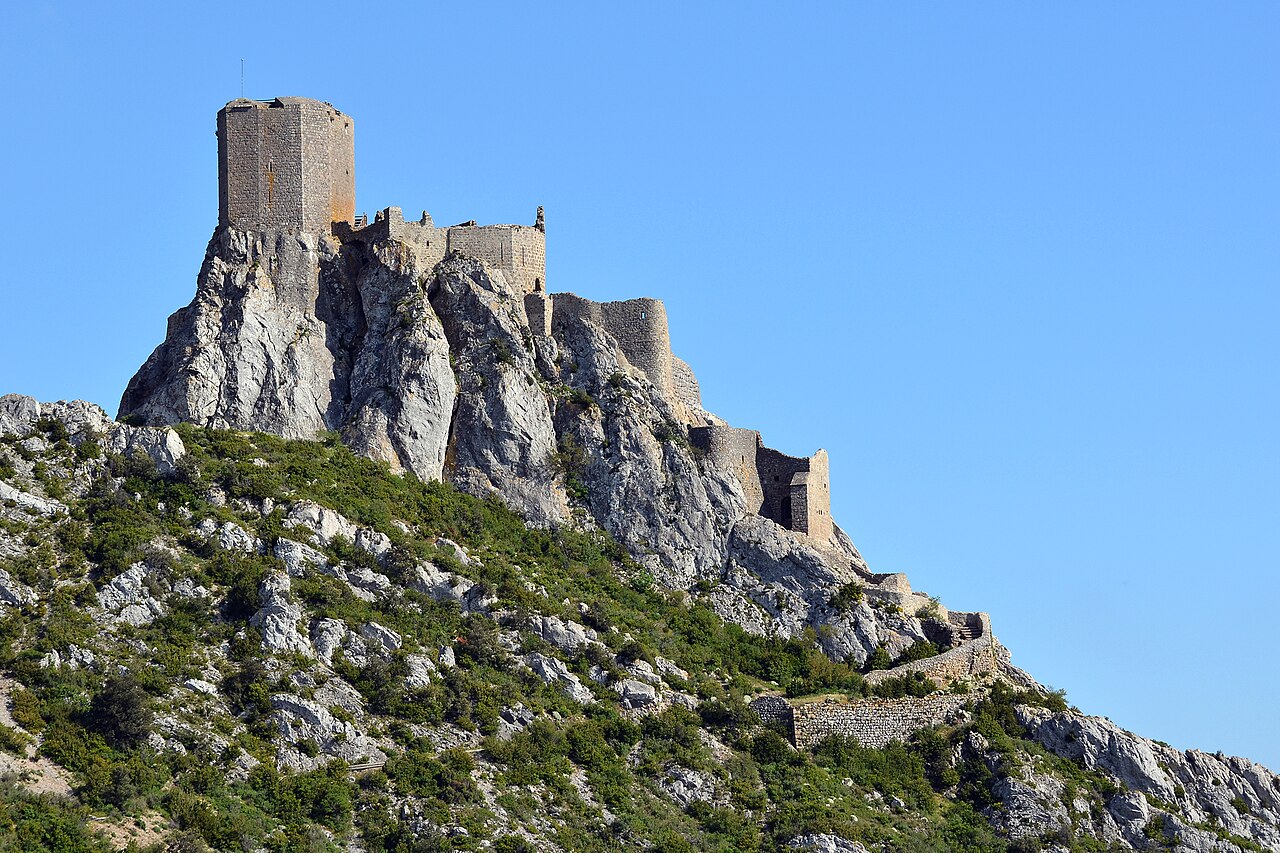
Château de Cuxous
Château de Cuxous is a notable medieval fortress located in the commune of Cassagnes in southern France. Originally constructed in the 11th century, this castle holds significant historical importance as it was first documented in the year 1119. Over the centuries, the castle underwent multiple phases of reconstruction and renovation, reflecting the evolving architectural styles and defensive needs of its time.
The origins and early history of Château de Cuxous
The castle's initial construction in the High Medieval period was typical of fortifications built during the 11th century in this region of France. Its location in Cassagnes was strategically chosen to oversee and protect the surrounding lands. The earliest records from 1119 indicate its role as a feudal stronghold, likely serving as a residence for local lords and a defensive position against rival factions or invaders.
Architectural features of the original structure
The original castle would have featured common elements of High Medieval military architecture, including thick stone walls, a keep or donjon as the main defensive tower, and possibly a motte-and-bailey layout or early stone curtain walls. Defensive features such as battlements, arrow slits, and a fortified gatehouse were likely part of the design, although specific details of the earliest phase remain limited due to later reconstructions.
Rebuilding phases and architectural evolution
Château de Cuxous experienced significant rebuilding during the 13th century, a period when many castles in France were upgraded to improve defenses against siege warfare and to reflect the growing status of their owners. This phase likely introduced stronger curtain walls, enhanced towers, and possibly the addition of residential buildings within the castle precincts.
18th-century modifications
By the 18th century, the castle's military function had diminished, and renovations from this period probably focused on adapting the structure for more comfortable habitation or agricultural use. Architectural elements from this era may include enlarged windows, interior refurbishments, and the addition of ancillary buildings such as stables or storage facilities.
20th-century restoration efforts
In the 20th century, restoration work was undertaken to preserve the castle's historical fabric and prevent further decay. These efforts aimed to stabilize the structure and maintain its heritage value, although the castle today may present a mixture of original medieval masonry alongside later additions and repairs.
Current condition and cultural significance
Today, Château de Cuxous stands as a partially preserved monument reflecting centuries of architectural and historical development. It is an important cultural landmark within the region of Occitanie, illustrating the evolution of medieval fortifications into later residential estates.
Visitor experience and accessibility
While not as widely known as some major French castles, Château de Cuxous offers visitors insight into the layered history of medieval architecture and regional heritage. The castle's setting in the rural landscape of Cassagnes provides a tranquil backdrop for exploration of its walls and surrounding grounds.
Architectural and historical context in the region
The castle's location in southern France places it within a broader historical context of medieval fortifications built during the turbulent centuries of feudal conflicts, the Albigensian Crusade, and later regional power struggles. Its repeated rebuilding phases mirror the shifting political and social dynamics of the area.
Comparison with other regional castles
Compared to larger and more famous castles in the region, Château de Cuxous is smaller but exemplifies typical rural castle development. Its architectural evolution from a defensive fortress to a more domesticated residence is characteristic of many such castles that adapted over time to changing needs.
Frequently asked questions (FAQ)
- What is the historical significance of Château de Cuxous?
- Château de Cuxous is a remarkable example of medieval architecture, showcasing the rich history of the region. Built in the 12th century, it served as a strategic fortification during various conflicts, reflecting the turbulent past of France.
- When was Château de Cuxous built?
- Château de Cuxous was constructed in the late 12th century. Its long-standing presence offers visitors a glimpse into the architectural styles and defensive strategies of the medieval period.
- Can I visit Château de Cuxous?
- Yes, Château de Cuxous is open to the public for tours. Visitors can explore the castle grounds and learn about its history through guided tours offered throughout the year.
- What are the opening hours for Château de Cuxous?
- Château de Cuxous is typically open from 10 AM to 6 PM during the peak tourist season, from April to October. Hours may vary during the off-season, so it is advisable to check the official website for the most current information.
- Is it possible to access Château de Cuxous with mobility aids?
- Château de Cuxous strives to be accessible, but due to its historic nature, some areas may present challenges for those with mobility aids. It is recommended to contact the castle in advance to discuss specific accessibility needs.
- What is the best time to visit Château de Cuxous?
- The best time to visit Château de Cuxous is during the spring and early fall when the weather is pleasant, and the crowds are smaller. Visiting during these seasons allows for a more enjoyable experience exploring the castle and its surroundings.
- Are there any nearby attractions to visit?
- Yes, the region surrounding Château de Cuxous is rich in attractions, including picturesque villages and beautiful landscapes. Nearby, you can explore local markets, hiking trails, and other historical sites that enhance your visit.
- What are the ticket prices for Château de Cuxous?
- Ticket prices for Château de Cuxous are generally affordable, with discounts available for students and seniors. Family passes are also offered, making it a great option for visitors of all ages.
Information
Loading map...
Visitor reviews
No reviews yet. Been here? Write the first review and help other travelers!
Write the first reviewVisited this castle? Share your experience
Your review helps other travelers and adds first-hand knowledge to our encyclopedia.