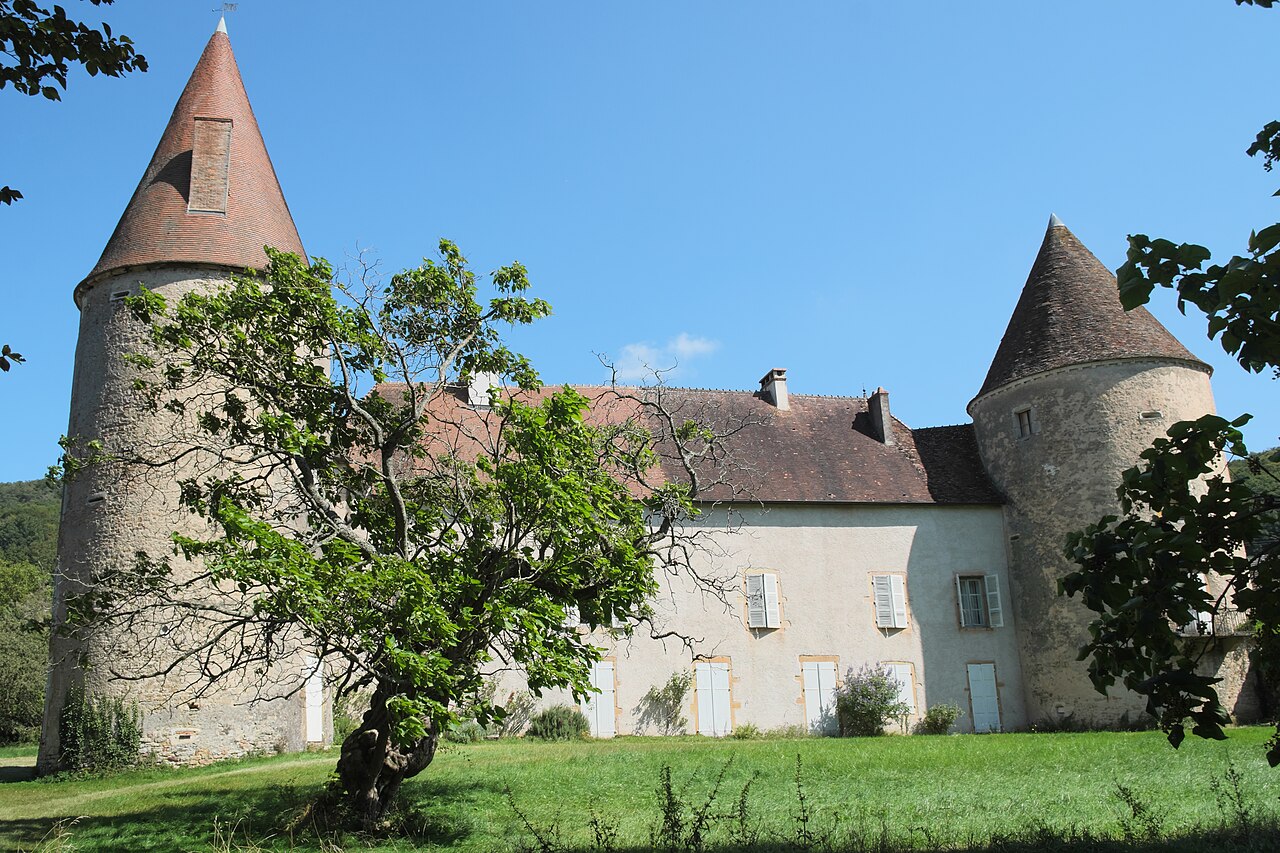
Château de Cormatin
The Château de Cormatin stands as a remarkable example of early 17th-century French Renaissance architecture, nestled in the commune of Cormatin in the Burgundy region of France. This castle, built upon the foundations of a medieval fortress, embodies a unique blend of defensive features and refined residential elegance, reflecting the transitional period in castle design when fortification gave way to comfort and status symbolism.
Historical background and construction
The origins of the Château de Cormatin trace back to a 13th-century medieval fortress owned by the du Blé family. The current château was initiated in 1606 by Antoine du Blé d’Uxelles, a nobleman and military governor appointed by King Henri IV during the tumultuous era of the French Wars of Religion. Antoine's elevated social and military status influenced the château's design, which was both a statement of power and a comfortable noble residence.
Construction spanned approximately two decades, concluding around 1626. The château was erected on a square island surrounded by a broad moat, a defensive feature harking back to its medieval roots. The design incorporated Renaissance architectural elements such as symmetrical wings, classical orders in doorways, and ornamental pediments, alongside military motifs like corner turrets and cannon openings, symbolizing strength even as the need for fortification waned.
Following the completion of the main structure, Antoine’s son Jacques du Blé enhanced the château’s interiors by 1627, commissioning over sixty paintings from Paris. These artworks enriched the château’s cultural significance, aligning it with contemporary artistic tastes and making it a hub of noble life and political activity. Notably, the château hosted distinguished visitors such as King Louis XIII and Cardinal Richelieu in 1629, underscoring its importance in French political and social circles.
Architectural features and layout
External structure and defensive elements
The château’s layout originally featured three wings arranged around a central courtyard, with half-projecting pavilions at the outer corners enhancing its visual rhythm and symmetry. The building rests on a bossed stonework base, providing solidity and a textured aesthetic typical of Renaissance masonry.
Overhanging turrets at the interior angles, while evocative of medieval defense, served primarily decorative purposes, blending the château’s military heritage with Renaissance elegance. The moat and surrounding water features, including a canal and water mirror, further enhanced the château’s imposing presence and reflected the status of its owners.
Main residence and entrance
The corps de logis, or main residence, faces the courtyard and is accessed through a grand doorway framed in the Doric order, crowned by an ornamental pediment with the remnants of a sculpted bust. A five-step stone staircase leads visitors into the château, emphasizing the ceremonial nature of the entrance.
The western façade features a slightly projecting central bay, adding depth and grandeur to the elevation. One wing opens onto the courtyard through a doorway flanked by Ionic pilasters, showcasing the château’s classical architectural vocabulary and attention to detail.
Notable architectural innovations
Among the château’s most significant architectural features is the hollow-core staircase located midway along the northern wing. This staircase, designed with a hollow center to reduce weight while maintaining strength, is recognized as the earliest known example of its kind in France, highlighting the château’s role in architectural innovation during the Renaissance.
Interior decoration and artistic heritage
The interiors of the Château de Cormatin are distinguished by their exquisite decoration, reflecting the tastes and wealth of the du Blé family. Several ground-floor rooms retain original features such as finely carved wooden fireplaces and wood paneling framed with Cordovan leather, a luxurious material imported from Spain, which adds texture and color to the walls.
Ceilings are delicately painted, showcasing French artistic styles of the early 17th century. The château’s art collection included works attributed to renowned painters such as Claude Gellée (Claude Lorrain), Lesueur, Mignard, Nattier, Rigaud, Van de Velde, and Velasquez, which adorned the walls and enriched the cultural atmosphere.
One of the château’s unique interior features is the cabinet of curiosities, which boasts one of the oldest surviving “sky” ceilings designed to create an illusion of openness and infinite space above. This reflects the Renaissance fascination with nature, science, and the cosmos.
The Sainte-Cécile cabinet is particularly notable for its lapis lazuli and gilded decoration, intended to reflect candlelight and facilitate reading. This room exemplifies the blend of function and aesthetic refinement that characterizes the château’s interiors.
Gardens and landscape evolution
The château is set within a twelve-hectare park that has evolved significantly over the centuries. An ordered garden existed by the early 17th century, reflecting Renaissance ideals of symmetry and control over nature. In the 18th century, the garden was simplified, and later, around 1785, it was landscaped with the introduction of American tree species brought by Pierre Desoteux, adding botanical diversity and reflecting the period’s interest in exotic plants.
After suffering destruction around 1815 due to the infilling of the moat, the gardens were recreated between 1990 and 1993. The restored grounds include formal flowerbeds and a large boxwood labyrinth centered on a pavilion topped with an ornate wrought iron dome created by artists Michel and J.-Y. Bouillot in 1990. This pavilion symbolizes the union of souls in divine love, adding a romantic and contemplative element to the landscape.
Changes, preservation, and current status
Over the centuries, the château changed hands multiple times, passing from the du Blé family to Henri-Camille de Beringhen in 1730, then to Jean-Gabriel Verne in 1766, followed by the Dezoteux family and various industrialists. In the 19th century, part of the château was converted into a textile manufacturing facility, which caused structural damage and led to the partial demolition of the southern wing after 1815. This wing has not been rebuilt, leaving the château with two main wings today.
Recognized for its historical and architectural significance, the Château de Cormatin was classified as a monument historique in 1862 and again in 1903, with protections extended to gardens, outbuildings, moat, canal, water mirror, enclosing walls, and the guardian’s house. After falling into disrepair in the late 20th century, private owners undertook restoration efforts to preserve this exceptional site.
Today, the château remains a testament to the transition from medieval fortification to Renaissance residence, celebrated for its architectural innovations, artistic heritage, and beautifully restored gardens. It continues to attract visitors interested in French history, Renaissance art, and garden design.
Frequently asked questions (FAQ)
- What is the historical significance of Château de Cormatin?
- Château de Cormatin is a remarkable example of 17th-century French architecture and is renowned for its stunning Baroque style. Built between 1600 and 1630, it reflects the grandeur of the period and has been meticulously preserved, showcasing the lifestyle of the French nobility during that era.
- When was Château de Cormatin built?
- Construction of Château de Cormatin began in 1606 and was completed in 1634. The castle was commissioned by the nobleman Jacques de Marconnay and serves as a prime illustration of the architectural trends of the time.
- Can I visit Château de Cormatin?
- Yes, Château de Cormatin is open to the public, allowing visitors to explore its beautiful gardens and grand interiors. Guided tours are available, providing insights into the castle's history and architecture.
- What are the opening hours for Château de Cormatin?
- Château de Cormatin is typically open from 10 AM to 6 PM from April to October, and shorter hours may apply during the off-season. It is advisable to check the official website for any changes in hours or special closures before your visit.
- Is it possible to access Château de Cormatin with a wheelchair?
- Yes, Château de Cormatin is equipped with facilities to accommodate visitors with reduced mobility. However, some areas may have limited access due to the historic nature of the building, so it is recommended to inquire in advance about specific accessibility features.
- What are the ticket prices for Château de Cormatin?
- Ticket prices for Château de Cormatin typically range from €9 for adults to €6 for children aged 7-18. Discounts may be available for groups, seniors, and students, so it is worth checking for any current promotions before your visit.
- When is the best time to visit Château de Cormatin?
- The best time to visit Château de Cormatin is during the spring and early autumn months when the weather is pleasant, and the gardens are in full bloom. Additionally, visiting during these times helps avoid the peak tourist crowds, allowing for a more enjoyable experience.
- What nearby attractions can I visit while at Château de Cormatin?
- Nearby attractions include the picturesque village of Cormatin, the beautiful vineyards of Burgundy, and other historic sites such as the Château de Brancion. Exploring the surrounding countryside can provide a deeper understanding of the region's rich cultural heritage.
Information
Website
Visit websiteSources & official resources
Verify the information above using these authoritative references.
Loading map...
Visitor reviews
No reviews yet. Been here? Write the first review and help other travelers!
Write the first reviewVisited this castle? Share your experience
Your review helps other travelers and adds first-hand knowledge to our encyclopedia.