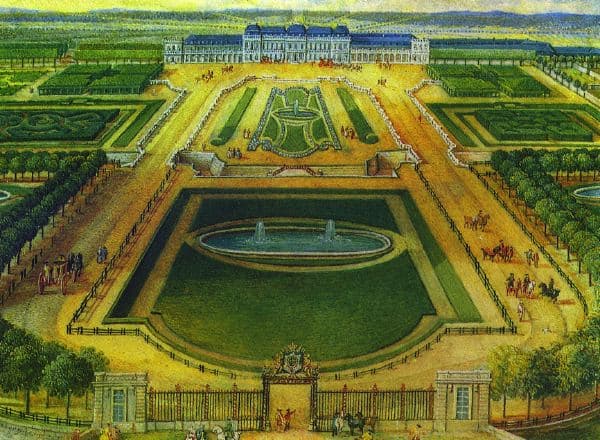
Château de Chanteloup
The Château de Chanteloup is a historic castle located in the commune of Chanteloup in the Hauts-de-France region of northern France. This hill castle combines medieval fortress origins with significant Renaissance architectural additions, reflecting centuries of evolving military and residential design. Its strategic position historically allowed control over the nearby Vanlée harbor, serving both defensive and surveillance roles along the Normandy coastline.
Medieval origins and early history
The earliest documented mention of the site dates back to 1022 in a charter benefiting the Mont-Saint-Michel Abbey. Tradition attributes the original fortress construction to a lord of Chanteloup, a companion of William the Conqueror, who also held estates in Dorset, Hereford, and Worcester counties in England. This early medieval stronghold became the seat of the de Chanteloup family, its original owners, establishing its role as a local power center.
In 1286, the castle passed by marriage to the Paynel family, with notable lords such as Foulques III and IV Paynel overseeing the estate. These Norman knights exerted considerable influence in the region during the late medieval period. The castle's military importance was highlighted during the Hundred Years’ War when it was seized by the English from 1418 to 1449. During English occupation, the fortress served as a prison for local resistance fighters in 1432, emphasizing its strategic and punitive functions.
Renaissance transformation and later history
After the English withdrawal, control returned to the French around 1434 under Louis d’Estouteville, who repaired the damaged keep and curtain walls. His descendant, Antoine d’Estouteville, abandoned the original medieval fortress around 1536 and added a Renaissance-style residential wing. This new dwelling reflected the period's evolving tastes, incorporating ornamental details and more comfortable living spaces. Antoine’s wife, Isabeau de Carbonnel, resided there, marking a shift from purely military to residential use.
The castle was besieged in 1594 during the Wars of Religion, supporting the French crown against the Catholic League. Around 1655, ownership passed to Jean de Montgomery, who expanded the living quarters to accommodate more modern needs.
The French Revolution brought significant destruction: the keep and two flanking towers were partially demolished, reducing them to the second floor. The drawbridge was removed, and heraldic shields were defaced by then-owner Madame Duprey. Despite this, the castle remains protected as a historic monument, preserving both its medieval and Renaissance elements, including facades, roofs, and interior features such as the great hall’s painted door.
Architectural features and remains
Castle layout and defensive structures
The Château de Chanteloup stands on a polygonal plan, originally surrounded by moats that provided defense and water management. Access to the courtyard is on the west side via a small stone bridge with two arches, replacing an earlier drawbridge whose pivot holes remain visible on the gatehouse entrance facade.
The gatehouse was flanked by two round towers, partially demolished during the revolutionary period. Within the southern courtyard lies the remains of a quadrangular keep, primarily dating from the 14th century but remodeled at the end of the 15th century. This stone tower stands about three stories tall, approximately 20 meters, though historically it reached nearly 30 meters with five levels and crenellations. The vaulted ground floor connected to the curtain walls by a staircase, emphasizing its defensive role.
Renaissance residential wing
On the east side of the courtyard is a Renaissance residential building reconstructed in the early 16th century. This logis features a large cylindrical tower at its northern corner, adorned with defensive elements such as machicolations and arrow slits, which fortified the castle enclosure.
The residence, built in granite around 1536, showcases sculptural decoration characteristic of early Renaissance style. Facades are enriched with pilasters featuring foliage scrolls, candelabrum motifs, finial spikes, and detailed friezes with medallions and cartouches. Large diamond-shaped panels filled with leaf patterns and fantastic creatures add to the ornamental scheme. Some architectural details evoke religious architecture, such as two portals with wide semi-circular tympana and a door resembling a tabernacle.
The decorative style shares similarities with the nearby Château de Lasson near Caen, built around 1520, particularly in recurring motifs.
Historical significance and preservation
The Château de Chanteloup exemplifies the transition from medieval fortress to Renaissance residence, illustrating shifts in architectural styles and social functions over centuries. Its layered history includes periods of military conflict, noble residence, and revolutionary destruction.
Today, the castle is classified as a historic monument, preserving its medieval keep, gatehouse, towers, moats, and Renaissance residential wing. While certain sections were reduced or altered, the site remains a valuable witness to the architectural and historical evolution of northern France.
Frequently asked questions (FAQ)
- What is the historical significance of Château de Chanteloup?
- Château de Chanteloup is a notable example of 18th-century French architecture, reflecting the grandeur of the period. Built by the architect Claude Nicolas Ledoux, it served as a residence for various noble families and has witnessed significant historical events.
- When was Château de Chanteloup built?
- Château de Chanteloup was originally constructed in the late 18th century, with its foundation laid in 1775. The castle has undergone various renovations over the years, preserving its historical essence while adapting to modern needs.
- Can I visit Château de Chanteloup?
- Yes, visitors are welcome to explore Château de Chanteloup. Guided tours are available, offering insights into the castle's history, architecture, and gardens.
- What are the opening hours for Château de Chanteloup?
- Château de Chanteloup is typically open to visitors from 10 AM to 6 PM, Tuesday through Sunday. It is advisable to check the official website for any seasonal changes or holiday closures before your visit.
- What are the ticket prices for visiting Château de Chanteloup?
- Ticket prices for Château de Chanteloup vary depending on the type of tour and age of the visitor. Generally, adult tickets range from €10 to €15, while reduced prices are available for children and seniors.
- Is it possible to access Château de Chanteloup with mobility issues?
- Yes, Château de Chanteloup strives to accommodate all visitors, including those with mobility challenges. There are accessible routes and facilities to ensure a comfortable visit.
- When is the best time to visit Château de Chanteloup?
- The best time to visit Château de Chanteloup is during the spring and early autumn months when the weather is pleasant and the gardens are in full bloom. Additionally, visiting during these times often means fewer crowds, allowing for a more enjoyable experience.
- What nearby attractions can I explore after visiting Château de Chanteloup?
- After visiting Château de Chanteloup, you can explore the beautiful Parc de la Tête d'Or or the historic city of Lyon, which is just a short drive away. Both locations offer rich cultural experiences and stunning landscapes.
Photo gallery

Photo by Attributed to Louis-Nicolas Van Blarenberghe•Public domain
Information
Website
Visit websiteSources & official resources
Verify the information above using these authoritative references.
Loading map...
Visitor reviews
No reviews yet. Been here? Write the first review and help other travelers!
Write the first reviewVisited this castle? Share your experience
Your review helps other travelers and adds first-hand knowledge to our encyclopedia.



