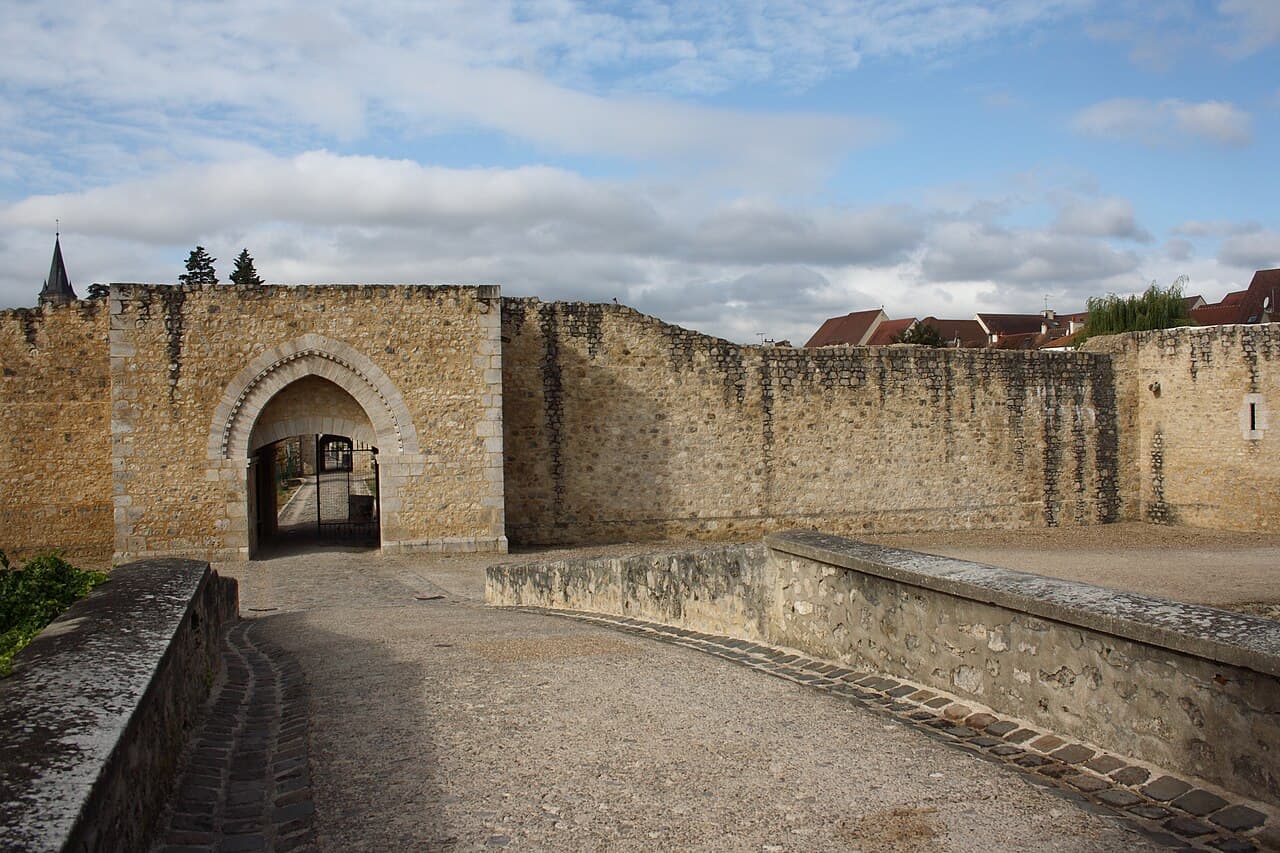
Château de Brie-Comte-Robert
The Château de Brie-Comte-Robert stands as a significant medieval fortress located in the town of Brie-Comte-Robert, within the Seine-et-Marne département of France. Constructed around 1190 by Robert I of Dreux, brother to King Louis VII, the castle marks an important architectural and historical landmark from the high medieval period. It was built on land previously owned by the bishops of Paris, at a time when the settlement of Brie-Comte-Robert was also established, reflecting the strategic and political importance of the site in the Île-de-France region.
Throughout its history, the castle has witnessed numerous changes in ownership and architectural modifications, reflecting the evolving needs of its noble and royal inhabitants. Initially held by the Dreux family until 1254, it passed through the Châtillon family and eventually to Marguerite d'Artois and her daughter Jeanne d'Évreux. Jeanne's marriage to King Charles IV the Fair integrated the castle into the royal domain, elevating its status as a prestigious residence.
Medieval origins and architectural design
The castle is designed as a hill castle occupying a roughly square area of approximately 2,500 square meters, with each side measuring about 58 meters. It is strategically situated within a natural depression, which was transformed into broad, water-filled moats approximately 15 meters wide and 5 meters deep. These moats are separated from the castle walls by a flat zone called the lices, originally gravelled and later divided into gardens during the 14th century.
The fortress is enclosed by a square curtain wall reinforced by a distinctive arrangement of towers. Four large round towers anchor each corner aligned with the cardinal directions, supplemented by two additional round towers along the north-west and south-east walls. Two square gate towers on the south-west and north-east sides serve as gatehouses, a rare feature in the Île-de-France region. Unlike many medieval castles, Brie-Comte-Robert lacks a separate keep; instead, the north-east gatehouse, known as the Tour Saint-Jean, functioned as the main defensive tower and emblematic symbol of the castle.
The towers are constructed mainly from local rubble limestone, with carefully cut stone used for window and door frames and quoins. The round towers feature vaulted ground floors but lack internal staircases and have few openings, limiting their defensive utility. Access to upper floors was typically via adjoining buildings within the castle complex.
Specialized tower functions
Several towers had specific roles: the south tower housed a complex latrine system with an ovoid basin and rainwater flushing; the south-east tower, now mostly ruined, also served latrines with a dual-channel drainage system. The west tower contained a semi-subterranean room likely used for food storage, equipped with a stone basin and ventilation slit. The north tower's vaulted ground floor, accessed through a bent corridor, probably served as additional storage and featured a dovecote on its upper floor in the 17th century.
The two square gate towers included defensive features such as portcullises, murder holes, and strong doors. The main entrance of the Tour Saint-Jean was particularly well fortified with a triple security system involving two portcullises and murder holes.
Historical significance and royal connections
During the 14th century, under Jeanne d'Évreux, the castle underwent significant enhancements, including the construction of a chapel dedicated to Saint Denis attached to the Tour Saint-Jean and the development of expansive pleasure gardens. The castle became a favored residence for high nobility, including the dukes of Burgundy, and hosted notable events such as the 1349 marriage of Philip VI of Valois and Blanche d'Évreux.
In the early 15th century, Louis I, Duke of Orléans, undertook fortification efforts to strengthen the castle amid regional conflicts. Following his assassination, the castle came under Burgundian control, serving as a strategic stronghold on the route between Paris and Burgundy. It withstood several sieges during the Hundred Years’ War, including a damaging 1430 siege by Humphrey Stafford, 1st Duke of Buckingham.
After returning to French control, the castle was reintegrated into the royal domain under King Louis XII. In the 16th century, it was held by various Italian noble families close to Catherine de' Medici, though their stewardship saw the castle's decline. A 1567 parliamentary law was enacted to prevent further damage. The castle also hosted the young King Louis XIII on two occasions in the early 17th century.
Conflict, decline, and restoration efforts
During the Fronde in 1649, the castle was captured and heavily bombarded by royal troops, resulting in the destruction of its south-eastern tower. By the late 17th century, it was in poor condition and considered unfit for residence. Minor repairs were made by Jean-Antoine de Mesmes before the castle passed into private hands.
In the mid-18th century, Germain-Louis de Chauvelin obtained permission to reduce the height of most towers and curtain walls to the first floor, sparing only the Tour Saint-Jean. Later, King Louis XV repurchased and exchanged the property with his cousin, the Count of Eu. The castle eventually came under the ownership of the Duke of Penthièvre and then the Duchess of Orléans.
During the French Revolution, the castle was used as a prison, notably holding Baron de Besenval, commander of the Swiss Guards. The property was sold as national property in 1793, reacquired by the town in 1803, sold again in 1813, and finally repurchased by the commune in 1923.
Modern conservation and archaeological work
Since 1982, the association "Les Amis du Vieux Château de Brie-Comte-Robert" has conducted extensive archaeological excavations and conservation efforts. A major restoration program began in 2003, focusing on rebuilding curtain walls to heights over six meters, restoring the Tour de Brie with its distinctive four-sided roof, and partially reconstructing the Tour Saint-Jean based on archaeological findings.
The castle grounds now feature a modern Heritage Interpretation Centre built in 2005, offering educational exhibitions about the castle's history. The courtyard retains a 17th-century sandstone paved walkway with drainage channels, reflecting the layout of the 14th-century noble and service areas divided by a wall and gate opposite the well.
The castle's water supply for the moat was historically sourced from nearby streams, and the original drawbridge was a counterweighted beam type resting on a wooden pontoon. Today, visitors access the site via two modern bridges.
Frequently asked questions (FAQ)
- How do I get to Château de Brie-Comte-Robert?
- Château de Brie-Comte-Robert is easily accessible by car and public transport. If you are traveling by train, take the RER E line to Tournan station, then catch a bus or taxi to the castle. There is parking available nearby for those driving.
- What is the historical significance of Château de Brie-Comte-Robert?
- Château de Brie-Comte-Robert dates back to the 12th century and served as a royal residence and a strategic fortress. It played a vital role during various conflicts in French history, including the Hundred Years' War. Today, it stands as a testament to medieval architecture and is a valuable educational resource.
- When was Château de Brie-Comte-Robert built?
- The construction of Château de Brie-Comte-Robert began in the early 12th century, specifically around 1130. Over the centuries, it has undergone numerous renovations and restorations, reflecting the architectural styles of different eras. The castle remains one of the best-preserved examples of medieval fortifications in France.
- Can I visit Château de Brie-Comte-Robert year-round?
- Yes, Château de Brie-Comte-Robert is open to visitors throughout the year, although opening hours may vary by season. It’s advisable to check the official website for the most current visiting hours and any special events. Guided tours are also available to enhance your experience.
- Why is Château de Brie-Comte-Robert a popular tourist attraction?
- Château de Brie-Comte-Robert attracts visitors due to its rich history, stunning architecture, and picturesque surroundings. The castle hosts various cultural events and exhibitions, making it a lively destination for both history enthusiasts and families. Its well-preserved structure offers a unique glimpse into medieval life.
- Is it possible to access all areas of the castle?
- While most areas of Château de Brie-Comte-Robert are accessible to visitors, some sections may be restricted due to preservation efforts. Guided tours typically include the main rooms and towers, offering insights into the castle’s history and architecture. Always check in advance for any accessibility concerns.
- What are the ticket prices for Château de Brie-Comte-Robert?
- Ticket prices for Château de Brie-Comte-Robert are generally affordable, with discounts available for students and seniors. Family tickets are also offered to encourage group visits. To ensure you get the best deal, consider purchasing tickets online in advance.
- What is the best time to visit Château de Brie-Comte-Robert?
- The best time to visit Château de Brie-Comte-Robert is during the spring and early autumn months when the weather is pleasant for exploring the castle and its gardens. Additionally, visiting during weekdays can help you avoid crowds. Always check for any special events or festivals that might enhance your visit.
- Are there any nearby attractions to visit?
- Yes, there are several nearby attractions worth exploring, including the charming town of Brie-Comte-Robert itself, which features quaint streets and local shops. The surrounding area is rich in natural beauty and offers opportunities for walking and cycling. Other historical sites in the region can also be part of your itinerary.
Photo gallery

Information
Website
Visit websiteSources & official resources
Verify the information above using these authoritative references.
Loading map...
Visitor reviews
No reviews yet. Been here? Write the first review and help other travelers!
Write the first reviewVisited this castle? Share your experience
Your review helps other travelers and adds first-hand knowledge to our encyclopedia.



