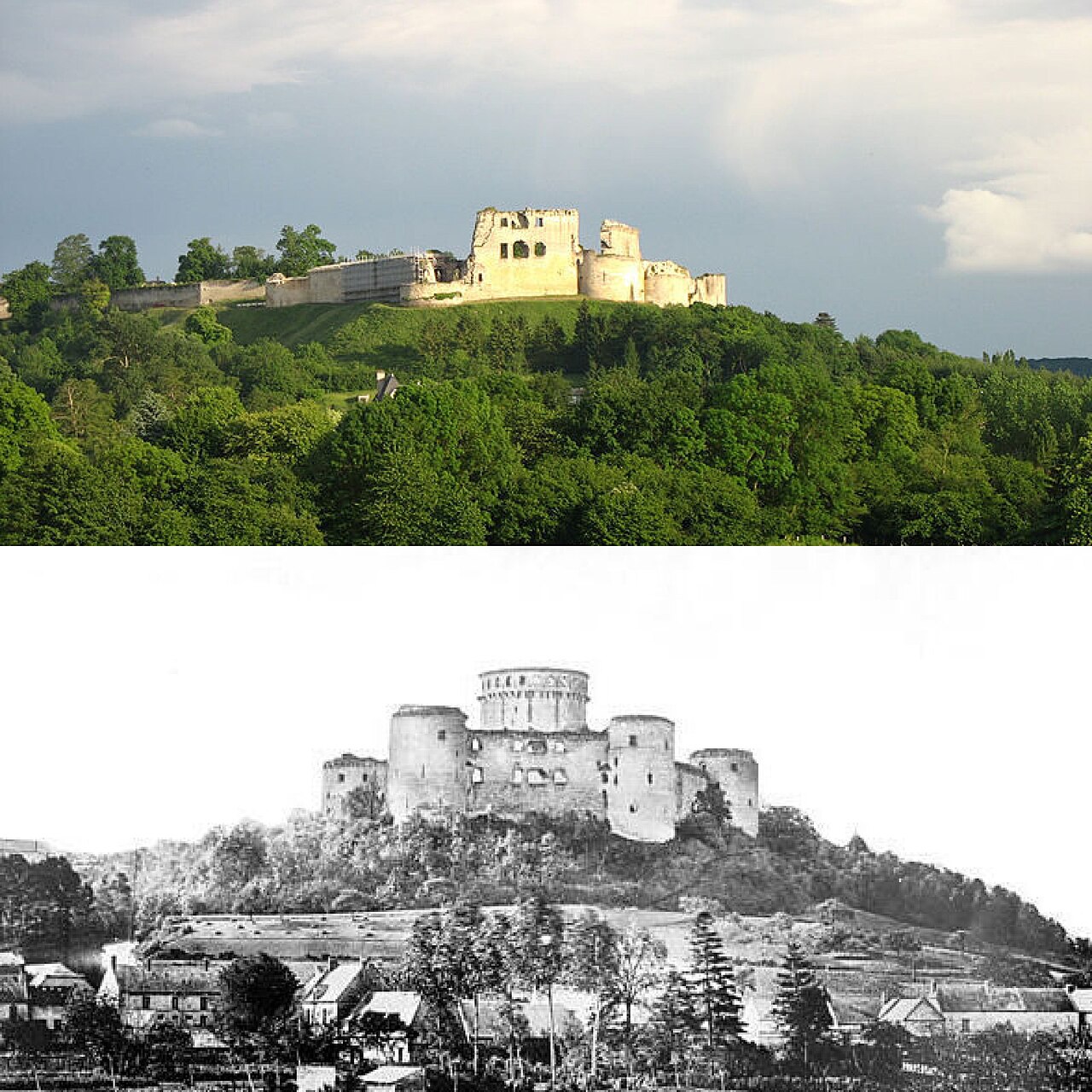
Château de Blérancourt
The Château de Blérancourt stands as a remarkable testament to the layered history of northern France and its enduring ties with the United States. Located in the town of Blérancourt within the Hauts-de-France region, this hill castle has origins tracing back to the medieval period, with archaeological excavations revealing earlier structures that predate the existing château. Its evolution from a noble estate to a symbol of international cooperation reflects centuries of architectural and historical transformation.
Medieval origins and early ownership
The site of the château was originally occupied during the medieval era, serving as a strategic location on an artificial terrace surrounded by a moat. In the 15th and 16th centuries, the estate was under the ownership of the Lanvin family. This period laid the groundwork for the château's later development, although little of the medieval structure remains visible today. The transition to the Potier family marked a significant turning point in the château's history.
17th-century reconstruction and architectural significance
Between 1612 and 1619, Bernard Potier de Gesvres and his wife Charlotte de Vieux-Pont commissioned the renowned architect Salomon de Brosse to rebuild the château in stone. This reconstruction established the château's defining architectural form, characterized by a central building flanked by two corner pavilions, all resting on a raised terrace encircled by a moat. The château featured three floors in the main building and four distinct pavilions arranged around the terrace, exemplifying early 17th-century French architectural styles with elegant stonework and balanced proportions.
Salomon de Brosse, a prominent figure in French architecture, contributed to the château's refined design, which anticipated the ornamental garden buildings and follies that would become fashionable in the 18th century. The château's layout and decorative elements reflect the transition from fortified medieval residences to more comfortable, stately homes emphasizing aesthetics and leisure.
Charitable foundations and family legacy
In 1661, Bernard Potier de Gesvres founded an orphanage on the château grounds, demonstrating the estate's role beyond a noble residence to a center of charitable activity. Although the orphanage no longer exists, remnants attest to this social history. Upon Bernard's death in 1662 without direct heirs, the estate passed to his nieces within the Potier family, maintaining continuity until the late 18th century.
Impact of the french revolution and subsequent decline
The French Revolution brought profound upheaval to the château. Declared national property, the main central building was largely demolished, and many decorative features and building materials were sold off. Only the grand entrance gate, two corner pavilions, the stone bridge, and the surrounding moat survived this period of destruction. These surviving elements stand as poignant reminders of the château's former grandeur.
20th-century devastation and american intervention
During World War I, the château suffered significant damage, particularly during the 1918 German offensive. The remaining structures were repurposed as the headquarters for the American Committee for Devastated Regions (CARD), established by American philanthropist Anne Morgan to aid war-torn northern France. Morgan's purchase of the estate in 1919 marked the beginning of its restoration and transformation into a site of Franco-American cultural cooperation.
Restoration and museum development
Restoration efforts commenced in 1924 under architect Jean Trouvelot, focusing on reviving the château's historic form while adapting it for new uses. Between 1928 and 1930, a new museum building was constructed on the site of the destroyed north wing, designed to respect the original ground-floor height and layout. In 1938, a matching south pavilion was added to honor American volunteers from World War I, reinforcing the château's role as a symbol of international friendship.
The museum, initially founded by Anne Morgan as the Franco-American Historical Museum in 1924, became state property in 1929 and was renamed the National Museum of Franco-American Cooperation in 1931. Despite closure during World War II, it was revived post-1945 under curator André Girodie. Further renovations, including a connecting structure between the pavilions completed in 2017, unified the historic and modern elements into a coherent cultural institution.
Architectural remnants and protected heritage
Today, the château's surviving architectural features include the monumental entrance gate, two corner pavilions, the stone bridge, and the moat, all protected as historic monuments since the early 20th century. These elements showcase exquisite craftsmanship and early 17th-century design principles, providing insight into the château's original grandeur and the evolution of French noble residences.
The 20th-century additions, including the museum buildings and connecting extensions, harmonize with the historic fabric, preserving the château's aesthetic and cultural significance while accommodating modern functions.
Gardens of the new world and botanical significance
The château is surrounded by the Gardens of the New World, developed from 1986 by French and American landscape architects. These gardens feature four themed areas — the white, pink, yellow, and memory gardens — planted exclusively with species native to North America. This botanical collection highlights the natural heritage shared between France and the United States and complements the museum's mission.
An adjacent arboretum includes trees known for their vibrant autumn colors, such as maples, oaks, liquidambar (sweetgum), and magnolias. These plantings create a living symbol of the transatlantic cultural and natural connections celebrated at Blérancourt.
Museum collections and cultural role
The National Museum of Franco-American Cooperation housed within the château buildings presents extensive collections that document the historical, cultural, and artistic exchanges between France and the United States. The museum's exhibits cover themes such as wartime alliances, philanthropy, and shared heritage.
The south pavilion contains a media library dedicated to research and documentation, serving scholars and visitors interested in the deep-rooted Franco-American relationship. The museum's designation as a Musée de France since 2002 underscores its importance as a cultural institution preserving and promoting this unique historical narrative.
Frequently asked questions (FAQ)
- What are the opening hours of Château de Blérancourt?
- Château de Blérancourt is open to visitors from 10 AM to 6 PM from Tuesday to Sunday. The castle is closed on Mondays and on certain public holidays, so it's always a good idea to check the official website for any updates on hours or special events.
- Can I purchase tickets online for Château de Blérancourt?
- Yes, tickets for Château de Blérancourt can be purchased online through the official website. Buying tickets in advance is recommended, especially during peak tourist seasons, to ensure your entry and avoid long queues at the ticket counter.
- When was Château de Blérancourt built?
- Château de Blérancourt was originally constructed in the 17th century, showcasing the architectural style of that era. It has since undergone various renovations and restorations to preserve its historical significance and charm.
- What is the historical significance of Château de Blérancourt?
- Château de Blérancourt has a rich history, particularly connected to the French-American relationship. It served as a memorial to soldiers during World War I and is now a cultural venue that highlights the friendship between France and the United States.
- Is it possible to access Château de Blérancourt with a wheelchair?
- Yes, Château de Blérancourt is committed to accessibility and offers facilities for visitors with mobility challenges. Wheelchair access is available in certain areas, and staff are on hand to assist where needed.
- What is the best time to visit Château de Blérancourt?
- The best time to visit Château de Blérancourt is during the spring and early autumn months when the weather is mild and the gardens are in full bloom. Visitors can enjoy the beautiful surroundings and participate in various outdoor activities organized by the castle.
- Are there any nearby attractions to visit after Château de Blérancourt?
- Yes, there are several attractions near Château de Blérancourt, including the picturesque village of Blérancourt and the nearby city of Compiègne, known for its historic sites and museums. Exploring these areas can provide a fuller experience of the region's rich history.
- What are the ticket prices for Château de Blérancourt?
- Ticket prices for Château de Blérancourt are generally affordable, with discounts available for students, seniors, and children. It's advisable to check the official website for the most current pricing information and any special promotions that may be available.
Information
Website
Visit websiteSources & official resources
Verify the information above using these authoritative references.
Loading map...
Visitor reviews
No reviews yet. Been here? Write the first review and help other travelers!
Write the first reviewVisited this castle? Share your experience
Your review helps other travelers and adds first-hand knowledge to our encyclopedia.