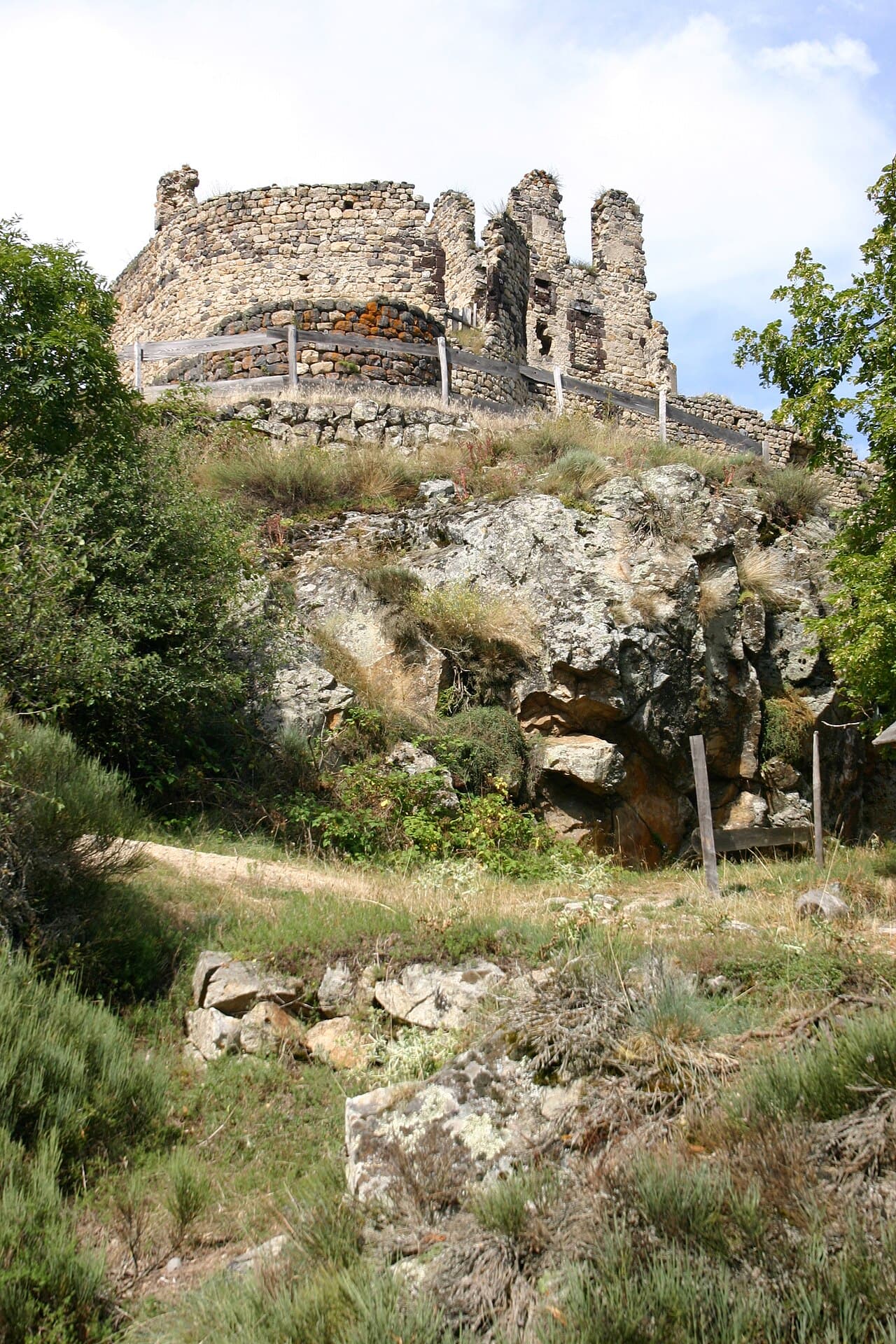
Château de Beaufort
The Château de Beaufort is a notable example of a High Medieval fortress situated in the Auvergne region of France, specifically near the village of Goudet in the Haute-Loire département. Constructed in the 13th century, this castle occupies a strategic position on a rocky headland overlooking the upper reaches of the river Loire. The site commands a dramatic view over the granitic rocks of the Margeride massif, emphasizing its military and defensive importance during the Middle Ages.
Originally built as a stronghold during the High Medieval period, the castle underwent significant modifications in the 15th and 16th centuries, reflecting evolving defensive needs and architectural styles. Today, the castle remains as ruined archaeological remains, with only fragments of walls and fortifications surviving to convey its former prominence.
Strategic location and natural defenses
The castle's placement on a steep rocky outcrop provided natural fortification against attackers. The surrounding granitic cliffs and the deep valley below created formidable obstacles, minimizing the need for extensive artificial defenses. The river Loire flowing nearby added a natural moat-like barrier on one side, enhancing the castle's defensibility.
This commanding position allowed the castle's occupants to monitor and control key routes through the region, particularly those along the Loire valley, which was an important corridor for trade and military movement in medieval France.
Architectural features and modifications
Although much of the castle is now in ruins, historical records and archaeological studies suggest that the original 13th-century construction included typical medieval defensive elements such as thick stone walls, a keep or donjon, and possibly a curtain wall enclosing a courtyard. The castle likely featured towers positioned to oversee the approaches and provide flanking fire against attackers.
The later 15th and 16th-century modifications may have introduced adaptations for artillery defense, such as lower, thicker walls and bastions, reflecting the transition from medieval to early modern fortification techniques. These changes indicate the castle's continued military relevance into the Renaissance period.
Historical significance and cultural legacy
The Château de Beaufort holds historical significance as a regional military stronghold during the Middle Ages and Renaissance. Its ruins provide valuable insight into the defensive architecture and feudal power structures of the time. The castle's dramatic setting and evocative ruins have inspired literary figures; notably, the Scottish writer Robert Louis Stevenson stopped at the site during his 1879 journey through the Cévennes, which he documented in Travels with a Donkey in the Cévennes. Stevenson's vivid description captures the castle's picturesque and rugged environment, linking it to cultural heritage beyond its architectural and historical value.
Present condition and visitor experience
Today, the Château de Beaufort stands as ruined archaeological remains, with much of the original structure lost to time. Visitors to the site can explore the remnants of the castle walls and enjoy panoramic views of the surrounding landscape, including the Loire valley and the Margeride mountains.
The castle's remote location and natural surroundings offer a glimpse into medieval military strategy and the harsh realities of fortress life. It remains a point of interest for historians, archaeologists, and tourists drawn to medieval architecture and French heritage.
Frequently asked questions (FAQ)
- When was Château de Beaufort built and what periods influenced its architecture?
- Château de Beaufort was originally built in the 13th century during the High Medieval period. It underwent significant modifications in the 15th and 16th centuries, incorporating features reflecting Renaissance military architecture.
- Where is Château de Beaufort located and what makes its location strategic?
- The castle is located near the village of Goudet in the Haute-Loire département of the Auvergne region, France. Its position on a rocky headland overlooking the river Loire and the Margeride massif provided natural defenses and control over important regional routes.
- What remains of Château de Beaufort can visitors see today?
- Visitors can explore the ruins of the castle, including fragments of walls and fortifications. The site offers panoramic views of the Loire valley and surrounding mountainous terrain, showcasing its strategic medieval placement.
- Did any famous historical figures visit Château de Beaufort?
- Yes, the Scottish author Robert Louis Stevenson visited Château de Beaufort during his 1879 travels documented in Travels with a Donkey in the Cévennes, highlighting the castle's cultural significance.
- Is Château de Beaufort accessible to the public and what should visitors expect?
- The castle ruins are accessible to visitors interested in medieval history and archaeology. The site is remote and largely unpreserved, so visitors should be prepared for uneven terrain and limited facilities.
Photo gallery

Information
Loading map...
Visitor reviews
No reviews yet. Been here? Write the first review and help other travelers!
Write the first reviewVisited this castle? Share your experience
Your review helps other travelers and adds first-hand knowledge to our encyclopedia.



