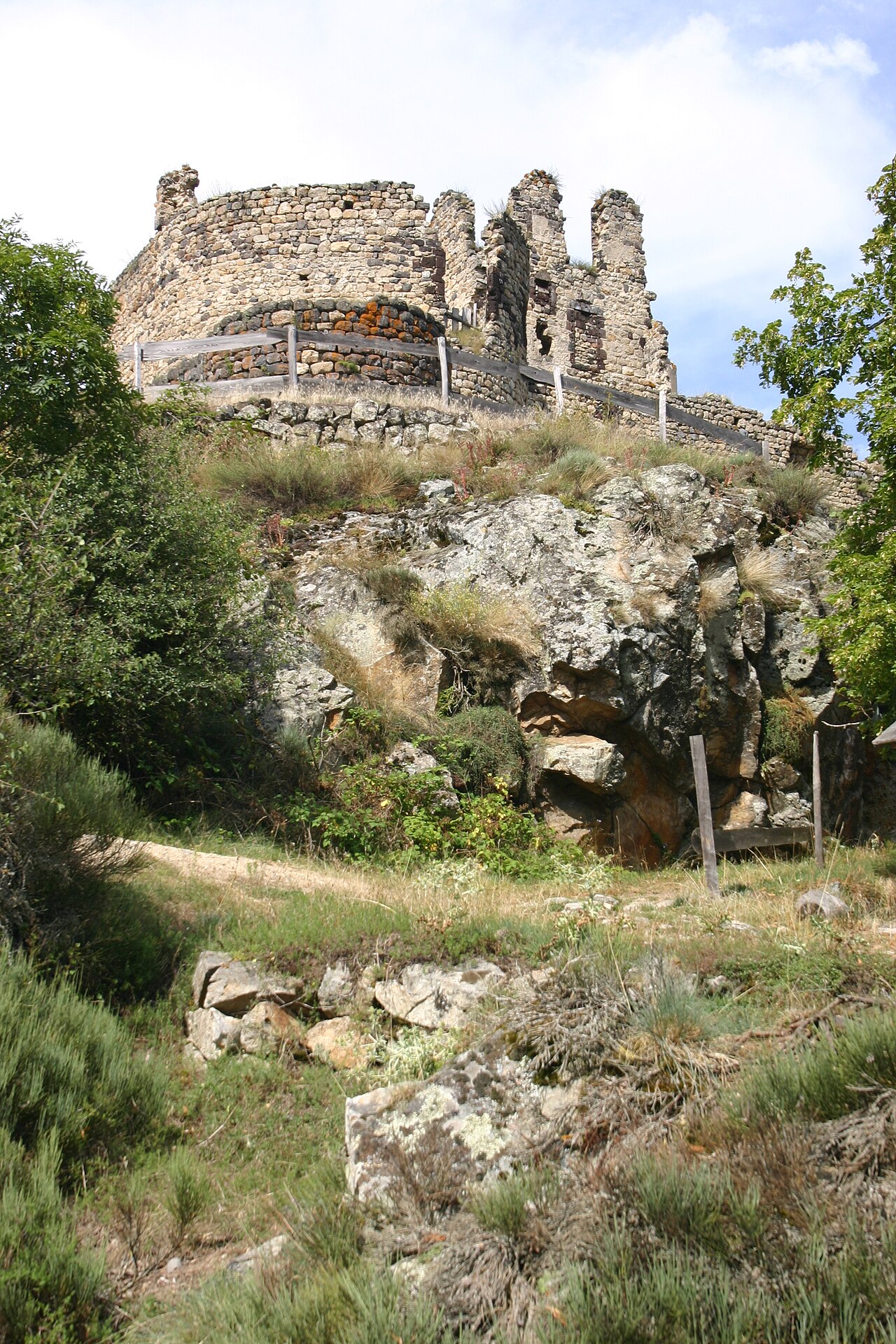
Château d’Arlempdes
The Château d’Arlempdes is a remarkable example of a medieval hill castle perched on a steep rocky promontory overlooking the Loire valley in France. Constructed initially in the 12th century, the castle's strategic location offered commanding views and natural defensive advantages, which were further enhanced by its architectural design. The site exemplifies the military and domestic architecture of the High medieval period, with its combination of fortified walls, towers, and service buildings.
Historical significance and ownership
The earliest documented mention of the château appears in a papal bull issued by Pope Clement IV in 1267, underscoring its importance in the medieval landscape. Originally built by local medieval builders, the castle served as a defensive stronghold controlling access along the Loire and its surrounding lands.
In the mid-15th century, the castle came under the ownership of the Poitiers family through marriage to Diane de Poitiers, a notable noblewoman who initiated significant restoration and rebuilding efforts. These renovations shaped much of the castle's later structure, reflecting the evolving needs of fortification and residence during the late medieval period.
The château's turbulent history continued into the French Wars of Religion, when in 1585 it was looted amid the religious conflicts that ravaged France. Despite such upheavals, the castle's chapel endured, serving as a lasting symbol of the site's spiritual and historical continuity.
Recognition of the château's cultural and historical value came in the 20th century, when it was officially protected as a historic monument by decree on 27 February 1926. More recently, private ownership has aimed at preservation and revitalization through restoration and cultural initiatives.
Architectural features and layout
Defensive structures and walls
The château is strategically positioned on a rocky outcrop with the southeast side facing a sheer cliff dropping to the Loire, naturally securing that flank without the need for fortifications. The remaining perimeter is enclosed by defensive curtain walls reinforced by six circular towers and one square tower, which provided multiple vantage points for surveillance and defense.
A chemin de ronde runs along the southwest side, serving as a protected walkway for guards to patrol the walls. The northern and northeastern sections were heavily fortified with additional curtain walls, creating layered defenses to repel attackers.
Internal divisions and key buildings
The castle's layout is divided by a central wall featuring a large round tower, effectively separating the site into two main areas. The southern section contains a broad esplanade, likely used for gatherings, training, or other open-air activities.
The northern sector houses the main entrance and associated buildings. Although much of this area lies in ruins, the vaulted ground floor of one building remains intact alongside the chapel of Saint-Jacques, a significant surviving structure.
The chapel of Saint-Jacques
The chapel of Saint-Jacques is the oldest standing element of the château, with foundations dating back to the 13th century and construction linked to the original 12th-century phase. It remains in relatively good condition compared to the rest of the ruins, offering valuable insight into the religious architecture and practices associated with the castle.
Domestic and service facilities
Among the preserved service areas is a vaulted kitchen chamber notable for its two large fireplaces on opposite sides. One fireplace includes a built-in bread oven, indicating the castle's self-sufficiency and the importance of food preparation within its walls.
Adjacent to the kitchen is a long vaulted room that housed a cistern for water collection, evidenced by the still-visible stone rim. This feature highlights the practical considerations of water storage and management crucial for sustaining the castle's inhabitants.
Current condition and preservation efforts
Today, the Château d’Arlempdes stands primarily as ruins, with most walls and towers fragmentary. However, the chapel and a nearby building have survived in better condition, providing a tangible connection to the castle's medieval origins. The site's preservation as a historic monument ensures ongoing protection and opportunities for restoration.
Its dramatic location and evocative remains continue to attract visitors interested in medieval architecture, history, and the cultural heritage of the Loire valley region.
Frequently asked questions (FAQ)
- How do I get to Château d’Arlempdes?
- Château d’Arlempdes is located in the Haute-Loire region of France, easily accessible by car from major cities like Le Puy-en-Velay. Public transportation options are limited, so it's recommended to drive or arrange for a guided tour that includes transportation.
- What is the historical significance of Château d’Arlempdes?
- Château d’Arlempdes dates back to the 12th century and played a crucial role in the feudal system of the region. It served as a stronghold for the local nobility and has witnessed significant historical events, making it an important landmark in French history.
- When was Château d’Arlempdes last renovated?
- The castle underwent significant restoration in the late 20th century, preserving its medieval architecture while making it accessible to visitors. Ongoing maintenance ensures that the castle remains in good condition for future generations to enjoy.
- Can I explore the interior of Château d’Arlempdes?
- Yes, visitors can explore certain areas of the castle, including the ramparts and some interior rooms. Guided tours are available, providing insight into the castle's history and architecture.
- Why is Château d’Arlempdes considered an architectural gem?
- Château d’Arlempdes is renowned for its impressive medieval architecture, characterized by its fortified walls and strategic positioning on a rocky outcrop. The combination of natural and man-made elements creates a stunning visual appeal, making it a favorite among architecture enthusiasts.
- Is it possible to visit Château d’Arlempdes year-round?
- Château d’Arlempdes is typically open to visitors from spring to autumn, with specific opening hours that may vary. It’s advisable to check the official website or contact local tourism offices for the most accurate and up-to-date visiting information.
- What are the ticket prices for Château d’Arlempdes?
- Ticket prices for Château d’Arlempdes are generally affordable, with discounts available for children and groups. Special rates may apply for guided tours, so it’s best to check in advance for the latest pricing details.
- What is the best time to visit Château d’Arlempdes?
- The best time to visit Château d’Arlempdes is during the spring and early autumn when the weather is mild and the surrounding scenery is particularly beautiful. Visiting during these seasons allows for a more enjoyable experience while exploring the castle and its grounds.
- Are there any nearby attractions to Château d’Arlempdes?
- Yes, visitors can explore the picturesque village of Arlempdes and its charming streets, as well as enjoy hiking trails in the surrounding natural parks. Other nearby attractions include the historic town of Le Puy-en-Velay, known for its stunning cathedral and vibrant cultural scene.
Information
Website
Visit websiteSources & official resources
Verify the information above using these authoritative references.
Loading map...
Visitor reviews
No reviews yet. Been here? Write the first review and help other travelers!
Write the first reviewVisited this castle? Share your experience
Your review helps other travelers and adds first-hand knowledge to our encyclopedia.