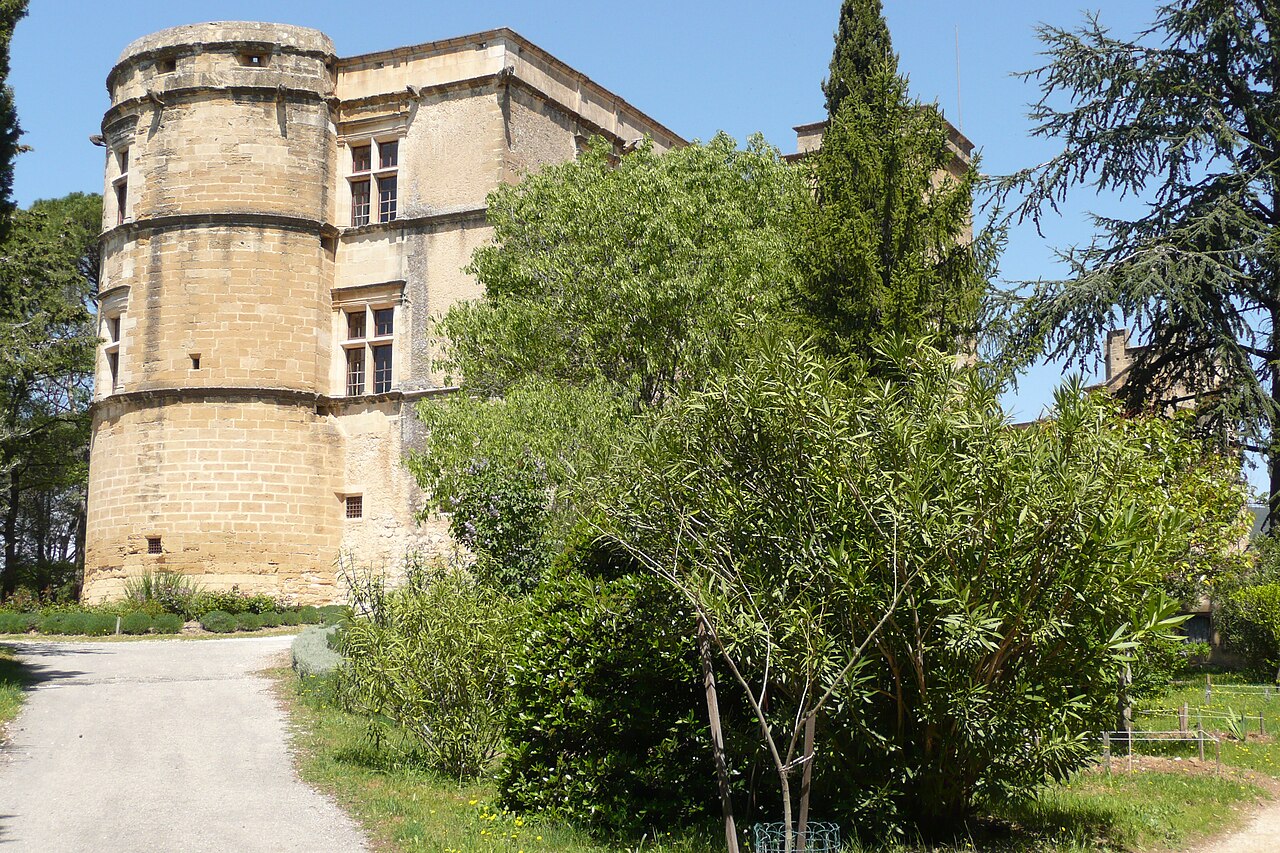
Château d'Ansouis
Château d'Ansouis stands as a remarkable example of a medieval fortress that evolved into an elegant residence over centuries. Located in the village of Ansouis in the Provence region of France, this castle's history spans more than a millennium, beginning as a strategic stronghold guarding the Aigues Valley. Its origins date back to the 10th century, when it was first constructed as a defensive fortress to control the surrounding territory and protect the region from invasions.
Medieval origins and military architecture
The initial structure of Château d'Ansouis was primarily built for military purposes, typical of early medieval fortifications. It featured robust defensive elements such as thick stone walls, a commanding position on elevated ground, and limited access points to deter attackers. The castle's location allowed it to oversee important routes through the valley, making it a key point of control in the region.
During the 12th and 13th centuries, the castle underwent significant modifications that softened its purely military appearance. These renovations introduced more refined architectural elements, including the addition of an elegant southern façade that contrasted with the fortress's austere origins. This period corresponds to the high medieval era, during which the castle was owned by influential noble families such as the Forcalquiers and later the Counts of Provence.
Transformation into a noble residence
Following the Wars of Religion in the late 16th century, Château d'Ansouis began its transformation from a fortress into a more gracious and comfortable residence. The military function diminished as the region stabilized, and the castle's owners focused on enhancing its livability and aesthetic appeal. This transition is evident in the addition of decorative elements and the development of surrounding gardens and terraces.
By the 17th century, the castle had acquired extensive gardens and terraces, reflecting the tastes of the period and the desire for leisure spaces integrated with the residence. The Escalis family owned the property in the 18th century, followed by the Villeuneuves, who enriched the interiors with intricate plasterwork. This decorative style is associated with the elegant Aix style of the Enlightenment era, showcasing aristocratic refinement and artistic craftsmanship.
19th and 20th century restoration and preservation
In the 19th century, the Sabran-Pontevès family undertook important restoration efforts to preserve Château d'Ansouis from decline. Their work ensured the survival of the castle's historical character while adapting it to contemporary needs. The estate and grounds were officially registered as protected heritage in 1948 by the Duchess of Sabran-Pontevès, highlighting its cultural significance in Provence.
Today, the château remains privately owned and has been carefully restored to maintain its architectural integrity. Visitors can explore the castle through guided tours, which provide access to the grand staircase, lavishly decorated rooms, and detailed plasterwork that illustrate the castle's evolution from a medieval fortress to an aristocratic residence. The surrounding lush gardens, groves, and terraces offer a serene environment that complements the historical ambiance.
Architectural features and style
Château d'Ansouis exhibits a blend of architectural styles reflecting its long history. The original fortress elements include thick defensive walls and a strategic hilltop location typical of high medieval hill castles. The later additions display characteristics of the Renaissance and Enlightenment periods, particularly in the refined southern façade and interior decoration.
The castle's layout includes a central courtyard, surrounded by living quarters and defensive structures. The grand staircase is a notable feature, connecting the various levels of the residence. Decorative plasterwork and period furnishings inside the château reveal the tastes and lifestyles of the noble families who inhabited it, especially during the 17th and 18th centuries.
Gardens and terraces
The extensive gardens and terraces surrounding Château d'Ansouis were developed primarily in the 17th century and later enhanced in the 18th century. These outdoor spaces were designed for leisure and social activities, incorporating formal garden layouts and natural groves. They provide picturesque views of the Provence countryside and contribute to the castle's charm.
Visiting château d'ansouis today
The château is open to the public for guided tours, typically conducted in French, lasting between one to one and a half hours. These tours offer insights into the castle's history, architecture, and the lives of its former inhabitants. Visitors can admire the intricate plasterwork, explore the lavish interiors, and enjoy the peaceful gardens.
Access to the castle is by reservation, especially during school holidays and for group visits. The private ownership ensures careful maintenance and preservation, making Château d'Ansouis a valuable cultural landmark in the Provence-Alpes-Côte d'Azur region. It represents a rare example of a castle that has transitioned from a medieval fortress to a refined noble residence while retaining its historical essence.
Frequently asked questions (FAQ)
- How do I get to Château d'Ansouis?
- Château d'Ansouis is located in the charming village of Ansouis in the Provence region of France. You can reach it by car, and there is parking available nearby. If using public transport, the nearest train station is in Pertuis, from where you can take a taxi or bus to the castle.
- What is the historical significance of Château d'Ansouis?
- Château d'Ansouis dates back to the 10th century and is a remarkable example of medieval architecture in Provence. It has been home to various noble families over the centuries and played a vital role in local history. The castle has been beautifully restored and is now a testament to France's rich heritage.
- When was Château d'Ansouis built?
- The construction of Château d'Ansouis began in the 10th century, with significant renovations occurring in subsequent centuries. The castle reflects different architectural styles, showcasing its evolution over time. Its impressive structure offers insights into medieval life and defense mechanisms.
- Can I take guided tours of Château d'Ansouis?
- Yes, guided tours are available at Château d'Ansouis, providing visitors with in-depth knowledge about its history and architecture. The tours are led by knowledgeable guides who share fascinating stories and insights. It’s recommended to book in advance, especially during peak tourist seasons.
- Why is Château d'Ansouis a popular tourist destination?
- Château d'Ansouis attracts visitors for its stunning architecture, beautiful gardens, and rich history. The picturesque views of the surrounding countryside further enhance its appeal. Additionally, the castle often hosts cultural events and exhibitions, making it a vibrant part of the local community.
- Is it possible to visit the gardens at Château d'Ansouis?
- Yes, visitors can explore the beautifully landscaped gardens of Château d'Ansouis, which are an integral part of the castle experience. The gardens feature a variety of plants and stunning views of the Luberon landscape. They are perfect for a leisurely stroll after exploring the castle's interior.
- What are the opening hours for Château d'Ansouis?
- Château d'Ansouis is typically open to visitors from April to October, with specific hours that may vary by season. It is advisable to check the official website for the most current opening hours before your visit. Special hours may apply during holidays or for private events.
- What are the ticket prices for visiting Château d'Ansouis?
- Ticket prices for Château d'Ansouis vary depending on age and whether guided tours are included. Generally, adult tickets are around €8, while reduced rates apply for students and children. It's best to check the official website for any special promotions or family packages.
- When is the best time to visit Château d'Ansouis?
- The best time to visit Château d'Ansouis is during the spring and early autumn months when the weather is pleasant, and the gardens are in full bloom. These seasons offer a more enjoyable experience with fewer crowds. Additionally, visiting during special events or exhibitions can enhance your experience.
- Are there any nearby attractions to visit along with Château d'Ansouis?
- Yes, the area surrounding Château d'Ansouis is rich in attractions, including the picturesque village of Lourmarin and the stunning Luberon Regional Park. You can also explore local vineyards and enjoy wine tasting experiences. Each of these sites adds to the charm of your visit to the Provence region.
Information
Loading map...
Visitor reviews
No reviews yet. Been here? Write the first review and help other travelers!
Write the first reviewVisited this castle? Share your experience
Your review helps other travelers and adds first-hand knowledge to our encyclopedia.