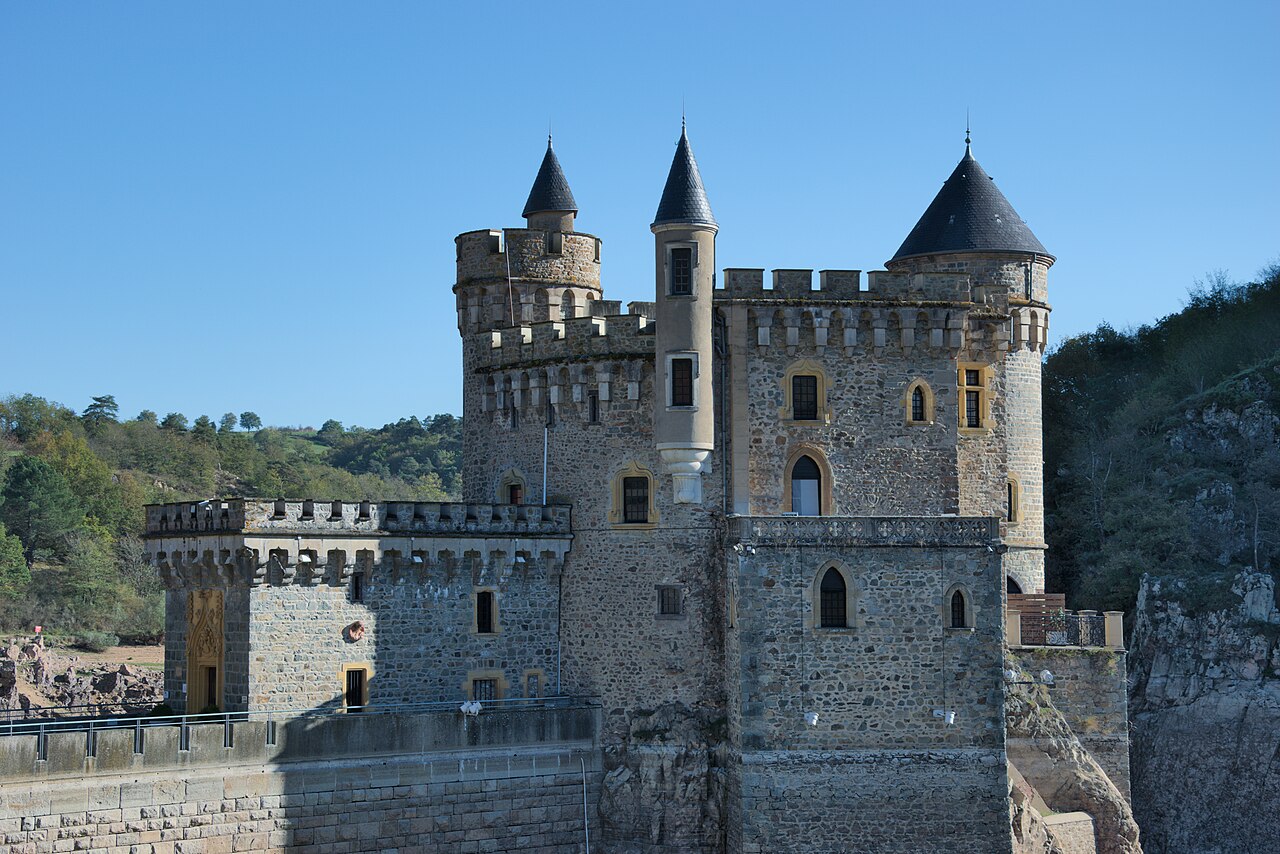
Chassignol Castle
Chassignol Castle, or Château de Chassignol, is a historic Renaissance manor located in the hamlet of Chassignol within the Loire department of France. This castle reflects the architectural and feudal history of the region, standing as a notable example of a rural French manor house with distinctive features from the 16th century and later modifications in the 19th century.
Historical background and feudal context
The castle originated as the center of the barony of Chassignol, which was a fiefdom subordinate to the neighboring Count of Ailly. This relationship situates the castle within the feudal hierarchy of the region during the Renaissance period. The initial construction phase dates back to the 16th century, a time when many such manors were built or renovated to reflect the changing tastes and defensive needs of the era.
Architectural features and layout
The castle's layout is characterized by a roughly square plan constructed primarily of regional red brick and stone, materials typical of the Loire region. The original structure included two prominent round towers capped with cone-shaped roofs, which are emblematic of rural French manor houses. These towers anchored the front corners of the building, providing both defensive and aesthetic functions.
In the mid-19th century, around 1850, the castle underwent significant expansion, effectively doubling its surface area. This renovation introduced a Renaissance facade that enhanced the manor's stylistic expression. Two additional towers were added during this period: one round and capped like the originals, and another square tower featuring crenellations and a platform accessible via a wooden staircase. These additions reflect the 19th-century romantic revival of medieval architectural elements.
Roof modifications and preservation
The castle's three round towers originally had distinctive roofs, but after World War I, two of these roofs were destroyed and subsequently replaced with simpler designs. Despite these changes, the castle retains much of its historic character and regional architectural identity.
Current status and accessibility
Today, Chassignol Castle remains privately owned and is not open to the public. However, it is easily visible from the adjacent public road, allowing visitors to appreciate its exterior and setting within the Loire countryside. Its preservation as a private residence helps maintain its structural integrity, though it limits direct public engagement with the site.
Significance within regional heritage
The castle exemplifies the evolution of French rural manorial architecture from the Renaissance through the 19th century. Its combination of red brick and stone construction, round and square towers, and the interplay between defensive and residential functions illustrate the architectural trends and social history of the Loire region. Chassignol Castle stands as a tangible link to the feudal past and the stylistic transitions that shaped French country estates.
Frequently asked questions (FAQ)
- Can I visit Chassignol Castle?
- Chassignol Castle is privately owned and not open to the public. Visitors can view the castle from the nearby public road but cannot enter the property.
- When was Chassignol Castle originally built?
- The oldest parts of Chassignol Castle date back to the 16th century, reflecting its origins in the Renaissance period.
- What are the distinctive architectural features of Chassignol Castle?
- The castle features a roughly square layout built of regional red brick and stone, with two original round towers capped with cone-shaped roofs typical of rural French manor houses.
- What changes were made to the castle in the 19th century?
- Around 1850, the castle was expanded, doubling its surface area and adding a Renaissance facade along with two new towers, including a square crenellated tower with a platform.
- Why were some of the tower roofs replaced after World War I?
- Two of the three round tower roofs were destroyed during World War I and replaced with simpler roofs, altering the original silhouette of the castle.
Information
Current owner
Private owner
Address
Rte de Chassignol, France
Loading map...
Visitor reviews
No reviews yet. Been here? Write the first review and help other travelers!
Write the first reviewVisited this castle? Share your experience
Your review helps other travelers and adds first-hand knowledge to our encyclopedia.