Castle of La Roche

Castle of la roche in saint-priest-la-roche, france
Saint-Priest-la-Roche, France
High Medieval (11th–13th c.)
Restored

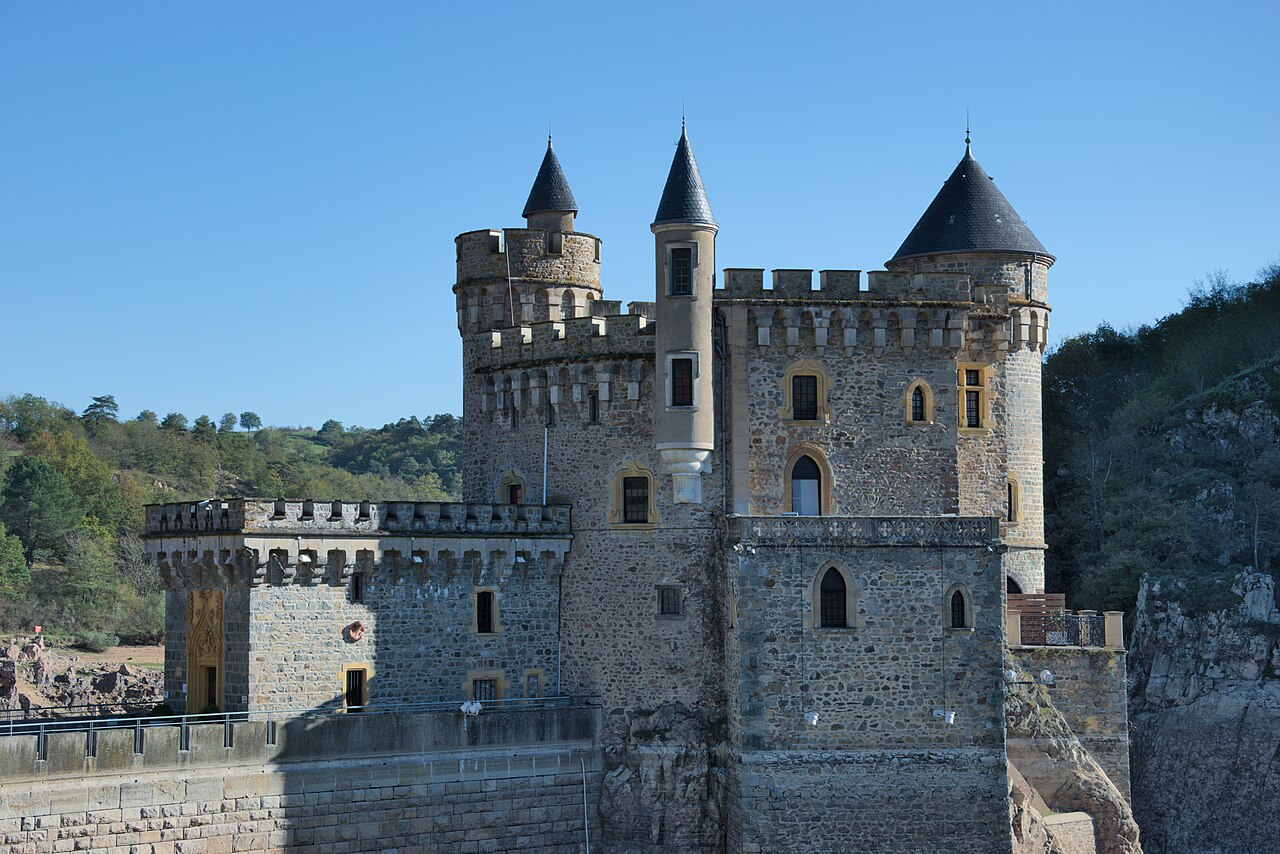
The castle of La Roche, located in Saint-Priest-la-Roche in France, is a remarkable example of a high medieval fortress built in the 13th century. This historic castle is uniquely situated on a rocky island in the lake formed by the Villerest dam, which now surrounds the site with water, enhancing its defensive position and picturesque setting.

Strategic location and early history

The earliest written records of the castle date back to 1260. It was constructed on a rocky platform rising approximately 30 metres above the Loire river. This vantage point allowed the castle to serve as a critical watchpoint over the river and its surrounding territory. Its position was strategic for monitoring river traffic and for the collection of tolls, as it marked a border within the County of Forez.

As a border fortress, the castle played a significant role in regional control during the high medieval period. Its commanding views over the Loire made it an ideal location for surveillance and defense, although it was more frequently challenged by natural forces than by military attacks.

Architectural features and defensive design

The castle's construction on a rocky island provided natural defenses, supplemented by robust stone walls and traditional medieval fortifications. The rocky outcrop and the surrounding waters created a natural moat, enhancing its defensive capabilities. While specific architectural details are limited, the castle likely featured typical medieval defensive elements such as battlements, towers, and a gatehouse to control access.

The castle's design reflects the military architecture of the high medieval era, focusing on surveillance and territorial control rather than extensive residential amenities. Its position and construction were intended primarily for defense and control of the river passage.

Challenges from the natural environment

Unlike many castles that faced frequent sieges, the castle of La Roche was more often threatened by the flooding of the Loire river. The Loire's dynamic flow and seasonal floods posed a persistent risk to the structure. Even after the construction of the Villerest dam, which created the lake that now surrounds the castle, flooding remained a concern.

Notably, the castle suffered from significant flood events in 2003 and 2008, which demonstrated the ongoing vulnerability of this historic site to natural water forces despite modern flood regulation efforts. These events have underscored the challenges in preserving a castle so closely intertwined with the river's ecosystem.

Restoration and current status

The castle has been restored to preserve its historical and architectural significance. Restoration efforts have aimed to maintain the castle's structural integrity and its unique setting on the island. Today, it stands as a well-preserved example of a high medieval fortress adapted to a distinctive natural environment.

Visitors to the castle can appreciate its scenic location, commanding views over the Loire, and the historical importance of its role in regional defense and river control. The castle of La Roche remains a symbol of medieval military architecture and the enduring relationship between human settlement and natural waterways.

Cultural and heritage significance

The castle is an important cultural landmark in the Auvergne-Rhône-Alpes region, reflecting the medieval history of the County of Forez and the strategic importance of the Loire river in French history. It attracts visitors interested in medieval architecture, regional history, and the natural beauty of its lakeside setting.

Its preservation and restoration contribute to the understanding of medieval fortifications and the challenges posed by natural forces to historical monuments. The castle of La Roche is a testament to the resilience of medieval construction and the ongoing efforts to protect heritage sites in flood-prone areas.

Frequently asked questions (FAQ)

How do I get to the Castle of La Roche?
The Castle of La Roche is located in Saint-Priest-la-Roche, France, easily accessible by car via the A72 motorway. Public transport options may be limited, so checking local bus schedules or considering a taxi service is recommended for convenience.
What is the historical significance of the Castle of La Roche?
The Castle of La Roche dates back to the 14th century and has played a pivotal role in the region's history, serving as a defensive structure during various conflicts. Its architecture reflects the medieval style, showcasing the strategic importance of castles in protecting territories during that era.
When was the Castle of La Roche last renovated?
The Castle of La Roche underwent significant restoration in the late 20th century, preserving its historical features while enhancing its structural integrity. These renovations have enabled the castle to open its doors to visitors, allowing them to explore its rich history.
Can I take guided tours of the Castle of La Roche?
Yes, guided tours are available and are highly recommended for a deeper understanding of the castle's history and architecture. Tours typically include insights from knowledgeable guides who share fascinating stories about the castle and its significance.
Why is the Castle of La Roche a popular tourist destination?
The Castle of La Roche is popular for its stunning architecture and picturesque views of the surrounding landscape. Additionally, its rich history and well-preserved structures make it an attractive destination for history enthusiasts and families alike.
Is it possible to host events at the Castle of La Roche?
Yes, the Castle of La Roche offers facilities for hosting various events, including weddings and corporate gatherings. The unique setting provides a memorable backdrop, and interested parties should contact the castle administration for availability and details.
What are the opening hours for the Castle of La Roche?
The Castle of La Roche is typically open to visitors from Tuesday to Sunday, with specific opening hours varying by season. It's advisable to check the official website or contact the castle directly for the most current hours before planning your visit.
What are the ticket prices for visiting the Castle of La Roche?
Ticket prices for the Castle of La Roche vary depending on age and group size, with discounts often available for students and seniors. Children under a certain age may enter for free, making it an affordable outing for families.
When is the best time to visit the Castle of La Roche?
The best time to visit the Castle of La Roche is during the spring and early fall when the weather is mild and the surrounding landscapes are particularly beautiful. This timing also tends to avoid the peak tourist crowds of summer, allowing for a more relaxed experience.
Are there any nearby attractions to visit after the Castle of La Roche?
Yes, nearby attractions include beautiful hiking trails and other historical sites, such as the charming village of Saint-Priest-la-Roche itself. Additionally, the region is known for its local cuisine and vineyards, making it a great area to explore beyond the castle.

Information

Water Castle

Sources & official resources

Verify the information above using these authoritative references.

Loading map...

Visitor reviews

No reviews yet. Been here? Write the first review and help other travelers!

Write the first review

Visited this castle? Share your experience

Your review helps other travelers and adds first-hand knowledge to our encyclopedia.
Write a review

(5/5)

0/2000 characters

Your review will be visible after admin approval

Nearby castles

2.1 km
Château de La Roche — France castle

Château de La Roche

Saint-Priest-la-Roche, France

The Château de La Roche is a remarkable hill castle located in the commune of Saint-Priest-la-Roche in the Auvergne-Rhone-Alpes region of France. Perched atop a rocky spur rising more than 40 meters above a sharp bend in the Loire River, this fortress commands a strategic viewpoint that historically controlled river traffic and toll collection on the frontier of the County of Forez. The earliest known mention of the castle dates back to 1260, marking it as a medieval fortification built primarily of stone. Its elevated position on a rocky peak was chosen for defensive advantage and surveillance over the vital Loire waterway. The castle's role as a frontier outpost was solidified in 1290 when Girard de La Roche pledged fealty to the Count of Forez, establishing the La Roche family’s lordship over the site. Medieval origins and strategic importance Constructed during the high medieval period, Château de La Roche was designed to serve both military and administrative functions. Its primary purpose was to monitor river traffic and collect tolls, a critical source of revenue and control for the County of Forez. The castle's location on a rocky promontory provided natural defenses, with steep cliffs on multiple sides making direct assault difficult. The fortress likely featured typical medieval defensive elements such as stone curtain walls, battlements, and a keep or donjon, though specific architectural details from the original construction are scarce. The castle's commanding view of the Loire allowed its occupants to spot approaching threats or commercial vessels from a distance, reinforcing its role as a border stronghold. Decline and transformation in the early modern era Throughout the 17th century, the castle endured repeated flooding from the Loire River, which gradually undermined its structural integrity. Unlike enemy sieges, the natural threat of flooding was a persistent challenge that diminished the castle's military and residential appeal. By the 19th century, the fortress had fallen into ruin, its defensive purpose obsolete and its fabric deteriorated by water damage and neglect. Neo-gothic restoration and 20th-century challenges In the early 20th century, the castle experienced a revival when Paul Roustan, a wealthy industrialist from Roanne, purchased the property. He undertook a significant restoration, transforming the medieval ruins into a neo-Gothic residence. This restoration introduced stylistic elements characteristic of the Gothic revival movement, including pointed arches, decorative stonework, and perhaps ornamental battlements, reshaping the castle into a romanticized version of its medieval past. This period marked a shift from military fortress to private home, reflecting broader trends in castle restoration during the era, where historic ruins were adapted for residential and aesthetic purposes. Impact of the villerest dam and preservation efforts The construction of the Villerest Dam in the 1930s by Électricité de France (EDF) posed a new threat to the castle. The dam's reservoir was set to flood the surrounding valley, potentially submerging the castle. EDF acquired the property in 1965 but did not maintain it, leading to further deterioration and episodes of looting. When the dam became operational in April 1984, the castle was uniquely spared from inundation, becoming an island surrounded by the reservoir’s waters. This isolation altered the castle’s context dramatically, turning it into a striking landmark within the dam's artificial lake. Recognizing its cultural and historical value, the municipality of Saint-Priest-la-Roche purchased the castle in 1993 for a symbolic franc. Extensive restoration work was completed by 1996, including structural repairs and adaptations to ensure the castle remained accessible despite fluctuating water levels. The dam’s water management was adjusted to maintain a lower level around the castle, allowing year-round access via a permanent bridge connecting the island to the mainland. Architecture and current condition Today, Château de La Roche stands as a well-preserved example of a hill castle that has evolved through centuries of use, damage, and restoration. The castle’s stone construction and elevated position remain defining features, while the neo-Gothic renovations add a layer of architectural interest that reflects early 20th-century tastes. The castle’s layout likely includes a combination of defensive walls, towers, and residential quarters, though much of the original medieval fabric has been modified or rebuilt. Its survival amidst periodic flooding in 2003 and 2008 attests to the resilience of the restoration efforts and ongoing local stewardship. The castle as a cultural landmark Château de La Roche is not only significant for its medieval origins but also as a symbol of adaptation and preservation in the face of environmental and infrastructural changes. Its transformation from a medieval fortress to a neo-Gothic residence and finally to a protected historic site on an island illustrates the dynamic history of French castles and their enduring cultural importance. Visiting and accessibility The castle is accessible to visitors year-round thanks to the controlled water levels maintained by EDF and the municipality. A bridge provides reliable access to the island, allowing tourists to explore the castle’s exterior and appreciate its dramatic setting on the Loire. While the interior access and visitor facilities may be limited, the castle’s picturesque location and historical ambiance make it a valuable destination for those interested in medieval architecture, French history, and river landscapes. In summary, Château de La Roche embodies the layered history of a medieval fortress adapted through centuries of change. Its strategic location, architectural evolution, and survival amidst modern challenges make it a fascinating subject for historians, architects, and visitors alike.

High Medieval (11th–13th c.)
Details
7.8 km

Chassignol Castle

Rte de Chassignol, France

Chassignol Castle, or Château de Chassignol, is a historic Renaissance manor located in the hamlet of Chassignol within the Loire department of France. This castle reflects the architectural and feudal history of the region, standing as a notable example of a rural French manor house with distinctive features from the 16th century and later modifications in the 19th century. Historical background and feudal context The castle originated as the center of the barony of Chassignol, which was a fiefdom subordinate to the neighboring Count of Ailly. This relationship situates the castle within the feudal hierarchy of the region during the Renaissance period. The initial construction phase dates back to the 16th century, a time when many such manors were built or renovated to reflect the changing tastes and defensive needs of the era. Architectural features and layout The castle's layout is characterized by a roughly square plan constructed primarily of regional red brick and stone, materials typical of the Loire region. The original structure included two prominent round towers capped with cone-shaped roofs, which are emblematic of rural French manor houses. These towers anchored the front corners of the building, providing both defensive and aesthetic functions. In the mid-19th century, around 1850, the castle underwent significant expansion, effectively doubling its surface area. This renovation introduced a Renaissance facade that enhanced the manor's stylistic expression. Two additional towers were added during this period: one round and capped like the originals, and another square tower featuring crenellations and a platform accessible via a wooden staircase. These additions reflect the 19th-century romantic revival of medieval architectural elements. Roof modifications and preservation The castle's three round towers originally had distinctive roofs, but after World War I, two of these roofs were destroyed and subsequently replaced with simpler designs. Despite these changes, the castle retains much of its historic character and regional architectural identity. Current status and accessibility Today, Chassignol Castle remains privately owned and is not open to the public. However, it is easily visible from the adjacent public road, allowing visitors to appreciate its exterior and setting within the Loire countryside. Its preservation as a private residence helps maintain its structural integrity, though it limits direct public engagement with the site. Significance within regional heritage The castle exemplifies the evolution of French rural manorial architecture from the Renaissance through the 19th century. Its combination of red brick and stone construction, round and square towers, and the interplay between defensive and residential functions illustrate the architectural trends and social history of the Loire region. Chassignol Castle stands as a tangible link to the feudal past and the stylistic transitions that shaped French country estates.

Renaissance (15th–17th c.)
Details
14.2 km

Roanne Castle

Roanne, France

Roanne Castle, known locally as Château de Roanne, is a historic medieval fortress located in the center of the town of Roanne in the Loire department of France. The castle's origins trace back to the early 13th century, with the earliest recorded mention dating to 1205 when King Philip II Augustus confirmed marriage agreements involving the grandchildren of the Count of Forez and the children of Guy de Dampierre, Lord of Bourbon. This early documentation highlights the castle's significance in regional noble alliances and territorial control. The castle was initially constructed by Bérard de Roanne, who held the title of Lord of Crozet. By the mid-13th century, the castle had become a recognized feudal stronghold, as evidenced in around 1260 when Damas de Roanne paid homage for the castle to the Count of Forez. This act underscored the castle's strategic importance in the region, serving both as a defensive structure and a symbol of feudal authority. Medieval fortifications and architectural features During the late 13th and early 14th centuries, significant fortifications were added to Roanne Castle. The complex featured a fortified enclosure with multiple towers, a drawbridge, and a moat fed by nearby marshes. These defensive elements were typical of late medieval military architecture in France, designed to protect the keep and its inhabitants from siege warfare and raids. The castle's keep, which remains the most prominent surviving structure, rises to a height of approximately 20 meters. Its design closely resembles that of the keep at Lespinasse Castle, featuring robust stone construction and a rectangular plan that was common in 14th-century fortifications. The keep would have served as the last refuge during attacks and housed the lord's living quarters and administrative rooms. Role in the town and later history By the late 14th century, the region experienced increased insecurity, prompting the construction of new town walls around Roanne Castle. These walls enclosed a settlement that developed near the keep, indicating the castle's central role in local defense and urban development. The castle thus functioned not only as a military fortress but also as a nucleus for the growing community. From around 1674, Roanne Castle took on a judicial role, serving as the seat of justice. It also housed a departmental prison until 1810, when the castle was abandoned for this purpose. Over time, the castle's defensive walls disappeared, and the structure fell into disrepair. Restoration and current status In 1845, the castle was purchased by Jean-Étienne de Saint-Thomas, a former senior officer and inspector of Historical Monuments in the Loire. By this time, much of the castle's walls had vanished, but Saint-Thomas undertook restoration work, focusing primarily on the keep. His efforts preserved the key medieval element of the castle, allowing it to survive into the modern era. The castle remained in the Saint-Thomas family until 1997, when it was acquired by the municipality of Roanne. Today, visitors can see the well-preserved keep alongside a bent section of the original walls, which have been incorporated into a residential building known as the Maison des Remparts. Opposite the keep stands the Saint-Étienne church, which evolved from the medieval castle chapel, linking the site’s religious and feudal past. Architectural significance and heritage Roanne Castle is a notable example of a late medieval fortified castle in central France. Its surviving keep demonstrates typical 14th-century military architecture with strong defensive features designed to withstand sieges. The castle's evolution from a feudal stronghold to a seat of justice and prison reflects broader social and political changes in France from the medieval period through the early modern era. The integration of the castle remains into the urban fabric of Roanne, particularly the incorporation of the walls into the Maison des Remparts, illustrates the adaptive reuse of medieval structures in later centuries. The proximity of the Saint-Étienne church, derived from the castle chapel, further emphasizes the castle’s historical role as a center of both secular and ecclesiastical power. Today, Roanne Castle stands as a cultural landmark within the Loire region, attracting visitors interested in medieval architecture, French history, and heritage preservation. Its restored keep and surviving fortifications offer valuable insights into the defensive strategies and feudal society of the late Middle Ages.

Late Medieval (14th–15th c.)
Details

