Chałupki
Chałupki palace castle stands as a remarkable historic monument in Chałupki, Poland, embodying centuries of architectural evolution and noble heritage. Originally established as a wooden defensive stronghold in the early medieval period, it guarded a vital ford on the Oder River. This site’s strategic importance is underscored by its early role in regional defense and control of river crossings.
The earliest fortification here, likely constructed in the mid-13th century, is traditionally attributed to the knight Henryk z Baruthu from Upper Lusatia around 1247. Known then as Barutswerde, the fortress and surrounding lands were part of the holdings of the dukes of Opole-Racibórz. These lands were often granted as fiefs to loyal knights, reflecting the feudal structure of the High Medieval era. By the late 13th century, the fortress on the right bank of the Oder and the left-bank town of Bogumin were incorporated into the Duchy of Racibórz.
The medieval fortress and early history
The first documented mention of the castle dates to 1373, when Duke Jan of Racibórz granted the castle, the town of Bogumin, and half of the village Zabełków as a fief to the knight Pasko. Unfortunately, the absence of detailed historical, architectural, and archaeological research leaves many questions about the castle’s original medieval appearance unanswered, including the timing of the transition from wooden to stone fortifications.
In 1422, Duke Jan II the Iron sold Barutswerde to the knight Bielik of Kornica. Ownership changed hands multiple times in the following decades, reflecting the turbulent political landscape. By 1523, the castle was purchased by Margrave George Frederick of Hohenzollern-Ansbach, known as "the Pious." During this period, the threat of Turkish invasions across Europe prompted significant military upgrades, possibly including the construction of bastion fortifications to strengthen the castle’s defenses.
Early modern transformations and baroque rebuilding
The Thirty Years' War (1618–1648) led to the loss of Hohenzollern possessions in Upper Silesia, including the Bogumin lands. In 1623, the Habsburgs pawned Bogumin to the influential Donnersmarck family. By 1697, the estate was elevated to the status of a territorial state. Around 1682, Eliasz Andrzej Donnersmarck inherited Bogumin and undertook a major transformation of the old border castle into a baroque palace. This reconstruction preserved elements of the medieval fortress while introducing the elegant architectural language of the Baroque period.
Following the Silesian Wars and the division of Silesia in 1742, Bogumin came under Habsburg control, while the castle itself fell under the reign of Prussian King Frederick II the Great. The estate changed ownership several times in the 19th century, passing through the hands of Charles Lichnowski and eventually to the prominent banking family, the Rothschilds, in 1846. The Rothschilds maintained ownership until 1936 and carried out renovations in the early 20th century that preserved the palace’s historic character.
20th century to present: preservation and adaptive reuse
After the Rothschild era, the castle became the property of Baroness von Rotkirch Kirchen und Pancken. Post-World War II, in 1945, the palace was nationalized. Neglected for some years, it was not until the 1970s that the building underwent significant restoration and was adapted for use as a hotel.
In 1993, ownership transferred to the municipality of Krzanowice, and today the palace remains in private hands, continuing to operate as a hotel. Despite various modifications, the palace retains its baroque appearance and incorporates remnants of earlier structures within its walls.
Architectural features and landscape
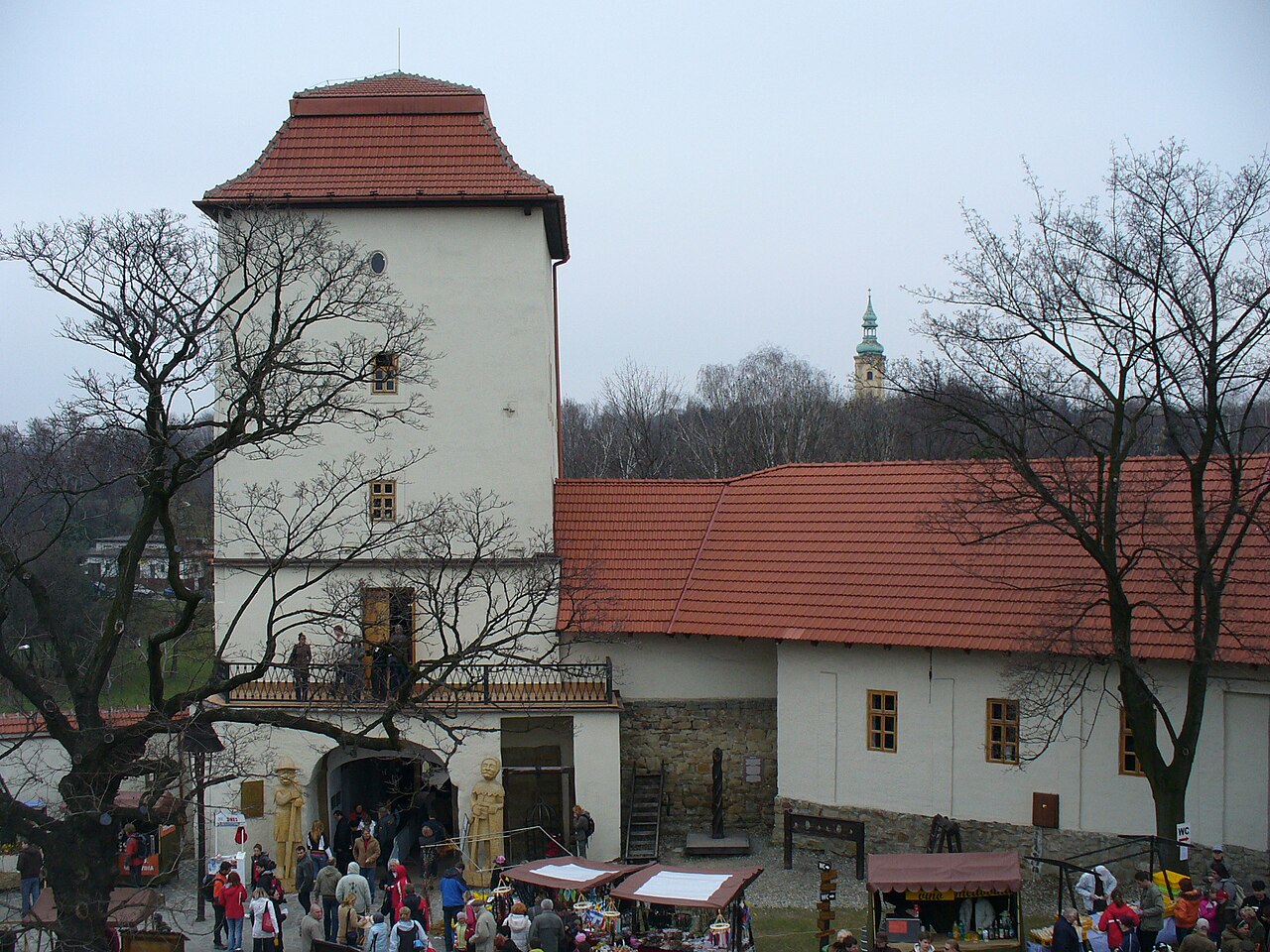
The palace is a two-story rectangular building with a distinctive cylindrical tower located at the northwest corner. The outline of the former moat is still clearly visible, encircling the castle and hinting at its defensive origins. Surrounding the palace is a landscape park with mature trees, established after the leveling of the bastion fortifications. Some remnants of these bastions remain visible, offering insight into the castle’s military past.
The castle’s evolution from a medieval fortress to a baroque palace reflects broader regional historical trends, including the shifting control between local dukes, Habsburgs, and Prussians. Its preservation and adaptive reuse as a hotel allow visitors to experience a tangible connection to the layered history of Upper Silesia and the architectural heritage of Poland.
Legacy and cultural significance
Chałupki palace castle is an important cultural landmark that illustrates the fusion of medieval defensive architecture with baroque residential elegance. It stands as a testament to the region’s complex history of territorial disputes, noble patronage, and architectural innovation. The castle’s enduring presence offers valuable insights into the social and political dynamics of Silesia from the Middle Ages through modern times.
Visitors today can explore the preserved baroque interiors and enjoy the scenic parkland, gaining a deeper appreciation for the castle’s historical context and architectural evolution. The site’s continued use as a hotel ensures its upkeep and accessibility, contributing to the preservation of Poland’s rich heritage.
Frequently asked questions (FAQ)
- When was Chałupki castle originally built?
- Chałupki castle was originally established as a wooden defensive stronghold around the year 1247, attributed to the knight Henryk z Baruthu.
- What architectural styles are visible at Chałupki castle?
- The castle showcases a blend of medieval defensive features and baroque architectural elements, especially visible in its 17th-century reconstruction.
- Can visitors stay overnight at Chałupki castle?
- Yes, the castle currently functions as a hotel, allowing guests to experience its historic ambiance firsthand.
- Who were some notable owners of Chałupki castle?
- Notable owners include the dukes of Opole-Racibórz, the Hohenzollern family, the Donnersmarck family, and the Rothschild banking dynasty.
- Is the original medieval structure still visible at Chałupki castle?
- While the castle has undergone significant baroque remodeling, remnants of the earlier medieval fortifications are still preserved within the structure.
Information
Current owner
Private owner
Loading map...
Visitor reviews
No reviews yet. Been here? Write the first review and help other travelers!
Write the first reviewVisited this castle? Share your experience
Your review helps other travelers and adds first-hand knowledge to our encyclopedia.