Ceneviz Castle
Ceneviz Castle, also known locally as Ceneviz Kalesi or Akçakoca Kalesi, is a significant medieval fortress located near the town of Akçakoca in the province of Düzce, Turkey. Perched on a high cliff along the Black Sea coast, this castle commands strategic views over two bays, highlighting its historical importance as a maritime defensive stronghold. The castle's name, "Ceneviz," meaning "Genoese" in Turkish, reflects its likely origins with the Genoese traders who established a network of coastal fortifications between the 11th and 15th centuries to protect their commercial interests in the region.
Historical context and origins
The exact origins of Ceneviz Castle remain somewhat ambiguous due to limited contemporary records. However, prevailing scholarly consensus suggests that it was constructed in the 15th century by the Genoese, who were prominent maritime traders along the Black Sea. Their fortifications typically combined local building materials with distinctive Genoese architectural features, a pattern evident in this castle's construction. Some alternative theories propose that the castle may have been built or restored during the period of the Latin Empire (1204–1261), following the Fourth Crusade and the conquest of Constantinople, reflecting the complex political control of the Black Sea coast during that era.
During its active use, the castle served as a critical defensive and commercial hub for the harbor town of Diapolis, now modern Akçakoca. It was part of a network of fortifications safeguarding Genoese trade routes and local settlements. Historical accounts also mention the settlement of Christian refugees of Turkic origin in the area, likely tasked with protecting the town and castle approaches, underscoring the multicultural and contested nature of the region.
Architectural features and layout
Ceneviz Castle is classified as a hill castle, built primarily of rubble masonry combined with roof tiles, bricks, and mortar, materials characteristic of Genoese coastal fortresses. The castle's position on a rocky cliff projecting into the sea allowed it to guard two bays, providing excellent natural defense and control over maritime traffic.
The fortress features a roughly square ground plan with notable defensive elements including two hexagonal towers positioned at opposite corners. These towers likely served as lookout points and platforms for archers or artillery, overseeing both the sea and the land approaches. Within the castle's courtyard lies a large cistern, approximately 5.3 meters in diameter, designed to collect and store rainwater, essential for sustaining the garrison during sieges or prolonged isolation.
The castle walls, though now partially ruined, exhibit the typical medieval defensive architecture with battlements and embrasures adapted for the use of firearms, suggesting modifications or restorations possibly carried out in the late medieval or early Ottoman periods. The presence of such features indicates the castle's continued military relevance over several centuries.
Comparison with nearby fortifications
Nearby, the Yoztarla Castle shares a similar architectural layout, albeit on a smaller scale, with a square plan and hexagonal towers, indicating a shared construction period and builders. This similarity reinforces the idea of a coordinated defensive network along the Black Sea coast, managed by the Genoese or their successors.
Historical significance and cultural heritage
The castle's location and construction reflect its role in the broader geopolitical struggles of the Black Sea region during the late medieval period. It stood at the crossroads of competing powers including the Genoese, the Latin Empire, the Byzantine successor states, and later the Ottomans, each vying for control of lucrative trade routes and regional dominance.
Archaeological evidence from the site indicates layers of occupation stretching back to the Hellenistic, Roman, and Byzantine periods, highlighting the area's long-standing strategic and economic importance. Today, Ceneviz Castle is recognized for its cultural and historical value, having been included on the UNESCO tentative list as part of the Genoese trade fortifications along the Black Sea, underscoring its significance as a heritage site.
Current state and visitor experience
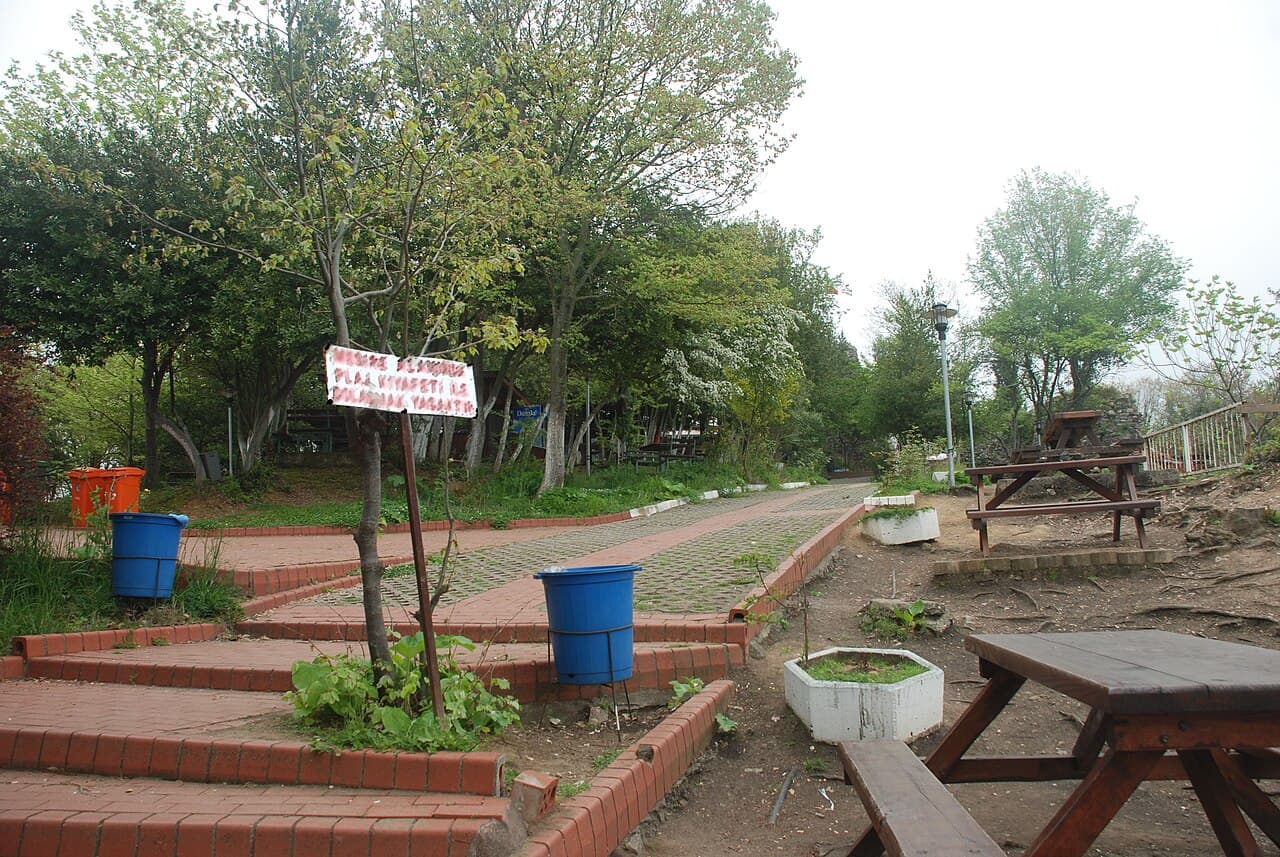
Currently, Ceneviz Castle is well preserved following recent restoration efforts that have stabilized the remaining walls and towers. The site is freely accessible to visitors and serves as a popular town park and picnic area, offering panoramic views of the sea and surrounding landscape.
The castle grounds are covered with laurel trees and other native vegetation, creating a pleasant natural setting. Visitors can explore the visible remains of the central tower, the defensive walls, and the water cistern, gaining insight into the castle's defensive capabilities and daily life during its operational period.
Nearby, the beaches on either side of the castle have been awarded Blue Flag status for their cleanliness and natural beauty, with the western beach area known as Yalıyarlar featuring distinctive coastal caves called seal reefs, adding to the appeal of the area for tourists and nature enthusiasts.
Access and amenities
The castle is easily reachable from Akçakoca town center via a short drive and a walk along marked paths. It offers a tranquil environment for hiking, photography, and historical exploration. Informational signage at the site provides context about the castle's history and architecture, enhancing the visitor experience.
Frequently asked questions
- When was Ceneviz Castle built? The castle was most likely constructed in the 15th century by the Genoese, although some sources suggest earlier origins during the Latin Empire period (1204–1261).
- What is the architectural style of Ceneviz Castle? It features typical late medieval Genoese coastal fortress architecture, with rubble masonry walls, hexagonal towers, and a large water cistern.
- Can visitors access Ceneviz Castle freely? Yes, the castle is freely accessible and serves as a public park and picnic site.
- What are the notable features of the castle? Key features include its strategic cliff-top location, two hexagonal towers, defensive walls with embrasures, and a large cistern.
- Is the castle part of a larger network of fortifications? Yes, it is associated with other Genoese fortifications along the Black Sea coast, including nearby Yoztarla Castle.
- Are there any nearby attractions? The adjacent beaches with Blue Flag status and the coastal caves at Yalıyarlar provide natural attractions close to the castle.
- What is the current condition of the castle? The castle is well preserved following recent restorations, with many structural elements still visible.
- How can I get to Ceneviz Castle? It is accessible by road from Akçakoca, followed by a short walk on forest paths to the site.
Frequently asked questions (FAQ)
- What is the historical significance of Ceneviz Castle?
- Ceneviz Castle, located in Akçakoca, Turkey, dates back to the Byzantine era and was later expanded by the Genoese. It served as a strategic stronghold for controlling maritime trade in the Black Sea region and reflects the architectural styles of its time, showcasing both military and residential features.
- When was Ceneviz Castle built?
- Ceneviz Castle was originally constructed in the 14th century, during the time of the Genoese expansion in the Black Sea. Over the centuries, it has undergone various renovations, particularly during the Ottoman period, to preserve its structure and significance.
- Is it possible to access Ceneviz Castle?
- Yes, visitors can access Ceneviz Castle, which is situated on a rocky promontory overlooking the sea. However, be prepared for some uneven terrain as you explore the castle’s grounds and historical features.
- What are the opening hours for Ceneviz Castle?
- Ceneviz Castle is typically open to visitors every day from 9 AM to 6 PM. It is advisable to check for seasonal variations or special closures before planning your visit.
- Can I take guided tours of Ceneviz Castle?
- Yes, guided tours are available and are highly recommended for a more in-depth understanding of the castle's history and architecture. Local guides can provide valuable insights and share fascinating stories about the castle’s past.
- What is the best time to visit Ceneviz Castle?
- The best time to visit Ceneviz Castle is during the spring (April to June) and fall (September to November) when the weather is mild and ideal for outdoor exploration. Summer can be quite hot, making it less comfortable for walking around the castle.
- Are there nearby attractions to Ceneviz Castle?
- Yes, nearby attractions include the beautiful beaches of Akçakoca, the scenic coastal promenade, and the historic town center. Visitors can also explore the local markets and enjoy fresh seafood in the area.
- What are the ticket prices for Ceneviz Castle?
- Entry to Ceneviz Castle is generally affordable, with tickets costing around 20 Turkish Lira. Discounts may be available for students and seniors, so be sure to ask at the ticket booth.

Information
Sources & official resources
Verify the information above using these authoritative references.
Loading map...
Visitor reviews
No reviews yet. Been here? Write the first review and help other travelers!
Write the first reviewVisited this castle? Share your experience
Your review helps other travelers and adds first-hand knowledge to our encyclopedia.



