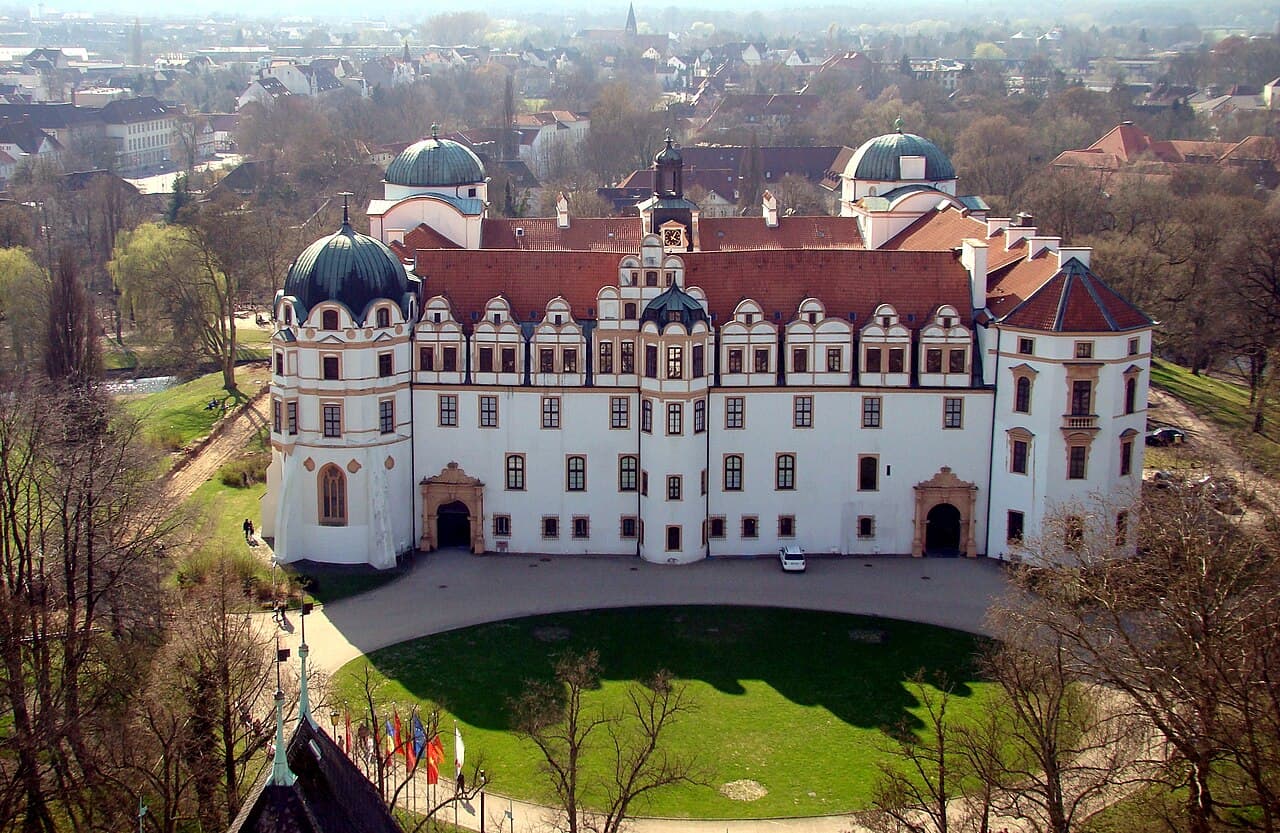
Celle Castle
Celle Castle stands as a prominent historical monument in the town of Celle, Germany, renowned for its architectural grandeur and rich heritage. As the largest castle in the southern Luneburg Heath region, it served as a significant residence of the House of Brunswick-Luneburg, a powerful noble family that played a major role in the history of northern Germany. The castle's origins trace back to the 13th century, situating it firmly within the High Medieval period, a time marked by the construction of many fortified structures across Europe.
The castle's layout is a distinctive quadrangular design, typical of medieval fortifications, featuring robust walls and strategically placed towers that reflect its defensive purpose. Over the centuries, Celle Castle evolved architecturally, incorporating elements from various periods, which is evident in its diverse rooms and halls. This blend of styles offers visitors a unique glimpse into the castle's long and varied history.
The architectural evolution of Celle Castle
Medieval foundations and fortifications
Originally constructed in the 13th century, the castle was built with the primary aim of defense and residence for the ruling family. Its High Medieval origins are visible in the thick stone walls and the overall fortress-like appearance. The quadrangular plan, with a central courtyard, was a common medieval design that facilitated both security and administrative functions.
Renaissance influences in the court chapel
One of the castle's most remarkable features is its court chapel, which underwent significant transformation following the Reformation. This chapel retains much of its original Renaissance architectural character, making it a rare and valuable example of religious architecture from this period. The chapel's preservation offers insight into the religious and cultural shifts that occurred during the 16th century.
Baroque state rooms under George William
During the reign of George William, the castle saw the addition of lavish Baroque-style state rooms. These rooms were designed to reflect the grandeur and power of the ruling house, featuring ornate decorations, intricate woodwork, and elegant furnishings. Remarkably, these state rooms have been preserved almost unchanged, allowing modern visitors to experience the opulence of Baroque court life.
Interior highlights and cultural significance
The Gothic Hall and exhibitions
The castle's Gothic Hall serves as a dynamic cultural space, hosting constantly changing exhibitions. This hall, with its medieval architectural features, provides a fitting backdrop for displays that explore various historical and artistic themes, enriching the visitor experience and connecting the past with contemporary cultural expressions.
Bomann Museum's Hanover history section
Located in the East Wing of Celle Castle is a dedicated section of the Bomann Museum, which focuses on the history of the Kingdom of Hanover. This museum section offers detailed insights into the political, social, and cultural developments of the region, complementing the castle's historical narrative and enhancing its role as a center for heritage preservation.
Historical context and legacy
The House of Brunswick-Luneburg, which made Celle Castle one of its residences, was influential in the governance and cultural development of the region. The castle not only functioned as a defensive stronghold but also as a symbol of noble authority and a hub for administrative affairs. Its preservation through the centuries allows it to stand as a testament to the region's medieval and early modern history.
Strategic location in Luneburg Heath
Situated in the southern part of the Luneburg Heath, Celle Castle's location was strategically chosen for defense and control over the surrounding territory. The heath itself is a distinctive natural landscape, which historically provided both challenges and advantages for castle construction and military strategy.
Visiting Celle Castle today
Today, Celle Castle is a well-preserved historical site that attracts visitors interested in medieval architecture, Renaissance and Baroque art, and German history. Its diverse architectural features and museum exhibitions make it a rich educational resource. Visitors can explore the castle's various rooms, halls, and museum collections, gaining a comprehensive understanding of the castle's role through the ages.
The castle's ongoing use as a cultural venue, with exhibitions in the Gothic Hall and the Bomann Museum's displays, ensures that it remains a vibrant part of Celle's cultural life. Its preservation and accessibility contribute to the appreciation of Germany's architectural and noble heritage.
Frequently asked questions (FAQ)
- How do I get to Celle Castle?
- Celle Castle is located in the heart of Celle, Germany, easily accessible by public transport. You can take a train to Celle station, which is a short walk from the castle, or drive and use the available parking facilities nearby.
- What is the historical significance of Celle Castle?
- Celle Castle dates back to the 13th century and served as a residence for the dukes of Brunswick-Lüneburg. Its rich history is reflected in its unique architecture and extensive art collections, making it a significant cultural landmark in the region.
- When was Celle Castle built?
- Celle Castle was originally constructed in 1292, undergoing various renovations and expansions throughout the centuries. The castle showcases a blend of architectural styles, including Renaissance and Baroque elements, reflecting its long history.
- Can I take guided tours of Celle Castle?
- Yes, guided tours are available for visitors, providing in-depth insights into the castle's history and architecture. These tours are led by knowledgeable guides and typically last about an hour, allowing you to explore the most significant areas of the castle.
- Why is the architecture of Celle Castle unique?
- The architecture of Celle Castle is unique due to its combination of Gothic and Renaissance styles, highlighted by its ornate facades and intricate interiors. The castle features a stunning courtyard and beautifully decorated rooms, showcasing the artistic heritage of the period.
- Is it possible to visit the castle year-round?
- Yes, Celle Castle is open for visitors throughout the year, although opening hours may vary by season. It's advisable to check the official website for the most current information on visiting hours and any potential closures for special events.
- What are the ticket prices for Celle Castle?
- Ticket prices for Celle Castle are generally affordable, with discounts available for students and seniors. Children under a certain age may enter for free, making it a great family-friendly destination.
- What is the best time to visit Celle Castle?
- The best time to visit Celle Castle is during the spring and summer months when the gardens are in full bloom and outdoor events are often held. However, visiting during autumn can also provide a beautiful backdrop with colorful foliage.
- Are there any nearby attractions to explore?
- Yes, there are several attractions near Celle Castle, including the charming old town of Celle with its half-timbered houses and the Bomann Museum. You can also enjoy a stroll along the picturesque banks of the Aller River, just a short walk from the castle.
Photo gallery

Information
Website
Visit websiteSources & official resources
Verify the information above using these authoritative references.
Loading map...
Visitor reviews
No reviews yet. Been here? Write the first review and help other travelers!
Write the first reviewVisited this castle? Share your experience
Your review helps other travelers and adds first-hand knowledge to our encyclopedia.



