Castrum bizantino di Ferrara
The historical context of Castrum Bizantino di Ferrara
Constructed during the Byzantine period, the fortress played a crucial role in controlling and defending the region around Ferrara. The Byzantine Empire, known for its extensive fortification techniques, emphasized the use of bastions to create defensive angles that allowed defenders to cover adjacent walls with crossfire. This method marked a significant evolution from earlier medieval fortifications.
The fortress likely dates back to the period when Byzantine influence extended into northern Italy, serving both military and administrative functions. Its presence in Ferrara underscores the strategic importance of the city as a frontier zone between Byzantine territories and other emerging powers in Italy.
Architectural features and defensive design
Bastioned fortifications
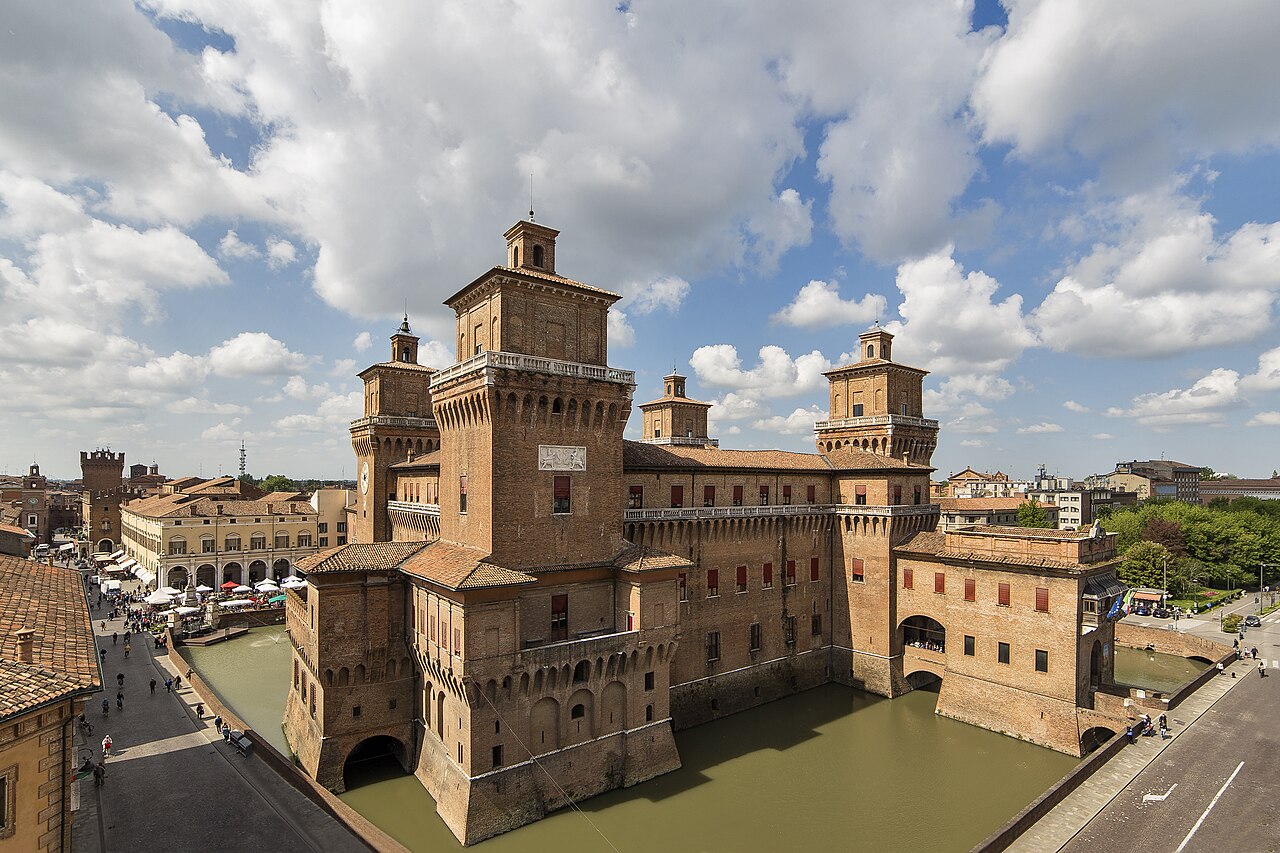
The defining characteristic of the Castrum Bizantino di Ferrara is its bastioned fortress design. Bastions are angular structures projecting outward from the main curtain walls, allowing defenders to cover the base of the walls and eliminate blind spots. This architectural innovation was crucial in the transition from high medieval castles to early modern fortresses capable of withstanding cannon fire.
Walls and materials
The fortress walls were constructed using durable materials typical of Byzantine military architecture, such as stone and brick. The walls were thick and reinforced to absorb and deflect artillery attacks. The use of brickwork in particular was a hallmark of Byzantine construction, often arranged in decorative patterns that also contributed to the structural integrity.
Additional defensive elements
Besides bastions and thick walls, the fortress likely featured other defensive elements such as moats or ditches, towers for observation and archery, and fortified gates to control access. These features combined to create a formidable defensive system adapted to the military technologies of the time.
The strategic importance of Ferrara in Byzantine times
Ferrara's location made it a key point of defense and control for the Byzantine Empire in northern Italy. The Castrum Bizantino served as a military hub to monitor and repel invasions, as well as to assert Byzantine presence in the region. The fortress's construction reflects the broader geopolitical struggles of the era, including conflicts with Lombards and later emerging Italian powers.
Preservation and current status
Today, the Castrum Bizantino di Ferrara remains a valuable historical site illustrating Byzantine military architecture. While the exact condition varies, it is recognized as a bastioned fortress that has endured through centuries. Preservation efforts focus on maintaining the structural integrity of the remaining walls and bastions to allow visitors and scholars to study this important example of Byzantine fortification.
The fortress also contributes to the cultural heritage of Ferrara, offering insights into the city's role in medieval and Byzantine history. It stands as a testament to the military engineering skills of the Byzantine Empire and its influence on Italian fortification traditions.
Frequently asked questions (FAQ)
- What is the historical significance of Castrum Bizantino di Ferrara?
- Castrum Bizantino di Ferrara is a Byzantine-era fortress that played a key role in defending northern Italy and showcasing Byzantine military architecture.
- What architectural features define Castrum Bizantino di Ferrara?
- The fortress is characterized by its bastioned design, thick stone and brick walls, and defensive elements like towers and fortified gates.
- Can visitors explore Castrum Bizantino di Ferrara today?
- The fortress remains a historical site with preservation efforts, allowing visitors and scholars to study its Byzantine fortifications.
Photo gallery

Information
Loading map...
Visitor reviews
No reviews yet. Been here? Write the first review and help other travelers!
Write the first reviewVisited this castle? Share your experience
Your review helps other travelers and adds first-hand knowledge to our encyclopedia.