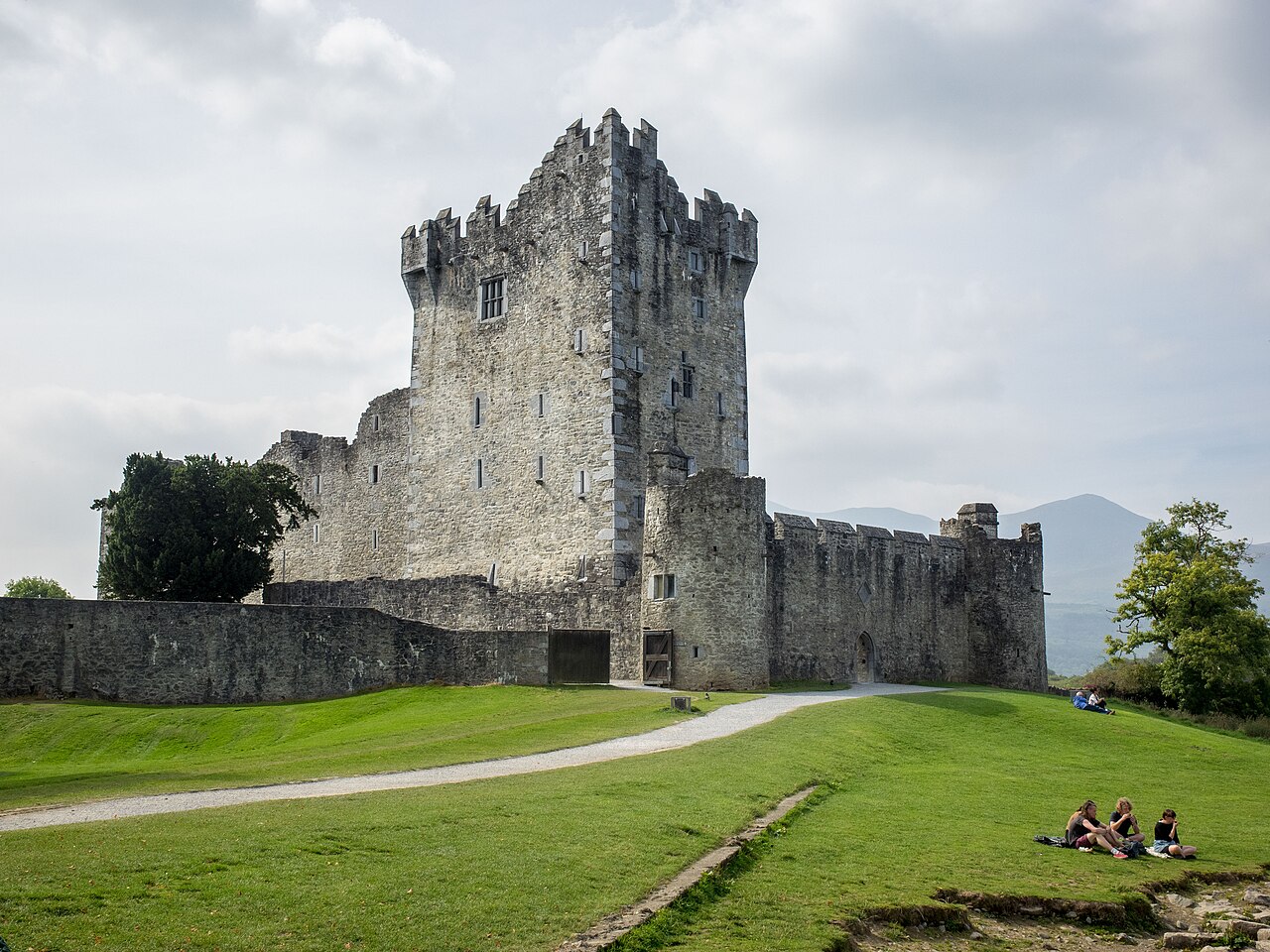
Castlelough Castle
Castlelough Castle, also known as Castle Lough or McCarthy Mor Castle, is a historic medieval fortress situated on a low promontory that was once an island in Lough Leane, part of the scenic Killarney lakes in County Kerry, Ireland. This castle, dating back to the 13th century, played a significant role in the turbulent history of the region during the High Medieval period.
Origins and early history
The exact date of Castlelough's initial construction remains uncertain, but it is widely believed to have been established in the early 13th century by the Anglo-Norman De Roche family, who were influential in the area following the Norman invasion of Ireland. The castle's strategic location on a promontory within Lough Leane provided natural defensive advantages, controlling access to the surrounding lands and waterways.
During the mid-13th century, the castle became a focal point of conflict between the Anglo-Normans and the native Gaelic Irish. In 1262, a notable battle occurred near Castlelough in which the Anglo-Norman knight Gerald Roche was killed. This event marked a shift in power as the Gaelic MacCarthy clan asserted control over South Kerry, using Castlelough alongside other strongholds such as Pallas Castle and Ballycarbery Castle to consolidate their rule.
The MacCarthy dynasty and castle prominence
Following the Anglo-Norman decline in the region, the MacCarthy Mor dynasty established Castlelough as one of their principal residences and military bases. The castle served not only as a defensive fortress but also as a symbol of Gaelic authority in Munster. It is recorded that Donal Og MacCarthy, the King of Desmond, died at Castlelough in 1390, underscoring the castle’s importance as a seat of regional power.
Architecturally, Castlelough was typical of High Medieval Irish castles, likely featuring a stone keep surrounded by defensive walls and possibly a moat or water defenses due to its island setting. Unfortunately, much of the original structure has not survived intact, leaving behind a ruin that offers limited visible features today.
Decline and later history
The castle remained in the hands of the MacCarthy family until the 18th century, specifically until the reign of King George II. During this period, the MacCarthys sold the property to William Crosbie, a British colonel. By the time of this transfer, Castlelough was likely already in a state of disrepair and ruin.
Following the sale, a new mansion was constructed on the shore of Lough Leane, which eventually developed into the present-day Lake Hotel. Castlelough Castle now stands as a picturesque ruin on the hotel grounds, serving as a historic landmark rather than a functional fortress.
Architectural features and current condition
Today, Castlelough Castle is a rather modest ruin with few distinguishable architectural elements visible above ground. Its position on a promontory surrounded by water remains one of its most striking features, offering scenic views of the lake and nearby landscapes.
The castle's ruined walls hint at its former defensive role, but much of the original structure has succumbed to centuries of weathering and neglect. Visitors can freely access the site during daytime hours, allowing for close inspection of the remains and appreciation of its setting.
Nearby, the better-preserved Ross Castle offers a contrasting example of a well-maintained medieval fortress, providing additional context for Castlelough's historical environment.
Visiting Castlelough Castle
Located on the grounds of the Lake Hotel, Castlelough Castle is accessible to the public during the day without an entrance fee. Although the ruins are not extensive, the site offers a quiet glimpse into the medieval past of County Kerry and the Gaelic lordships that once dominated the region.
Visitors interested in medieval Irish history and architecture will find the castle's setting evocative, despite the limited remains. Its proximity to Killarney and other historic sites makes it a convenient stop for those exploring the rich cultural heritage of southwestern Ireland.
Frequently asked questions (FAQ)
- How do I get to Castlelough Castle?
- Castlelough Castle is located on a promontory in Lough Leane near Killarney, County Kerry. It is accessible by foot from the nearby Lake Hotel grounds, which is a common starting point for visitors.
- What is the historical significance of Castlelough Castle?
- Castlelough Castle was a key stronghold for the Gaelic MacCarthy Mor dynasty in the 13th and 14th centuries. It played a role in the conflicts between Anglo-Norman and Gaelic forces and was the residence of King Donal Og MacCarthy.
- Can I visit Castlelough Castle freely?
- Yes, Castlelough Castle is freely accessible during daytime hours. There is no entrance fee, and visitors can explore the ruins on the hotel grounds.
- When was Castlelough Castle built?
- Castlelough Castle was likely built in the early 13th century, possibly by the Anglo-Norman De Roche family, though exact dates are uncertain.
- What architectural style is Castlelough Castle?
- The castle is a typical example of a High Medieval Irish water castle, likely featuring a stone keep and defensive walls, though much of the original structure is now in ruins.
Information
Opening hours
Daytime access
Ticket prices
Free
Current owner
Private owner
Loading map...
Visitor reviews
No reviews yet. Been here? Write the first review and help other travelers!
Write the first reviewVisited this castle? Share your experience
Your review helps other travelers and adds first-hand knowledge to our encyclopedia.