Castle Roche
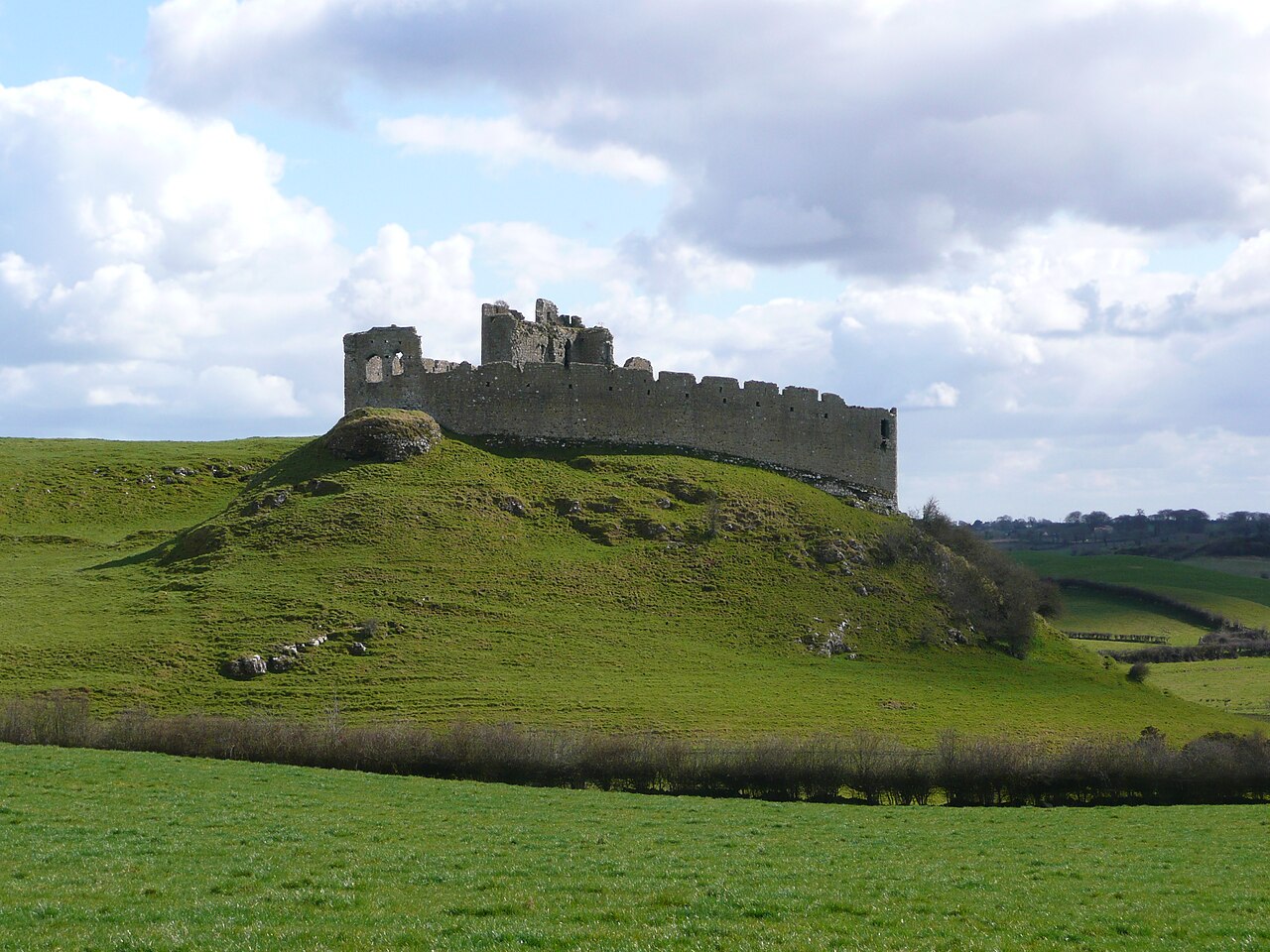
Castle Roche, also known as Castleroche or Roche Castle, is a remarkable Norman fortress perched atop a rocky hill in County Louth, Ireland. Constructed in 1236 by Lady Rohesia de Verdun, this high medieval hill castle commands a strategic position overlooking the surrounding countryside, controlling access to the province of Ulster and the Anglo-Norman Pale. Its name, derived from the Norman French word "roche" meaning rock, reflects the imposing natural outcrop upon which it stands.
The castle's construction was overseen by Lady Rohesia following the death of her husband, Theobald le Botiller, 2nd Chief Butler of Ireland. A notable legend tells that Rohesia, fiercely protective of her castle's secrets, allegedly threw the architect from a bedroom window after completion, a window now known as the Murder Window. This dramatic tale adds a layer of intrigue to the castle's history, complementing its formidable military purpose.
Historical context and strategic importance
Castle Roche was built during a turbulent period marked by ongoing conflicts between the Anglo-Norman settlers and the native Gaelic Irish. The castle's location on the border of Ulster and the Pale was crucial for securing Norman influence and controlling key routes into South Armagh. Its commanding views and natural defenses made it a vital stronghold in the region.
The de Verdun family, prominent Norman lords with roots in Staffordshire, England, maintained control of the castle for centuries. Nicholas de Verdun notably commanded the fortress during the 1316 invasion by Robert the Bruce, underscoring its military significance. In 1561, the castle served as a mustering point for English forces in Ireland. However, during the 1641 rebellion, it supported the Irish Confederates before being besieged and ultimately destroyed during the Cromwellian conquest.
Architectural features and layout
The castle's unique triangular layout was dictated by the shape of the natural rock outcrop. Its design includes a large enclosure fortified by thick stone walls and a twin-towered gatehouse that once provided a formidable entrance. The castle was protected on two sides by steep cliffs, while the third side was defended by a rock-cut ditch, likely spanned by a drawbridge, enhancing its defensibility.
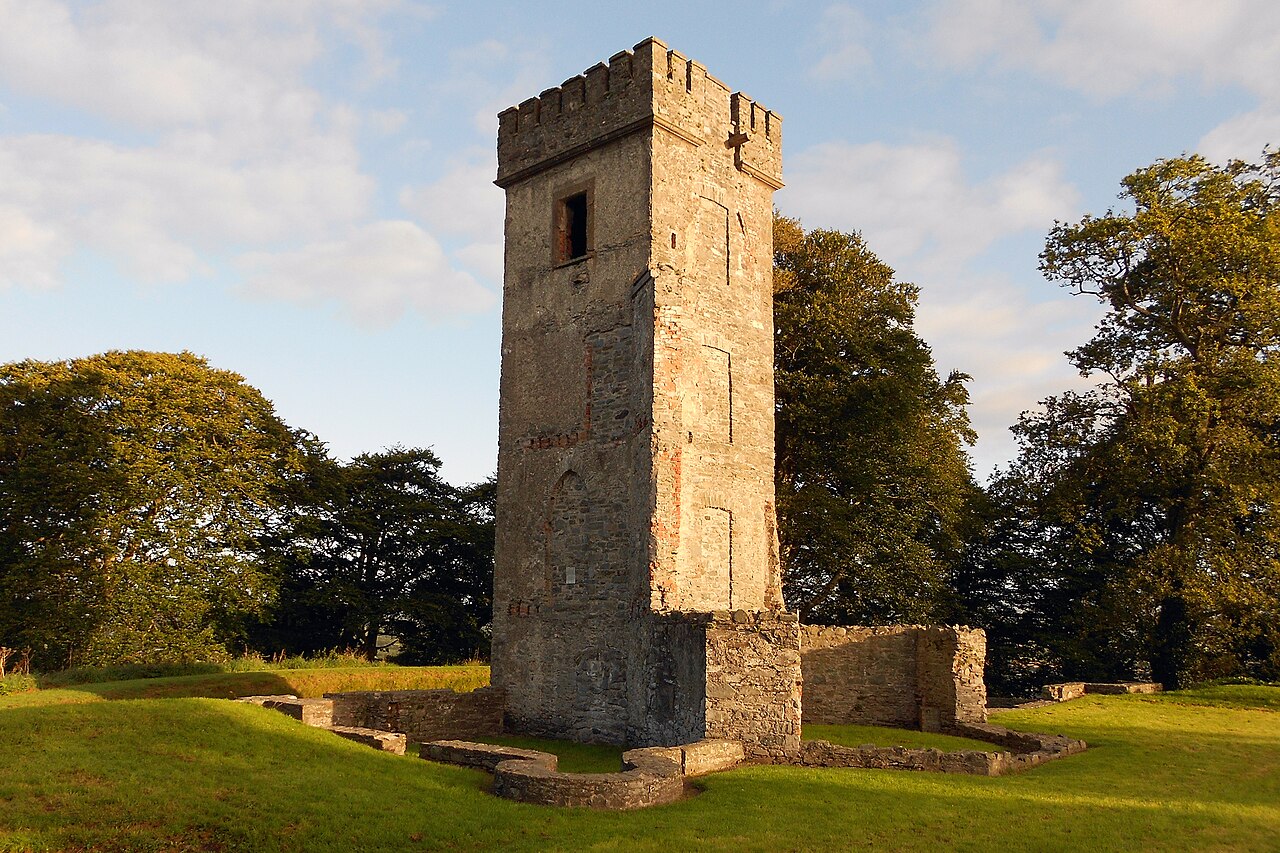
Within the walls, the castle featured a great hall and residential quarters, though much of the interior structures have not survived intact. A noteworthy feature is a bedroom window associated with the legend of Rohesia, still visible today as the "Murder Window." The castle also had a secret passage linking it to a nearby round tower outpost, which would have served as a lookout or escape route during attacks.
Defensive elements
The natural rocky terrain was skillfully integrated into the castle's defenses. The steep cliffs on two sides made direct assault difficult, while the rock-cut ditch and drawbridge on the third side created a controlled access point. The twin-towered gatehouse was a critical defensive structure, allowing defenders to repel attackers effectively.
Associated features and surroundings
Nearby historical elements include St. Ronan’s Well and the Wall of Saint Ronan, which contribute to the cultural landscape of the site. Though details about these features are limited, they highlight the castle's connection to local traditions and religious practices.
Later history and current condition
Castle Roche's military importance declined following its destruction in the 1641 Cromwellian siege. Since then, it has remained a ruin, with only the fundamental layout and some structural elements still discernible. The castle has not undergone restoration, preserving its authentic ruined state.
Today, Castle Roche is valued for its dramatic setting and historical significance. Its remote location atop a rocky hill offers visitors panoramic views and a tangible connection to Ireland's medieval past. The ruins stand as a testament to Norman military architecture and the turbulent history of the Anglo-Norman presence in Ireland.
Legend of rohesea de verdun
The story of Lady Rohesia de Verdun is an integral part of the castle's lore. After commissioning the castle's construction, she is said to have promised marriage to the architect if he met her expectations. Upon completion, she allegedly pushed him from the bedroom window to ensure the castle's secrets remained safe. Rohesia later became a nun at Gracedieu Priory in Leicestershire, where she died in 1247. Her tomb remains in Belton parish church, linking her legacy to both Ireland and England.
Visiting castle roche
Visitors to Castle Roche can explore the impressive ruins and appreciate the castle’s strategic hilltop location. While the interior buildings are largely gone, the surviving walls, gatehouse, and natural defensive features offer insight into medieval fortification techniques. The site’s remote and scenic setting makes it a rewarding destination for history enthusiasts and photographers alike.
Access to the castle is generally possible, though it stands on farmland, so visitors should check local access guidelines. The surrounding countryside enhances the experience, with peaceful rural landscapes and historical points of interest nearby.
Frequently asked questions (FAQ)
- When was Castle Roche built and by whom?
- Castle Roche was built in 1236 by Lady Rohesia de Verdun, a Norman noblewoman who managed her estates after her husband's death.
- What is the legend of the Murder Window?
- The Murder Window is linked to Lady Rohesia de Verdun, who allegedly threw the castle's architect out of this window after completion to keep the castle's secrets.
- What is the architectural layout of Castle Roche?
- Castle Roche has a unique triangular layout shaped by the rocky hill it stands on, featuring a twin-towered gatehouse and a rock-cut ditch.
- Can visitors access Castle Roche today?
- Yes, visitors can explore the ruins of Castle Roche, though it is located on farmland, so checking local access guidelines is recommended.
- What historical events took place at Castle Roche?
- Castle Roche was a strategic stronghold during the Anglo-Norman period, saw action during the 1316 invasion by Robert the Bruce, was a gathering point in 1561, and was destroyed during the 1641 Cromwellian conquest.
Information
Website
Visit websiteSources & official resources
Verify the information above using these authoritative references.
Loading map...
Visitor reviews
No reviews yet. Been here? Write the first review and help other travelers!
Write the first reviewVisited this castle? Share your experience
Your review helps other travelers and adds first-hand knowledge to our encyclopedia.