Castle Roche — Ireland castle

Castle Roche

Castle roche: a 13th-century norman fortress in county louth, ireland
High Medieval (11th–13th c.)
Ruins

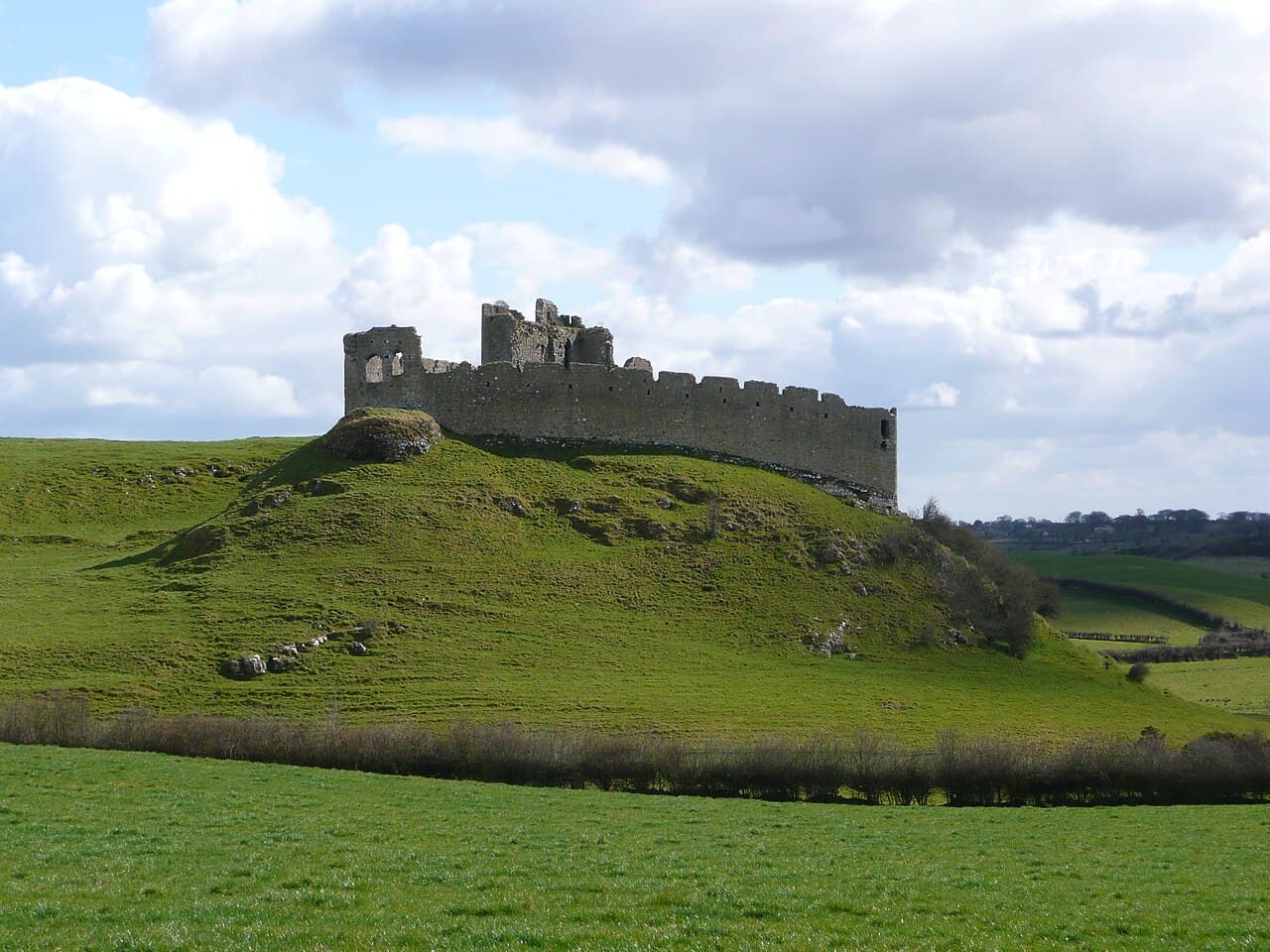
Castle Roche (Irish: Dún Gall) stands as a significant example of Norman military architecture in County Louth, Ireland. Constructed in 1236 by the de Verdun family, the castle was strategically positioned approximately 10 km northwest of Dundalk, commanding expansive views over the surrounding landscape. Its location atop a prominent rocky outcrop provided natural defensive advantages, which were further enhanced by the castle's formidable man-made features.

Architectural features and defensive design

The castle's design reflects typical high medieval fortification techniques. Castle Roche was built with strong stone walls and surrounded by a deep moat, creating a formidable barrier against attackers. The combination of natural rock foundations and constructed defenses made it nearly impregnable during its time. The castle's layout included a keep and various towers, with a notable feature being a secret passage that linked the main castle to a round tower outpost—a tactical element allowing discreet movement and communication during sieges.

The moat and walls

The moat surrounding Castle Roche was an essential element of its defense, designed to impede direct assaults on the walls. The walls themselves were constructed of local stone, thick and high enough to resist battering and scaling. Battlements and arrow slits allowed defenders to repel invaders effectively.

The secret passage and outpost tower

The existence of a secret passage connecting to a round tower outpost highlights the castle's sophisticated military planning. This feature provided a secure route for messengers or defenders to move unseen, reinforcing the castle's defensive capabilities.

Historical context and ownership

The castle was the seat of the de Verdun family, a prominent Norman lineage in Ireland during the high medieval period. The family's influence in the region was consolidated through the construction of Castle Roche, which served both as a residence and a military stronghold. The castle played a role in the turbulent history of Norman Ireland, witnessing various conflicts and changes in ownership over the centuries.

The de verdun family

The de Verduns were instrumental in establishing Norman control in parts of Ireland. Their decision to build Castle Roche on a commanding rocky outcrop was both a strategic and symbolic assertion of their power and presence in County Louth.

Surrounding landscape and nearby landmarks

Castle Roche's location offers extensive views of the surrounding countryside, which was crucial for early warning of approaching threats. Nearby lies St. Ronan's Well, a site of historical and local significance, adding cultural value to the castle's setting.

Current condition and archaeological significance

Today, Castle Roche exists as ruins, classified as an archaeological site. Its remains provide valuable insights into medieval castle construction and Norman military architecture in Ireland. The site attracts historians, archaeologists, and visitors interested in medieval history and architecture.

Preservation and access

While the castle is in a state of ruin, efforts have been made to preserve its structural elements and maintain accessibility for visitors. The site is an important cultural heritage location, offering a tangible connection to Ireland's Norman past.

Architectural style and period

Castle Roche is a representative example of high medieval Norman architecture. Its construction in the 13th century places it firmly within the period when Norman military and residential castles were being established across Ireland, combining defensive functionality with the status of noble residences.

Frequently asked questions (FAQ)

How do I get to Castle Roche from Dundalk?
Castle Roche is located about 10 km northwest of Dundalk. Visitors can reach the site by car via local roads, with parking available nearby. Public transport options are limited, so driving is recommended.
What are the opening hours for visiting Castle Roche?
Castle Roche is an archaeological site generally open to the public during daylight hours. There are no formal entrance gates or ticket booths, so visitors can explore the ruins at their convenience, but it is advisable to visit during daylight for safety.
Is there an entry fee to visit Castle Roche?
Visiting Castle Roche is free of charge as it is an open archaeological site. Donations for maintenance and preservation may be accepted but are not required.
What architectural features are notable at Castle Roche?
Notable features include the strong stone walls, deep moat, and a secret passage connecting the castle to a round tower outpost. These elements highlight the castle's defensive design typical of Norman fortifications.
Can I explore the secret passage at Castle Roche?
The secret passage is part of the castle's ruins and is not safely accessible to visitors. Exploration is limited to viewing from a distance due to safety concerns.
Why was Castle Roche built on a rocky outcrop?
Building on a rocky outcrop provided natural defense advantages, making the castle harder to assault and easier to defend. It also allowed commanding views of the surrounding area to spot approaching enemies.

Photo gallery

Castle Roche
Click to view

Photo by Hazazzy•CC BY-SA 3.0

1 photo • Click any image to view in full screen

Information

Archaeological Site / Ruins

Loading map...

Visitor reviews

No reviews yet. Been here? Write the first review and help other travelers!

Write the first review

Visited this castle? Share your experience

Your review helps other travelers and adds first-hand knowledge to our encyclopedia.

Write a review

(5/5)

0/2000 characters

Your review will be visible after admin approval

Nearby castles

0 km

Castle Roche

Castleroche, United Kingdom

Castle Roche, also known as Castleroche or Roche Castle, is a remarkable Norman fortress perched atop a rocky hill in County Louth, Ireland. Constructed in 1236 by Lady Rohesia de Verdun, this high medieval hill castle commands a strategic position overlooking the surrounding countryside, controlling access to the province of Ulster and the Anglo-Norman Pale. Its name, derived from the Norman French word "roche" meaning rock, reflects the imposing natural outcrop upon which it stands. The castle's construction was overseen by Lady Rohesia following the death of her husband, Theobald le Botiller, 2nd Chief Butler of Ireland. A notable legend tells that Rohesia, fiercely protective of her castle's secrets, allegedly threw the architect from a bedroom window after completion, a window now known as the Murder Window. This dramatic tale adds a layer of intrigue to the castle's history, complementing its formidable military purpose. Historical context and strategic importance Castle Roche was built during a turbulent period marked by ongoing conflicts between the Anglo-Norman settlers and the native Gaelic Irish. The castle's location on the border of Ulster and the Pale was crucial for securing Norman influence and controlling key routes into South Armagh. Its commanding views and natural defenses made it a vital stronghold in the region. The de Verdun family, prominent Norman lords with roots in Staffordshire, England, maintained control of the castle for centuries. Nicholas de Verdun notably commanded the fortress during the 1316 invasion by Robert the Bruce, underscoring its military significance. In 1561, the castle served as a mustering point for English forces in Ireland. However, during the 1641 rebellion, it supported the Irish Confederates before being besieged and ultimately destroyed during the Cromwellian conquest. Architectural features and layout The castle's unique triangular layout was dictated by the shape of the natural rock outcrop. Its design includes a large enclosure fortified by thick stone walls and a twin-towered gatehouse that once provided a formidable entrance. The castle was protected on two sides by steep cliffs, while the third side was defended by a rock-cut ditch, likely spanned by a drawbridge, enhancing its defensibility. Within the walls, the castle featured a great hall and residential quarters, though much of the interior structures have not survived intact. A noteworthy feature is a bedroom window associated with the legend of Rohesia, still visible today as the "Murder Window." The castle also had a secret passage linking it to a nearby round tower outpost, which would have served as a lookout or escape route during attacks. Defensive elements The natural rocky terrain was skillfully integrated into the castle's defenses. The steep cliffs on two sides made direct assault difficult, while the rock-cut ditch and drawbridge on the third side created a controlled access point. The twin-towered gatehouse was a critical defensive structure, allowing defenders to repel attackers effectively. Associated features and surroundings Nearby historical elements include St. Ronan’s Well and the Wall of Saint Ronan, which contribute to the cultural landscape of the site. Though details about these features are limited, they highlight the castle's connection to local traditions and religious practices. Later history and current condition Castle Roche's military importance declined following its destruction in the 1641 Cromwellian siege. Since then, it has remained a ruin, with only the fundamental layout and some structural elements still discernible. The castle has not undergone restoration, preserving its authentic ruined state. Today, Castle Roche is valued for its dramatic setting and historical significance. Its remote location atop a rocky hill offers visitors panoramic views and a tangible connection to Ireland's medieval past. The ruins stand as a testament to Norman military architecture and the turbulent history of the Anglo-Norman presence in Ireland. Legend of rohesea de verdun The story of Lady Rohesia de Verdun is an integral part of the castle's lore. After commissioning the castle's construction, she is said to have promised marriage to the architect if he met her expectations. Upon completion, she allegedly pushed him from the bedroom window to ensure the castle's secrets remained safe. Rohesia later became a nun at Gracedieu Priory in Leicestershire, where she died in 1247. Her tomb remains in Belton parish church, linking her legacy to both Ireland and England. Visiting castle roche Visitors to Castle Roche can explore the impressive ruins and appreciate the castle’s strategic hilltop location. While the interior buildings are largely gone, the surviving walls, gatehouse, and natural defensive features offer insight into medieval fortification techniques. The site’s remote and scenic setting makes it a rewarding destination for history enthusiasts and photographers alike. Access to the castle is generally possible, though it stands on farmland, so visitors should check local access guidelines. The surrounding countryside enhances the experience, with peaceful rural landscapes and historical points of interest nearby.

High Medieval (11th–13th c.)
Details
5.2 km
Dún Dealgan Motte — Ireland castle

Dún Dealgan Motte

Dundalk, Ireland

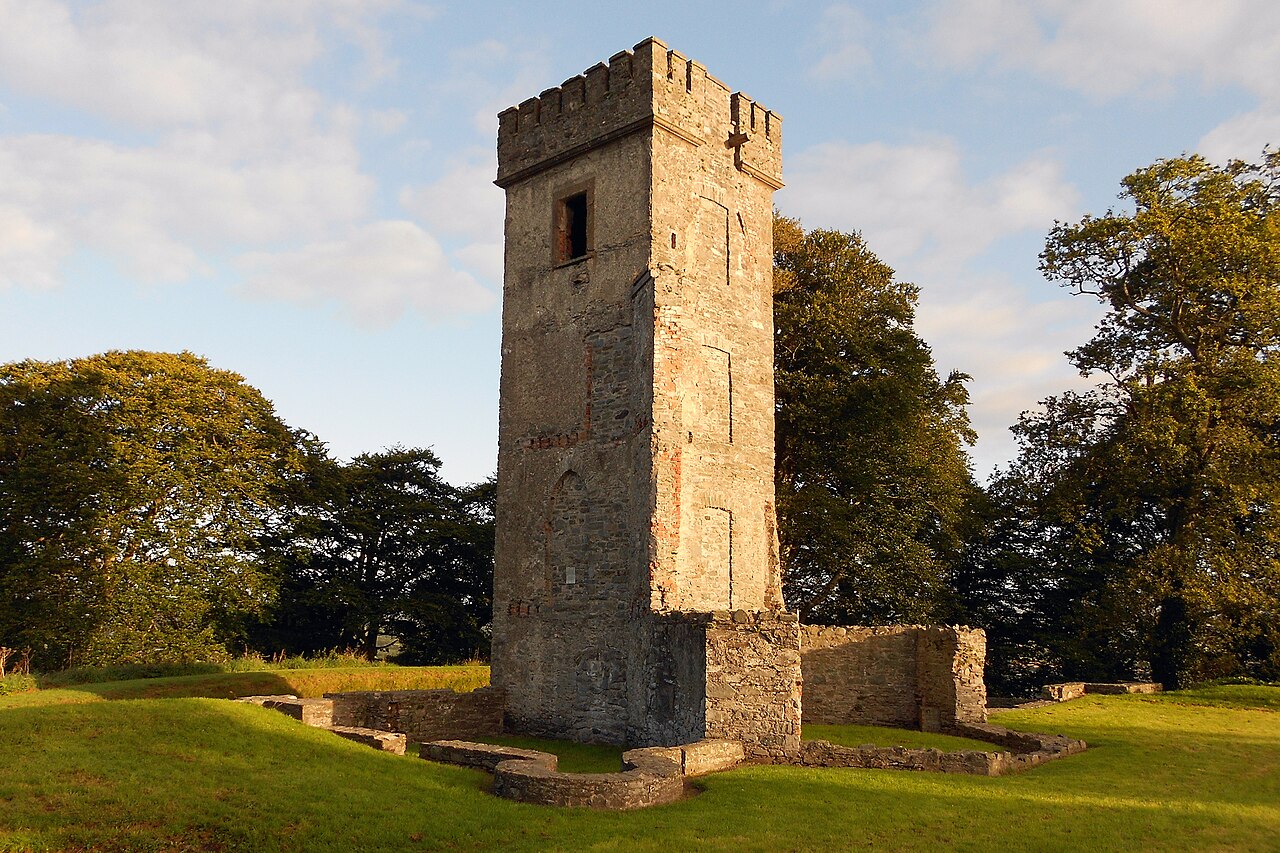
Dún Dealgan Motte is a significant medieval motte castle and a designated National Monument located in Dundalk, Ireland. This historic site represents an important example of the motte-and-bailey castle type, which was widely used across Ireland and the British Isles during the High Medieval period. The motte and its strategic importance The motte at Dún Dealgan consists of a large, artificial earthen mound, which would have originally supported a wooden or stone keep at its summit. This elevated position provided a commanding view over the surrounding landscape, crucial for defense and control during the turbulent medieval centuries. The motte's construction reflects the typical Norman military architecture introduced to Ireland following the Anglo-Norman invasion in the late 12th century. Design and defensive features The motte is surrounded by what would have been a protective ditch or moat, enhancing its defensibility. Around the base of the motte, there would have been a bailey—a fortified enclosure that housed living quarters, stables, workshops, and storage buildings. Although much of the original wooden structures have not survived, archaeological evidence and historical records help reconstruct the castle's layout and function. Historical context and significance Dún Dealgan Motte is closely linked to the early medieval history of Dundalk and the wider region of County Louth. The site is traditionally associated with the legendary Irish hero Cú Chulainn, who is said to have lived in the area during the Iron Age. While the motte itself dates from the medieval period, the location holds a strong cultural resonance tied to Ireland's ancient past. Anglo-Norman influence The motte was likely constructed during the late 12th or early 13th century as part of the Anglo-Norman efforts to consolidate control over the region. The Normans introduced the motte-and-bailey design to Ireland, which allowed rapid establishment of fortified centers to assert dominance and protect newly acquired lands. Dún Dealgan Motte thus represents a key phase in the transformation of Irish political and military landscapes. Archaeological investigations and preservation Archaeological studies at Dún Dealgan have revealed important insights into the construction techniques and occupation phases of the motte. Excavations have uncovered remnants of defensive ditches and postholes indicating former wooden structures. The site is carefully preserved as a National Monument, with ongoing efforts to maintain its condition and facilitate public access. Current condition and visitor experience Today, Dún Dealgan Motte remains a prominent earthwork visible in the landscape of Dundalk. While no standing stone buildings survive, the motte's shape and surrounding features clearly convey its original defensive purpose. Visitors can explore the site and appreciate its historical significance within the context of Ireland's medieval heritage. Architectural legacy of motte castles in Ireland Motte castles like Dún Dealgan played a crucial role in the Norman colonization of Ireland. Their relatively simple yet effective design allowed rapid construction and provided secure bases for further expansion. As one of the better-preserved examples, Dún Dealgan Motte helps illustrate the military and social strategies employed during this transformative period. Overall, Dún Dealgan Motte stands as a valuable monument reflecting both the medieval military architecture of motte-and-bailey castles and the layered history of the Dundalk region, from ancient legend to Norman conquest.

High Medieval (11th–13th c.)
Details
5.2 km

Dún Dealgan Motte

, United Kingdom

Dún Dealgan Motte stands as a remarkable testament to Ireland's layered history, combining elements from ancient Gaelic fortifications through Norman military architecture to later Gothic revival influences. Located northwest of Dundalk in Northern Ireland, this site occupies a strategic ridge overlooking the Castletown River, commanding views that have made it a significant defensive position for over a millennium. The earliest known occupation of the site dates back to ancient Gaelic Ireland, where it functioned as a dún, a type of native fortification. This original fortification is deeply embedded in Irish cultural memory, being associated with the legendary hero Cú Chulainn from the epic Táin Bó Cúailgne. According to early medieval Irish literature and local tradition, Cú Chulainn was born and based at this fort, which was originally known simply as "Dealga". Historical chronicles such as the Annals of the Four Masters record a battle at this location around the year 500 AD, underscoring its longstanding martial significance. The term "dún," meaning fort, appears in records only after 1002 AD, which may indicate the formalization or enhancement of the fortification at that time. Norman conquest and motte-and-bailey construction Following the Norman invasion of Ireland in the late 12th century, the site was transformed into a classic motte-and-bailey castle. This type of fortification was typical of Norman military strategy, emphasizing rapid construction and strong defensive features. Between 1135 and 1192, the motte was likely constructed by Bertram III de Verdun, a prominent Norman lord. The motte itself is a large artificial earthen mound approximately 68 meters in diameter at the base and rising about 10 meters high. Atop this mound would have stood a wooden tower surrounded by a palisade, providing a vantage point over the surrounding landscape. The motte was accompanied by a bailey to the southeast, an enclosed courtyard that served domestic and defensive functions. The bailey would have been surrounded by a ditch or moat, enhancing the site's defensibility. This layout allowed the castle to control the northern approach from Ulster and oversee the vital Castletown River valley. In 1210, the motte was held by Hugh de Lacy, the first Earl of Ulster, who used it as a military stronghold. However, he abandoned it during a pursuit by King John further north. The site also played a role in the Battle of Faughart in 1318, which ended the campaign of Edward Bruce in Ireland, marking a significant moment in Irish medieval military history. Later architectural developments and historical events In the late 18th century, the site underwent a significant transformation when Patrick Byrne, a local landowner reputed to be a smuggler, constructed a Gothic-style castellated house on the summit of the motte. This building introduced a new architectural layer to the site, blending romantic Gothic revival elements with the ancient earthworks beneath. Unfortunately, the house was heavily damaged during the 1798 Rebellion, with only a single tower surviving. This remaining tower is locally known as "Byrne's Folly" and stands as a poignant ruin reflecting the turbulent history of the period. The house was rebuilt in 1850 by Thomas Vesey Dawson as a country retreat, but it eventually fell into neglect. The property was later acquired by the County Louth Archaeological and Historical Society for use as a museum. However, during the Irish revolutionary period between 1919 and 1923, the building suffered further damage when armed men deliberately set it on fire, leaving it in a ruinous state. Archaeological features and preservation The motte and defensive earthworks The dominant feature of the site remains the large earthen motte, a classic example of Norman military engineering. Its substantial size and height provided a formidable defensive position. Surrounding the motte is a ditch or moat, which would have been filled with water or left dry to impede attackers. The motte's flat summit once supported the wooden tower and palisade, enabling defenders to survey the surrounding terrain and control access routes. The bailey and associated structures The bailey to the southeast of the motte served as a protected courtyard for domestic buildings and additional defenses. While the exact remains of the bailey are less distinct today, its presence is typical of motte-and-bailey castles, providing space for stables, workshops, and living quarters for soldiers and servants. Gaelic souterrain beneath the motte One of the site's most unique features is the Z-shaped souterrain located beneath the motte. This underground passage, approximately 17 meters long, dates from the Gaelic period before the Norman conquest. Souterrains were typically used as places of refuge during attacks or for storing food and valuables. The survival of this subterranean structure offers valuable insight into the early medieval Gaelic occupation of the area and their architectural practices. Bronze Age standing stone Adding to the site's deep historical significance is a nearby Bronze Age standing stone, which indicates human activity in the area long before the medieval periods. This prehistoric monument enriches the cultural landscape of Dún Dealgan, linking it to Ireland's ancient past. Historical and cultural significance Dún Dealgan Motte is not only a military site but also a cultural landmark embedded in Irish mythology and history. Its association with Cú Chulainn makes it a place of legendary importance, while its transformation through the Norman invasion and later historical events illustrates the complex layers of Irish history. The surviving earthworks, ruins, and archaeological features collectively narrate a story of continuous occupation, adaptation, and conflict spanning from prehistoric times through the early 20th century. Today, the site is valued for its archaeological significance and as a symbol of regional heritage. The preservation of the motte, the Gaelic souterrain, and the remnants of Byrne's Folly provide visitors and scholars with tangible connections to Ireland's multifaceted past. The site remains an important destination for those interested in medieval military architecture, Gaelic culture, and Irish history.

High Medieval (11th–13th c.)
Details