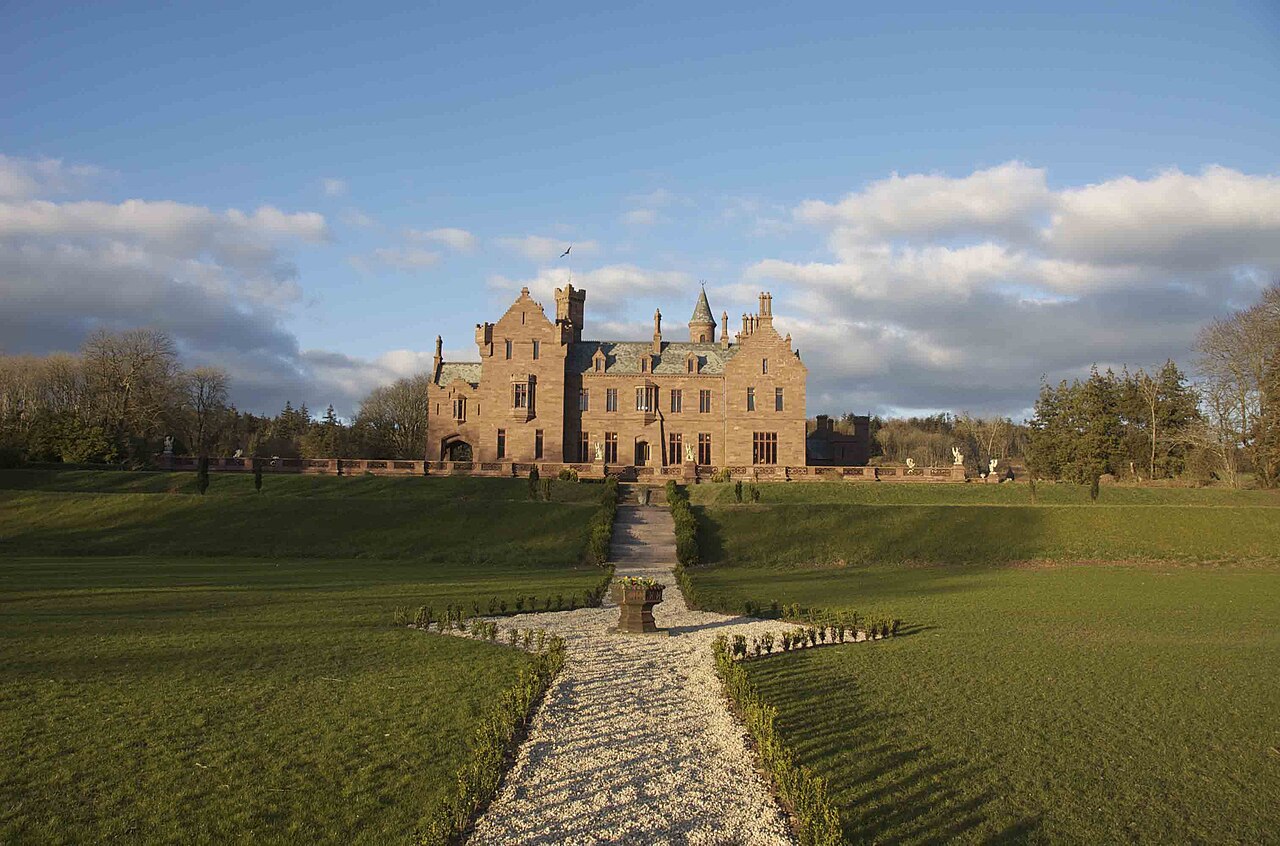
Castle Oliver
Castle Oliver is a striking example of a Victorian mock castle located in the south part of County Limerick, Ireland. Built primarily for entertainment rather than defense, it embodies the romantic architectural trends of the 19th century, blending historicist styles with lavish interior decoration. The castle stands prominently on massive terraces, offering commanding views over what was once a vast 20,000-acre estate.
Historical background and origins
The lands of Castle Oliver were originally granted to Captain Robert Oliver, a Cromwellian soldier, in 1666. It is believed that he either built a manor house or repurposed an existing late medieval structure on the site. The Oliver family resided there until 1812, after which the house was left to a bailiff and quickly fell into ruin. By 1837, the original house was reported as being in ruins, marking the end of its first phase.
Between 1845 and 1850, a new Castle Oliver was constructed, reflecting an Irish interpretation of Scottish Baronial architecture. This new building was designed more as a grand residence for entertaining than a defensive fortress, incorporating stylistic elements that evoked medieval castles but with modern comforts and aesthetics of the Victorian era.
Architectural features and style
The castle's architecture is characterized by its romanticized medieval appearance, featuring towers, battlements, and ornamental corbels. The interiors are richly decorated, with a ballroom, drawing room, library, morning room, dining room, and a grand hall. These rooms showcase exquisite hand-painted ceilings, stencil work, and stained glass windows of superb craftsmanship, reflecting the Victorian passion for detailed ornamental design.
Castle Oliver also boasts Ireland's largest wine cellar, reputed to hold approximately 55,000 bottles. This feature underscores the castle's role as a place of social gatherings and entertainment during its heyday.
The folly and ancillary structures
Behind the manor house, on a high hill, stands Oliver's Folly, a castle-like decorative structure built around 1790. This mock castle ruin consists of two round towers connected by a curtain wall containing a gate and windows. It was constructed purely for aesthetic purposes to be visible from the manor house and the surrounding landscape. Due to its elevated position, Oliver's Folly can be seen from miles around, serving as a picturesque landmark.
At the eastern and western borders of the demesne are two Gothic gate lodges dating from the same period as the 19th-century house. These lodges, though not currently in use, add to the romantic atmosphere of the estate and are visible from the public road.
Later history and restoration efforts
After passing through several owners, Castle Oliver fell into disrepair again in the 1980s. Around the year 2000, restoration work began to revive the castle, a process that has continued into the 21st century. The castle is now privately owned by an Australian family. Despite its private status, the folly remains accessible when the surrounding pasture is not in use, though the main house itself cannot be visited or seen from public roads.
In the late 20th century, the castle was reportedly for sale for ₤22,000, including two gate lodges and 11 acres, reflecting its state of decline at the time. Today, ongoing restoration efforts aim to preserve and celebrate this unique example of Victorian romantic architecture in Ireland.
Cultural significance and visitor information
Castle Oliver stands as a testament to the Victorian era's fascination with medieval revival architecture and the social lifestyle of the landed gentry. Its combination of grand entertaining spaces, ornate decoration, and extensive grounds highlight the cultural aspirations of its builders.
While the castle itself remains a private residence and is not open to the public, the surrounding landscape, including Oliver's Folly and the gate lodges, offers glimpses into the estate's historic grandeur. Visitors interested in Irish architectural heritage and Victorian country houses will find Castle Oliver a compelling subject of study, even if direct access is limited.
Frequently asked questions (FAQ)
- Can I visit Castle Oliver and its grounds?
- Castle Oliver is a private residence and is not open to the public. However, Oliver's Folly on the nearby hill is accessible when the surrounding pasture is not in use.
- What architectural style is Castle Oliver built in?
- Castle Oliver is designed in a Victorian interpretation of Scottish Baronial style, classified as Romantic Neo-Gothic, featuring towers, battlements, and ornamental details.
- When was the current Castle Oliver built?
- The present Castle Oliver was constructed between 1845 and 1850, replacing an earlier manor house that had fallen into ruins.
- What notable interior features does Castle Oliver have?
- The castle includes a ballroom, drawing room, library, morning room, dining room, and hall, all decorated with hand-painted ceilings, stencil work, and stained glass windows.
- What is Oliver's Folly and can I see it?
- Oliver's Folly is a decorative mock castle ruin built around 1790 on a hill behind the manor house. It is visible from miles around and accessible to visitors when conditions allow.
Information
Sources & official resources
Verify the information above using these authoritative references.
Loading map...
Visitor reviews
No reviews yet. Been here? Write the first review and help other travelers!
Write the first reviewVisited this castle? Share your experience
Your review helps other travelers and adds first-hand knowledge to our encyclopedia.