Castle of Sirmione

Castle of Sirmione: medieval lakeside fortress in Italy
Sirmione, Italy
High Medieval (11th–13th c.)
Well Preserved

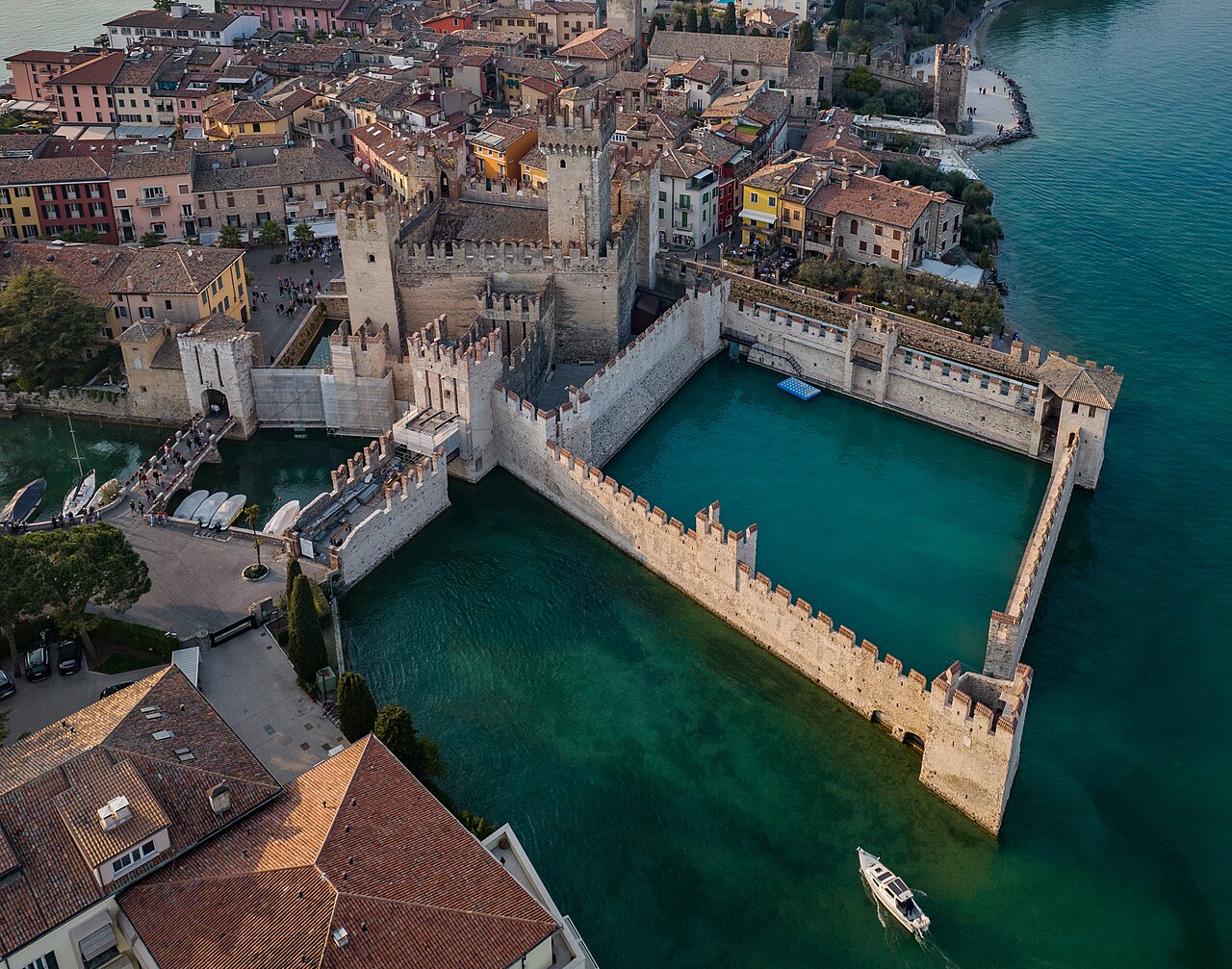
Castle of Sirmione, also known as Scaliger Castle, is a remarkable example of a medieval port fortification located on the southern shore of Lake Garda in Sirmione, Italy. Constructed in the 13th century during the High Medieval period, this fortress was strategically positioned at the entrance to the Sirmione peninsula, controlling access to the lake and protecting the surrounding territory.

Historical significance and strategic location

The castle was built by the powerful Scaliger family, rulers of Verona, who used it primarily as a defensive stronghold for their fleet. Its location was crucial for controlling naval traffic on Lake Garda and defending against both external enemies and local uprisings. The fortress also served as a symbol of Scaliger dominance in the region during the turbulent medieval era.

Architectural features and defensive design

The Castle of Sirmione is one of the few surviving examples of a medieval port fortification in Italy. It is distinguished by its imposing moat, which surrounds the entire structure and is filled with water from the lake, enhancing its defensive capabilities. Access to the castle is only possible via two drawbridges, which could be raised to prevent enemy entry.

The castle's walls are constructed from local stone, featuring crenellated battlements and towers that provided vantage points for archers and lookouts. The fortress combines elements of both military and residential architecture, with the inner courtyard and living quarters designed to accommodate the garrison and the lord's retinue.

Main structures within the castle

  • The keep or central tower served as the last line of defense and housed important rooms.
  • The courtyard provided space for gatherings and military drills.
  • The gatehouse controlled access and was heavily fortified.
  • The moat and drawbridges were critical defensive features.

Cultural and archaeological significance

Inside the castle, visitors can explore a small museum that displays artifacts from the Roman era as well as medieval relics, reflecting the long history of human settlement in the area. The presence of Roman finds highlights the peninsula's importance dating back to antiquity, while the medieval artifacts illustrate the castle's role in regional defense and governance.

Preservation and visitor experience

The Castle of Sirmione is well preserved, retaining much of its original structure and charm. Its waterside setting on Lake Garda makes it a popular destination for tourists interested in medieval architecture and history. The castle's combination of defensive features and scenic location offers a unique glimpse into the military and social history of northern Italy during the Middle Ages.

Visitors can walk across the drawbridges, explore the battlements, and enjoy panoramic views of the lake and surrounding landscape. The museum inside provides educational context, enhancing the visitor experience with insights into both Roman and medieval periods.

Frequently asked questions (FAQ)

What is the historical significance of the Castle of Sirmione?
The Castle of Sirmione, built in the 13th century, is a remarkable example of medieval military architecture. It was constructed to defend the town against invasions and has played a crucial role in the region's history, particularly during the conflicts between the Scaliger family and the Venetians.
When is the best time to visit the Castle of Sirmione?
The best time to visit the Castle of Sirmione is during the spring (April to June) and fall (September to October) when the weather is mild and the crowds are smaller. Summer can be quite hot, and the area can be very busy with tourists.
Can I access the Castle of Sirmione with a wheelchair?
Yes, the Castle of Sirmione is partially accessible for visitors with mobility challenges. However, some areas may have limited access due to the historic nature of the site, so it’s advisable to check in advance for specific accessibility details.
What are the opening hours of the Castle of Sirmione?
The opening hours of the Castle of Sirmione typically vary by season. Generally, it is open daily from 9 AM to 7 PM during the summer months, while hours may be reduced during the off-peak season, so it’s best to check the official website for the latest information.
How much do tickets for the Castle of Sirmione cost?
Tickets for the Castle of Sirmione are generally affordable, with prices around €6 for adults and discounts available for children and seniors. It is recommended to purchase tickets online in advance to avoid long queues, especially during peak tourist season.
Is it possible to take guided tours of the Castle of Sirmione?
Yes, guided tours of the Castle of Sirmione are available, providing visitors with in-depth insights into its history and architecture. These tours often enhance the experience by sharing stories and details that might be overlooked when exploring independently.
What nearby attractions can I visit after the Castle of Sirmione?
After visiting the Castle of Sirmione, you can explore the charming old town of Sirmione, the beautiful Grotte di Catullo ruins, and the stunning thermal baths nearby. The area is also known for its picturesque lake views and excellent dining options.
How do I get to the Castle of Sirmione from the nearest airport?
The nearest major airport is Verona Villafranca Airport, located about 30 km from Sirmione. You can reach the castle by renting a car, taking a taxi, or using public transportation, with buses available from the airport to Sirmione.

Information

Water Castle

Sources & official resources

Verify the information above using these authoritative references.

Loading map...

Visitor reviews

No reviews yet. Been here? Write the first review and help other travelers!

Write the first review

Visited this castle? Share your experience

Your review helps other travelers and adds first-hand knowledge to our encyclopedia.
Write a review

(5/5)

0/2000 characters

Your review will be visible after admin approval

Nearby castles

2.6 km
Sirmione Castle — Italy castle

Sirmione Castle

Sirmione, Italy

Sirmione Castle, also known as the Scaliger Castle, stands as one of the most remarkable medieval fortresses in Europe, uniquely built on water in the southern part of Lake Garda in Lombardia, Italy. Constructed in the 13th century by the powerful Della Scala family, the lords of Verona, this castle served as a strategic military stronghold and a symbol of Scaliger power during the turbulent High Medieval period. Its imposing presence, surrounded on all sides by water, rises steeply from the narrow peninsula of Sirmione, offering both formidable defense and commanding views over the lake. Historical context and strategic significance The location of Sirmione Castle on a narrow strip of land extending more than two miles into Lake Garda made it a vital defensive and control point. The castle was likely built upon the ruins of an ancient Roman fortification, emphasizing continuity in military importance from antiquity through the Middle Ages. During the late 13th and 14th centuries, the castle was integral to the defense network of the Scaligeri, who sought to protect their territories from rival city-states such as Milan. Following the conquest of Sirmione by the Republic of Venice in 1405, the castle's fortifications were significantly enhanced to secure Venice's northern borders. Venice's modifications included strengthening the outer walls and expanding the harbor facilities, modeled after the famous Venetian Arsenal. This transformation secured the castle's role as a critical military outpost and naval refuge well into the 16th century. Architectural features and defensive structures Bastioned fortress design Sirmione Castle is classified as a bastioned fortress, a style characterized by angular bastions designed to deflect cannon fire and provide overlapping fields of defensive fire. The castle's design reflects the transition from medieval fortifications to early modern military architecture, with a focus on water defenses. It is completely surrounded by water, creating a natural moat that enhances its impregnability. Drawbridge, towers, and battlements The castle is accessed exclusively via a drawbridge that connects the fortress to the mainland, a critical defensive feature that could be raised to prevent enemy access. The walls are punctuated by multiple towers and battlements, which provided vantage points for archers and later artillery. The battlements are crenellated, allowing defenders to shield themselves while firing upon attackers. Main courtyard and inner structures Upon entering the castle, visitors encounter a large rectangular courtyard enclosed by high walls and corner towers. This courtyard served as the heart of the castle's daily life and military operations. Within the castle, a porch houses a collection of Roman and medieval lapidary artifacts, emphasizing the site's long historical continuity. A staircase and secondary drawbridge lead to the inner walls' walkways, offering panoramic views of the harbor and the surrounding lake. Evolution and usage through the centuries After its initial construction by the Scaliger family, the castle underwent several expansions and improvements under Venetian rule. The Venetian authorities fortified the outer walls and modernized the harbor, ensuring the castle remained a key defensive and naval base. The docks served as a safe haven for both Scaliger and Venetian fleets, highlighting the castle's dual military and maritime functions. In the centuries following the 16th century, as military technology and political boundaries evolved, Sirmione Castle's strategic importance declined. It was repurposed as an armory, military barracks, and later housed municipal offices and a police station after the unification of Italy. It even functioned as a small jail, reflecting its continued civic utility beyond military purposes. The castle suffered some neglect but was restored after World War I and transformed into a museum, preserving its rich history and architectural heritage for public education and tourism. Significance and visitor experience today Today, Sirmione Castle is one of the best-preserved examples of a medieval bastioned fortress on water, attracting visitors from around the world. Its unique position on Lake Garda, combined with its architectural grandeur and historical significance, makes it a must-see landmark in northern Italy. Visitors can explore the castle's drawbridge, towers, and battlements, walk the ramparts for sweeping views of the lake and town, and visit the lapidary collection that connects the site to its Roman past. The castle's museum offers insights into the military and political history of the Scaliger and Venetian periods, enriching the visitor experience. Access and amenities The castle is accessible via the drawbridge from the mainland, with pathways leading to the main courtyard and upper walkways. The preservation of the castle allows for safe exploration of its defensive structures and scenic vantage points. Its location within the picturesque town of Sirmione also provides visitors with opportunities to enjoy local culture, cuisine, and the natural beauty of Lake Garda. Architectural legacy and cultural importance Sirmione Castle exemplifies the evolution of military architecture from the High Middle Ages into the early modern era. Its bastioned design and water defenses illustrate the adaptation of fortresses to new military technologies such as artillery. The castle's continuous use and modifications by the Scaliger and Venetian powers reflect the shifting political landscape of northern Italy during the medieval and Renaissance periods. As a cultural monument, the castle symbolizes the heritage of the Lombardia region and the historical significance of Lake Garda as a strategic and economic hub. Its preservation as a museum allows contemporary audiences to engage with this layered history and appreciate the architectural ingenuity of medieval and Renaissance fortifications.

High Medieval (11th–13th c.)
Details
5.2 km

Desenzano Castle

Desenzano del Garda, Italy

Desenzano Castle, locally known as Castello di Desenzano, is a prominent historic fortress located in the heart of Desenzano del Garda, within the province of Brescia in the Lombardy region of Italy. This castle stands as a symbol of the town's medieval heritage and offers visitors a glimpse into the architectural and military history of the area. Situated on a strategic vantage point overlooking Lake Garda, the castle has played a significant role in the defense and development of the town throughout centuries. Early history and medieval origins The origins of Desenzano Castle date back to the early 11th century, with evidence suggesting it was constructed on the remains of a Roman castrum or vicus. This earlier Roman military settlement likely served as a foundation for the medieval fortress, highlighting the site's long-standing strategic importance. Around 1030, the castle was ceded by the Holy Roman Emperor Henry II to a local rural count named Bosone I, marking the beginning of feudal control over the area. During the High Medieval period, the castle was managed by various noble families, including the Confalonieri family from 1220. Its position on the western shore of Lake Garda made it a key defensive and administrative center for controlling the surrounding territory. Venetian rule and architectural enhancements In 1426, the castle and the town of Desenzano came under the control of the Republic of Venice. This transition marked a period of economic growth and increased strategic importance for the town. To strengthen its defenses, the castle underwent significant enlargement and fortification in 1480. These enhancements included reinforcing the walls, improving the towers, and possibly updating the gate defenses to withstand contemporary siege tactics. Despite these improvements, the castle faced military challenges, such as the siege led by Alfonso II of Naples, the Duke of Calabria, during the late 15th century. The castle's fortifications and its role as a refuge for the local population were tested during this turbulent period. Architecture and structural features The plan of Desenzano Castle is an irregular rectangle, adapted to the topography of the site. The castle is characterized by its defensive walls with a walkway along the battlements, allowing defenders to patrol and defend the perimeter effectively. Several towers punctuate the walls, with a prominent gate tower on the northern side that historically protected the main entrance and drawbridge. The gate tower still preserves loopholes used for the drawbridge chains, a testament to the castle's defensive design. The enclosed area originally housed a small village complete with streets, a square, a bell tower, and a church dedicated to Saint Ambrose. This integration of residential and religious structures within the castle walls reflects its role as a fortified refuge rather than a purely military fortress. Military adaptations and later uses While the castle never evolved into a major military fortress, it served primarily as a shelter for the local population during times of conflict. In the 19th century, following the Unification of Italy, the castle was repurposed as a military barracks, housing a garrison until 1943. This adaptive reuse led to modifications in the interior to accommodate soldiers and military needs. Modern restoration and cultural significance After periods of military use and damage, including bombardment by the Austrian navy during the Third Italian War of Independence in 1866, the castle underwent restoration efforts, notably completed in 2007. These restorations have preserved the walls, walkways, towers, and the entrance gate, making them accessible to the public. Today, parts of Desenzano Castle serve as venues for cultural events, exhibitions, and conferences. The former officers' quarters have been converted into exhibition rooms, providing a space for art and historical displays. Visitors can enjoy panoramic views of Lake Garda from the castle towers, enhancing the site's appeal as a tourist destination. Visitor experience and nearby attractions The castle is open to visitors for a small fee, with access to the gate tower and adjacent wings. Some interior areas may be restricted due to ongoing restoration or preservation work. The town of Desenzano del Garda also offers other attractions such as the Archaeological Museum and the remains of a Roman villa, enriching the historical context of the visit. Desenzano Castle remains a defining feature of the town's skyline and cultural identity. Its blend of medieval architecture, historical significance, and scenic location on the shores of Lake Garda make it a noteworthy destination for those interested in Italian history and medieval fortifications.

High Medieval (11th–13th c.)
Details
7.5 km

Peschiera Fortress

Peschiera del Garda, Italy

Peschiera fortress in Peschiera del Garda, Italy, is a significant example of Renaissance military architecture that played a crucial role in the turbulent history of northern Italy. Situated strategically on the shores of Lake Garda, the fortress was built on the site of an ancient lake-dwelling settlement, underscoring the area's long-standing importance as a defensive and settlement location. Historical significance and military role The fortress's history is deeply intertwined with the military campaigns that shaped northern Italy after the 15th century. By the mid-16th century, Peschiera del Garda and its fortress came under the control of the Republic of Venice. Recognizing the strategic value of the location, the Venetians commissioned a comprehensive reconstruction of the fortress. These works were guided by the renowned military engineer Giulio Savorgnan and influenced by the designs of Guidobaldo da Urbino and Jacopo Sanmicheli, both prominent figures in Renaissance fortification design. This reconstruction transformed Peschiera into a modern bastioned fortress, capable of withstanding artillery sieges typical of the period. During the Napoleonic era, two additional fortresses were added to the complex, further enhancing its defensive capabilities and reflecting the evolving needs of military technology and tactics. In the early 19th century, the Austrian Empire undertook significant redesign and expansion efforts, integrating the fortress into a broader network of fortifications known as the Quadrilateral, which included Mantua, Verona, and Legnano. This network formed the backbone of the Quadruple Alliance's defensive strategy in the region. Architectural features and design The fortress is a prime example of a water castle with extensive use of natural and artificial water defenses, including moats connected to Lake Garda. Its layout features bastioned walls designed to deflect cannon fire and provide overlapping fields of defensive fire. The walls are punctuated by ravelins, curtain walls, and bastions arranged in a polygonal shape, characteristic of Renaissance and early modern fortifications. Key architectural elements include the main gate with its robust defensive structures, underground casemates for artillery placement, and a complex system of ramparts and parapets that allowed defenders to operate effectively during sieges. The integration of the fortress with the surrounding waterways enhanced its defensibility and complicated enemy approaches. Notable historical events Peschiera fortress was a focal point during the First Italian War of Independence (1848-1849). It was famously defended for six weeks by General Josef Radetzky's forces before falling to the Piedmontese army on May 30, 1848. The defense was noted for its determination and strategic importance, impacting the course of the war in the region. Following the Third War of Independence in 1866, the fortress and town were incorporated into the newly unified Kingdom of Italy. Its military importance gradually declined with the advent of modern warfare, but the fortress remains a well-preserved monument to Renaissance and 19th-century military engineering. Current status and cultural importance Today, Peschiera fortress is well preserved and serves as a historical landmark attracting visitors interested in military history and Renaissance architecture. Its extensive fortifications and integration with the natural landscape provide valuable insights into the evolution of fortress design from the Renaissance through the Napoleonic and Austrian periods. The fortress is part of the UNESCO World Heritage site known as the Venetian Works of Defence between the 16th and 17th centuries: Stato da Terra – western Stato da Mar, recognizing its outstanding universal value as a masterpiece of military architecture.

Renaissance (15th–17th c.)
Details

