Castle of Piada — Greece castle

Castle of Piada

Castle of piada
High Medieval (11th–13th c.)
Ruins

The Castle of Piada is a notable example of a high medieval hill castle located in Greece, dating back to the 13th century. This fortress was constructed during a period marked by frequent conflicts and territorial disputes in the region, reflecting the strategic importance of elevated defensive structures in medieval warfare.

Historical context and significance

Built in the high medieval period, the Castle of Piada served as a critical military stronghold. The 13th century in Greece was characterized by shifting control among various powers, including the Byzantine Empire, Latin Crusader states, and local Greek lords. Castles like Piada were essential for maintaining control over key routes and territories, offering protection against invasions and raids.

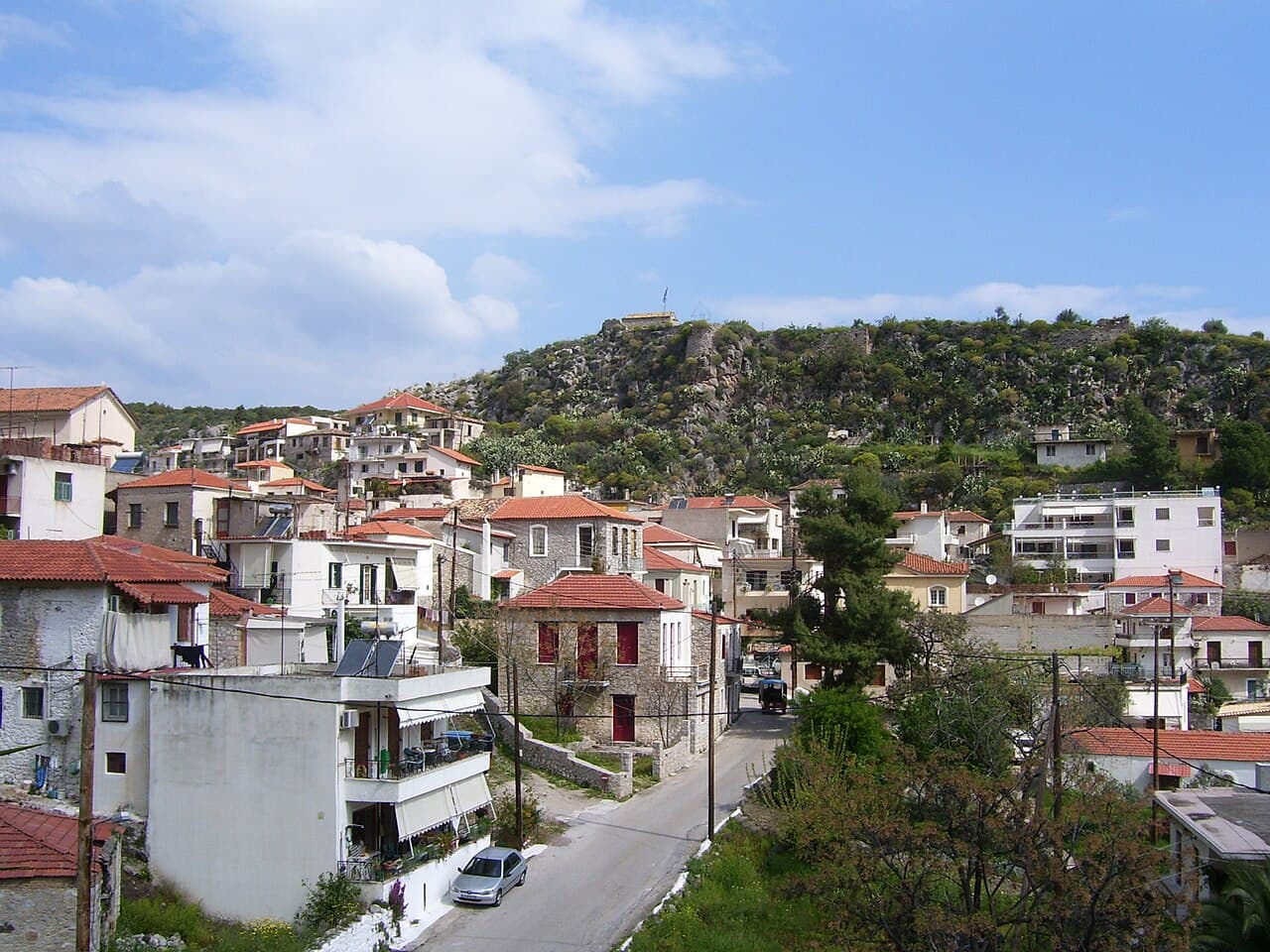
The castle's location on a hill provided a commanding view of the surrounding landscape, allowing its occupants to monitor movements and prepare defenses accordingly. This strategic positioning was typical for hill castles, which leveraged natural topography to enhance their defensive capabilities.

Architectural features

The Castle of Piada exemplifies the characteristics of a hill castle with its robust stone walls and elevated position. The fortifications likely included a keep or donjon, serving as the last line of defense and residence for the lord or commander. Surrounding the keep would have been curtain walls with battlements, designed to repel attackers and provide vantage points for archers.

Although detailed architectural plans are scarce, typical features of 13th-century Greek hill castles include narrow arrow slits, a fortified gatehouse, and possibly a moat or dry ditch to hinder enemy advances. The use of local stone materials would have been common, blending the structure into the natural environment.

Defensive structures

The castle's defensive elements were likely enhanced by natural cliffs or steep slopes, making direct assaults difficult. The walls would have been thick and high, with towers positioned at intervals to allow flanking fire. The gatehouse, often the most vulnerable point, would have been heavily fortified with a portcullis and murder holes to defend against siege attempts.

Cultural and heritage importance

While not as famous as some other Greek castles, the Castle of Piada holds significance as a representation of medieval military architecture in the region. It reflects the turbulent history of Greece during the Middle Ages and the adaptation of fortification techniques to local geography and political realities.

Today, the castle remains a valuable archaeological site for historians and architects studying medieval fortifications. Its ruins offer insights into construction methods and defensive strategies used during the high medieval period in Greece.

Visiting the castle

Information about public access and visitor facilities at the Castle of Piada is limited. Potential visitors should prepare for a hike due to its hilltop location and bring appropriate gear for uneven terrain. The site appeals to enthusiasts of medieval history and castle architecture, offering an evocative glimpse into Greece's past.

Best time to visit

The ideal time to explore the castle ruins is during the spring or autumn months when the weather is mild. Summers can be hot and dry, making the climb more challenging, while winters may bring rain and slippery conditions.

Nearby attractions

Depending on its exact location, visitors might combine a trip to the Castle of Piada with tours of other medieval sites, ancient ruins, or natural landscapes in the region. Greek hill castles often lie near historical towns rich in culture and tradition.

Frequently asked questions (FAQ)

How do I get to the Castle of Piada?
The Castle of Piada is accessible by road from major cities in Greece, with ample parking available nearby. Public transportation options may include local buses that connect to the castle, making it convenient for visitors without personal vehicles.
What is the historical significance of the Castle of Piada?
The Castle of Piada dates back to the Byzantine era and played a crucial role in the defense against invaders. It has witnessed various historical events and changes in ownership, reflecting the rich history of the region.
When was the Castle of Piada built?
Construction of the Castle of Piada began in the late 12th century and was completed in the early 13th century. This timing places it in the context of the Byzantine Empire's efforts to fortify its territories.
Can I take guided tours of the Castle of Piada?
Yes, guided tours are available and highly recommended for visitors who want to learn about the castle's history and architecture. These tours often provide in-depth insights that enrich the experience of exploring the castle grounds.
Why is the architecture of the Castle of Piada unique?
The Castle of Piada showcases a blend of Byzantine and medieval architectural styles, characterized by its imposing stone walls and innovative defensive structures. This combination reflects the historical influences of the time and the strategic importance of the location.
Is it possible to visit the Castle of Piada year-round?
Yes, the Castle of Piada is open to visitors year-round, although hours may vary seasonally. It’s advisable to check the official website or contact the visitor center for the most up-to-date information regarding opening hours.
What are the ticket prices for the Castle of Piada?
Ticket prices for the Castle of Piada are generally affordable, with discounts available for students and seniors. It's best to check the official website for current pricing and any special offers that may be available during your visit.
What is the best time to visit the Castle of Piada?
The best time to visit the Castle of Piada is during the spring and fall when the weather is mild and the tourist crowds are smaller. These seasons provide a pleasant atmosphere for exploring the castle and enjoying the surrounding landscape.
Are there nearby attractions to visit after exploring the Castle of Piada?
Yes, there are several nearby attractions, including local museums and scenic hiking trails that showcase the natural beauty of the region. Visitors can also explore traditional villages and enjoy authentic Greek cuisine in the surrounding areas.

Photo gallery

Castle of Piada
Click to view

Photo by Costas78•CC BY-SA 3.0

1 photo • Click any image to view in full screen

Information

Hill Castle

Loading map...

Visitor reviews

No reviews yet. Been here? Write the first review and help other travelers!

Write the first review

Visited this castle? Share your experience

Your review helps other travelers and adds first-hand knowledge to our encyclopedia.
Write a review

(5/5)

0/2000 characters

Your review will be visible after admin approval

Nearby castles

28.1 km
Damalas Castle — Greece castle

Damalas Castle

, Greece

Damalas Castle is a notable example of a high medieval hill castle located in Greece, dating back to the 13th century. Its position on elevated terrain provided strategic advantages for defense and surveillance during the medieval period. The castle's architecture reflects the military and residential needs of its time, combining robust fortifications with functional living quarters. Historical context and significance Constructed during the high medieval period, Damalas Castle played a role in the complex political and military landscape of medieval Greece. This era was marked by frequent conflicts among local lords, Byzantine forces, and later Latin crusader states following the Fourth Crusade. The castle served as a defensive stronghold and a symbol of feudal authority in the region. The 13th century was a time of shifting powers in Greece, with the establishment of various principalities and the influence of Western European knights. Castles like Damalas were essential for controlling territory, protecting trade routes, and resisting invasions. Architectural features and layout Damalas Castle exemplifies the characteristics of a hill castle, built on elevated ground to maximize natural defenses. Its design typically includes thick stone curtain walls, battlements, and towers positioned to cover all approaches. The castle likely featured a keep or donjon as the central stronghold, providing a last line of defense. The layout would have incorporated a courtyard surrounded by residential buildings, storage facilities, and possibly a chapel. Defensive features such as arrow slits, machicolations, and a fortified gatehouse would have enhanced its security. While specific architectural details of Damalas Castle are limited, these elements are common in contemporaneous hill castles in the region. Construction materials and techniques The castle was primarily constructed using local stone, which provided durability and resistance to siege weaponry. Masonry techniques of the period involved thick walls with rubble infill and dressed stone facing. The use of mortar and careful stone cutting contributed to the longevity of the structure, parts of which may still be visible today as ruins or partially preserved sections. Strategic importance and location Situated on a hill, Damalas Castle commanded views over the surrounding landscape, allowing early detection of enemy movements. Its location was likely chosen to control important routes or borders, serving both military and administrative functions. The elevated position also made direct assault difficult, enhancing the castle's defensive capabilities. Current condition and preservation Today, Damalas Castle is generally classified as ruins, with remnants of its walls and foundational structures still visible. Preservation efforts, if any, focus on stabilizing these remains to prevent further decay. The site offers valuable insights into medieval military architecture and the history of the region. Visiting information and cultural value While detailed visitor information is scarce, castles like Damalas attract historians, archaeologists, and tourists interested in medieval heritage. The site contributes to the cultural landscape of Greece, showcasing the architectural and historical legacy of the high medieval period. Visitors can appreciate the strategic design and imagine the castle's role in medieval society.

High Medieval (11th–13th c.)
Details
31.5 km
Bourtzi Castle — Greece castle

Bourtzi Castle

Nafplio, Greece

Bourtzi Castle is a distinctive bastioned fortress located on a small islet in the harbor of Nafplio, Greece. This fortress is renowned for its strategic position and robust architecture, which have made it a notable landmark and tourist attraction in the Peloponnese region. Its name, derived from the Turkish word for "tower," reflects the Ottoman influence in the region's history. Visitors are drawn to Bourtzi not only for its historical significance but also for its picturesque setting and accessibility by boat from Nafplio. Historical background and construction The origins of Bourtzi Castle date back to the late 15th century. It was initially constructed in 1471 by the Venetian architect Antonio Gambello from Bergamo, with later completion by the technician Brancaleone. The fortress was built to protect the port of Nafplio, a vital maritime hub, primarily against pirate attacks and other naval threats. The Venetians fortified the entire city in 1473, and Bourtzi played a crucial role in this defensive network. Design adapted to the island The fortress's design was uniquely tailored to the narrow, rocky shape of the islet it occupies. Its bastioned layout allowed for effective defense and control over the surrounding waters. The castle features two main entrances on the north and south sides and consists of three floors connected by internal stairways. A small harbor on the northeastern side facilitated safe and convenient access between the sea and the fortress. To further enhance its defense, the Ottomans later installed a large barricade of stones on the seabed around the island, preventing large enemy ships from approaching. Role through history Following the Greek War of Independence in 1821, Bourtzi Castle was repurposed as the residence of the executioner responsible for inmates held at the nearby Palamidi fortress. This dark chapter in its history contrasts with its earlier military function. In the 20th century, between 1930 and 1970, the castle underwent modifications under the German architect Wolf Schaeffer and was used as a hotel, showcasing a unique adaptive reuse of the historic structure. Modern cultural significance Today, Bourtzi Castle hosts the Summer Music Festival, providing a stunning backdrop for musical performances and cultural events. Its accessible location and scenic views make it a popular destination for visitors exploring Nafplio. The castle's preservation and restoration efforts have maintained its historical integrity while allowing for contemporary use. Architectural features and style Bourtzi is classified as a bastioned fortress, a style that emerged in the post-Renaissance period to counter advances in artillery and siege warfare. Its robust stone walls, angled bastions, and strategic positioning demonstrate the military architectural principles of the early 18th century. The fortress's compact design maximizes defensive capabilities on the limited space of the islet. Connection with Palamidi Fortress While Bourtzi guards the harbor entrance, the imposing Palamidi fortress dominates the hill to the east of Nafplio. Built between 1711 and 1714 by the Venetians during their second occupation, Palamidi is a large baroque fortress featuring eight bastions named after ancient Greek heroes and Venetian officials. It offers commanding views of the Argolic Gulf and the surrounding area. The two fortresses together represent the strategic military architecture of the Venetian and Ottoman periods in the Peloponnese. Palamidi's historical role Palamidi was captured by the Ottomans in 1715 and remained under their control until the Greek capture in 1822. It served various functions, including as a prison where notable figures of the Greek Revolution were held. The fortress is accessible via a steep stairway of over 900 steps, a testament to its formidable position. Visiting Bourtzi Castle Visitors can easily reach Bourtzi Castle by boat from Nafplio's port. The island's restored condition allows for safe exploration of its bastioned walls and interior spaces. The castle's historical layers, from Venetian construction through Ottoman modifications to modern cultural use, provide a rich experience for history enthusiasts and tourists alike. Overall, Bourtzi Castle stands as a symbol of Nafplio's maritime heritage and military history. Its unique location, architectural features, and evolving roles over centuries make it a fascinating subject for study and a must-visit site in the Peloponnese.

Post-Renaissance (17th–18th c.)
Details
31.9 km
Acronauplia — Greece castle

Acronauplia

Nafplion, Greece

Acronauplia is the historic citadel and the oldest part of the city of Nafplion in the Peloponnese region of Greece. Its name derives from the Greek words "akro" meaning "highest" or "outermost" and "Nauplia," the ancient name of the city, reflecting its position as a fortified acropolis overlooking the surrounding area. The site has a long history of occupation and fortification, dating back to antiquity, making it a significant landmark in Greek military architecture. Historical background and strategic importance The Acronauplia fortress originally served as an independent town until the 13th century, when the arrival of the Venetians and the Franks led to its integration into the expanding fortifications of Nafplion. Its elevated position provided a commanding view over the Argolic Gulf and the surrounding plains, making it a key defensive stronghold throughout various historical periods. During the Byzantine era, the fortress was an important military and administrative center. The Venetians, who controlled Nafplion in several phases between the 13th and 17th centuries, significantly enhanced the fortifications, adapting them to the evolving needs of artillery warfare. The fortress was also used by the Ottoman Turks during their occupation of the region, who referred to it as Iç Kale, meaning "Inner Castle" in Turkish. Architectural features and fortifications The fortress is classified as a bastioned fortress, characterized by its angular bastions designed to resist cannon fire and provide overlapping fields of defensive fire. The walls of Acronauplia exhibit a complex layering of construction phases, with remnants from the ancient, Byzantine, Venetian, and Ottoman periods. The fortifications include thick stone walls, bastions, ramparts, and gatehouses that reflect the military architectural styles of their respective eras. The layout of the fortress follows the contours of the rocky hill on which it stands, maximizing natural defensive advantages. The bastions are strategically positioned to cover all approaches, and the walls incorporate embrasures and loopholes for muskets and cannons. The fortress also contains internal courtyards and chambers that served various military and administrative functions. Use as a prison and modern transformation In later centuries, particularly under the modern Greek state, parts of the fortress were repurposed as a prison. This use continued until the mid-20th century. Recognizing the site's potential for tourism due to its panoramic views over Nafplion and the Argolic Gulf, the Greek government undertook a transformation of the fortress area. A hotel complex was constructed within the fortress grounds, which remains operational today, blending historical preservation with modern hospitality. Cultural significance and tourism today Today, Acronauplia stands as a prominent cultural and historical monument in Nafplion. Visitors can explore the fortress walls, bastions, and remnants of its varied architectural heritage. The site offers sweeping views of the city and sea, making it a popular destination for tourists interested in history, architecture, and scenic landscapes. The fortress is often included in guided tours of Nafplion and the Peloponnese, highlighting its role in the region's military history and its transformation from a medieval stronghold to a modern tourist attraction. Preservation efforts continue to maintain the structural integrity of the fortress while accommodating visitors.

High Medieval (11th–13th c.)
Details