Castle of Haut-Koenigsbourg
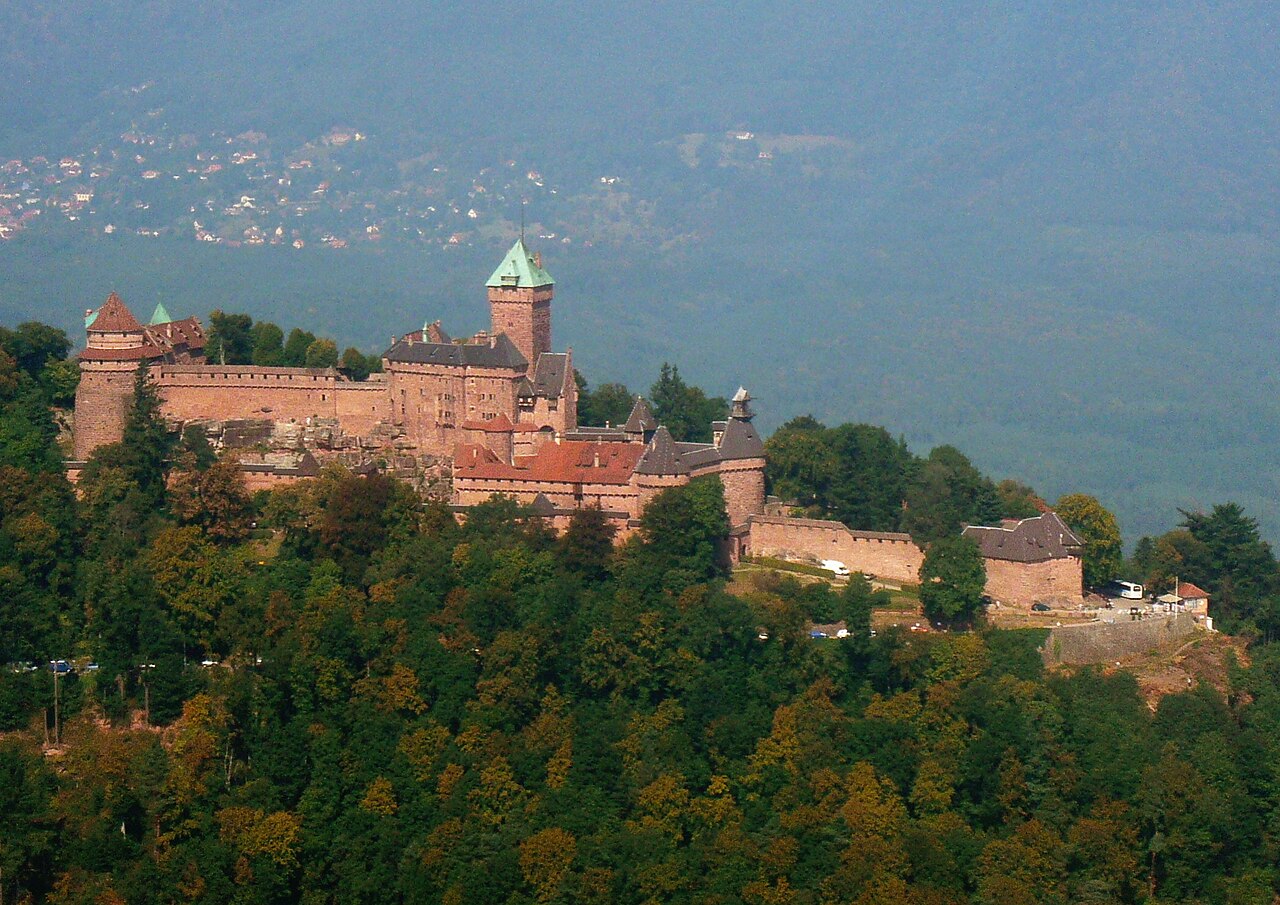
The castle of Haut-Koenigsbourg stands prominently on a rocky promontory at an altitude exceeding 700 meters, overlooking the Upper Rhine valley. This strategic position provided commanding views over vital trade and military routes, making it a formidable defensive stronghold in the region. Its location atop a steep rock formation exemplifies the classic hill castle design, optimized for surveillance and defense.
Early history and medieval significance
The origins of the castle trace back to approximately 1147 when the first fortification, known as Castrum Estuphin, was established. Within a decade, the fortress was renamed Koenigsburg, meaning "royal castle" in German, reflecting its elevated status and strategic importance. Throughout the high medieval period, the castle was a coveted asset, passing through various hands and serving as a military and administrative center.
Its robust construction and commanding location allowed it to control key routes and exert influence over the surrounding territories. The castle's medieval fortifications included thick stone walls, towers, and a complex gate system designed to withstand sieges and assaults common in the period.
Destruction and reconstruction in the late medieval period
In 1462, the castle endured a significant siege led by a coalition of forces from the cities of Colmar, Strasbourg, and Basel. This siege resulted in the castle's destruction, reflecting the turbulent political and military conflicts of the late medieval era. Following this, the Habsburg emperor Frederick III granted the ruined fortress to the Counts of Tierstein.
The Counts undertook a substantial reconstruction and enlargement of the castle, adapting its defenses to the evolving demands of warfare, particularly the increasing use of artillery. The defensive system was modernized with thicker walls and new bastions capable of withstanding cannon fire, marking a transition from purely medieval fortifications to early modern military architecture.
The castle during the thirty years' war and abandonment
During the Thirty Years' War, a devastating conflict that ravaged much of Central Europe from 1618 to 1648, the castle was once again a target. It was burnt to the ground by Swedish forces, leaving it in ruins. This destruction led to the castle being abandoned for nearly two centuries, a common fate for many medieval fortresses rendered obsolete by advances in military technology and changing political landscapes.
19th-century recognition and restoration efforts
In 1862, the ruins of Haut-Koenigsbourg were officially classified as a historical monument, recognizing their cultural and historical significance. Three years later, the nearby town of Selestat purchased the ruins with the intent to preserve them. However, the restoration plans were interrupted by the geopolitical shifts following the Franco-Prussian War in 1871, when the Alsace region was annexed by Germany.
In 1899, the citizens of Selestat transferred ownership of the castle to the German emperor Wilhelm II. The emperor, eager to emphasize German sovereignty over Alsace, commissioned a comprehensive restoration of the castle. This ambitious project began in 1900 and spanned eight years, culminating in the castle's grand reopening on May 13, 1908, attended by Wilhelm II himself.
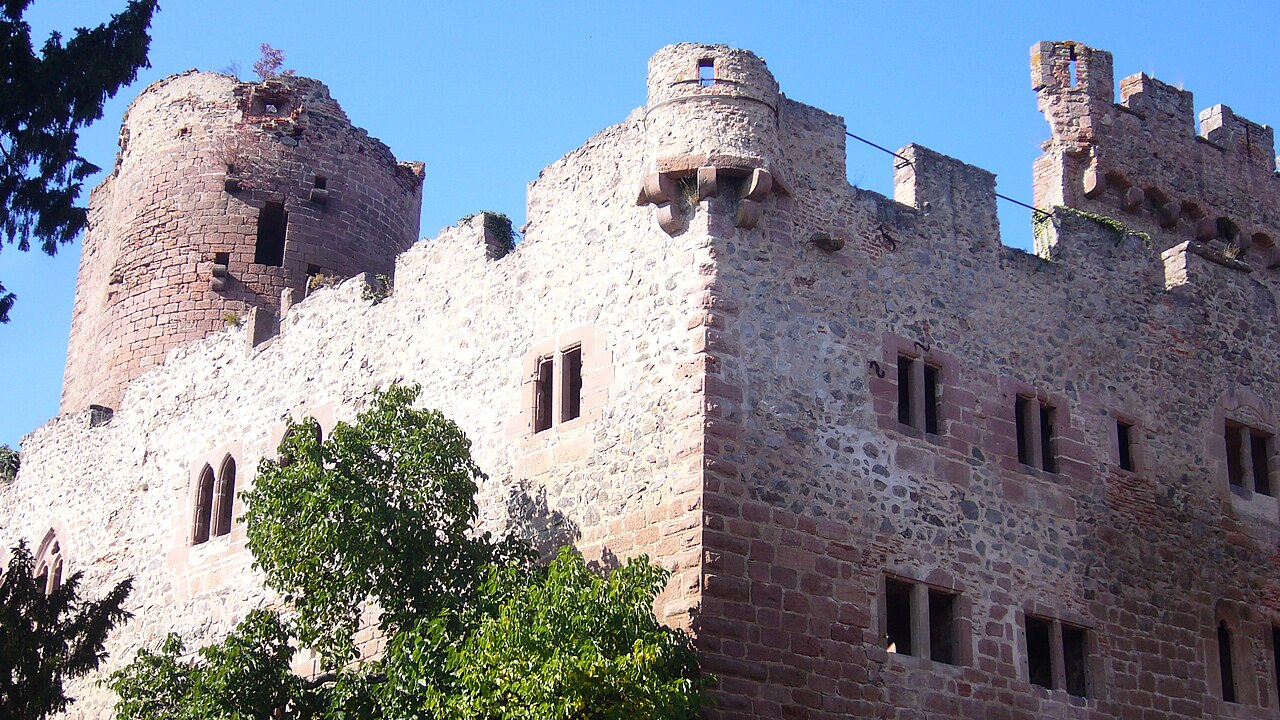
The restoration, led by architect Bergmann, aimed to faithfully reconstruct the castle as it would have appeared in the late medieval period, incorporating both historical accuracy and the romanticized vision of medieval fortresses popular at the time. The project included rebuilding the towers, curtain walls, gatehouses, and interior chambers, as well as restoring the castle's defensive features such as battlements and artillery bastions.
Architectural features and defensive systems
The castle of Haut-Koenigsbourg is an exemplary model of a hill castle with adaptations reflecting changes in military technology from the high medieval through the late medieval periods. Its layout includes a series of fortified enclosures, each protected by thick stone walls and towers positioned to maximize defensive coverage.
Key architectural elements include the imposing donjon (keep), which served as the last line of defense and the residence of the lord. The castle also features multiple gatehouses with portcullises and murder holes, designed to repel attackers. The extensive use of machicolations and battlements along the walls allowed defenders to launch projectiles and boiling substances on besiegers.
Following the 15th-century reconstruction, the castle incorporated artillery bastions and angled walls to better resist cannon fire, a significant advancement over earlier medieval designs. The castle's water supply was secured through a deep well within the courtyard, essential for surviving prolonged sieges.
The castle in the 20th century and today
After World War I, the Treaty of Versailles in 1919 returned the castle to French control. Since then, the castle has been maintained as a cultural monument and tourist attraction. It is now one of the most visited castles in France, attracting over 500,000 visitors annually.
Today, the castle of Haut-Koenigsbourg stands as a remarkably well-preserved example of medieval military architecture, offering visitors a vivid glimpse into the past. Its restored interiors include period furnishings, armory displays, and detailed recreations of medieval life. The castle's location continues to provide breathtaking views over the surrounding Alsace region and the Rhine valley.
The site hosts various cultural events, medieval reenactments, and educational programs, enhancing its role as a living museum and heritage site.
Visitor information and cultural significance
Visitors to the castle can explore its extensive ramparts, towers, and chambers, gaining insight into the defensive strategies and daily life of medieval nobility. The castle's museum exhibits include weapons, armor, and artifacts from different periods of its history.
The castle of Haut-Koenigsbourg is not only a symbol of regional history but also a testament to the evolving nature of fortress design from the high medieval period through the early modern era. Its preservation and restoration reflect the broader European interest in medieval heritage and architectural conservation.
Frequently asked questions (FAQ)
- How do I get to the Castle of Haut-Koenigsbourg?
- The Castle of Haut-Koenigsbourg is located in Orschwiller, France, and can be easily accessed by car or public transport. There are designated parking areas near the castle, and local buses run from nearby towns, making it convenient for visitors.
- What is the historical significance of the Castle of Haut-Koenigsbourg?
- The Castle of Haut-Koenigsbourg dates back to the 12th century and has played a vital role in the region's history. It served as a strategic stronghold during various conflicts, particularly during the Hundred Years' War and the Thirty Years' War, reflecting the tumultuous history of Alsace.
- When was the Castle of Haut-Koenigsbourg restored?
- The castle underwent significant restoration from 1900 to 1908 under the direction of the German Emperor Wilhelm II. This restoration aimed to return the castle to its medieval glory and included the addition of various decorative elements and modern amenities.
- Can I take guided tours of the Castle of Haut-Koenigsbourg?
- Yes, guided tours are available at the Castle of Haut-Koenigsbourg, providing visitors with in-depth knowledge of its history and architecture. Audio guides are also offered for those who prefer to explore at their own pace while still learning about the castle's fascinating past.
- Why is the architecture of the Castle of Haut-Koenigsbourg unique?
- The architecture of Haut-Koenigsbourg is a blend of medieval styles, showcasing elements from the Romanesque and Gothic periods. Its impressive fortifications, towers, and well-preserved interiors reflect the castle's strategic importance and the aesthetic values of the time.
- Is it possible to visit the Castle of Haut-Koenigsbourg year-round?
- Yes, the Castle of Haut-Koenigsbourg is open to visitors year-round, although opening hours may vary by season. It's advisable to check the official website for specific hours and any seasonal events or closures before planning your visit.
- What are the ticket prices for visiting the Castle of Haut-Koenigsbourg?
- Ticket prices for the Castle of Haut-Koenigsbourg are generally affordable, with discounts available for children, students, and seniors. Group rates are also offered, making it a great option for school trips or family outings.
- What is the best time to visit the Castle of Haut-Koenigsbourg?
- The best time to visit the Castle of Haut-Koenigsbourg is during the spring and fall when the weather is mild and the surrounding landscapes are particularly beautiful. Summer can be crowded, while winter may offer a unique experience with fewer visitors and a picturesque snowy backdrop.
- Are there any nearby attractions to visit along with the Castle of Haut-Koenigsbourg?
- Yes, the region around Haut-Koenigsbourg is rich in attractions, including the charming village of Riquewihr, famed for its wine and medieval architecture. Additionally, the Alsace Wine Route offers numerous wineries and picturesque towns worth exploring.
Information
Website
Visit websiteSources & official resources
Verify the information above using these authoritative references.
Loading map...
Visitor reviews
No reviews yet. Been here? Write the first review and help other travelers!
Write the first reviewVisited this castle? Share your experience
Your review helps other travelers and adds first-hand knowledge to our encyclopedia.