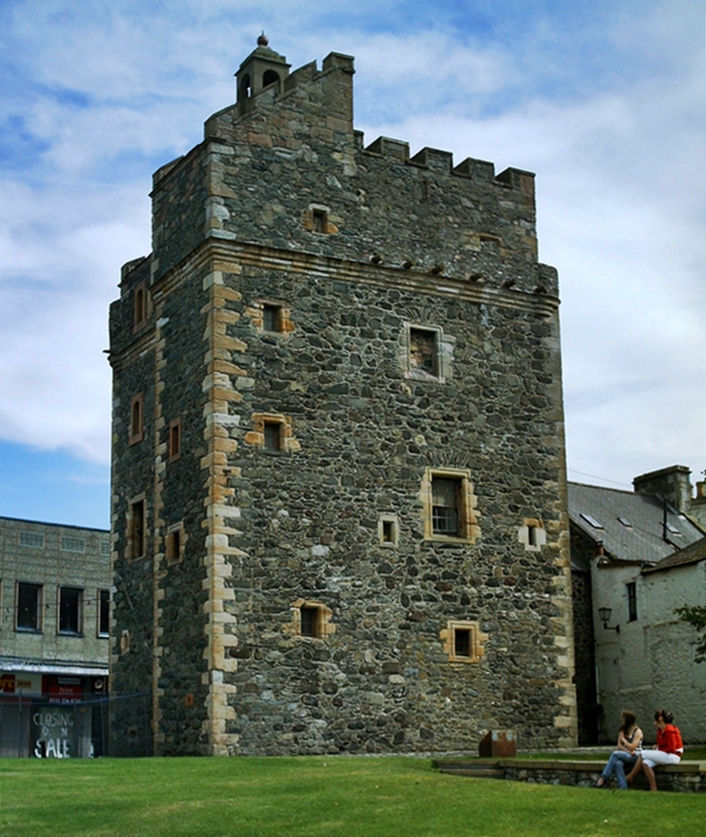
Castle Kennedy
Castle Kennedy is a notable example of a 17th-century Renaissance tower house located approximately 4.8 km east of Stranraer in Wigtownshire, Scotland. This castle stands today as a ruin, offering a glimpse into the architectural and historical developments of the period. Originally constructed in 1607 by John Kennedy, 5th Earl of Cassilis, the castle was built on the site of an earlier stronghold that had belonged to the Kennedys since 1482.
Historical context and ownership
The Kennedys were a powerful family in southwestern Scotland, and their possession of the site since the late 15th century underscores the strategic importance of this location. The castle's construction in the early 17th century reflects the transition from medieval fortified homes to more comfortable Renaissance residences with defensive features. After its initial period under the Kennedys, the property briefly came into the hands of the Hamiltons of Bargany. Around 1677, it passed to the Dalrymples of Stair, a family prominent in Scottish politics and society.
Despite its grandeur, Castle Kennedy suffered a devastating fire in 1716, which gutted the building. The castle was never restored, leaving the ruins visible today as a testament to its past.
Architectural features and layout
Castle Kennedy is designed in an E-plan, a layout typical of the Renaissance period in Scotland, combining both defensive and residential elements. The castle was originally situated on an island within a loch, enhancing its defensive position. The main block of the castle rises to four storeys plus an attic, flanked by two projecting square wings each five storeys high. Additionally, there are two imposing seven-storey square towers located in the re-entrant angles of the E-plan.
One of the seven-storey towers houses the main turnpike stair, a spiral staircase characteristic of Scottish tower houses, allowing vertical circulation between floors. The basement and ground floors feature vaulted rooms, including a large kitchen, which was essential for the castle's self-sufficiency. The vaulted passage from the main entrance leads through the basement, connecting to a newel stair in the southwest re-entrant turret.
The castle's windows are large and evenly spaced, a Renaissance feature that allowed more light into the interior than earlier medieval castles typically permitted. Defensive shot-holes are also present, indicating that while the castle was designed for comfort, it retained elements for defense.
Later additions include three-storey wings, which expanded the living quarters. The main block likely contained the public rooms, with a single large chamber on each level, while the wings accommodated a series of bedchambers and closets, reflecting the hierarchical arrangement of space common in Renaissance residences.
Gardens and surrounding landscape
The castle was originally surrounded by water, positioned on an island in a loch, which served as a natural moat. Although the loch no longer surrounds the ruins, the defensive advantage it provided was significant. To the south of the castle lies a walled garden dating from the 18th century, indicating continued use and landscaping of the grounds after the castle itself was abandoned.
Current condition and significance
Today, Castle Kennedy remains a ruined tower house, its stone walls and vaulted basements providing insight into early 17th-century Scottish Renaissance architecture. The fire of 1716 left the castle gutted, and it was never restored, which has preserved its historic fabric in a state of ruin rather than renovation. The site is important for understanding the evolution of Scottish noble residences from fortified medieval castles to Renaissance homes that balanced defense with domestic comfort.
Castle Kennedy's architectural features, including its E-plan layout, vaulted basements, and turnpike stair, exemplify the transitional period of Scottish castle building. Its history of ownership by prominent Scottish families adds to its cultural significance.
Frequently asked questions (FAQ)
- How do I get to Castle Kennedy?
- Castle Kennedy is located in Wigtownshire, United Kingdom. Visitors can reach the castle by car, with ample parking available on site. Public transport options include buses that connect to nearby towns, making it accessible for those without a vehicle.
- What is the historical significance of Castle Kennedy?
- Castle Kennedy dates back to the 16th century and is notable for its connection to the Kennedy family, influential figures in Scottish history. The castle has played a key role in the region's history and offers insights into the feudal system and noble life during its peak. Visitors can learn about its storied past through guided tours and exhibits.
- When was Castle Kennedy built?
- Castle Kennedy was constructed in the early 1600s, showcasing the architectural styles of the time. Its design reflects the transition from medieval fortifications to more refined residential structures. The castle has undergone various renovations, preserving its historical essence while adapting to modern needs.
- Can I visit Castle Kennedy year-round?
- Yes, Castle Kennedy is open to visitors throughout the year, although certain areas may be restricted during the winter months. It is advisable to check the castle's official website for specific opening hours and any seasonal events that may enhance your visit.
- Is it possible to take guided tours at Castle Kennedy?
- Absolutely! Guided tours are available and provide a wealth of information about the castle's history, architecture, and gardens. These tours are led by knowledgeable staff who can answer questions and share fascinating stories about the castle's past.
- What are the ticket prices for visiting Castle Kennedy?
- Ticket prices for Castle Kennedy vary depending on age and group size, with discounts available for children, seniors, and families. It's best to check the official website for up-to-date pricing and any special offers that may be available during your visit.
- What are the opening hours for Castle Kennedy?
- Castle Kennedy typically opens at 10 AM and closes at 5 PM, though hours may vary seasonally. It’s recommended to verify the hours on the official website before planning your visit, especially during public holidays and peak tourist seasons.
- What is the best time to visit Castle Kennedy?
- The best time to visit Castle Kennedy is during the spring and summer months when the gardens are in full bloom and the weather is pleasant. Autumn also offers beautiful foliage, while winter may provide a quieter atmosphere. Special events often occur during these peak seasons, enhancing the visitor experience.
- Are there any nearby attractions to visit alongside Castle Kennedy?
- Yes, there are several attractions near Castle Kennedy, including the stunning gardens of Castle Kennedy and the historical ruins of nearby castles. Additionally, the scenic coastline of Wigtownshire offers beautiful walks and views. Visitors can easily plan a full day of exploration in the area.
Loading map...
Visitor reviews
No reviews yet. Been here? Write the first review and help other travelers!
Write the first reviewVisited this castle? Share your experience
Your review helps other travelers and adds first-hand knowledge to our encyclopedia.