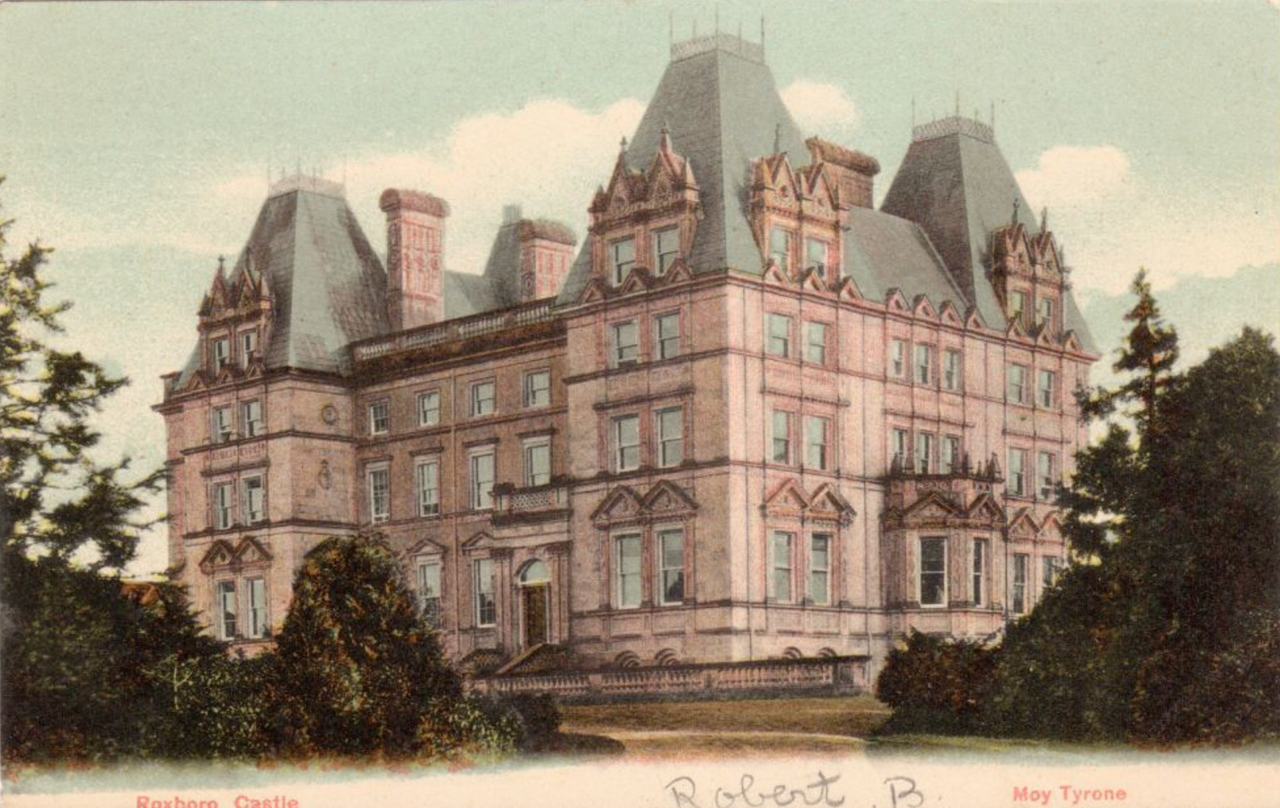
Castle Caulfield
Castle Caulfield, also historically known as Ballydonelly Castle, stands as a significant example of a Renaissance period mansion in Northern Ireland. Located in the village of Castlecaulfield, west of Dungannon in County Tyrone, this castle was constructed between 1611 and 1619 by Sir Toby Caulfield, an English settler granted land during the Ulster Plantation. The castle occupies the site of an earlier fortified residence belonging to the native O'Donnelly family, who were allied with the powerful O'Neill clan of the region.
Historical context and origins
The land on which Castle Caulfield was built was originally held by the O'Donnelly family, a Gaelic Irish sept closely connected to the O'Neills of Dungannon. Their earlier fortification, located a few miles west of the present castle, was a typical Gaelic defensive structure. When the English crown initiated the Ulster Plantation in the early 17th century, lands were confiscated from native Irish families and granted to English and Scottish settlers. Sir Toby Caulfield received a grant of approximately 1000 acres, on which he constructed the mansion that became Castle Caulfield.
The castle was built as a fortified mansion rather than a traditional medieval fortress, reflecting the changing architectural and social needs of the period. It served both as a residence and a symbol of English authority in the region.
Architectural features and design
Castle Caulfield was originally designed in a U-shaped plan, although the northwest wing is now missing, leaving an L-shaped footprint. The building rises to three stories with attics, featuring numerous large mullioned windows that allowed ample light into the interior, a characteristic of Renaissance domestic architecture.
The castle's tall chimney stacks are prominent features, indicative of the period's emphasis on comfort and domesticity. The surviving gatehouse on one side of the ruin is particularly notable; it is believed to incorporate elements of the earlier O'Donnelly fortification, including at least one reused doorway. This gatehouse likely served both defensive and ceremonial functions.
Construction materials and techniques
The castle was constructed primarily from locally sourced stone, with finely crafted masonry work evident in the window surrounds and doorways. The use of mullioned windows and the overall symmetry of the design reflect Renaissance influences, while the defensive elements such as thick walls and the gatehouse hint at the lingering need for security in a turbulent region.
Historical events and later use
Castle Caulfield's history is marked by conflict and change. During the Irish Rebellion of 1641, the castle was set on fire by Patrick Donnelly, a figure associated with the rebellion. Despite this damage, the Caulfield family repaired and reoccupied the mansion until the 1660s.
In 1670, the castle hosted a service conducted by Saint Oliver Plunkett, an important Catholic martyr and archbishop. This event underscores the castle's significance as a local religious and social center during a period of religious tension.
By around 1700, Castle Caulfield fell into disuse and began to decline. The famous Methodist preacher John Wesley preached at the castle in 1767, by which time it was already a ruin. Today, the castle remains as a large, evocative ruin, an empty shell bearing witness to its turbulent past.
Current condition and visitor experience
Presently, Castle Caulfield is a ruined mansion freely accessible to the public. The site offers a tangible connection to the early 17th century and the complex history of the Ulster Plantation. Visitors can explore the remains of the gatehouse, the surviving walls, and the layout of the original mansion, gaining insight into the architectural style and defensive needs of the period.
The castle's setting in the village of Castlecaulfield provides a picturesque backdrop, and its ruins are appreciated both for their historical significance and their atmospheric presence in the Northern Irish landscape.
Cultural significance and heritage
Castle Caulfield represents a key example of a plantation-era mansion in Ulster, illustrating the transition from Gaelic to English control and the architectural evolution from medieval fortifications to Renaissance domestic residences. The castle's association with notable historical figures such as Sir Toby Caulfield, Saint Oliver Plunkett, and John Wesley adds layers of cultural and religious importance.
As a heritage site, Castle Caulfield contributes to understanding the complex history of Northern Ireland during a period of colonization, rebellion, and religious change. Its ruins serve as a monument to the region's layered past and the architectural trends of the early 17th century.
Frequently asked questions (FAQ)
- How do I get to Castle Caulfield?
- Castle Caulfield is located in the village of Castlecaulfield, west of Dungannon in County Tyrone, Northern Ireland. It is accessible by local roads and can be reached by car or local transport services from Dungannon.
- What is the historical significance of Castle Caulfield?
- Castle Caulfield is significant as a Renaissance mansion built during the Ulster Plantation, representing English settlement on former Gaelic lands. It also has connections to notable historical figures like Sir Toby Caulfield and Saint Oliver Plunkett.
- Can I visit the interior of Castle Caulfield?
- As Castle Caulfield is currently a ruin, visitors can explore the exterior remains and the gatehouse but should exercise caution. There are no formal interior tours, and some areas may be unsafe due to the building's condition.
- When was Castle Caulfield built?
- Castle Caulfield was constructed between 1611 and 1619 by Sir Toby Caulfield on the site of an earlier Gaelic fort.
- Is there an entrance fee to visit Castle Caulfield?
- Visiting Castle Caulfield is free of charge as it is an open ruin accessible to the public without an entrance fee.
Information
Loading map...
Visitor reviews
No reviews yet. Been here? Write the first review and help other travelers!
Write the first reviewVisited this castle? Share your experience
Your review helps other travelers and adds first-hand knowledge to our encyclopedia.