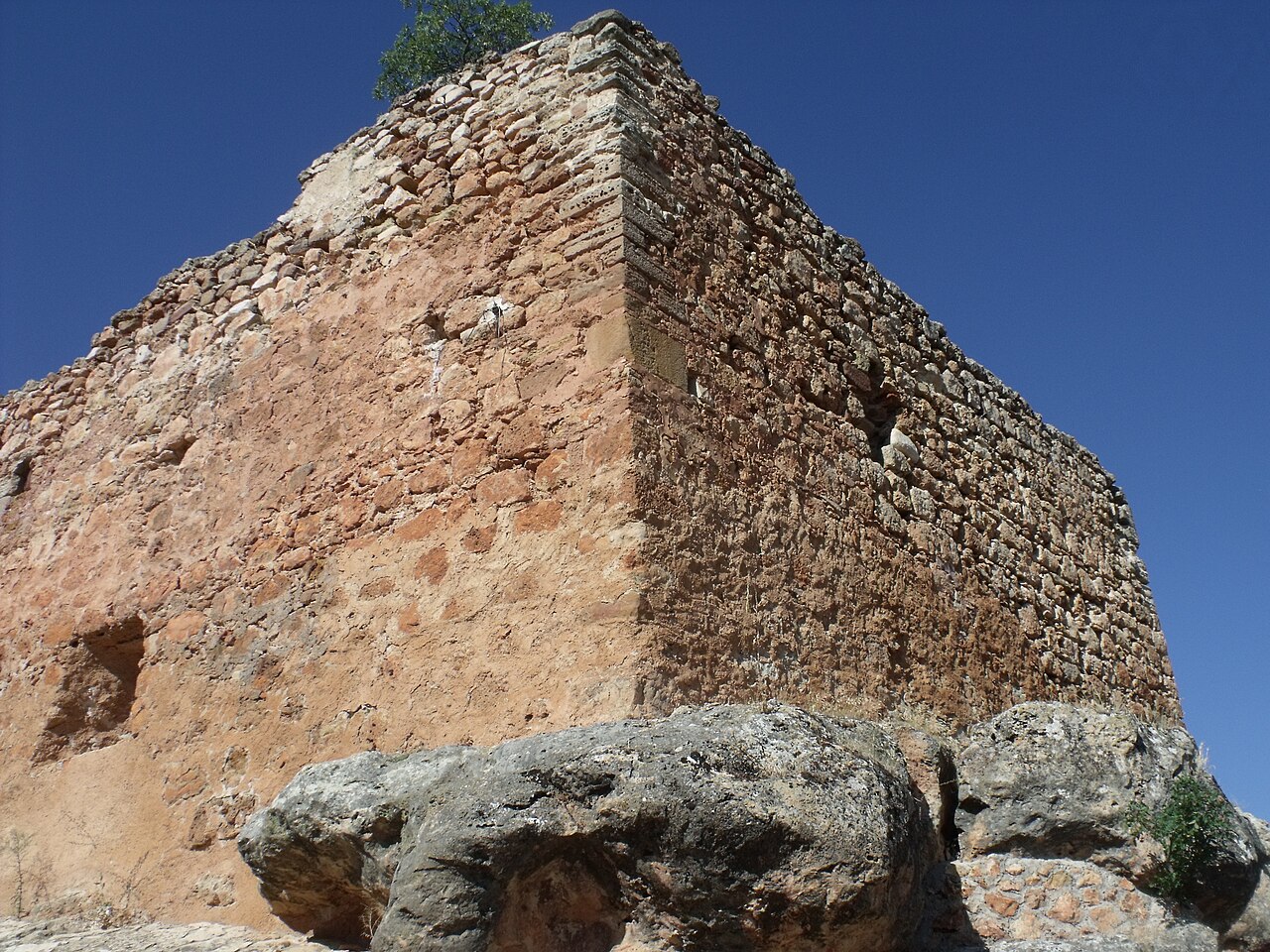
Castillo de Peñolite
The Castillo de Peñolite stands as a significant example of Almohad military architecture in southern Spain, located near the municipality of Puente de Génave in the province of Jaén. This hill castle was constructed during the 12th century under the rule of the Almohad Caliphate, a powerful Muslim dynasty that controlled large parts of the Iberian Peninsula and North Africa. The castle played a strategic role in the defense and control of rural territories during a period marked by frequent conflicts between Muslim and Christian forces.
Unlike large urban fortresses, Castillo de Peñolite was primarily a rural stronghold linked to a network of alquerías—small agricultural settlements typical of the Islamic period in Spain. These farmsteads formed the economic backbone of the region, and the castle served as a refuge and defensive point to protect the local population and resources from raids or military incursions.
Historical context and significance
The castle’s origins lie in the Almohad era, which spanned the 12th and early 13th centuries. The Almohads were known for their architectural innovations and military fortifications, adapting designs to the rugged terrain of Andalusia. Castillo de Peñolite was part of a broader system of fortifications aimed at securing the frontier zones and maintaining control over agricultural lands.
Historical documents from the late 15th and 16th centuries provide valuable insights into the castle’s status during the transition from Muslim to Christian rule. The Relación de pueblos compiled by Francisco de León in 1468 mentions the castle, indicating its continued recognition as a landmark. However, by the time of the Relación Topográfica of 1575, commissioned by King Philip II, the castle was reported as being in ruins, reflecting its abandonment and decline following the Reconquista.
The nearby village of Peñolite developed only after the castle had fallen out of use, underscoring the fortress’s role as an isolated defensive site rather than a settlement center. Today, the castle remains a solitary witness to the Almohad presence and the early organization of rural landscapes in this part of Andalusia.
Architectural features and layout
Castle plan and defensive structures
The Castillo de Peñolite occupies a roughly rectangular area measuring approximately 30 meters by 15.6 meters. Its design reflects typical medieval Muslim military architecture, adapted to the demands of a rural defensive outpost. The castle’s fortified walls were constructed to provide a strong enclosure, with corner towers enhancing surveillance and defense.
Three towers remain standing today, located at the southern and western corners of the enclosure. These towers feature square bases with a distinctive truncated conical shape, wider at the base and tapering slightly towards the top. This design provided stability and resistance against siege engines and natural erosion.
Tower construction and internal features
The surviving towers are built with a robust lower section designed for strength and durability. Each tower originally contained three internal floors, supported by wooden beams. These floors would have served multiple purposes, including lookout posts, living quarters for guards, and storage areas for supplies and weapons.
The upper levels of the towers are pierced with narrow vertical arrow slits, allowing defenders to use bows and crossbows while remaining protected behind the thick stone walls. One tower remains fully intact, measuring approximately four meters on each side, offering a clear example of the castle’s original scale and construction techniques.
Walls and additional fortifications
The castle walls that once enclosed the fortress are now heavily ruined, but archaeological evidence suggests the presence of a fourth tower at the remaining corner, completing the rectangular layout. The walls would have included battlements and walkways to facilitate defense and communication between towers.
The castle’s role in the local landscape
During its active use, Castillo de Peñolite functioned as a defensive refuge for the scattered rural population and the agricultural estates in the surrounding area. Its position on a hill provided a vantage point to monitor movement along nearby routes and to guard against incursions.
Although no permanent village existed adjacent to the castle during the Almohad period, the fortress was integral to the security and administration of the rural landscape. The castle’s presence helped maintain control over farmlands and waterways, which were vital for the local economy and sustenance.
Current condition and preservation
Today, Castillo de Peñolite is classified as a hill castle in a ruined state, with only partial remains of its walls and towers surviving. The site offers valuable insights into Almohad military architecture and rural fortifications in medieval Spain.
Preservation efforts focus on maintaining the structural integrity of the remaining towers and walls, allowing visitors to appreciate the castle’s historical and architectural significance. The castle is accessible to the public, providing an opportunity to explore a lesser-known example of Islamic fortifications in the Iberian Peninsula.
Frequently asked questions (FAQ)
- What is the historical significance of Castillo de Peñolite?
- Castillo de Peñolite is a historic castle that dates back to the 13th century, representing the rich cultural heritage of the region. It played a vital role in the defense against invasions during the Middle Ages and is a testament to the architectural advancements of that era.
- When is the best time to visit Castillo de Peñolite?
- The best time to visit Castillo de Peñolite is during the spring and fall months when the weather is pleasant, and the crowds are fewer. These seasons offer a more enjoyable experience for exploring the castle and the surrounding landscapes.
- What are the opening hours for Castillo de Peñolite?
- Castillo de Peñolite is typically open to visitors from 10 AM to 6 PM, with extended hours during the summer months. It is advisable to check the official website or contact the castle administration for any seasonal changes in hours.
- Can I access Castillo de Peñolite with a wheelchair?
- While Castillo de Peñolite aims to be accessible, the historical nature of the site may pose challenges for wheelchair users due to uneven terrain and steep pathways. It is recommended to contact the castle administration in advance to inquire about specific accessibility options.
- Is there an entrance fee to visit Castillo de Peñolite?
- Yes, there is an entrance fee to visit Castillo de Peñolite, which helps maintain the site and its surroundings. Ticket prices typically vary based on age groups, with discounts available for children and seniors.
- What nearby attractions should I visit while at Castillo de Peñolite?
- While visiting Castillo de Peñolite, you can also explore the charming village of Puente de Génave and its beautiful natural surroundings. Other nearby attractions include the Sierra de Cazorla Natural Park, which offers hiking trails and stunning views.
- How do I get to Castillo de Peñolite?
- Castillo de Peñolite is accessible by car, with parking available near the entrance. Public transportation options may be limited, so it is advisable to check local bus schedules or consider a guided tour from nearby cities.
- What architectural features can I expect to see at Castillo de Peñolite?
- Castillo de Peñolite showcases a blend of Gothic and Moorish architectural styles, characterized by its impressive stone walls and strategic towers. Visitors can admire the castle's well-preserved battlements and stunning views of the surrounding landscape.
Information
Loading map...
Visitor reviews
No reviews yet. Been here? Write the first review and help other travelers!
Write the first reviewVisited this castle? Share your experience
Your review helps other travelers and adds first-hand knowledge to our encyclopedia.