Castillo de Fuste
The Castillo de Fuste stands as a significant example of 18th-century military architecture on the island of Fuerteventura, part of the Canary Islands, Spain. This defensive tower was constructed to protect the strategically important bay of Caleta de Fuste, a vital port for the island, from frequent pirate raids during the early modern period. The castle's history is deeply intertwined with the broader defensive efforts undertaken across the Canary Islands in response to threats from Berber, English, and French pirates who targeted the vulnerable coasts of Fuerteventura prior to the 1700s.
Commissioned by Andrés Bonito y Pignatelli, the commander general of the Canary Islands, the construction of Castillo de Fuste was entrusted to the military engineer Claudio de L’Isle. His design reflects the typical characteristics of coastal fortifications in the region, emphasizing robust defensive features tailored to withstand artillery attacks and provide effective surveillance of maritime approaches.
Historical context and strategic importance
Before the castle's construction, the coastline of Fuerteventura was notably unfortified, leaving the island exposed to repeated pirate incursions. These raids disrupted local commerce and threatened the safety of inhabitants. Recognizing the urgent need for coastal defenses, the Spanish authorities initiated a program to erect a series of fortifications across the Canary Islands, with Castillo de Fuste being a key component of this network.
The castle's location on a promontory approximately seven meters above sea level allowed for commanding views over the bay and surrounding waters. This vantage point was crucial for early detection of hostile vessels and coordination of defensive responses. The fortification served not only as a military stronghold but also as a deterrent, signaling Spanish control and readiness to repel attacks.
Architectural features and construction details
Design and layout
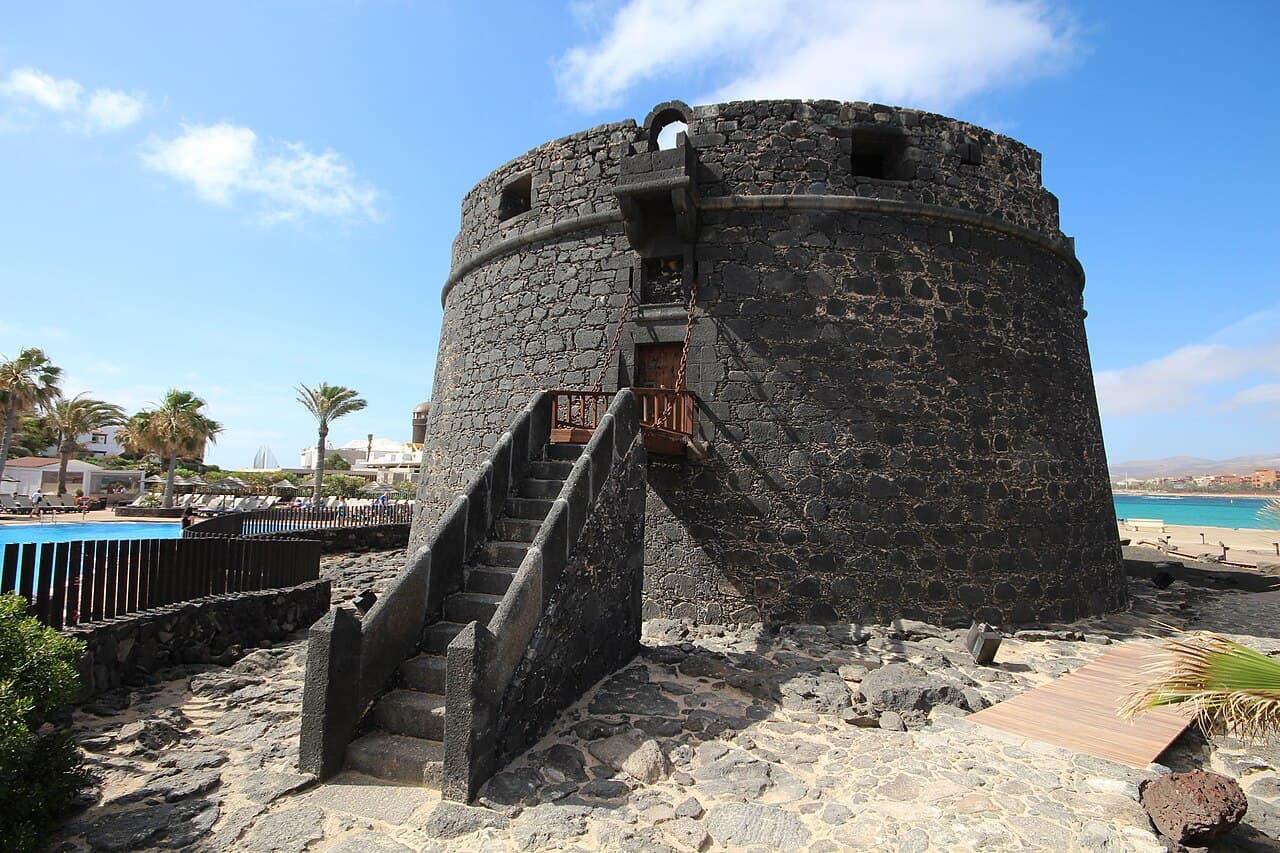
Castillo de Fuste exhibits a circular plan spanning two levels, a common design choice for military towers in the Canary Islands during the early 18th century. The circular form minimized blind spots and provided a 360-degree field of fire for the garrison's artillery. The walls were initially built to a thickness of about three meters, reflecting the need to resist cannon fire.
Structural reinforcements
Following an attack by pirates that inflicted damage through cannon fire, the castle's walls were reinforced and nearly doubled in thickness to approximately six meters. This enhancement significantly improved the fortress's resilience against artillery bombardment, a testament to the evolving military engineering practices of the period.
Interior architecture
Inside, the tower features a vaulted ceiling supported by a large central pillar. This architectural solution provided both structural stability and efficient distribution of the weight from the upper levels. The interior space was designed to accommodate the garrison and their artillery, including two small-caliber iron cannons that were stationed to defend the bay.
Access and defensive mechanisms
Entry to the castle is gained via a masonry staircase leading to a doorway equipped with a drawbridge operated by iron chains. This mechanism allowed defenders to control access securely, raising the drawbridge to prevent enemy entry during attacks. Such features were typical of coastal fortifications designed to withstand sieges and sudden assaults.
Comparative analysis with regional fortifications
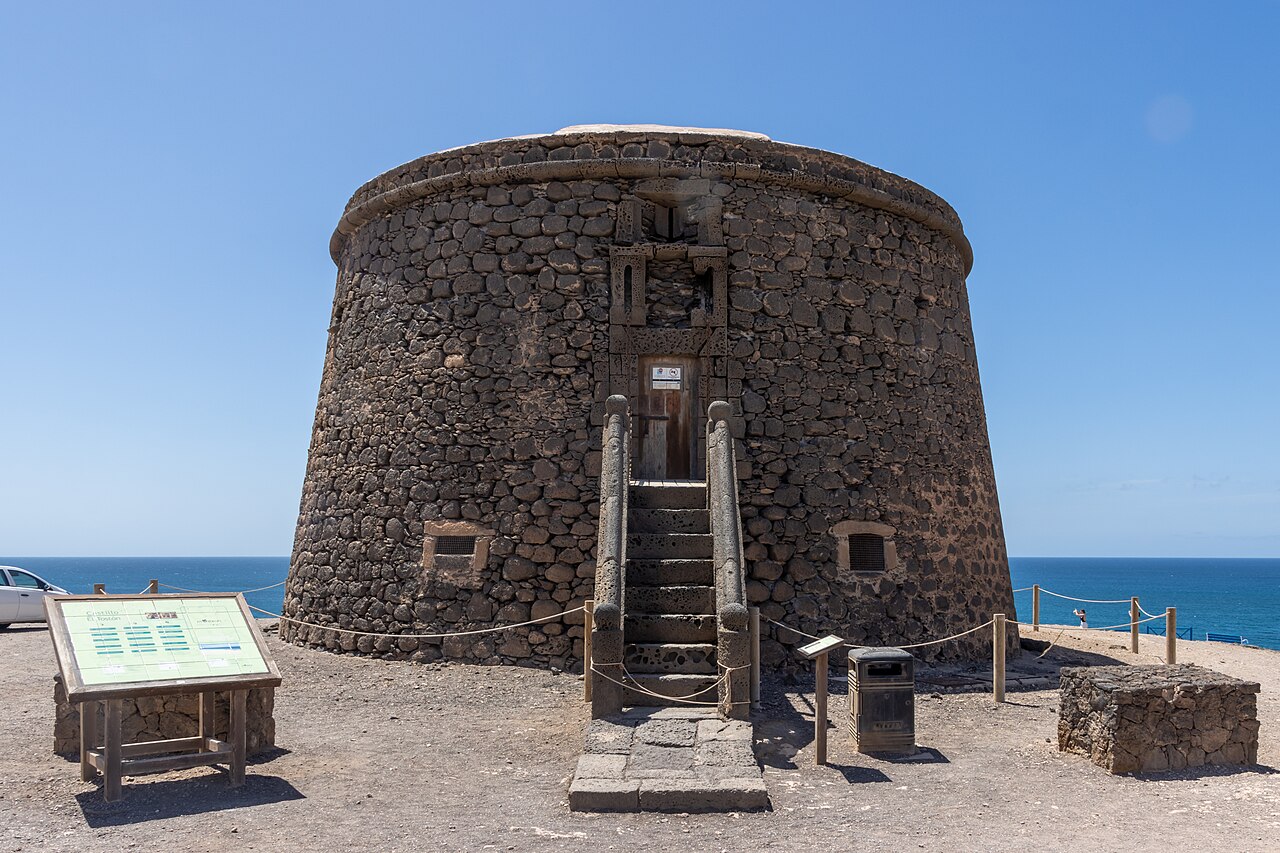
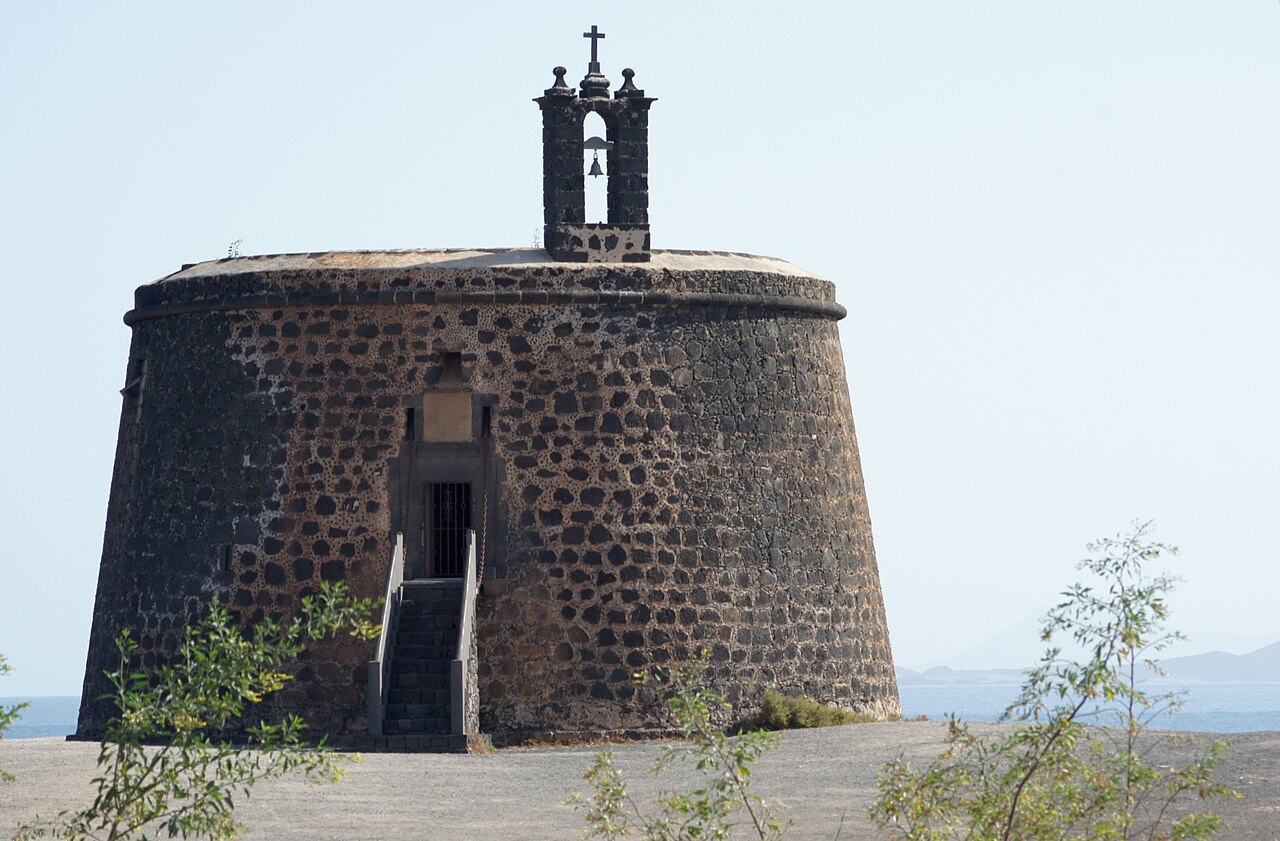
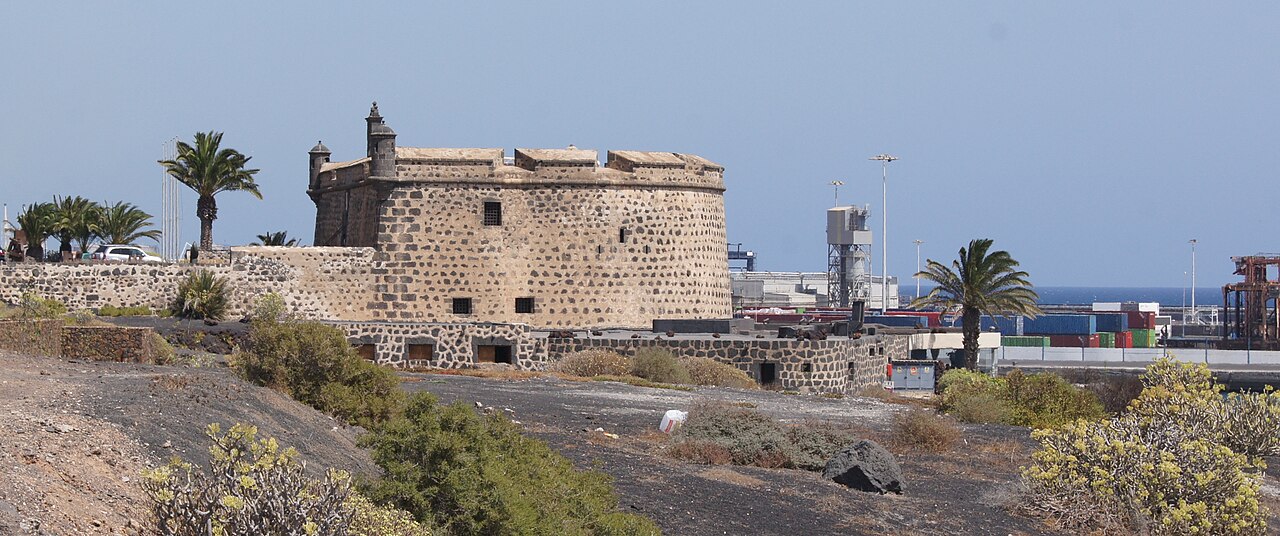
The design and construction of Castillo de Fuste closely resemble other notable Canary Island fortifications, such as the Torre de San Andrés in Tenerife, the towers of Gando and San Pedro in Gran Canaria, the Castillo de El Cotillo on Fuerteventura, and the Torre del Águila in Lanzarote. These structures collectively represent a regional architectural tradition focused on coastal defense, characterized by robust masonry, strategic siting, and functional military features.
Later history and preservation
By the 19th century, the military significance of Castillo de Fuste diminished as changes in warfare and political circumstances reduced the threat of pirate attacks. The castle eventually passed into private ownership. In the early 1980s, the surrounding area underwent development, including the addition of a tourist complex with modern amenities such as swimming pools, which altered the immediate landscape around the tower.
Recognizing the cultural and historical value of the castle, restoration efforts were undertaken in 2013 by the local island council and municipality. These efforts focused on preserving the castle's fundamental features, restoring structural integrity, and preparing the site for public access. Today, Castillo de Fuste stands as a well-preserved monument and a prominent landmark that reflects the island's rich heritage of coastal defense.
Visitor experience and cultural significance
Visitors to Castillo de Fuste can appreciate its strategic coastal position and the architectural ingenuity of early modern military engineers. The castle offers insight into the challenges faced by island communities in defending against maritime threats and the evolution of fortification techniques in the Canary Islands. Its preservation contributes to the understanding of regional history and serves as an educational resource for both locals and tourists.
The castle's proximity to the bay and integration within a tourist complex make it accessible for visitors interested in history, architecture, and coastal scenery. Interpretive materials and guided tours help contextualize the castle within the broader narrative of Spanish colonial defense and maritime security in the Atlantic.
Frequently asked questions (FAQ)
- What is the historical significance of Castillo de Fuste?
- Castillo de Fuste, built in the 18th century, was originally constructed to defend against pirates and invasions. Its strategic location on the eastern coast of Fuerteventura highlights its importance in safeguarding the island's maritime routes. Today, it stands as a symbol of the island's rich history and military architecture.
- When was Castillo de Fuste built?
- Construction of Castillo de Fuste began in 1741 and was completed in 1745. It was designed by the Italian engineer Giovanni Battista Calvi as part of a broader defense system for the Canary Islands. Over the years, it has undergone various restorations to preserve its historical integrity.
- What are the opening hours for Castillo de Fuste?
- Castillo de Fuste is typically open to visitors every day from 10 AM to 6 PM. However, it's advisable to check for any seasonal changes or special events that may affect these hours. Planning your visit in advance ensures you have ample time to explore the site.
- Can I access Castillo de Fuste if I have mobility issues?
- Yes, Castillo de Fuste is accessible for visitors with mobility challenges. The site has made efforts to provide suitable access routes and facilities to ensure everyone can enjoy the historical experience. It's recommended to contact the visitor center for specific inquiries regarding accessibility features.
- What are the ticket prices for visiting Castillo de Fuste?
- Admission to Castillo de Fuste is generally affordable, with tickets costing around €4 for adults and discounted rates for children and seniors. Family tickets may also be available at a reduced price. Check the official website for any special promotions or free entry days.
- When is the best time to visit Castillo de Fuste?
- The best time to visit Castillo de Fuste is during the spring and fall months when the weather is mild, making outdoor exploration more enjoyable. Summer can be quite hot, while winter offers cooler temperatures but still pleasant for sightseeing. Early mornings or late afternoons are ideal for avoiding crowds.
- Are there any nearby attractions to visit after Castillo de Fuste?
- Yes, after visiting Castillo de Fuste, you can explore the nearby beaches such as Playa del Castillo, which offers stunning views and relaxation opportunities. Additionally, the town of Antigua is just a short drive away, featuring local shops and restaurants that showcase Canarian culture.
Photo gallery

Information
Website
Visit websiteSources & official resources
Verify the information above using these authoritative references.
Loading map...
Visitor reviews
No reviews yet. Been here? Write the first review and help other travelers!
Write the first reviewVisited this castle? Share your experience
Your review helps other travelers and adds first-hand knowledge to our encyclopedia.