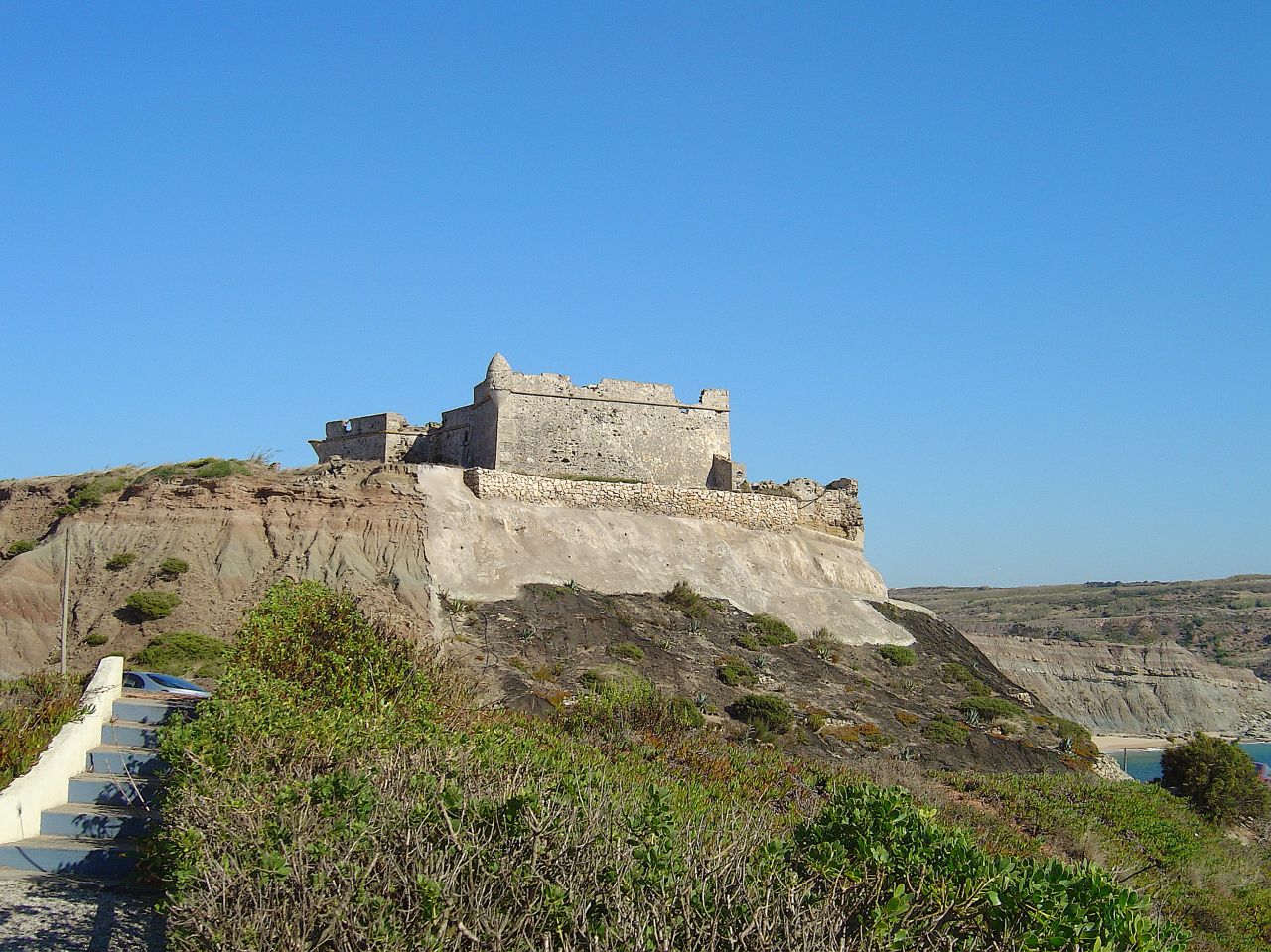
Castelo de Torres Vedras
Castelo de Torres Vedras stands as a remarkable testament to Portugal's layered history and medieval military architecture. Located in the municipality of Torres Vedras, this hill castle occupies a strategic position that has witnessed human activity since the Roman domination of the Iberian Peninsula. Archaeological discoveries such as tombstones and coins confirm early occupation, suggesting the site's long-standing importance. Initial fortifications may have been established by the Goths or Alans, with significant rebuilding during the period of Moorish control.
The castle's capture in 1148 by the forces of Afonso Henriques, the first King of Portugal, marked a pivotal moment in the Christian Reconquest. Following this, the nobleman Fuas Roupinho took possession and is credited with reinforcing and reconstructing the castle's walls, enhancing its defensive capabilities. This fortification proved its strategic value during an eleven-day siege by Almohad troops in 1184, successfully withstanding the assault. Further fortifications were undertaken in the late 13th century under King Denis I, who expanded and strengthened the defenses in 1288. Subsequent repairs occurred under King Ferdinand I in 1373, reflecting the castle's ongoing military significance.
Medieval military and royal significance
During the turbulent 1383-1385 interregnum, a period of political crisis in Portugal, the castle was besieged due to the loyalty of its governor to Beatriz, a claimant to the throne, underscoring its strategic importance in national conflicts. Beyond its military role, Castelo de Torres Vedras served as a royal residence for several Portuguese monarchs. Notably, King John I convened a crucial council here that led to the 1415 conquest of Ceuta, an event that launched Portugal’s era of overseas expansion and maritime empire.
In the early 16th century, during the reign of King Manuel I, the town of Torres Vedras was granted a new charter. The castle underwent significant reconstruction beginning in 1516, including the addition of a distinctive gate featuring Manueline architectural elements. These details, such as the armillary spheres and the Cross of the Order of Christ adorning the gate, symbolize Portugal’s maritime ambitions and religious heritage during the Age of Discovery.
Later history and military adaptations
The castle’s history in the late 16th century was marked by conflict during the Philippine dynasty. In 1589, forces supporting António, Prior of Crato, briefly seized the castle before being expelled. By the early 1600s, the castle had fallen into partial ruin, with the barbican dismantled and defensive walls deteriorating. The 1755 Lisbon earthquake caused extensive damage, leading to the collapse of internal structures and battlements.
In the 19th century, Castelo de Torres Vedras played a vital role in the Peninsular War as part of the Lines of Torres Vedras, a network of fortifications designed to protect Lisbon from Napoleonic invasion. Designated as redoubt number 27, it was equipped with artillery and garrisoned by approximately 500 soldiers tasked with defending the strategic road between Coimbra and Lisbon. During the Liberal Wars in the 1830s, parts of the eastern walls and northern turrets were rebuilt, reflecting ongoing military use. The castle also served as military barracks in 1846, during which it suffered bombardment that caused the explosion of its powder magazine and significant damage to the Palace of the Alcaides, the residence of the castle governors.
Later in the 19th century, military engineers undertook repairs to the walls in 1866. Ownership transferred to the local municipality in 1929, and in 1957 the castle was officially designated a Site of Public Interest. Throughout the 20th century and into the early 21st century, restoration efforts and archaeological excavations have revealed much about the castle’s complex past, including a medieval refuse area that provided insights into the diet of the medieval nobility.
Architectural features and remains
Castelo de Torres Vedras is characterized by its oval-shaped curtain wall, typical of medieval defensive architecture. This curtain wall is reinforced by semicylindrical towers on the southeast and southwest sides, enhancing its ability to withstand attacks. A prominent feature is the projecting square gate tower, which houses the main entrance. The gateway itself is distinguished by a pointed arch crowned with the coat of arms of King Manuel I, flanked by armillary spheres and the Cross of the Order of Christ, symbols of Portugal’s maritime power and religious orders.
Within the castle grounds stands the Church of Santa Maria do Castelo, accessible by a staircase and located near a historic cistern used for water storage. Adjacent to this area was a medieval cemetery, indicating the castle's role as a religious as well as a military center.
The inner keep and defensive structures
The inner keep, known as the alcáçova, features an irregular square plan dominated by a large semicircular tower at the southeast corner. This tower contains a vaulted two-level chamber supported by ribbed vaulting, a sophisticated architectural technique that strengthens the ceiling. The tower includes two cannon openings, an external door, and is topped by square-shaped merlons—defensive battlements that provided protection for archers and artillerymen.
Doorways in the southern curtain wall and northern corner walls lead into the inner bailey, the enclosed courtyard of the castle. Within the bailey lie the ruins of the Palace of the Alcaides, a two-storey residence for the castle governors. Visitors can observe remnants such as exterior walls, the main entrance door, stone and brick flooring fragments, stone corbels that once supported wooden beams, and portions of elaborately carved window stonework.
The bailey also contains two cisterns, one of which is covered by a brick vault, demonstrating advanced medieval engineering for water storage. Although the original town walls have largely vanished, sections on the western and northern sides were reconstructed in the 1830s during military refurbishments.
Archaeological discoveries and conservation efforts
Throughout the 20th century, Castelo de Torres Vedras underwent multiple phases of repair and strengthening. Archaeological excavations supervised by the Portuguese Institute of Archaeology have uncovered a wealth of information about the castle’s historical layers. These investigations revealed a medieval refuse area containing animal bones, offering valuable insights into the diet and lifestyle of the medieval nobility who inhabited the castle.
Today, the surviving structures of Castelo de Torres Vedras provide a tangible link to Portugal’s medieval past and its evolution through centuries of military, political, and social change. The castle’s well-preserved walls, towers, and inner buildings remain a significant cultural and heritage site, attracting visitors interested in Portugal’s rich history and architectural legacy.
Frequently asked questions (FAQ)
- How do I get to Castelo de Torres Vedras?
- Castelo de Torres Vedras is easily accessible by car, with ample parking available nearby. Public transportation options include local buses that connect from Lisbon and surrounding areas. Make sure to check the local schedules for the most convenient routes.
- What is the historical significance of Castelo de Torres Vedras?
- Castelo de Torres Vedras played a crucial role during the Peninsular War as a strategic fortification against Napoleon's forces. Its well-preserved walls and towers offer a glimpse into medieval military architecture and the region's tumultuous history. Visitors can explore the site and learn about its importance through informational displays.
- When was Castelo de Torres Vedras built?
- The castle was originally constructed in the 10th century, during the Moorish occupation of Portugal. It underwent numerous renovations and expansions over the centuries, particularly in the 12th century when it was recaptured by the Portuguese. This rich timeline adds to its allure as a historical site.
- Can I visit Castelo de Torres Vedras with children?
- Absolutely! Castelo de Torres Vedras is a family-friendly destination where children can enjoy exploring the castle's walls and towers. There are plenty of open spaces for kids to play, and educational opportunities that make history fun and engaging for all ages.
- Why is Castelo de Torres Vedras known for its architecture?
- The architecture of Castelo de Torres Vedras is notable for its impressive defensive structures, including thick walls and strategic towers. Its design reflects the military needs of the time, combining functionality with aesthetic appeal. The castle's Romanesque and Gothic elements also showcase the evolution of architectural styles throughout the centuries.
- Is it possible to access the castle for people with disabilities?
- While efforts have been made to improve accessibility, some areas of Castelo de Torres Vedras may present challenges for visitors with mobility issues due to uneven terrain and steep steps. It is advisable to contact the castle's administration beforehand to inquire about specific accommodations available during your visit.
- What are the opening hours for Castelo de Torres Vedras?
- Castelo de Torres Vedras is generally open to visitors from 9 AM to 7 PM during the summer months and has reduced hours in the winter. However, it's always best to check the official website or call ahead for any updates or changes to the schedule. Plan your visit accordingly to make the most of your experience.
- What are the ticket prices for Castelo de Torres Vedras?
- Admission to Castelo de Torres Vedras is typically affordable, with discounts available for students and seniors. Children under a certain age can often enter for free. Check the official site for the latest pricing information and any special offers that may be available during your visit.
- What nearby attractions can I explore after visiting the castle?
- After exploring Castelo de Torres Vedras, consider visiting the Museu Municipal, which showcases local history and culture. The charming town of Torres Vedras itself offers quaint shops and restaurants, perfect for a leisurely afternoon. Additionally, the beautiful beaches of the Silver Coast are just a short drive away.
Information
Website
Visit websiteSources & official resources
Verify the information above using these authoritative references.
Loading map...
Visitor reviews
No reviews yet. Been here? Write the first review and help other travelers!
Write the first reviewVisited this castle? Share your experience
Your review helps other travelers and adds first-hand knowledge to our encyclopedia.