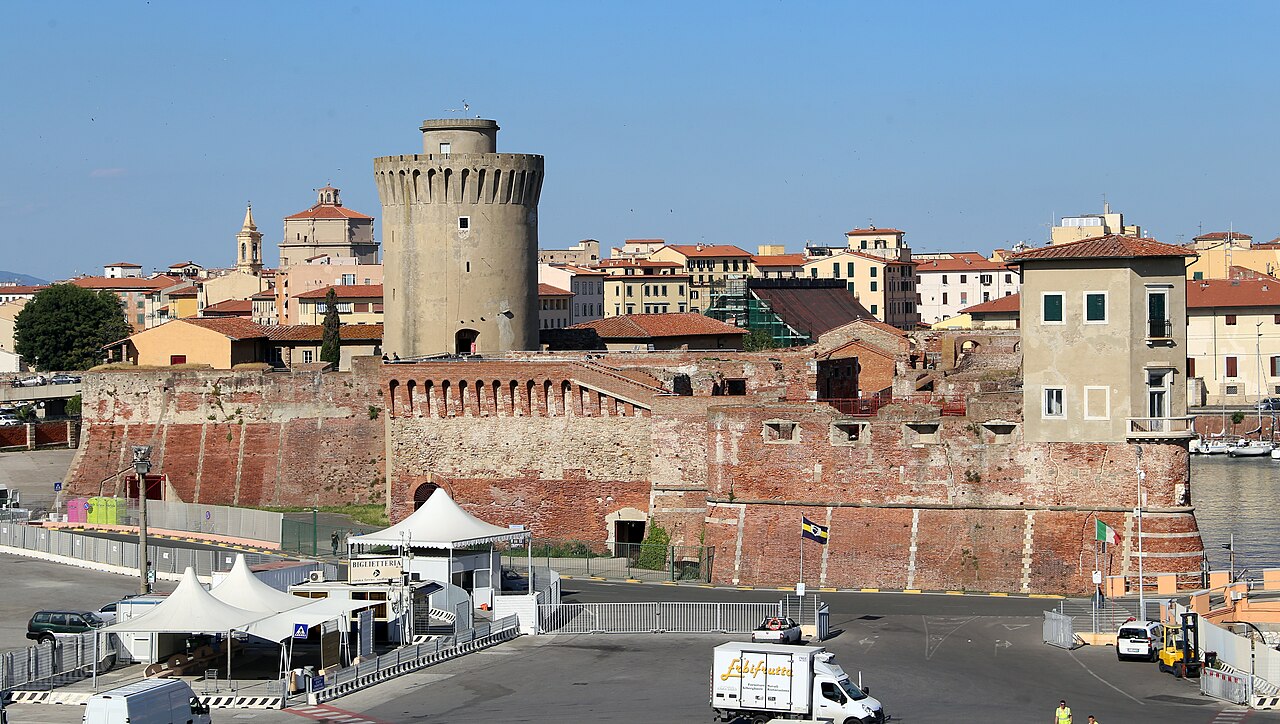
Castello dei Vicari
The Castello dei Vicari is a remarkable hill castle located in the town of Lari, nestled in the picturesque region of Tuscany, Italy. Perched strategically on a hill that has witnessed continuous human occupation since ancient times, this castle embodies a rich tapestry of history spanning from the early medieval period through the Renaissance and beyond. Its commanding position not only provided military advantage but also symbolized the administrative authority exercised over the surrounding territory known as the vicariate.
Early origins and medieval history
The origins of Castello dei Vicari are believed to trace back to the early medieval period, potentially linked to the Lombard era, although the first documented medieval phase dates from the 12th century. The castle's early history is marked by conflict, notably its destruction in 1164 by forces from the nearby city of Pisa, a dominant power in the region during this time. This event underscores the castle's strategic importance in the contested Tuscan landscape.
Following this devastation, the castle underwent significant rebuilding between 1230 and 1287 under the control of the influential Upezzinghi family. Initially, the family opposed Pisan dominance but eventually submitted after the intervention of the renowned condottiero Guido da Montefeltro in 1289, which restored the castle to Pisan control. This period established the castle as a key administrative and military stronghold within the Pisan territory.
Administrative role and architectural evolution
Over the centuries, the castle's function evolved beyond military defense to serve as the seat of the vicars who governed the surrounding lands on behalf of the Archbishops of Pisa. The vicars collected rents and tributes, underscoring the castle's role as a center of civil administration. By the mid-18th century, many of the original medieval Pisan structures had disappeared, save for a southwestern wall near the garden, as the castle underwent extensive rebuilding and expansion under Florentine authorities.
Renaissance fortifications and Medici influence
The 16th century marked a pivotal phase in the castle's architectural development, with significant renovations initiated by the ruling Medici family of Florence. These works aimed to strengthen the castle's defenses in response to prior military conflicts that had compromised its fortifications. Notable vicars such as Iacopo di Bongiovanni Gianfigliazzi, who personally financed improvements in 1523, and Bartolomeo Capponi, who governed from 1525 to 1526, played key roles in this renewal.
Around 1530, ambitious plans for further fortifications were drafted by the architect Francesco da San Gallo or his son, reflecting Renaissance military architectural principles. However, these plans were never fully realized due to financial constraints and possibly the elder San Gallo's death. Mid-century structural issues caused by cellars excavated beneath the castle led to instability, documented in 1559 by engineer David Fortini, who reported collapsing walls and other damages.
Cosimo I de’ Medici authorized funds for repairs and extended the vicars' terms to ensure financial stability for restoration efforts, though some damaged sections remained unrestored. These interventions highlight the challenges of maintaining a complex fortress adapting to evolving military technologies and political circumstances.
Later history and transformations
In 1725, a catastrophic landslide severely damaged the castle's outer portions, resulting in the tragic death of the vicar's son. Reconstruction efforts following this disaster were limited, as the Archbishop of Pisa vetoed full restoration, permitting only partial rebuilding completed by 1775. This event marked a turning point, signaling the castle's gradual decline as a military stronghold.
By the late 19th century, the castle had been repurposed to serve as the local court and prison. This civic use necessitated updates to meet modern standards, including interior alterations. After the court's closure in 1923, the castle was rented to private families who further modified the interiors, subdividing large halls and creating new living spaces, significantly altering the original medieval and Renaissance layout.
Following World War II, the archival documents of the vicariate administration were transferred to the State Archives of Pisa. From the 1970s onward, renewed interest in the castle's cultural and historical significance led to restoration and conservation efforts. A volunteer cultural group, supported by municipal authorities, reopened parts of the complex for guided tours and cultural events in the early 1990s.
Architectural features and artistic heritage
The layout of Castello dei Vicari is centered around a spacious courtyard, accessible via an external staircase. The courtyard is enclosed by several significant structures. On the right stands the castle chapel, part of the former west wing, while opposite the entrance are the prison cells, reflecting the castle's later civic function.
Dominating the courtyard is the Palazzo dei Cancellieri, a central block notable for its façade richly adorned with numerous coats of arms belonging to successive vicars of Lari. This heraldic display emphasizes the castle's administrative importance. At the courtyard's center is a large cistern, ingeniously designed to collect rainwater from surrounding roofs, a vital feature for sustaining inhabitants during sieges or droughts.
The courtyard's far end is closed by the Palazzo dei Vicari, featuring a monumental façade decorated with an extensive array of heraldic emblems that narrate the history and authority of the vicars who governed the region. Among the surviving medieval elements, only a portion of a southwestern wall near the garden remains from the original Pisan fortifications.
The 16th-century defensive enhancements included fortifications attributed to Francesco da San Gallo or his son, though some features, such as a western stairway, have since been demolished. These upgrades reflect Renaissance military architectural innovations aimed at improving the castle's resilience against contemporary warfare.
Inside, the castle preserves important cycles of frescoes spanning the Gothic, Renaissance, and Baroque periods. These artworks, restored during late 20th-century conservation projects, enrich the castle's cultural heritage and provide insight into the artistic trends that influenced its occupants.
Archaeological discoveries and cultural significance
Archaeological excavations within the castle grounds have uncovered significant artifacts that reveal the site's long history. Fragments of Etruscan pottery attest to the hill's ancient cultural layers predating the medieval fortress. In 1997, archaeologist Giovanni Ranieri Fascetti discovered a large white marble torso of a Roman statue, providing a tangible connection to the classical past beneath the layers of medieval and Renaissance construction.
The castle's historical collections were dedicated in 1996 to Filippo Baldinucci, a notable 17th-century art historian who once governed the Pisane Hills vicariate. This dedication underscores the castle's enduring cultural and scholarly significance.
In 2014, a locally painted icon depicting Emperor Constantine was installed to commemorate the 1700th anniversary of the Edict of Milan (313 AD), celebrating religious tolerance and highlighting the region's connection to Roman-Christian heritage.
Modern restoration and visitor experience
Restoration projects funded by the Pisa Savings Bank Foundation between 1996 and 2007 have repaired various parts of the castle, including frescoes and coats of arms from different historical periods. These efforts have helped preserve the castle's architectural integrity and artistic treasures.
Today, visitors to Castello dei Vicari can explore its historic courtyards, admire the heraldic façades, and appreciate the preserved frescoes that narrate centuries of Tuscan history. The castle serves as a cultural venue hosting guided tours and events, offering a unique window into the region's medieval and Renaissance past.
While the castle's interiors were altered during the 20th century when converted to residential use, ongoing restoration aims to return spaces closer to their original appearance, respecting the site's architectural heritage. The castle stands as a testament to the layered history of Tuscany, from ancient times through the medieval and Renaissance eras to the present day.
Frequently asked questions (FAQ)
- How do I visit Castello dei Vicari?
- Castello dei Vicari is open to the public for guided tours and cultural events, typically organized by local authorities and volunteer groups. Visitors should check the official website or local tourism offices for current opening hours and tour availability.
- What is the historical significance of Castello dei Vicari?
- Castello dei Vicari served as a key administrative and military stronghold from the 12th century, governing the surrounding vicariate under Pisan and later Florentine rule. Its layered history reflects Tuscany's medieval and Renaissance political dynamics.
- When was the castle built?
- The castle's first confirmed medieval phase dates from the 12th century, with significant rebuilding between 1230 and 1287. Earlier origins may trace back to the Lombard era in the early medieval period.
- Can I see original frescoes inside the castle?
- Yes, the castle preserves important fresco cycles from Gothic, Renaissance, and Baroque periods, restored during late 20th-century conservation efforts. These artworks provide insight into the castle's artistic heritage.
- Is the castle accessible for people with limited mobility?
- Due to its historic structure and hilltop location, some areas of Castello dei Vicari may be challenging for visitors with limited mobility. It is advisable to contact the site in advance for specific accessibility information.
- Why is the castle called Castello dei Vicari?
- The name derives from its role as the seat of the vicars who governed the surrounding territory, collecting rents and administering justice on behalf of the Archbishops of Pisa.
Information
Website
Visit websiteSources & official resources
Verify the information above using these authoritative references.
Loading map...
Visitor reviews
No reviews yet. Been here? Write the first review and help other travelers!
Write the first reviewVisited this castle? Share your experience
Your review helps other travelers and adds first-hand knowledge to our encyclopedia.