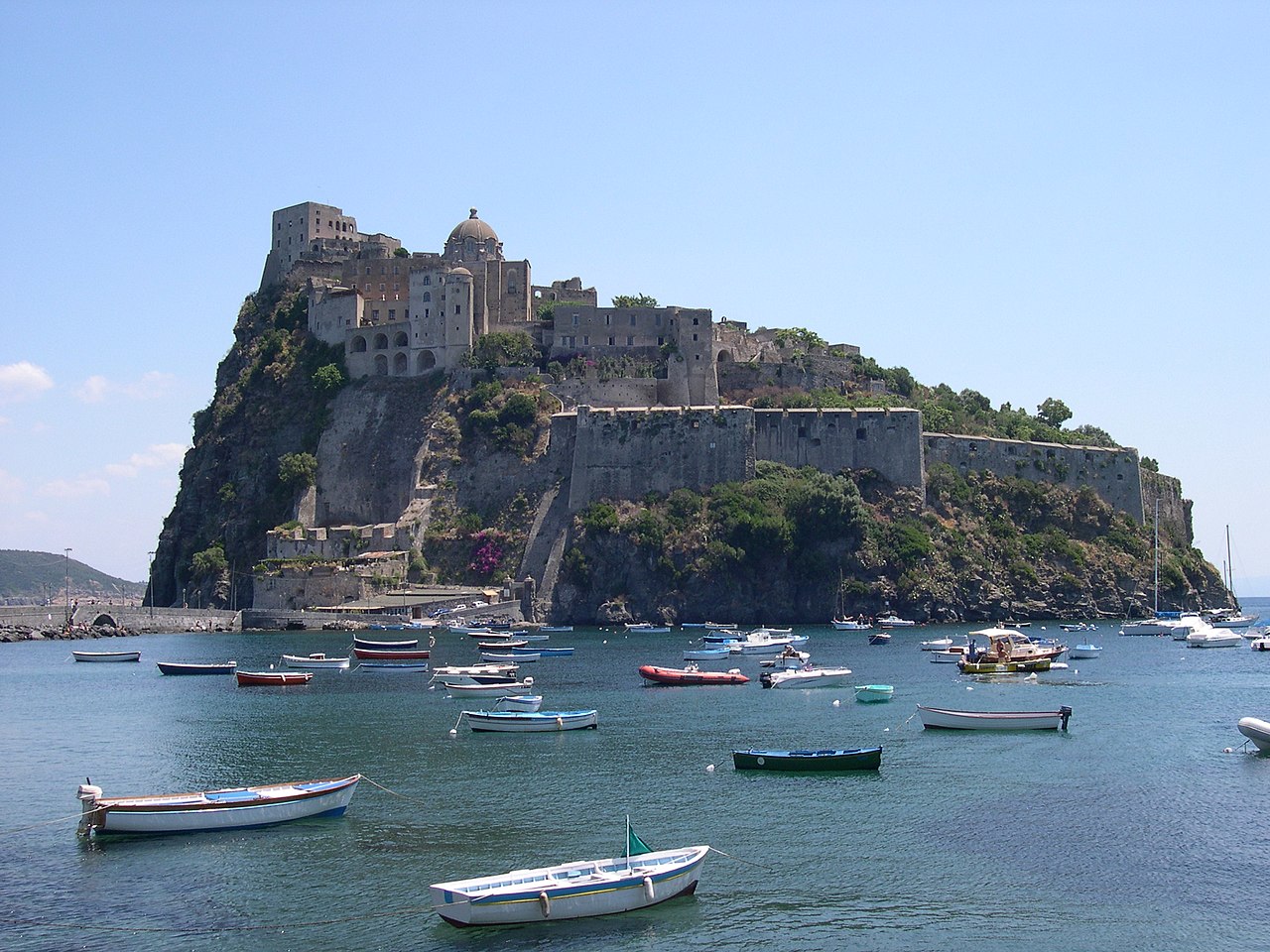
Castello Barbarossa
Castello Barbarossa is an archaeological ruin located on the island of Capri, Italy, notable both for its historical significance and its role as an ornithological station. The castle's name commemorates the famed Ottoman admiral and pirate Hayreddin Barbarossa, who attacked the fortress in 1535 and inflicted substantial damage, culminating in its destruction in 1544. Although the exact construction date remains uncertain, architectural and historical evidence suggests the castle was originally built in the late 9th century, placing it firmly in the early medieval period.
Historical context and significance
The strategic location of Castello Barbarossa on Capri provided a defensive vantage point overseeing the Tyrrhenian Sea, crucial for controlling maritime routes and protecting the island from invasions. Throughout its history, the castle served as a military stronghold, witnessing numerous sieges and changes in control. Its destruction in the mid-16th century marked the decline of its military importance, although the ruins have since become a cultural and natural heritage site.
Architectural features and layout
Overall design and materials
The castle's plan is predominantly quadrangular with an imposing semicircular wall section, constructed primarily from local stone. The use of vaulted roofs and tiled floors reflects typical medieval building techniques adapted to the island's environment. The structure's defensive nature is emphasized by its robust walls and strategic positioning.
Residential and religious spaces
At the highest point of the ruins lies the core residential area, which included a chapel with a vaulted apse and a belfry. The chapel's preserved vaulted apse is a significant example of medieval ecclesiastical architecture. Adjacent to this area is a cistern that was historically used for water storage and later repurposed as a warehouse, highlighting the castle's self-sufficiency during sieges.
Military structures and towers
The castle is distinguished by its two prominent towers, which underscore its military function. One tower, square-shaped, dates from the Swabian period, reflecting architectural influences from the 13th century under the Hohenstaufen dynasty. The other tower is circular and was constructed during the Angevin period, indicating modifications and expansions in the 14th century. These towers provided lookout points and defensive advantages against attackers.
Additional architectural elements
Other notable features include a vaulted roof section with a small, partially walled embrasure and an arched opening, both indicative of defensive design. A room with an iron-beamed roof also survives, suggesting adaptations and repairs over the centuries. These elements contribute to understanding the castle's evolution and functional complexity.
Later history and preservation
In 1898, the ruins of Castello Barbarossa were acquired by the Swedish psychiatrist Axel Munthe, who played a key role in preserving the site. Munthe donated the castle to his foundation, ensuring its protection and integration into the island's cultural landscape. Today, the castle is not only an archaeological site but also hosts an ornithological station, reflecting the rich biodiversity of Capri's natural surroundings.
The castle remains in a ruined condition, with significant portions still standing and accessible to visitors. Its blend of military architecture, religious structures, and natural environment makes it a unique destination for those interested in medieval history, architecture, and ecology.
Botanical and ecological importance
The area surrounding Castello Barbarossa is renowned for its diverse botanical features, which contribute to the ecological value of the site. The presence of the ornithological station highlights the castle's role in bird conservation and study, linking cultural heritage with natural science.
Visiting information and accessibility
The castle is accessible to visitors interested in exploring its ruins and the surrounding natural landscape. While the site is primarily an archaeological ruin, its open-air environment allows for walking tours and observation of the island's flora and fauna. Visitors should be prepared for uneven terrain and limited facilities, typical of historic ruins.
Frequently asked questions (FAQ)
- How do I get to Castello Barbarossa?
- To reach Castello Barbarossa, you can take a ferry from Naples or Sorrento to Capri. Once on the island, local buses or taxis can take you to the castle, which is located near the center of Capri.
- What is the historical significance of Castello Barbarossa?
- Castello Barbarossa, built in the 16th century, was named after the infamous pirate Redbeard who frequented the area. The castle served as a military fortification and played a crucial role in protecting the island from invasions, making it a significant part of Capri's maritime history.
- When was Castello Barbarossa constructed?
- Construction of Castello Barbarossa began in the late 1500s, during a time when the threat of piracy was prevalent in the Mediterranean. The castle was completed shortly thereafter and has since stood as a testament to the island's strategic military past.
- Can I visit Castello Barbarossa year-round?
- Yes, Castello Barbarossa is open to visitors throughout the year, although the best time to visit is during the spring and early fall when the weather is mild and crowds are smaller. Be sure to check specific opening hours, as they may vary seasonally.
- Why is the architecture of Castello Barbarossa unique?
- The architecture of Castello Barbarossa reflects a blend of military functionality and local style, featuring thick stone walls and a commanding view of the sea. Its strategic positioning on a cliff allows visitors to enjoy breathtaking panoramic views of Capri and the surrounding waters.
- Is it possible to access Castello Barbarossa for those with mobility issues?
- While Castello Barbarossa is an iconic site, its location on a hillside means that accessibility can be challenging for those with mobility issues. It is advisable to contact local visitor services for any available accommodations or special arrangements.
- What are the ticket prices for visiting Castello Barbarossa?
- Entry to Castello Barbarossa is generally affordable, with tickets costing around €5 for adults and discounts available for students and seniors. It’s wise to check the official website for any changes in pricing or special offers.
- What are the opening hours for Castello Barbarossa?
- Castello Barbarossa typically opens at 9 AM and closes at sunset, but hours may vary by season. It’s recommended to verify the current opening hours before your visit to ensure you have ample time to explore.
- What nearby attractions should I visit after Castello Barbarossa?
- After exploring Castello Barbarossa, consider visiting the famous Gardens of Augustus, which are just a short walk away. The stunning views of the Faraglioni rock formations and the charming streets of Capri offer perfect opportunities for further exploration.
Information
Loading map...
Visitor reviews
No reviews yet. Been here? Write the first review and help other travelers!
Write the first reviewVisited this castle? Share your experience
Your review helps other travelers and adds first-hand knowledge to our encyclopedia.