Castell d’Eramprunyà
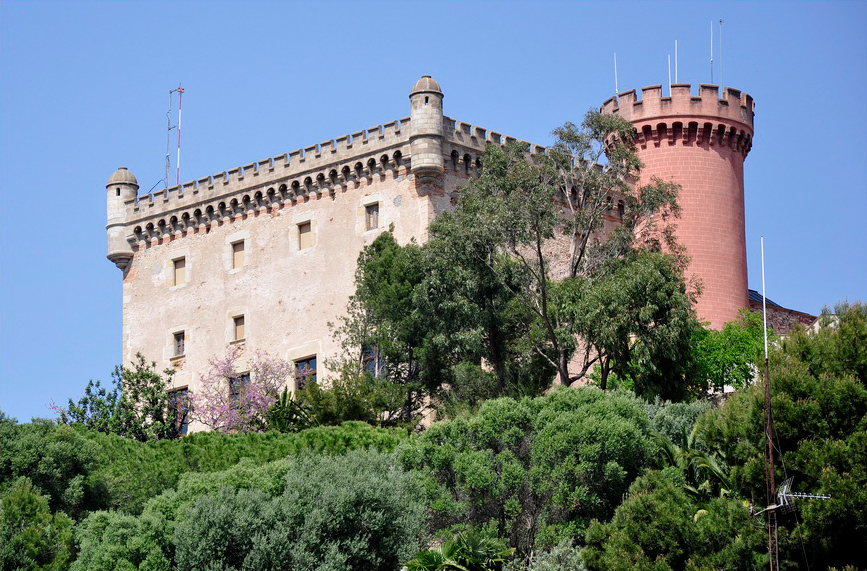
The Castell d’Eramprunyà stands as a significant medieval fortress located in the municipality of Gavà, Spain. Its origins trace back to the early 10th century, during a period when the region was a frontier zone influenced by the Carolingian Empire, serving as a defensive bastion against incursions from Al-Andalus. This castle is one of the earliest documented fortifications in Catalonia, first appearing in written records in 957 and linked to the notable Count Sunyer of Barcelona. Its strategic placement atop a mountainous ridge provided commanding views over the Llobregat Delta and the Garraf mountain range, emphasizing its military and administrative importance.
Historical significance and medieval role
Throughout the Middle Ages, Castell d’Eramprunyà functioned as a pivotal political, economic, and military center. It governed a substantial territory encompassing modern towns such as Gavà, Begues, Castelldefels, Sant Climent de Llobregat, Viladecans, and parts of Sant Boi de Llobregat, extending to the coastal areas of Sitges and Olivella. This extensive jurisdiction highlights the castle’s role in regional governance and defense during a time of frequent conflict and territorial consolidation.
Ownership of the castle evolved over centuries. In the 11th century, it transitioned from the Counts of Barcelona to the feudal lordship of the Mir Geribert and Sant Martí families. By the 13th century, it was reintegrated into the Crown of Aragon. A notable event occurred in 1323, when King James II sold the castle to the banker Pere Marc for 120,000 sous barcelonins, a transaction that financed military campaigns in Sardinia. The castle endured significant damage during the Catalan Civil War in 1469, when it was bombarded by Generalitat forces. Subsequently, it passed through various noble families, though its strategic military role diminished.
Architectural features and fortifications
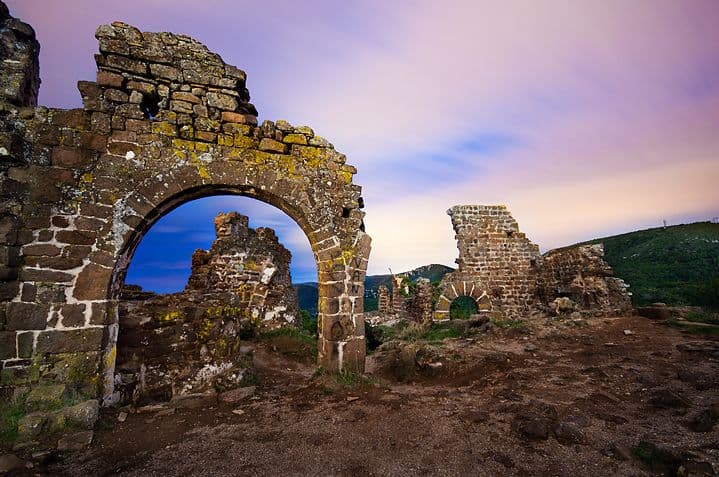
The castle’s architecture reflects its layered defensive and residential functions, arranged in three fortified enclosures at different altitudes on the ridge. The highest enclosure, at 402 meters above sea level, housed the main castle-palace. Today, this area preserves Gothic ruins with defensive walls built of finely cut ashlar stone approximately 50 centimeters thick. A stone bridge originally controlled access, now replaced by a wooden walkway, and a bastion with a southern wall nearly 90 centimeters thick provided enhanced protection against attacks.
The middle enclosure, at 392 meters altitude, contains the Chapel of Sant Miquel d’Eramprunyà. This chapel is architecturally significant due to its three distinct construction phases. The earliest phase is pre-Romanesque, evident in internal lateral walls. The second phase, from the 12th century, exhibits Romanesque style features, including exterior walls and a barrel vault at the apse base. The final phase, dating to the early 16th century, shows Renaissance-Gothic influences in the façade and vaulted roof. Surrounding the chapel are stone tombs carved in human shapes and several rock inscriptions, including a 14th-century engraving by Jaume March I, lord of Eramprunyà, a 12th-century inscription, and an 18th-century text related to castle guard duties.
The lowest enclosure, at 319 meters, preserves substantial portions of the original defensive wall, marking the castle’s outer perimeter. These walls illustrate the complex layered defense system that protected the castle and its territory during medieval conflicts.
Archaeological investigations and preservation efforts
After centuries of decline, the castle attracted renewed interest in the late 19th century when banker Manel Girona acquired the property and initiated preservation efforts. The municipality of Gavà purchased the site in 2007, leading to systematic archaeological excavations beginning in 2010. These investigations have shed light on the castle’s extensive history, architectural evolution, and its role within the broader historical landscape of Catalonia.
The church of sant miquel d’eramprunyà
Located near the castle, the church of Sant Miquel d’Eramprunyà is a significant historical and religious site first mentioned in a 977 testament and recorded as a parish church by 1074. It served the local community until the 14th century, when it lost its cemetery and eventually became subordinate to the nearby parish of Sant Pere de Gavà. The church’s architectural and epigraphic features complement the castle’s historical narrative, reflecting the intertwined religious and feudal structures of the medieval period.
Strategic location and natural defenses
Perched atop a mountainous ridge surrounded by sheer cliffs, Castell d’Eramprunyà’s location was chosen for its commanding views over the surrounding landscape, including the fertile Llobregat Delta and the rugged Garraf region. This vantage point allowed for early detection of approaching forces and control over vital communication and trade routes. The natural cliffs provided formidable barriers, enhancing the castle’s defensive capabilities alongside its man-made fortifications.
Frequently asked questions (FAQ)
- How do I get to Castell d’Eramprunyà?
- Castell d’Eramprunyà is located in Gavà, Catalonia, Spain. Visitors can reach the site by car or public transport from Barcelona, followed by a hike up the mountainous ridge where the castle stands.
- What is the historical significance of Castell d’Eramprunyà?
- The castle was a key medieval fortress and administrative center from the early 10th century, controlling a large territory and serving as a defensive frontier against Al-Andalus.
- When was the castle built?
- The origins of Castell d’Eramprunyà date back to the early 10th century, with the first written record appearing in 957.
- Can I visit the chapel of Sant Miquel d’Eramprunyà?
- Yes, the chapel is part of the castle complex and can be visited. It features architectural elements from pre-Romanesque, Romanesque, and Renaissance-Gothic periods.
- Why is the castle in ruins?
- The castle suffered major damage during the Catalan Civil War in 1469 and has been partially preserved and restored since then, but remains largely in ruins today.
- What are the opening hours and ticket prices?
- Visiting hours and ticket prices vary; it is recommended to check with the Municipality of Gavà or local tourist information centers for current details.
Photo gallery

Information
Current owner
Municipality of Gavà
Loading map...
Visitor reviews
No reviews yet. Been here? Write the first review and help other travelers!
Write the first reviewVisited this castle? Share your experience
Your review helps other travelers and adds first-hand knowledge to our encyclopedia.