Castell de Sant Joan de Lloret
The Castell de Sant Joan de Lloret is a significant medieval hill castle located in the municipality of Lloret de Mar on the Catalonian coast of Spain. Constructed in the 11th century by Catalan nobility, this fortress played a key role in regional feudal and ecclesiastical history. Positioned atop the Turó des Castell, a small hill roughly 60 meters above sea level, the castle commands dramatic views over the Mediterranean coastline, strategically overseeing the area between Lloret's main beach and Fenals beach.
Its earliest recorded mention dates to 1041, when viscounts Guerau and Ermessenda granted the property to Sicardis, granddaughter of the viscount of Girona and lady of Lloret. This donation established the castle's importance as a feudal seat. The castle's religious significance was marked in 1079 with the consecration of the chapel of Sant Joan by Bishop Berenguer Guifré of Girona, integrating a spiritual dimension into the fortress complex.
Historical development and ownership
Following Sicardis's death in 1104, her lands were divided between her sons, one of whom became bishop of Girona, while the other was an ancestor of the Palafolls lords. Over the next century, the castle transitioned to the control of the Cathedral Chapter of Girona, confirmed as an ecclesiastical lordship by Bishop Ramon Palafolls in 1217. This shift reflects the intertwined nature of religious and feudal power in medieval Catalonia.
The castle endured multiple military conflicts during the Middle Ages. It suffered damage from attacks involving the French army under King Pere el Gran and a significant assault by a Genoese fleet around 1356. These attacks necessitated restorations ordered by King Pere el Cerimoniós in the late 14th century. Notably, a 1378 legal mandate compelled local residents to contribute labor and resources to the castle's repair and defense, illustrating the fortress's communal importance.
Further repairs in the 15th century addressed damage from both military actions and natural disasters, including earthquakes recorded between 1427 and 1431. By the 16th century, advances in military technology and changing strategic needs led to the castle's gradual decline as a defensive stronghold. Its form at this time largely resembles the present-day ruins, with the keep serving as a lookout point into the 18th century.
Architectural features and layout
The castle's original layout was roughly triangular, enclosing about 500 square meters within walls approximately five meters high. These walls, constructed from broken stones and unshaped cobbles set in lime mortar, formed a distinctive triangular silhouette atop the hill. A defensive ditch about three meters deep surrounded the interior side of the walls, designed to hinder attackers.
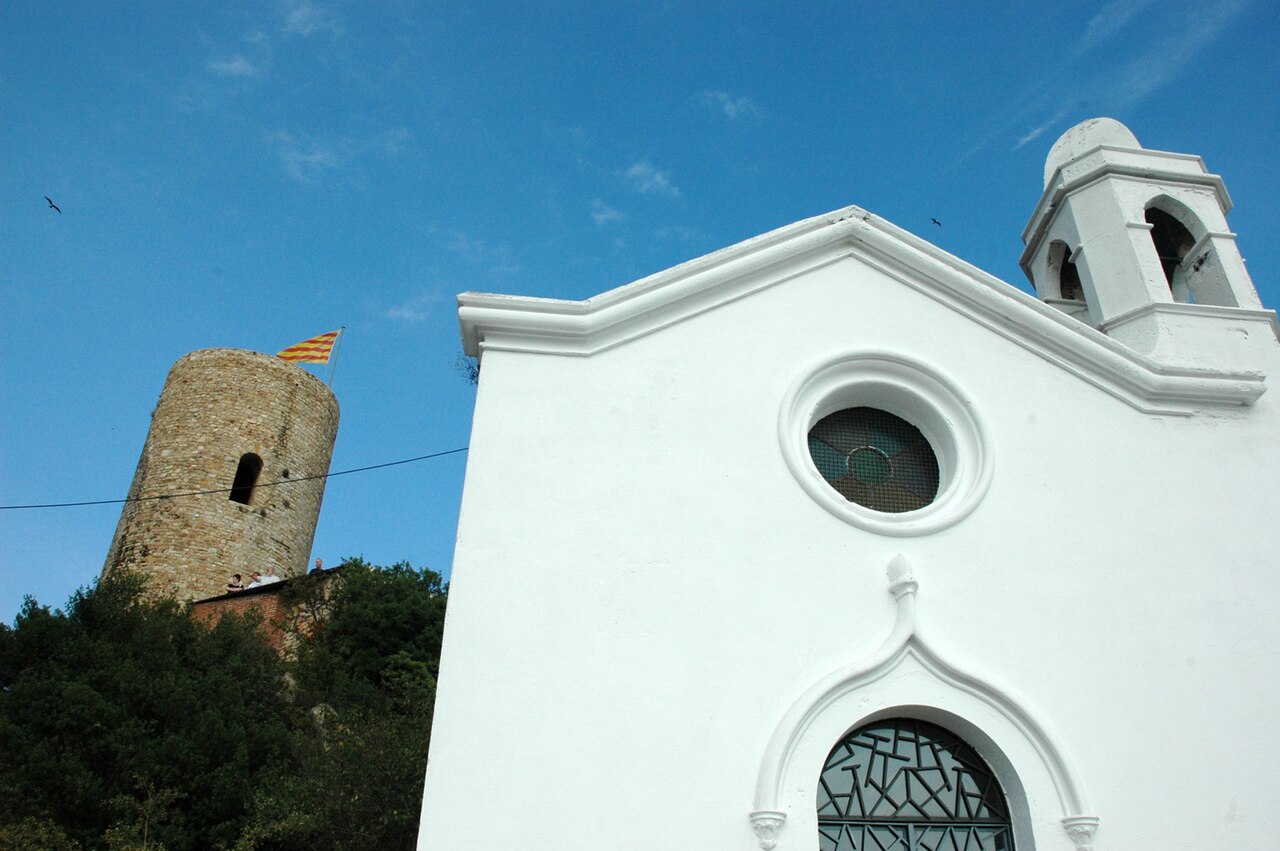
At the heart of the fortress stood the circular keep or torre mestra, approximately 18 meters tall with walls 1.35 meters thick and an interior diameter of 5.40 meters. This central tower was the strongest defensive element, constructed with typical medieval masonry techniques of the region.
Within the enclosure were simple quadrangular and trapezoidal living quarters made of stone and mortar, serving the lords and stewards. Archaeological excavations have revealed the perimeter walls formed a nearly rectangular area, with a northern wall measuring about 27 meters, meeting the other sides at the southern angle anchored by the keep.
The castle grounds included medieval grain silos or sitges, essential for storing provisions during sieges. Two chapels were historically present: the chapel of Sant Joan, consecrated in 1079, and another dedicated to Santa Llúcia, documented in the early 18th century. The Sant Joan chapel was relocated within the enclosure due to structural concerns, reflecting ongoing adaptation of the site.
Military history and decline
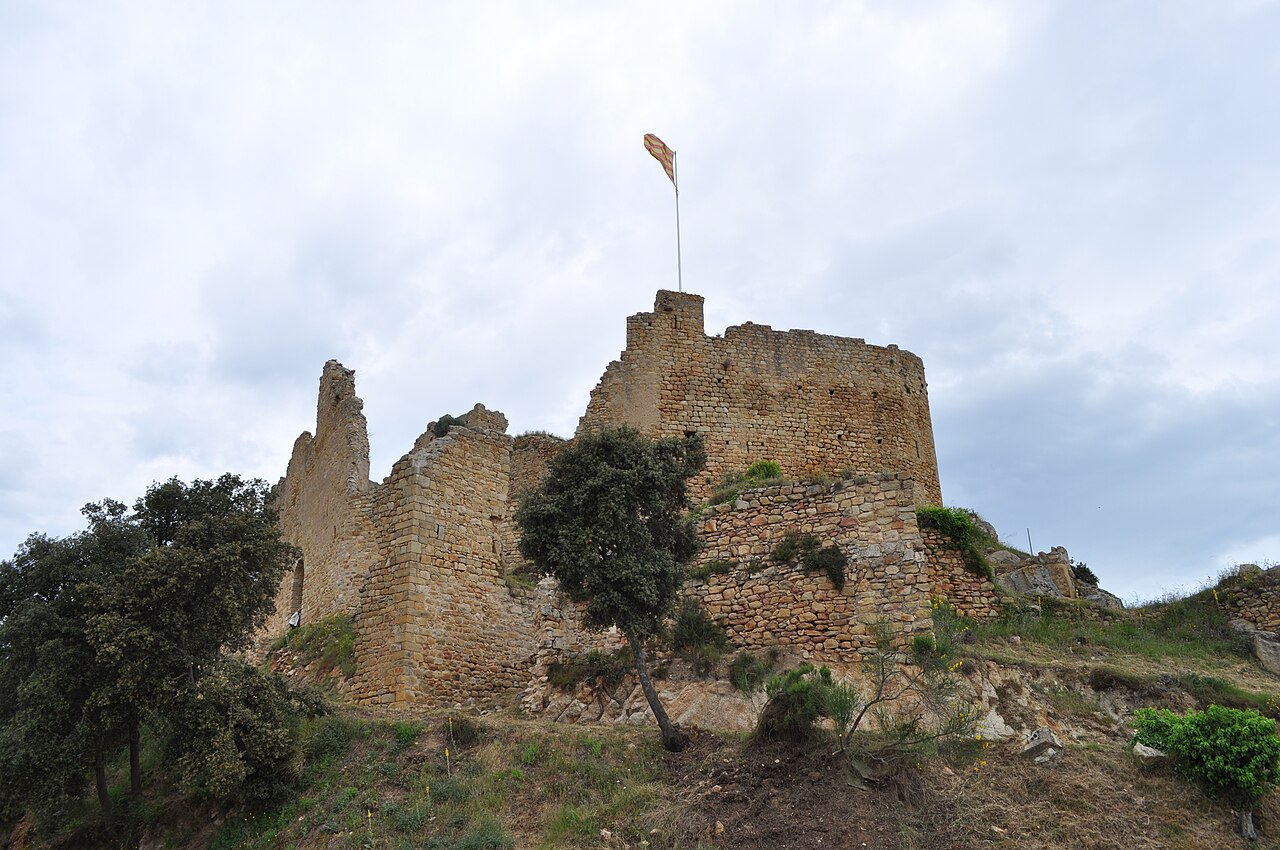
Throughout its history, the Castell de Sant Joan de Lloret witnessed several military engagements. Damage inflicted during the Napoleonic Wars included bombardment by the British navy in 1805, which further reduced the castle to ruins. By the 19th century, only the tower remained partially standing, suffering additional damage from a British naval shot that split the tower during conflict. A lightning strike in 1923 caused further collapse of the remaining structure.
The castle's military significance diminished over time, with the keep used mainly as a lookout point into the 18th century. Attempts by local residents in the late 18th century to incorporate the castle into the royal patrimony were unsuccessful, and it remained under church control until the early 19th century.
Archaeological research and restoration efforts
After the desamortización in 1855, when church properties were confiscated by the Spanish state, the castle came under government control. Unauthorized excavations in 1964 damaged parts of the site, including the base and medieval grain silos, hindering restoration plans. This led to intervention by the Spanish Association of Friends of Castles to preserve the site.
Archaeological research led by Armand de Fluvià between 1965 and 1968 provided detailed mapping and understanding of the castle's remains. Further excavations in 2000 and 2001 uncovered original foundations of the keep and additional medieval silos, confirming extensive renovations from the 15th and 16th centuries.
Restoration work in 1989 and 1990 partially rebuilt the keep and sections of the perimeter walls, allowing the castle to be presented as a heritage site reflecting its medieval origins. The castle's dramatic location on the cliff edge emphasizes its historical defensive role and offers visitors a glimpse into medieval military architecture.
Access and visitor experience
Today, the Castell de Sant Joan de Lloret is accessible from Lloret de Mar's main promenade and adjacent roads leading up to the hill. Visitors can explore the partially restored keep, perimeter walls, and archaeological remains including grain silos and chapel foundations. The castle's position overlooking the Mediterranean coastline provides scenic views and insight into the strategic importance of hilltop fortresses in medieval Catalonia.
Frequently asked questions (FAQ)
- When was the Castell de Sant Joan de Lloret originally built?
- The castle was built in the 11th century, with the earliest record dating to 1041 when it was granted to Sicardis, granddaughter of the viscount of Girona.
- What is the architectural style of the castle?
- The castle features mixed medieval architectural styles, including typical stone masonry and lime mortar construction characteristic of the High Medieval period.
- Can visitors access the castle today?
- Yes, the castle is accessible from Lloret de Mar's main promenade and nearby roads, with partially restored structures and archaeological remains open for exploration.
- What significant historical events impacted the castle?
- The castle was damaged during conflicts involving the French army, a Genoese fleet attack in 1356, and British naval bombardments during the Napoleonic Wars in 1805.
- What restoration efforts have been undertaken?
- Restorations occurred in the late 14th century, 15th and 16th centuries, and modern efforts in 1989-1990 partially rebuilt the keep and perimeter walls based on archaeological findings.
Information
Website
Visit websiteSources & official resources
Verify the information above using these authoritative references.
Loading map...
Visitor reviews
No reviews yet. Been here? Write the first review and help other travelers!
Write the first reviewVisited this castle? Share your experience
Your review helps other travelers and adds first-hand knowledge to our encyclopedia.