Casa del Mar
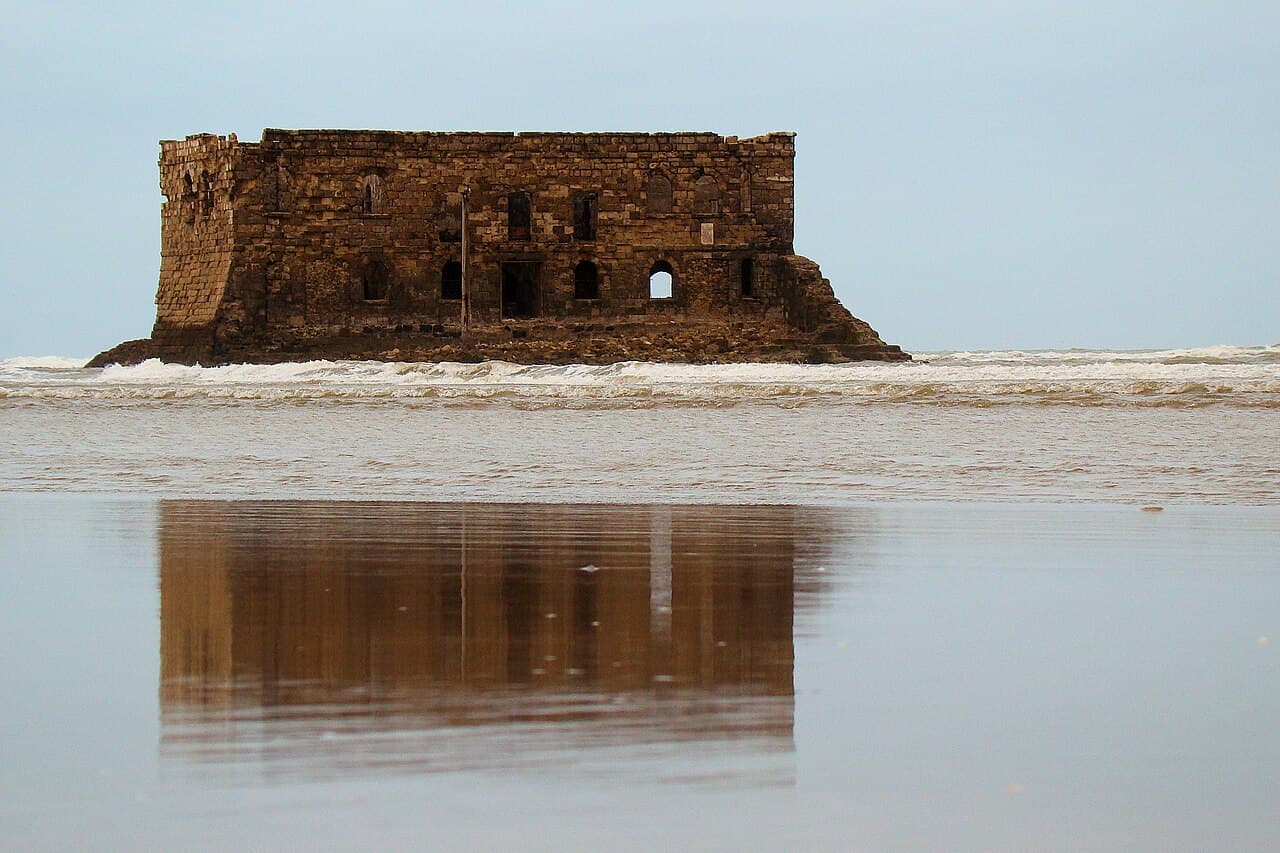
Casamar fortress, also known historically as Port Victoria and Mackenzie's factory, is a significant 19th-century bastioned fortress located on the coast of Cape Juby near Tarfaya, Morocco. Constructed in 1882 by Donald MacKenzie, founder of the British North West Africa Company, the fortress played a pivotal role in facilitating trade between the Saharan caravan routes and European markets during a period of expanding colonial influence in North Africa.
Strategic location and historical context
Casamar was strategically situated on a sandy island off the coast of Cape Juby, a key point for controlling maritime access and caravan trade routes from the interior of Africa. The location was chosen to intercept and engage with commercial caravans traveling from Timbuktu to Wadi Noun. This trade was vital for the exchange of goods such as gold, salt, and textiles, linking the Saharan interior with European markets, particularly the English city of Manchester.
The fortress's establishment in the late 19th century coincided with the height of European colonial expansion and competition for control over African trade routes. Donald MacKenzie's presence from 1879 and the subsequent construction of Casamar in 1882 reflected British commercial ambitions in the region, despite the complex political environment involving local Saharan tribes and the Moroccan Sultanate.
Architectural features and defensive structures
Casamar was designed as a bastioned fortress, a style characterized by angular bastions projecting from the curtain walls, allowing defenders to cover adjacent walls with cannon and musket fire. The fortress consisted of two main floors: a ground floor with eight rooms and an upper floor also containing eight rooms. These rooms were primarily used for storage of consumables and trade goods, reflecting the fortress's dual role as a commercial hub and defensive stronghold.
The fortress was equipped with six ground tanks designed to store potable water, an essential feature for sustaining the garrison and traders in the arid coastal environment. Additionally, Casamar included a shipping port that enabled docking of ships and commercial boats, facilitating maritime trade and resupply.
To defend against attacks from local Saharan tribes, the fortress was fortified with war cannons strategically placed on its bastions. These defenses were crucial given the hostile environment and the 1888 attack that challenged the British hold on the site.
Historical events and legacy
Despite its robust fortifications, Casamar faced significant challenges. In 1888, the fortress was attacked by local Saharan groups resisting foreign control and trade interference. This event marked a turning point, as it demonstrated the difficulties faced by European powers in maintaining outposts in contested regions.
Following the attack and increasing political pressure, the British North West Africa Company abandoned Casamar in 1895, transferring control to Sultan Moulay Abd al-Aziz of Morocco. This transfer was formalized under the Treaty of Cape Juby, which delineated spheres of influence and marked the end of British commercial ambitions in this part of Morocco.
Today, Casamar stands as a historical monument reflecting the intersection of colonial trade ambitions, military architecture, and the complex dynamics between European powers and Saharan societies in the late 19th century. Its remains offer insight into the bastioned fortress design adapted for coastal defense and commercial use in a challenging desert environment.
Casamar's role in regional trade networks
The fortress was a critical node in the trade network connecting the Saharan interior with the Atlantic coast. Goods transported by caravans from Timbuktu and other inland trading centers were stored and shipped via Casamar to European markets. This trading activity underscores the economic motivations behind the fortress's construction and the British North West Africa Company's investment in the region.
The presence of substantial storage facilities within the fortress, including rooms dedicated to consumables and trade goods, highlights Casamar's function beyond mere military defense. It served as a commercial hub, facilitating the exchange of commodities such as textiles, foodstuffs, and manufactured goods between Africa and Europe.
Architectural significance and preservation status
Casamar exemplifies the bastioned fortress architectural style adapted to a coastal and desert environment. Its design features, including the angular bastions, thick walls, and integrated water storage systems, demonstrate practical responses to both military and environmental challenges.
While the fortress is no longer in active use, its remains are partially preserved, offering valuable insights into late 19th-century fortification techniques and colonial architecture in Morocco. Preservation efforts focus on maintaining the structural integrity of the walls and bastions, as well as the water tanks and port facilities.
Visiting casamar today
Visitors to Casamar can explore the site to observe its bastioned defenses, storage rooms, and water tanks. The fortress's location near Tarfaya provides opportunities to understand the historical context of European trade ambitions and local resistance in southern Morocco.
While the site does not have extensive visitor facilities, its historical significance and coastal setting make it a point of interest for those studying colonial history, military architecture, and Saharan trade routes.
Frequently asked questions (FAQ)
- How do I get to Casamar fortress?
- Casamar is located near Tarfaya in the Laâyoune-Sakia El Hamra region of Morocco. The nearest major city is Tarfaya, accessible by road from Laâyoune. Visitors typically reach the fortress by local transport or organized tours from Tarfaya.
- What is the historical significance of Casamar?
- Casamar was built in 1882 by the British North West Africa Company to facilitate trade between Saharan caravan routes and European markets. It also served as a defensive bastioned fortress against local tribal attacks.
- When was Casamar built and by whom?
- Casamar was constructed in 1882 by Donald MacKenzie, founder of the British North West Africa Company, to establish a trading post and fortify British commercial interests in Cape Juby.
- Can I visit the interior rooms of Casamar?
- While Casamar's remains are partially preserved, some interior rooms and storage areas are accessible to visitors. However, facilities are limited, and visitors should be cautious when exploring the site due to its condition.
- Why was Casamar abandoned by the British?
- Following an attack in 1888 by local Saharan tribes and political pressures, the British North West Africa Company abandoned Casamar in 1895, transferring control to the Moroccan Sultan under the Treaty of Cape Juby.
Photo gallery

Information
Current owner
Moroccan government
Loading map...
Visitor reviews
No reviews yet. Been here? Write the first review and help other travelers!
Write the first reviewVisited this castle? Share your experience
Your review helps other travelers and adds first-hand knowledge to our encyclopedia.