Cardiff Castle
Cardiff Castle stands as a remarkable testament to over two millennia of history in the heart of Cardiff, Wales. This iconic site uniquely combines a medieval motte and bailey castle with a Victorian Gothic revival mansion, reflecting the layered architectural and historical evolution of the region. Originally constructed in the late 11th century by Norman invaders atop the remains of a 3rd-century Roman fort, the castle has witnessed Roman soldiers, medieval knights, and Victorian aristocrats, each leaving an indelible mark on its fabric.
The castle's strategic location on a hill overlooking the ancient harbor and the confluence of the Rivers Taff and Rhymney made it a vital military and administrative center throughout the High Medieval period. It formed the core of the Marcher Lordship of Glamorgan and the medieval town of Cardiff. Over centuries, the castle evolved through numerous phases of construction, conflict, and restoration, culminating in the lavish 19th-century Gothic revival transformation commissioned by the 3rd Marquess of Bute and executed by the renowned architect William Burges.
Roman origins and Norman foundation
The site of Cardiff Castle was initially a Roman military fortification established around AD 55, strategically chosen to guard the southern Roman border in Wales and control the nearby harbor. The fourth Roman fort, built in the mid-3rd century, was a substantial limestone structure measuring approximately 194 by 184 meters. Its walls were irregularly shaped to accommodate the nearby River Taff, and it remained occupied until at least the late 4th century.
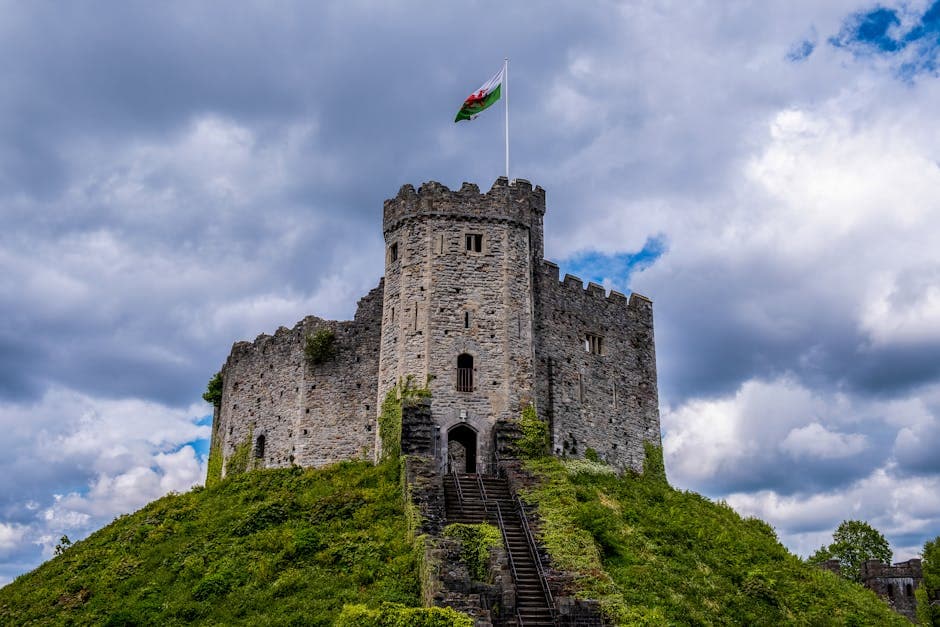
Following the Norman conquest of England, the Normans extended their reach into South Wales, constructing castles to consolidate their control. Around the late 11th century, either commissioned by William the Conqueror or Robert Fitzhamon, the Normans built a motte and bailey castle on the Roman fort's ruins. The motte, standing 12 meters high, is the largest in Wales and was topped by a wooden keep, surrounded by a wide moat. The castle's earthworks incorporated the collapsed Roman walls, with an inner and outer bailey divided by stone defenses.
Medieval stone reconstruction and military history
In the 12th century, the castle began its transition from timber to stone, likely under Robert of Gloucester. A polygonal shell keep was constructed atop the motte, measuring 23 meters wide and 9 meters high, along with stone walls around the inner bailey. These fortifications were responses to frequent Welsh uprisings and attacks during this turbulent period.
Throughout the 12th to 14th centuries, Cardiff Castle was a focal point in the conflicts between the Anglo-Normans and the Welsh. It endured multiple assaults, including a notable storming during Owain Glyndŵr's revolt in 1404. Ownership passed through influential families such as the de Clare, Despenser, and Beauchamp dynasties. In the 15th century, Richard de Beauchamp, 13th Earl of Warwick, significantly expanded the castle, adding a distinctive 23-meter-high octagonal tower with defensive machicolations and smaller turrets, a design that influenced other castles like Newport and Nottingham.
Decline of military importance and civil war
Following the Wars of the Roses and the revocation of the castle's Marcher Lord status in 1495, Cardiff Castle's military significance waned. The Herbert family took ownership in 1550 and adapted the castle for domestic and administrative use, adding Elizabethan extensions and maintaining parts of the outer bailey, which housed the Shire Hall and other civic buildings.
During the English Civil War, the castle changed hands between Royalist and Parliamentary forces multiple times. It was besieged but spared destruction, later serving as a garrison to defend against potential Scottish invasions. The castle's constable also acted as mayor of Cardiff, overseeing local governance.
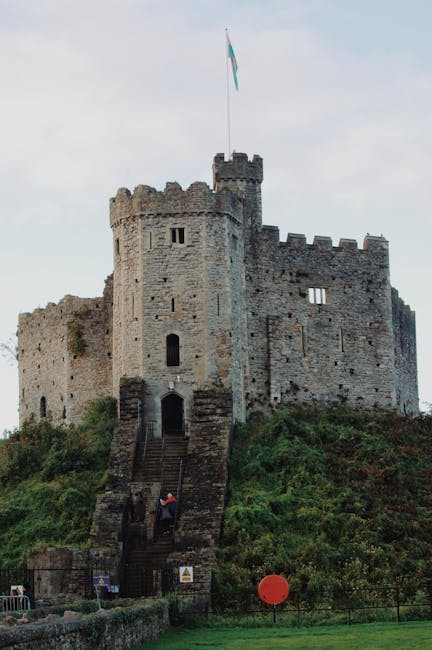
Photo by Marina Gr
Georgian renovations and Victorian Gothic revival transformation
In the mid-18th century, the castle passed to the Marquesses of Bute, a wealthy aristocratic family. The 1st Marquess commissioned renowned landscape architect Capability Brown and architect Henry Holland to renovate the castle into a Georgian mansion and to landscape the grounds, which involved demolishing many medieval structures and flattening parts of the site.
The family's fortunes soared during the 19th century due to the booming coal industry in Glamorgan. The 3rd Marquess of Bute, inheriting in 1848, embarked on an ambitious project to transform Cardiff Castle into a Victorian Gothic fantasy. He hired William Burges, whose imaginative designs created some of the most magnificent interiors of the Gothic Revival movement. Burges designed richly decorated rooms such as the Arab Room with its Moorish-style ceiling, the Banqueting Hall with elaborate carvings, and the Library housing the Marquess's extensive book collection.
Architectural highlights of the Gothic revival
The Clock Tower, completed in 1868, is a standout feature of Burges's work. Rising 46 meters, it houses a suite of rooms lavishly decorated with allegorical frescoes, carvings, and sculptures by Thomas Nicholls. The tower's Summer Smoking Room offers panoramic views of the Cardiff Docks, the Bristol Channel, and surrounding countryside.
Other notable additions include the Guest Tower, the Chaucer Room with its intricately painted roof, and the Roof Garden featuring a Madonna and child sculpture by Ceccardo Fucigna. Burges's interiors are celebrated for their craftsmanship, symbolism, and imaginative use of medieval motifs.
Archaeological discoveries and 20th-century developments
In 1890, excavations uncovered the remains of the Roman fort beneath the castle. This led to the reconstruction of Roman-style walls and a gatehouse, blending ancient heritage with the Victorian Gothic aesthetic. The castle grounds were further landscaped, including the creation of Bute Park and the installation of the Animal Wall, decorated with sculpted animals, and the Swiss Bridge over the River Taff.
In the early 20th century, restoration work continued under architect John Grant, who rebuilt medieval gates and walls. The castle's stables were completed, and the Animal Wall was relocated to enclose a Pre-Raphaelite themed garden. During World War II, the castle's medieval walls were adapted to house extensive air raid shelters capable of protecting up to 1,800 people.
Transition to public ownership and cultural venue
After the death of the 4th Marquess of Bute in 1947, the castle was gifted to the City of Cardiff. It became a public heritage site and tourist attraction, with restoration efforts preserving its unique architectural heritage. The castle now hosts the Firing Line regimental museum and an interpretation center, offering insights into its military and social history.
Cardiff Castle also serves as a vibrant cultural venue, hosting concerts, festivals, and events that draw thousands of visitors annually. Its combination of ancient fortifications and Victorian grandeur makes it one of Wales's most significant historical landmarks.
Architectural features and layout
The castle complex covers approximately 3.34 hectares, encompassing the Roman fort, the Norman motte and bailey, medieval stone walls, and Victorian additions. The motte remains a dominant feature, surrounded by a filled-in moat and spiral path. The shell keep atop the motte is a rare example of its kind in Wales.
The 15th-century octagonal tower constructed by Richard de Beauchamp remains a prominent defensive structure, featuring machicolations and polygonal turrets. The Black Tower served as a prison and was repaired after damage during the 1404 rebellion.
Victorian Gothic elements include the Clock Tower, the Banqueting Hall, and the Arab Room, all richly decorated with frescoes, stained glass, and intricate woodwork. The castle grounds feature landscaped parks, gardens, and architectural follies that enhance its romantic and historic atmosphere.
Visiting Cardiff Castle today
Today, Cardiff Castle is a well-preserved and restored historic site open to the public. Visitors can explore the extensive grounds, the Roman and medieval remains, and the opulent Victorian interiors. The castle offers guided tours, educational programs, and hosts a variety of events throughout the year.
The site includes the Firing Line museum, which presents the military history associated with the castle and the region. The wartime air raid shelters have been restored and are accessible, providing a poignant glimpse into the castle's role during World War II.
Cardiff Castle remains a symbol of Welsh heritage and architectural splendor, attracting history enthusiasts, architecture lovers, and tourists seeking to experience its rich and diverse past.
Frequently asked questions (FAQ)
- How do I get to Cardiff Castle?
- Cardiff Castle is located in the heart of Cardiff, easily accessible by public transport. You can take a train to Cardiff Central Station, which is just a short walk away, or use local bus services that stop nearby.
- What is the historical significance of Cardiff Castle?
- Cardiff Castle has a rich history dating back to Roman times and has served various roles throughout the centuries, including a fortress and a Victorian Gothic mansion. It reflects the architectural evolution of Wales and is a symbol of the city’s heritage.
- When was Cardiff Castle built?
- The original fortifications of Cardiff Castle were constructed in the late Roman period, around 55 AD. The castle as we see it today underwent significant renovations and expansions in the 19th century under the guidance of the Marquess of Bute.
- Can I take guided tours of Cardiff Castle?
- Yes, Cardiff Castle offers guided tours that provide in-depth insights into its history and architecture. These tours are led by knowledgeable guides and are a great way to enhance your visit.
- Why is the architecture of Cardiff Castle unique?
- The architecture of Cardiff Castle is a blend of medieval and Victorian styles, showcasing intricate designs and lavish interiors. The castle's Keep and the ornate rooms created by the 3rd Marquess of Bute are particularly noteworthy for their artistic detail.
- Is it possible to host events at Cardiff Castle?
- Yes, Cardiff Castle is available for private events, including weddings, corporate functions, and special celebrations. The stunning backdrop and historic setting make it a popular choice for memorable occasions.
- What are the opening hours of Cardiff Castle?
- Cardiff Castle typically opens from 9:00 AM to 5:00 PM, with extended hours during the summer months. It's advisable to check the official website for any seasonal variations or special events that may affect opening times.
- What are the ticket prices for Cardiff Castle?
- Ticket prices for Cardiff Castle vary depending on age and type of visit, with discounts available for children, students, and seniors. Family tickets and membership options can also provide additional savings for frequent visitors.
- When is the best time to visit Cardiff Castle?
- The best time to visit Cardiff Castle is during the spring and summer months when the weather is pleasant, and the grounds are in full bloom. However, visiting during weekdays can help you avoid large crowds and enjoy a more leisurely experience.
- Are there any nearby attractions to Cardiff Castle?
- Yes, there are several attractions near Cardiff Castle, including the National Museum Cardiff, Bute Park, and the Principality Stadium. Exploring these nearby sites can enhance your visit and provide a fuller experience of Cardiff's cultural offerings.
Photo gallery

Photo by David Atkins


Information
Website
Visit websiteSources & official resources
Verify the information above using these authoritative references.
Loading map...
Visitor reviews
No reviews yet. Been here? Write the first review and help other travelers!
Write the first reviewVisited this castle? Share your experience
Your review helps other travelers and adds first-hand knowledge to our encyclopedia.



