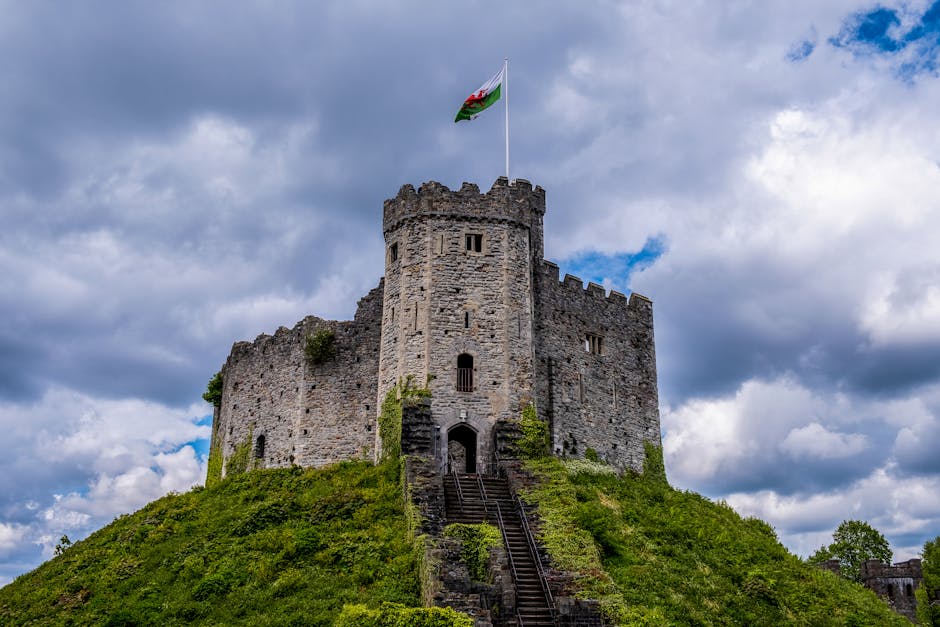
Animal Wall at Cardiff Castle
The Animal Wall at Cardiff Castle is a distinctive and whimsical architectural feature located in Cardiff, Wales. This unique wall showcases a series of fifteen sculpted wild beasts that appear to be playfully climbing out from the interior of Bute Park onto the street, captivating visitors with their lively and imaginative presence.
The original concept for the Animal Wall was conceived by William Burges, the renowned Gothic Revival architect and artist responsible for the extensive Victorian-era transformation of Cardiff Castle into a medieval fantasy masterpiece. Burges designed a menagerie of eight animal sculptures intended to adorn the wall as part of his broader vision for the castle's surroundings. Unfortunately, Burges passed away in 1881 before seeing the project completed.
Following Burges's death, the project was revived and brought to completion in 1890. The sculptural work was executed by Thomas Nicholls, an English sculptor who had collaborated with Burges on other projects. Nicholls crafted the original eight animals with remarkable attention to detail, capturing the spirit and vitality of each creature. These sculptures were initially painted in bright, vivid colors to enhance their playful character, although in recent restorations they have been returned to a more natural grey stone finish, with repairs made to damaged features such as snouts.
In 1922, the entire Animal Wall was carefully relocated to accommodate road widening near the castle, ensuring the preservation of this cherished feature while adapting to the evolving urban landscape of Cardiff. Subsequently, in 1931, six additional animal sculptures were added to the wall by Scottish sculptors Alexander Carrick and Phyllis Mary Bone. These new additions expanded the menagerie and included notable figures such as the popular anteater, which has also undergone recent restoration to maintain its condition and appeal.
Architectural and artistic significance
The Animal Wall is celebrated for its imaginative integration of sculptural art with functional architecture. The wall itself serves as a boundary between the castle grounds and the public street, but the addition of the animal sculptures transforms it into a dynamic visual narrative that engages passersby. The animals are positioned in various poses that suggest movement and curiosity, creating an interactive experience that invites viewers to imagine the creatures as living beings escaping from the park.
The design reflects Burges's Gothic Revival style, characterized by its romantic medievalism and attention to detail, but the playful subject matter of the animals adds a whimsical contrast to the more formal castle architecture. This blend of fantasy and historicism is a hallmark of Burges's work and contributes to the distinctive character of Cardiff Castle's landscape.
Historical context and development
The Animal Wall was part of a larger 19th-century effort to enhance Cardiff Castle and its surroundings under the patronage of the 3rd Marquess of Bute, one of the wealthiest men in Britain at the time. The Marquess commissioned William Burges to transform the medieval castle into a lavish Gothic Revival residence and cultural landmark. The Animal Wall was conceived as an extension of this vision, adding artistic flair and charm to the castle's perimeter.
Despite Burges's death halting the initial progress, the commitment to completing the wall demonstrated the importance placed on artistic and architectural innovation during the Victorian era. The subsequent additions by Carrick and Bone in the early 20th century reflect continued appreciation and adaptation of the original concept, ensuring the wall remained a relevant and beloved feature of Cardiff's heritage.
Conservation and public engagement
The Animal Wall has undergone various conservation efforts to preserve its structural integrity and artistic details. The relocation in 1922 was a significant engineering feat that safeguarded the sculptures while accommodating urban development. Recent restorations have focused on maintaining the stonework and repairing weather-related damage, including the restoration of the anteater's snout and other delicate features.
Today, the Animal Wall is a popular attraction for both locals and tourists. Its accessible location along Castle Street allows easy viewing, and the playful nature of the sculptures makes it especially appealing to families and children. The wall is often featured in cultural tours of Cardiff and is recognized as an important example of Victorian Gothic Revival art and architecture.
Visitor information
- The Animal Wall is located adjacent to Cardiff Castle and Bute Park, making it easily accessible on foot from the city center.
- Viewing the wall is free and open to the public at all times, as it forms part of the public street boundary.
- Best times to visit are during daylight hours for optimal viewing and photography.
- The wall's proximity to other Cardiff attractions, such as Cardiff Castle itself and the National Museum Cardiff, makes it a convenient stop on cultural heritage tours.
The legacy of william burges and the gothic revival
William Burges was a pivotal figure in the Gothic Revival movement, known for his imaginative designs that combined medieval inspiration with Victorian craftsmanship. His work at Cardiff Castle, including the Animal Wall, exemplifies his ability to blend architecture and sculpture into a cohesive artistic vision. The Animal Wall stands as a testament to his creative genius and his influence on Victorian architecture.
The wall's playful animals contrast with the imposing castle architecture, showcasing Burges's unique approach to design that embraced fantasy and storytelling. This legacy continues to attract scholars, architects, and visitors interested in the rich cultural history of Victorian Britain and its architectural achievements.
Frequently asked questions (FAQ)
- How do I get to the Animal Wall at Cardiff Castle?
- The Animal Wall is located on Castle Street, adjacent to Cardiff Castle and Bute Park, easily accessible on foot from Cardiff city center.
- What is the historical significance of the Animal Wall?
- The Animal Wall was designed by William Burges as part of the Victorian Gothic Revival transformation of Cardiff Castle, featuring playful sculptures that add artistic charm to the castle grounds.
- When was the Animal Wall built and by whom?
- The original eight sculptures were designed by William Burges and sculpted by Thomas Nicholls, completed in 1890 after Burges's death.
- Can I visit the Animal Wall for free?
- Yes, the Animal Wall is freely accessible to the public at all times as it forms part of a public street boundary.
- Why were additional animals added to the wall?
- Six more animals were added in 1931 by Scottish sculptors Alexander Carrick and Phyllis Mary Bone to expand the menagerie and continue the artistic legacy.
- Is the Animal Wall suitable for families and children?
- Absolutely, the playful and imaginative animal sculptures make the wall especially appealing to families and children visiting Cardiff.
Information
Opening hours
Open daily, free access
Ticket prices
Free
Current owner
Municipality
Loading map...
Visitor reviews
No reviews yet. Been here? Write the first review and help other travelers!
Write the first reviewVisited this castle? Share your experience
Your review helps other travelers and adds first-hand knowledge to our encyclopedia.