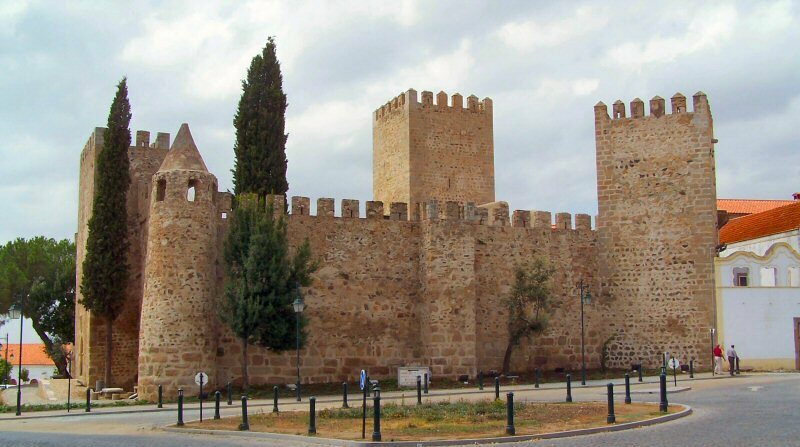
Cabeço de Vide Castle

Cabeço de Vide Castle: historic hilltop fortress in Alto Alentejo, Portugal
Largo da Misericórdia, Portugal
Late Medieval (14th–15th c.)
Ruins

Cabeço de Vide Castle, locally known as Castelo de Cabeço de Vide, is a historic hilltop fortress located in the town of Cabeço de Vide in the Alto Alentejo region of Portugal. This site embodies a rich tapestry of human occupation spanning from prehistoric times through Roman influence and into the medieval period. The castle's strategic position atop a hill overlooking the village reflects its enduring military and defensive significance throughout history.

Early history and roman influence

The earliest evidence of human presence at Cabeço de Vide dates back to the Neolithic era, marked by prehistoric remains and megalithic monuments in the surrounding landscape. The area gained prominence during the Roman period when the Roman Empire expanded into the Iberian Peninsula. Around the late 2nd century BCE, during the reign of Caesar Augustus, the Romans established a sulfurous thermal bath complex known locally as A Sulfúrea. This complex was strategically located near a small dammed river approximately one kilometer southeast of the modern village, adjacent to a Roman road connecting Lisbon and Mérida. The baths served as a place of healing and rest, highlighting the area's integration into Roman infrastructure and culture.

Local tradition recounts that the original settlement was located in an area called Pombal. Following a devastating battle and subsequent plague outbreak, survivors relocated to the nearby hilltop, known as the cabeço, seeking cleaner air and better health conditions. This relocation laid the foundation for the village's establishment on the elevated site.

Medieval military significance and reconquista

During the Christian Reconquista, the site of Cabeço de Vide gained military importance. The original Muslim settlement was conquered by Afonso I of Portugal in 1160. However, it was retaken by Muslim forces under the Almohad caliph Yaqub al-Mansur in 1190, who destroyed the fortifications and settlement during their campaign. After Portugal reasserted control, the village was rebuilt on the hilltop for defensive purposes, with a castle and surrounding walls constructed or reconstructed to protect the frontier position.

The existing castle likely dates from the 14th century, built or rebuilt during the later stages of the Reconquista. It functioned as a hill castle, commanding views over the surrounding landscape and serving as a strategic defensive post. The castle's curtain wall, which survives today in a somewhat elliptical shape, enclosed the settlement and provided protection for its inhabitants.

Ownership and regional importance

In the early 16th century, the domains of Cabeço de Vide were granted to Diogo de Azambuja, a notable Portuguese nobleman and military figure. During this period, the village held regional significance, underscored by the establishment of the Santa Casa de Misericórdia, a charitable institution founded by Queen Leonor in 1498. King Manuel I further elevated the settlement's status by issuing a new charter (Foral Novo) in 1512, regulating its governance and privileges.

Decline and later history

The village and castle suffered severe damage during the Portuguese Restoration War in the mid-17th century, a conflict that marked Portugal's struggle to regain independence from Spanish rule. This period of warfare contributed to the castle's decline and eventual ruin, although the exact timeline of its deterioration is unclear. Following the war, the settlement entered a phase of decline, and the castle fell out of military use.

In the 20th century, administrative changes saw the dissolution of Cabeço de Vide's municipality, which was first incorporated into Alter do Chão and later into the municipality of Fronteira. Contemporary efforts aim to classify the site as part of Portugal's cultural heritage, recognizing its archaeological and historical value.

Architectural features and remains

Today, the primary visible remnant of Cabeço de Vide Castle is the elliptical curtain wall that once enclosed the fortified settlement. This wall features a single gate adorned with the coat of arms of the Military Order of Aviz, indicating the castle's historical association with this influential military order. The interior of the castle site is largely empty, apart from a modern water tower, reflecting its state as a ruin rather than a preserved fortress.

The castle's construction materials and detailed architectural elements are not extensively documented, but the surviving wall provides insight into the defensive strategies employed during the late medieval period. The hilltop location itself is a classic feature of hill castles, chosen for its natural defensive advantages and commanding views.

Roman thermal baths and archaeological significance

In addition to the medieval fortifications, the site includes the remains of the Roman thermal bath complex A Sulfúrea. These baths are located near the dammed river southeast of the village and attest to the area's long-standing role as a place of healing and rest. Although detailed architectural descriptions of the baths are limited, their presence underscores the multi-layered historical significance of Cabeço de Vide.

The archaeological remains at Cabeço de Vide illustrate a continuum of human habitation and strategic importance from prehistoric times through the Roman era and into the medieval period. Preservation and classification efforts seek to protect these valuable cultural assets for future generations.

Visiting cabeço de vide castle today

Cabeço de Vide Castle is situated within a small municipal park, offering visitors a chance to explore the historic hilltop site from the outside. The castle itself is not accessible internally due to its ruinous state and the presence of modern structures within its walls. Visitors can appreciate the surviving curtain wall and the gate with its distinctive coat of arms, gaining insight into the castle's medieval military role.

The surrounding town of Cabeço de Vide, while quiet and modest, provides a glimpse into the region's layered history. The site is of particular interest to those fascinated by medieval fortifications, Roman archaeology, and Portuguese heritage. Visiting hours and ticketing information may vary, so prospective visitors should check local resources before planning their trip.

Frequently asked questions (FAQ)

When was Cabeço de Vide Castle originally built?
Cabeço de Vide Castle was likely constructed or rebuilt in the 14th century during the late medieval period, following the Christian Reconquista.
Can I enter inside Cabeço de Vide Castle?
The castle is currently in ruins and not accessible internally. Visitors can explore the site externally and view the surviving curtain wall and gate.
What is the historical significance of the coat of arms on the castle gate?
The coat of arms on the castle gate belongs to the Military Order of Aviz, reflecting the castle's historical association with this influential Portuguese military order.
Are there any Roman remains near Cabeço de Vide Castle?
Yes, nearby there are remains of a Roman sulfurous thermal bath complex called A Sulfúrea, located about one kilometer southeast of the village, highlighting the area's Roman heritage.
Why was the village relocated to the hilltop?
Local tradition states that after a devastating battle and plague outbreak, survivors moved to the hilltop seeking cleaner air, which contributed to the community's recovery and the establishment of the village in this elevated location.

Information

Hill Castle

Address

Largo da Misericórdia, Portugal

Loading map...

Visitor reviews

No reviews yet. Been here? Write the first review and help other travelers!

Write the first review

Visited this castle? Share your experience

Your review helps other travelers and adds first-hand knowledge to our encyclopedia.

Write a review

(5/5)

0/2000 characters

Your review will be visible after admin approval

Nearby castles

6.8 km

Alter Pedroso Castle

Alter do Chão, Portugal

Alter Pedroso Castle, known locally as Castelo de Alter Pedroso, is a ruined medieval fortress located in the hamlet of Alter Pedroso within the Alto Alentejo region of Portugal. This castle occupies a strategic rocky hill southeast of the town of Alter do Chão, overlooking the surrounding plains. Its origins trace back to the High Medieval period, specifically the 13th century, with earlier fortifications likely established by Moorish occupants in the 12th or early 13th century. Historical background and military significance The site initially served as a Moorish fortified settlement during the Islamic presence in the Iberian Peninsula. In 1216, Christian forces conquered the area as part of the Reconquista efforts to reclaim territory from Muslim rulers. Following this, the castle's lands were granted in 1249 to the Military Order of Aviz, a prominent Christian military order responsible for defending and consolidating Portuguese frontiers. The Order of Aviz undertook construction of the castle, adapting and expanding the earlier fortifications to establish a defensive stronghold. Despite this, Alter Pedroso Castle was not considered a major strategic fortress within the broader defensive network of Alentejo castles. Its role was likely limited to local control and surveillance rather than serving as a key military bastion. Architecture and structural features The castle was built atop a rocky hill providing natural defensive advantages. The remaining ruins include portions of curtain walls, a small corner tower, and a surviving that once controlled access to the castle interior. The walls were constructed using local stone, typical of medieval military architecture in the region. Within the castle grounds, a small chapel dedicated to Saint Benedict was erected around the year 1300, reflecting the religious practices of the time and the close ties between military orders and ecclesiastical institutions. Today, the chapel stands in ruins alongside the castle walls. Notably, a geodesic marker has been installed on the base of a former corner tower, marking the site for surveying purposes. Additionally, a modern lookout tower for wildfire monitoring crowns the ruins, integrating contemporary utility with the historic site. Decline and present condition During the Portuguese Restoration War in 1662, the castle was reportedly unguarded when Spanish forces under John of Austria captured the area. The castle was subsequently razed and left in ruins, never to be rebuilt or restored as a military installation. Currently, Alter Pedroso Castle exists as a partially preserved ruin, with only fragments of its original structure remaining. Visitors can explore the gate, wall sections, the ruined chapel, and the corner tower base. The site offers panoramic views of the surrounding Alentejo landscape, making it a point of interest for history enthusiasts and hikers. Visiting information and cultural significance The castle is freely accessible to the public and does not have formal visitor facilities or guided tours. Its modest remains and scenic vantage point provide an opportunity to appreciate medieval military architecture in a rural Portuguese setting. While Alter Pedroso Castle may not attract large crowds due to its ruinous state and limited structures, it holds cultural value as part of the region's historical defensive line and as a testament to the Military Order of Aviz's role in Portuguese history.

High Medieval (11th–13th c.)
Details
9.5 km
Alter do Chão Castle — Portugal castle

Alter do Chão Castle

Alter do Chão, Portugal

Alter do Chão Castle, locally known as Castelo de Alter do Chão, is a remarkable medieval fortress situated in the town of Alter do Chão, in the Alto Alentejo region of Portugal. Perched on a hill at 270 meters above sea level, this castle commands sweeping views of the surrounding landscape, underscoring its strategic importance through centuries of Iberian history. The site of Alter do Chão Castle has a rich and complex history stretching back to pre-Roman times. Originally, it hosted the early settlement of Abeltério, which was significant during the Roman conquest of the Iberian Peninsula. Its location along one of the three Roman roads connecting Olissipo (Lisbon) to Augusta Emerita (Mérida) made it a vital military and trade route. The settlement was destroyed by Roman legions during Emperor Hadrian's reign in the early 2nd century CE, likely leading to the construction of a Roman fortification to secure the area. Following the Roman period, the site endured invasions by the Vandals, who damaged the existing defenses. These fortifications were later restored during the Muslim occupation of the Iberian Peninsula, probably under the reign of Abd al-Rahman III in the 10th century. Archaeological remains from this era include five rows of carefully cut stones, characteristic of caliphal architectural style, indicating significant reconstruction efforts. The Christian reconquest and medieval rebuilding The castle came under Christian control in the early 13th century during the Reconquista. In 1216, King Afonso II ordered the repopulation of the area, highlighting the strategic importance of the site. The castle was first documented in 1232 through a charter granted by the Bishop of Guarda, Mestre Vicente Hispano, during the reign of King Sancho II. Soon after, in 1249, King Afonso III issued a charter mandating the castle's reconstruction, emphasizing its defensive role in securing the frontier. Throughout the late 13th century, King Denis I maintained close ties to the castle, visiting multiple times and granting a new charter in 1292. This charter confirmed the town's direct allegiance to the crown, bypassing any intermediate lords, which was significant for its governance and autonomy. The present castle structure dates primarily from the reign of King Peter I of Portugal, who ordered a comprehensive rebuilding on 22 September 1357. This date is commemorated by a marble plaque above the main gate, marking the castle's transformation into a formidable Gothic fortress. Subsequent monarchs, including Ferdinand I, John I, and John II, continued to maintain and enhance the castle, underscoring its ongoing military and administrative significance. Ownership and military role in later centuries In 1428, the castle and town passed to the renowned general Nuno Álvares Pereira, a key figure in Portuguese history. After his death, ownership transferred to his daughter and, through marriage, to Afonso I, Duke of Braganza in 1432. The Duke initiated restoration works to preserve and adapt the fortress. Later in the 15th century, the castle was used as a prison under the direction of Duke Ferdinand II of Braganza, reflecting its multifunctional role. During the Portuguese Restoration War in the mid-17th century, the castle's defenses were modernized with the addition of a gun emplacement on the northeast wall, including a barbette for artillery. Despite these upgrades, the fortress and town were captured by Spanish forces led by John of Austria in 1662, illustrating the castle's ongoing strategic importance. Architectural features and layout The castle exhibits a quadrangular layout typical of early Gothic military architecture. Constructed primarily from schist and granite, its defensive walls are reinforced by six towers of various shapes and functions. These include two rectangular towers, two cylindrical corner towers for enhanced defense, a smaller quadrangular turret along the northeast wall, and a square turret above the main gate on the southwest side. One of the most distinctive features is the eastern corner tower with its conical roof, which provides both aesthetic appeal and protection from the elements. The walls are crowned by crenellations supported by stone corbels, especially prominent along the eastern section, and a chemin de ronde runs atop the walls, allowing defenders to patrol the perimeter safely. The main entrance is marked by a pointed ogival arch, a hallmark of Gothic design, above which sits the castle's coat of arms and the inscription commemorating the 1357 reconstruction. Passing through this gate leads to the parade ground, an open courtyard originally used for assembling troops and military drills. Essential features within the courtyard include a well and a cistern, crucial for water supply during sieges. Dominating the interior is the castle's keep (donjon), a robust square tower rising approximately 44 meters high. The keep is topped by a parapet with truncated pyramidal crenellations, combining defensive and decorative elements. Inside, the keep contains two vaulted floors with barrel ceilings supported by pointed stone arches. Light filters through mullioned windows, illuminating the stronghold's interior chambers, all of which feature Gothic pointed arch doorways. Adjacent to the keep are the remains of the mayor's office and other residential and administrative quarters. This area includes multiple entrances, windows, and a staircase, indicating the castle's role beyond military defense as a center of local governance. Above the mayor's office door, an inscription dated 1372 honors Fernão Rodrigues, steward to Dom Fernando Neto, Count of Arraiolos, who commissioned these works. Preservation and current status Alter do Chão Castle has undergone several restoration campaigns, particularly during the 20th century, to preserve its medieval fabric while respecting its layered history. These efforts were largely supported by Portugal's Directorate-General for National Buildings and Monuments and financially backed by the Casa de Bragança Foundation, which remains the current owner. Today, the castle is well preserved and open to visitors for a small fee during business hours. Its combination of military architecture, historical significance, and scenic location makes it a captivating destination for those interested in Portuguese history and medieval fortifications. The castle stands as a testament to the region's turbulent past and enduring cultural heritage. The surrounding town of Alter do Chão offers a peaceful backdrop, enhancing the castle's appeal as a sleepy historic site where visitors can explore centuries of architectural evolution and historical events.

Late Medieval (14th–15th c.)
Details
16.9 km

Castelo de Assumar

Monforte, Portugal

Castelo de Assumar is a medieval hill castle located in the village of Assumar, within the Monforte municipality in Portugal. This site holds a deep historical significance, with archaeological evidence indicating human settlement since the Neolithic era, well before the castle's construction. The castle's location reflects its strategic importance in the border region of eastern Portugal, an area marked by centuries of conflict and cultural exchange. Medieval origins and historical context The region encompassing Assumar was a contested frontier during the early medieval period, experiencing alternating control between Christian and Muslim powers. Initially, the territory was captured by King Afonso Henriques, the first king of Portugal, who laid the foundations of the Portuguese kingdom. However, control was lost to Muslim forces before being definitively reconquered during the reign of King Sancho I. These shifts were part of the broader Reconquista campaigns across the Iberian Peninsula. In the late 13th and early 14th centuries, under the reign of King Dinis I, Assumar gained prominence. The village was granted special privileges in 1298 and achieved administrative independence from Monforte by 1314. Recognizing the need for defense in a volatile border region, King Afonso IV commissioned the construction of a small defensive castle in 1332. This fortification was intended to protect the local population and assert royal authority, as evidenced by an inscription originally placed on the castle. Architectural features and fortification The castle of Assumar was a modest military structure typical of smaller Portuguese fortifications of the early 14th century. While detailed architectural plans have not survived, the castle likely featured a curtain wall enclosing the settlement, providing a basic defensive perimeter. Today, only a small fragment of this original curtain wall remains visible within the village, offering a rare physical link to the medieval fortress. The castle's design would have included essential defensive elements such as battlements and possibly a gatehouse, though no substantial remains of these survive. The fortification's scale and construction reflect its role as a protective refuge rather than a large-scale military stronghold. Religious and military significance The castle's history intertwines with both military and religious developments. During the 1383–1385 crisis, a civil war triggered by the death of King Ferdinand I without a male heir, Assumar played a supportive role. Following the Battle of Atoleiros, the renowned Constable Nuno Álvares Pereira is said to have taken refuge in the village's Church of Nossa Senhora dos Milagres. This highlights Assumar's strategic and symbolic importance during a period of national upheaval. In the 15th century, the castle was entrusted to local nobility, with King João II appointing Gonçalo Álvarez as alcaide-mor, or chief governor, of the castle and village. This position granted him ownership of the castle and control over royal lands and tolls, reflecting the feudal practices of frontier governance prevalent at the time. By the early 16th century, the castle and village were documented by the scribe Duarte de Armas around 1509, providing one of the earliest visual records of Assumar. At this time, Gonçalo Álvares de Abreu served as alcaide, continuing the lineage of local governance. Conflicts and decline The castle's strategic location made it a target during later military conflicts. In 1662, during the Portuguese Restoration War aimed at ending Spanish rule, the castle was captured by Spanish forces led by Don Juan of Austria. This occupation caused significant damage to the fortifications. A subsequent occupation in 1701 further undermined the castle's defensive capabilities. By the 19th century, the castle had fallen into disrepair, with much of the structure demolished or deteriorated. Today, only scant remains survive, including a small section of the original curtain wall and an important epigraphic inscription. Preservation and archaeological remains The most notable surviving artifact is an epigraphic inscription commemorating the castle's founding under King Afonso IV. Originally affixed to the castle itself, this inscription was later moved to the south façade of the Church of Nossa Senhora dos Milagres and subsequently relocated to the church tower in the 19th century. It remains preserved there as a tangible link to the castle's medieval past. Physically, the only visible structural remnant of the castle is a small segment of the original curtain wall, which still stands within the village landscape. These remains, although limited, provide valuable insight into the castle's defensive role and the historical layering of the site. Despite its historical significance, the castle has not been officially designated as a protected heritage site by Portuguese authorities. Nevertheless, the combination of the inscription and surviving wall fragment constitutes an important archaeological and cultural record, reflecting Assumar's military, administrative, and religious history. Cultural heritage and visitor information While the castle itself offers limited physical remains, the village of Assumar and its church continue to embody the historical legacy of this medieval fortification. Visitors interested in Portuguese medieval history and border fortifications can explore the site to appreciate the layers of history embedded in the landscape. The preserved inscription in the church tower provides a focal point for understanding the castle's origins and significance. The surrounding region, rich in historical sites, offers additional opportunities to explore Portugal's medieval heritage.

Late Medieval (14th–15th c.)
Details