Bychaŭ Castle
Bychaŭ Castle stands as a significant hill castle located in the town of Bychaŭ, Belarus, with a history deeply intertwined with the military and political developments of the Grand Duchy of Lithuania and later the Polish-Lithuanian Commonwealth. Originally established during the late medieval period, the castle evolved from a wooden fortress into a robust stone complex by the early 17th century, reflecting the shifting architectural and defensive needs of the region.
The castle's strategic position on the elevated right bank of the Dnieper River underscored its importance in controlling local trade routes and defending against incursions. The earliest fortifications, dating from the 14th to 15th centuries, consisted of wooden walls, towers, and gates that protected the settlement. These wooden defenses notably withstood a 1590 assault by Don Cossacks under Hetman Matyusha Fedorovich, highlighting the castle's role in the turbulent borderlands of Eastern Europe.
Transition from wooden to stone fortifications
Following the 1590 siege, Jan Karol Chodkiewicz, a prominent noble and military leader of the Grand Duchy of Lithuania, received royal permission to construct a stone castle on the site. The construction, which spanned several decades and concluded by 1619, marked a significant transformation in the castle's defensive capabilities. The new stone structures replaced the earlier wooden fortifications, providing greater durability and resistance against artillery and siege warfare that characterized the period.
Ownership and military significance in the 17th century
In 1621, the castle passed into the hands of Lew Sapieha, an influential magnate of the Polish-Lithuanian Commonwealth. Under Sapieha's ownership, the castle's defenses were enhanced with bastion-style fortifications, a military architectural style designed to deflect cannon fire and improve defensive coverage. These improvements reflected evolving military technologies and the castle's ongoing strategic importance.
Sieges and conflicts
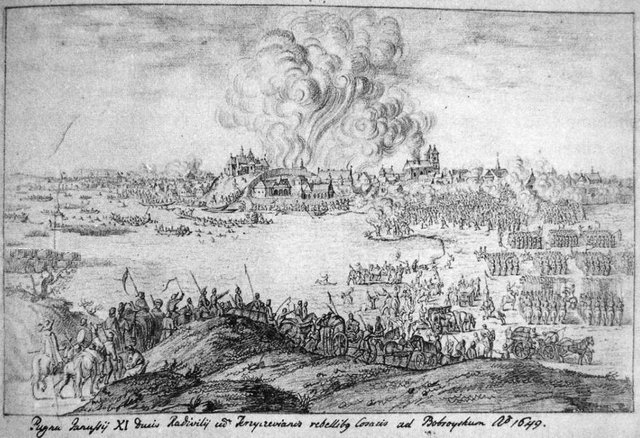
Throughout the mid-17th century, Bychaŭ Castle was a focal point in the frequent conflicts that engulfed Eastern Europe. It successfully resisted a 1648 siege by Ukrainian Cossacks led by F. Harkusha. However, during the Russo-Polish War (1654–1657), the castle endured a prolonged 11-month siege by combined Ukrainian Cossack and Russian forces, ultimately falling after an extended 18-month siege in early 1657. The castle changed hands again in 1659 after another siege and finally surrendered to Polish forces in 1661. These events illustrate the castle's contested status amid the shifting political and military landscape.
Role in the Great Northern War
In the early 18th century, during the Great Northern War, the castle's owner, Kazimir Jan Sapieha, allied with Swedish King Charles XII. The castle's garrison actively engaged in military operations against Russian and Saxon troops. Despite fierce resistance, the castle was eventually forced to capitulate following heavy bombardment, marking its last major military engagement.
20th-century history and preservation efforts
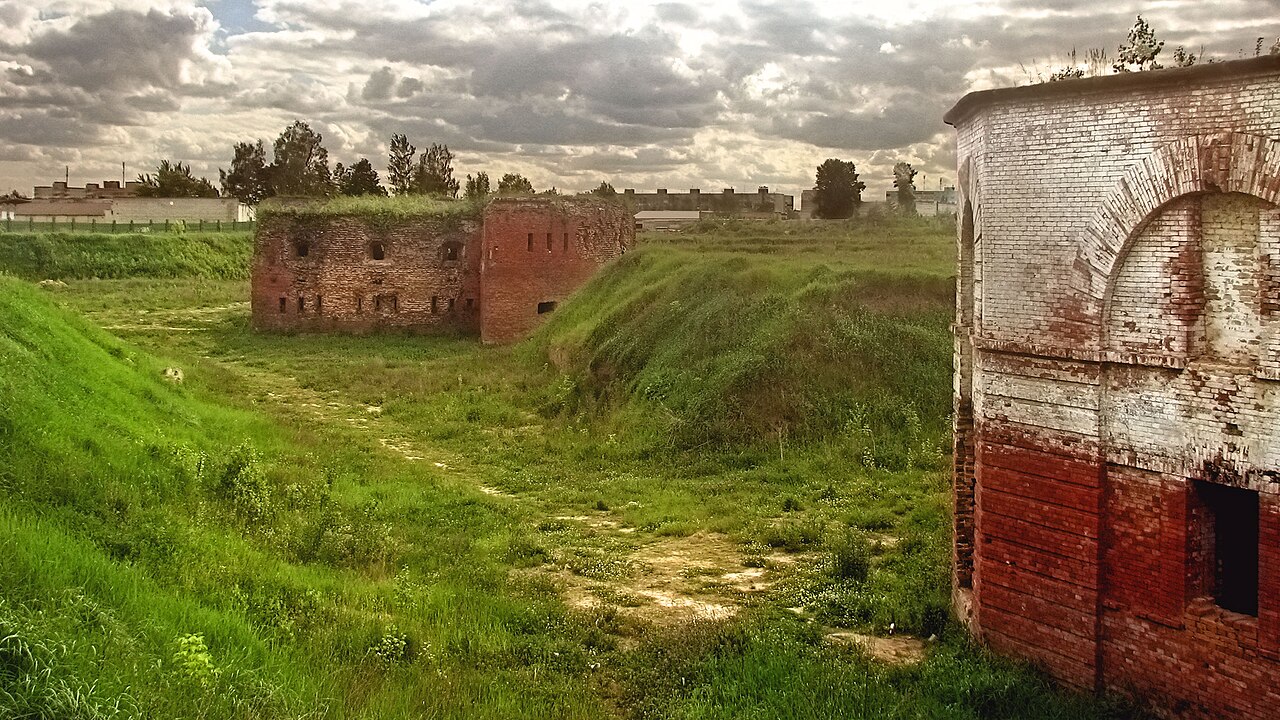
By the 20th century, Bychaŭ Castle had fallen into decline. During World War II, Nazi forces repurposed the castle as a detention site for prisoners from the local Bychaŭ ghetto. Later, prior to a devastating fire in 2004, parts of the castle complex were adapted for civilian use, including a woodworking workshop, signaling a shift away from its historic military and administrative functions.
Restoration efforts began in the 2010s, funded by government budgets and public donations. By 2013, partial renovations were completed alongside ongoing archaeological excavations led by Igor Marzalyuk. Plans for the castle's future include establishing cultural institutions and community spaces, aiming to revive its role as a heritage landmark in Belarus.
Architectural features and layout
The castle occupies an irregular quadrilateral area approximately 75 by 70 meters, consisting of several stone and brick buildings arranged around an inner courtyard. This layout replaced the earlier wooden fortifications and reflects architectural trends of the early 17th century.
Defensive structures
The northern courtyard boundary is marked by a solid stone wall that provided access to the adjacent city defensive rampart, integrating the castle's defenses with the town's fortifications. The western side, facing the market square, housed barracks and featured a central gate with a drawbridge controlling access. Octagonal defensive towers stood at each corner of this façade, emphasizing the castle's military readiness.
South of one western tower, a stone wall was replaced over time by wooden buildings adjoining a two-story stone service building connected directly to the main palace. This complex combined residential, administrative, and support functions.
Palace and residential quarters
The palace is an elongated stone building with its main façade oriented eastward toward the Dnieper River. It features a tall, two-pitched tiled roof nearly two stories high, contributing to its imposing silhouette. Faceted towers at the eastern and southern ends rise five stories and are topped with distinctive two-tiered domes known locally as "banyas," indicative of Dutch Renaissance architectural influence.
Inside, the palace façade facing the courtyard includes a two-level arched gallery. The ground-level arcade is stone-built with cross vaulting, providing access to interior rooms, while the upper gallery is wooden, offering a lighter structure. Large vaulted cellars beneath supported storage and service needs.
The interior is divided by robust transverse stone walls forming a linear enfilade of rooms. The ground floor contained service quarters, chambers, and workshops with cross vaults, while the upper floor served as residential space with distinct male and female sections and reception rooms. The palace towers housed specialized rooms such as a chapel, library, and study, illustrating the multifunctional nature of the complex.
Additional buildings and fortifications
Other stone buildings within the castle compound share similar architectural elements, including load-bearing walls and vaulted ceilings, though many original decorative features have been lost. City gates built beyond the main complex, especially the western gate, were two-story stone structures with vaulted ceilings under a dome called a "galka." This gate displayed the Sapieha family coat of arms on a weather vane and featured double-leaf doors reinforced with an iron grill known as a "hersa," secured by an iron locking mechanism. A wooden bridge with an additional central wooden grille provided access, enhancing security.
Near the Mogilev gate stood a stone synagogue, linking the castle site to the religious and cultural life of the local Jewish community during the castle's active period.
Military production facilities
From the 16th to 18th centuries, the castle housed a specialized armory called a "ludwisarnia," where cannons, cannonballs, bullets, and grenades were manufactured and stored. In 1692, the arsenal inventory included 34 cannons, some multi-barreled artillery pieces nicknamed "organs," 32 tin ingots known as "pigs," as well as gunpowder and various grenades. The armory also held 1,200 muskets and assorted high-quality weapons and armor, establishing the castle as a notable military production center with influence beyond Belarus.
Together, these architectural and historical elements illustrate Bychaŭ Castle's evolution from a wooden fortress into a fortified stone complex that served both military and residential purposes. Its design reflects the influence of Renaissance military architecture and the complex political history of Eastern Europe from the late medieval period through the early modern era.
Frequently asked questions (FAQ)
- How do I get to Bychaŭ Castle?
- Bychaŭ Castle is located in Bychaŭ, Belarus, and can be reached by car or public transport from nearby cities. The nearest major city is Mogilev, which offers bus and train services to Bychaŭ. It’s advisable to check local transport schedules for the most convenient routes.
- What is the historical significance of Bychaŭ Castle?
- Bychaŭ Castle dates back to the 16th century and is known for its role in the defense of the region. It showcases the architectural styles of different periods and reflects the historical turmoil of Belarus. The castle is an important cultural landmark that attracts history enthusiasts and researchers.
- When was Bychaŭ Castle built?
- Construction of Bychaŭ Castle began in the late 16th century, specifically around 1565, during a time of political instability in the region. Over the centuries, it has undergone several renovations and expansions, which have contributed to its unique architectural features. This long history makes it a fascinating site for visitors interested in medieval architecture.
- Can I visit Bychaŭ Castle year-round?
- Yes, Bychaŭ Castle is open for visitors throughout the year, although the best time to visit is during the spring and summer months when the weather is more favorable for outdoor exploration. Special events and guided tours may be more frequent during the warmer months. Always check the castle's official website for any seasonal events or changes in visiting hours.
- Why is Bychaŭ Castle a popular tourist attraction?
- Bychaŭ Castle attracts visitors due to its rich history, impressive architecture, and scenic surroundings. The castle offers a glimpse into the past and is a perfect spot for photography and exploration. Its location near other historical sites makes it a convenient stop for tourists exploring Belarus.
- Is it possible to take guided tours of the castle?
- Yes, guided tours are available at Bychaŭ Castle, providing visitors with in-depth knowledge about its history and architecture. These tours are usually conducted in multiple languages to accommodate international visitors. It's recommended to book in advance, especially during peak tourist seasons.
- What are the opening hours for Bychaŭ Castle?
- Bychaŭ Castle typically opens at 9 AM and closes at 6 PM, but hours may vary based on the season. It’s best to check the official website or contact the castle directly for the most accurate and up-to-date information before your visit. Special hours may apply during holidays or events.
- Are there any nearby attractions to visit while at Bychaŭ Castle?
- Yes, there are several nearby attractions, including the picturesque Bychaŭ town center and scenic parks perfect for leisurely walks. Visitors may also explore other historical sites in the region, making it a great day trip. Combining your visit to Bychaŭ Castle with these nearby sites enhances your experience of Belarus's rich heritage.
- What are the ticket prices for visiting Bychaŭ Castle?
- Ticket prices for Bychaŭ Castle are generally affordable, with discounts often available for students and seniors. Children may have free or reduced entry fees, making it accessible for families. It's advisable to check the castle's official site for current pricing and any special offers.
Information
Loading map...
Visitor reviews
No reviews yet. Been here? Write the first review and help other travelers!
Write the first reviewVisited this castle? Share your experience
Your review helps other travelers and adds first-hand knowledge to our encyclopedia.