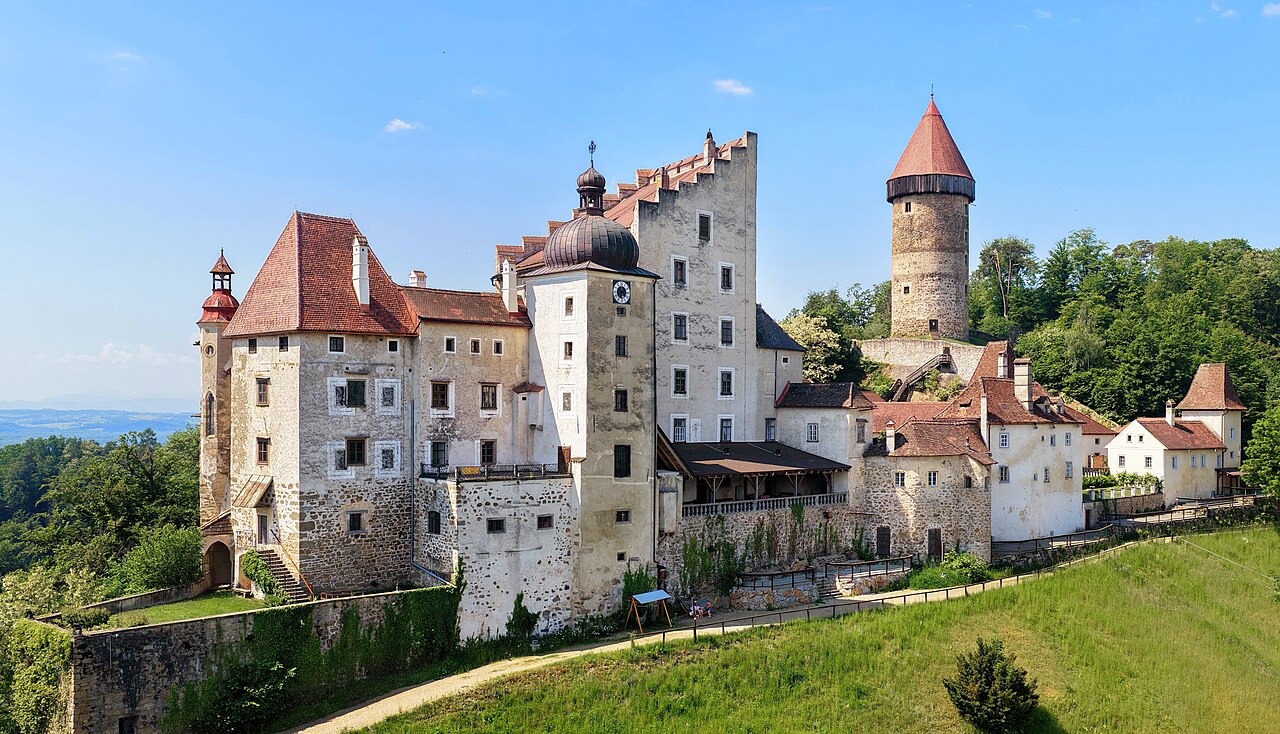
Burgruine Windhaag stands as a significant hilltop castle ruin in the municipality of Windhaag bei Perg, Austria. Nestled approximately 500 meters above sea level, this site offers a remarkable glimpse into the medieval period and the evolution of castle architecture and noble residence in the region. Originally constructed in the medieval period, the castle's first indirect mention dates to 1290, though its origins likely precede this, reflecting the strategic importance of its rocky hilltop location.
The early history and noble ownership
The earliest known proprietors of Burgruine Windhaag were the noble family of Heinrich and Freitel von Windhaag. By the late 14th century, ownership shifted to Hans von Au, then to Konrad Schaffer and Dorothea, linking the castle to prominent local dynasties. Around 1400, Thomas Tannpeck acquired half of the estate, completing full ownership by 1407. The Tannpeck family held the castle for several decades, receiving it as a fief from King Ladislaus Postumus in 1455, an official recognition of their status and the castle's importance.
In 1485, the castle was granted by Emperor Friedrich III to Ladislaus Prager, who further cemented his ties to the estate through marriage to Anna Regina Tannpeck. Ladislaus was formally enfeoffed with full ownership in 1488. Under his patronage, the castle chapel was constructed in 1499, marking a significant architectural and religious enhancement to the estate. The castle was elevated to a lordship with its own district court in 1491, a status reaffirmed by Emperor Maximilian I in 1494. This jurisdiction included the communities of Windhaag, Münzbach, Altenburg, and parts of Rechberg, underscoring the castle's regional influence.
Transformation into a noble residence
Following Ladislaus Prager's death in 1514, his widow Anna and their children undertook extensive expansions, transforming the fortress from a primarily defensive Gothic structure into a more comfortable and representative noble residence, later known as the Old Castle. This transition reflected broader architectural trends in late medieval Europe, where fortifications increasingly incorporated residential and administrative functions.
The castle's layout evolved to include vaulted chambers serving diverse purposes: a great hall for gatherings, a chapel for private worship, and specialized chambers such as a women's chamber and bedrooms for the lord's family. Functional spaces like the dining room, kitchen, bakery, and storage rooms were integrated, alongside leisure features such as a covered balcony known as an Altane or Söller. Administrative and security rooms included the steward's chamber, a complaints room, a silver vault for valuables, an armory, a powder magazine, and a prison located in the bergfried, the main defensive tower.
Supporting estate buildings and Renaissance influence
Beyond the main fortress, additional buildings were constructed on freehold land starting in 1507 under Ladislaus Prager and his widow. These included a separately built chapel (added in 1512), a horse stable with a riding hall, a masonry granary, a brewery, a smithy for metalwork, and a bathhouse. This ensemble formed a largely self-sufficient estate, blending residential comfort with economic and administrative functionality.
By the mid-17th century, the castle's military role diminished significantly. In 1636, Joachim Enzmilner acquired the property and constructed a new Renaissance-style residence nearby between 1642 and 1673. He also established a Dominican convent within the Old Castle in 1668 for his daughter Eva Magdalena, the order's first prioress in Windhaag. Eva Magdalena later commissioned a new convent on the castle gardens' grounds, leading to the demolition of most of the Renaissance residence except its chapel, while preserving the Old Castle and its chapel.
Decline, ruin, and conservation efforts
In 1734, a partial collapse severely damaged sections of the Old Castle, leading to its ruinous condition. Despite this, parts remained inhabited until 1771, serving various functions including housing religious officials, court staff, and local poor inhabitants. Over the centuries, ownership transitioned from private hands to local organizations in the late 20th century, prompting conservation and restoration efforts beginning in the 1990s.
The castle's original defensive features included a bergfried and a protective ditch encircling the roughly circular site measuring about 45 meters across. The northern entrance was accessed via a masonry-built ditch crossed by a drawbridge, while the southern side facing the Münzbach area was secured by a fortified wall. Today, the main tower has been restored with a staircase added to allow visitor access, offering panoramic views of the surrounding Alpine landscape and the Machland region.
While the tower and parts of the Old Castle are preserved and accessible, many outer buildings, including the chapel ruins related to later convent functions, remain privately owned and closed to the public. These remnants continue to testify to the castle's centuries-long evolution from a medieval fortress into a noble residence and religious site.
Architectural significance and heritage value
Burgruine Windhaag exemplifies the architectural and historical development typical of hill castles in Austria during the late medieval and Renaissance periods. Its transformation from a defensive stronghold to a noble residence reflects changing social and military conditions. The presence of a bergfried, vaulted chambers, and a chapel highlight the castle's dual role as a fortress and a seat of noble power.
The later addition of Renaissance elements and the establishment of a Dominican convent demonstrate the site's layered history and cultural importance. Conservation efforts have preserved key structures, allowing visitors to appreciate the castle's architectural features and its role in regional history.
Visiting Burgruine Windhaag today
Visitors to Burgruine Windhaag can explore the restored main tower and enjoy sweeping views of the surrounding countryside. The castle's hilltop location provides a scenic vantage point over the Machland region and nearby Alpine foothills. While some areas remain private, the accessible ruins offer insight into medieval construction techniques and the lifestyle of Austrian nobility across centuries.
The site is an important heritage landmark in Upper Austria, attracting history enthusiasts and those interested in medieval architecture. Conservation initiatives ensure that Burgruine Windhaag remains a valuable cultural asset, preserving its story for future generations.
Frequently asked questions (FAQ)
- How do I get to Burgruine Windhaag?
- Burgruine Windhaag is accessible by car and is located near the town of Windhaag bei Perg in Austria. There are also public transport options available, including local buses that connect to nearby towns. It is advisable to check local schedules for the most convenient routes.
- What is the historical significance of Burgruine Windhaag?
- Burgruine Windhaag dates back to the 12th century and served as a strategic fortification in the region. It played a vital role in local conflicts and territorial disputes throughout its history. Today, it stands as a testament to medieval architecture and the rich history of the area.
- When was Burgruine Windhaag built?
- The construction of Burgruine Windhaag began in the 12th century, with subsequent modifications made over the years. Originally built as a fortress, it has undergone various changes, reflecting the architectural styles of different periods. The ruins today provide insight into the medieval building techniques of the time.
- Can I visit Burgruine Windhaag year-round?
- Yes, Burgruine Windhaag is open to visitors year-round, although access may be limited during harsh winter months. It is advisable to check the local weather conditions and any seasonal advisories before planning your visit. The site offers a beautiful landscape and panoramic views, making it a great destination at any time of the year.
- Why is Burgruine Windhaag a popular tourist destination?
- Burgruine Windhaag attracts visitors due to its stunning views, rich history, and picturesque ruins. The castle's scenic location offers a peaceful escape for nature lovers and history enthusiasts alike. Additionally, it serves as a great spot for photography and exploring the surrounding countryside.
- Is it possible to organize guided tours at Burgruine Windhaag?
- Yes, guided tours can be arranged to enhance your experience at Burgruine Windhaag. These tours often provide in-depth information about the castle's history and architecture. It is recommended to book in advance, especially during peak tourist seasons.
- What are the opening hours for Burgruine Windhaag?
- Burgruine Windhaag typically opens at 9 AM and closes at sunset, but hours may vary depending on the season. It is best to check the official website or local tourism information for the most current opening hours. Visitors are encouraged to arrive early to enjoy the site before it gets busy.
- Are there any ticket prices for visiting Burgruine Windhaag?
- Entry to Burgruine Windhaag is usually free, making it an accessible destination for all visitors. However, there might be fees associated with guided tours or special events held at the castle. Always check for any updates or changes in pricing before your visit.
- What nearby attractions can I visit while at Burgruine Windhaag?
- While visiting Burgruine Windhaag, you can explore the charming town of Windhaag bei Perg and its local shops and cafes. Additionally, the beautiful natural landscapes of the surrounding area provide opportunities for hiking and outdoor activities. Other historical sites in the vicinity can also enhance your trip.
Information
Website
Visit websiteSources & official resources
Verify the information above using these authoritative references.
Loading map...
Visitor reviews
No reviews yet. Been here? Write the first review and help other travelers!
Write the first reviewVisited this castle? Share your experience
Your review helps other travelers and adds first-hand knowledge to our encyclopedia.