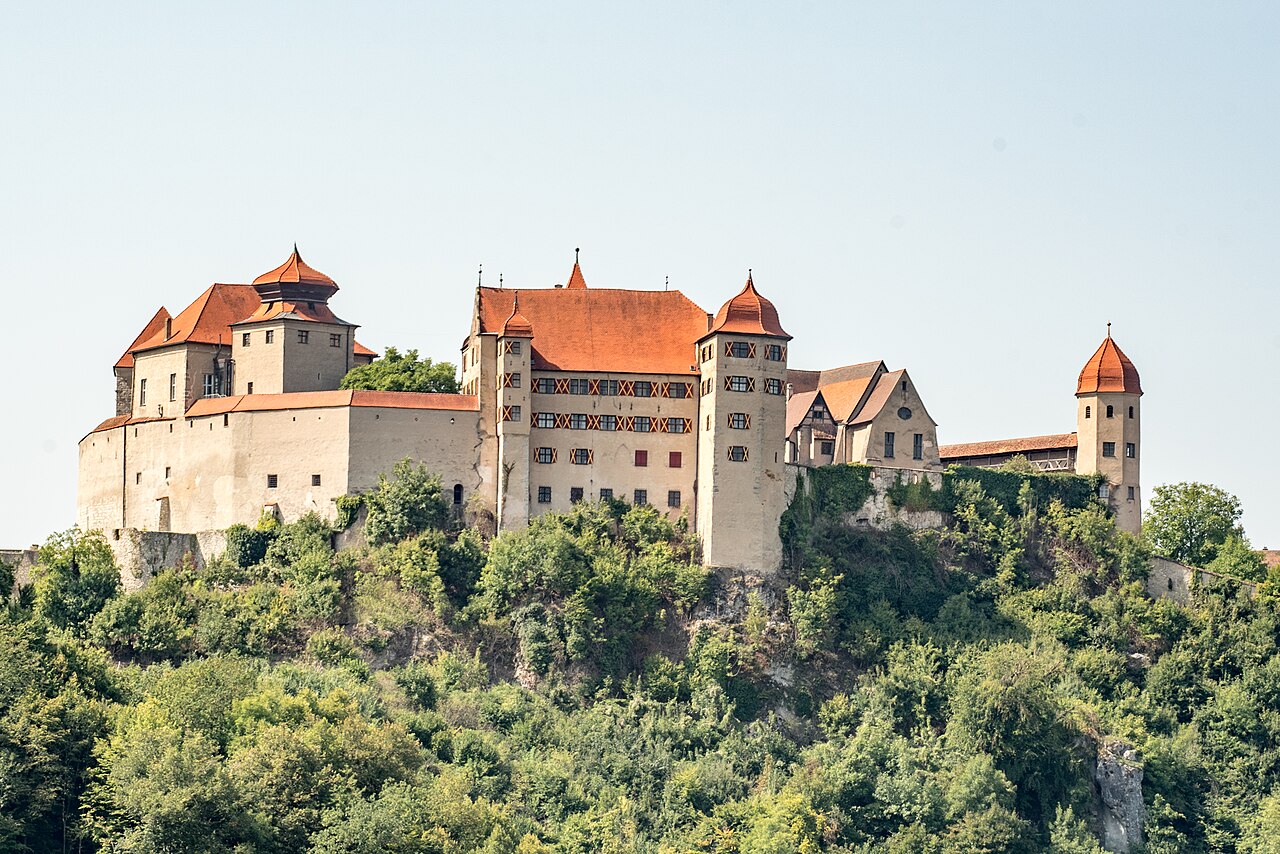
Burgruine Graisbach
Burgruine Graisbach stands as a significant medieval hilltop castle ruin located near the village of Graisbach within the municipality of Marxheim, Bavaria, Germany. This hill castle was originally constructed during the early 12th century, reflecting the feudal dynamics and architectural styles of medieval German nobility. Positioned strategically on the Schlossberg hill at an elevation of approximately 430 meters, the castle’s location provided commanding views of the surrounding landscape, serving both defensive and residential purposes.
Historical development and ownership
The earliest documented phase of Burgruine Graisbach dates back to around 1130, when it was likely established by the local Lords of Graisbach. This initial construction phase coincides with the Romanesque period, which influenced the castle’s architectural elements, particularly the chapel dedicated to Saint Pancras. The castle’s foundation during this period underscores its role as a fortified noble residence amidst the fragmented political landscape of medieval Bavaria.
During the 13th century, the castle’s ownership underwent a significant transition. After the destruction of the nearby stronghold, Burg Lechsend, which belonged to the Counts of Lechsgemünd, by merchants from Regensburg in 1248, the counts relocated their seat to Graisbach. They subsequently adopted the title Counts of Lechsgemünd-Graisbach, marking a new chapter in the castle’s lineage and regional importance.
Throughout the 13th and 14th centuries, the castle served as a noble residence and administrative center, undergoing several expansions to enhance its fortifications and living quarters. The death of Gebhard III of Graisbach, the last heir who was also the Bishop of Eichstätt, in 1327 led to the castle passing into the hands of the Wittelsbach dynasty. Under Wittelsbach rule, the castle functioned as a local governmental seat managed by ducal officials, highlighting its continued strategic and administrative relevance.
In the 15th century, Burgruine Graisbach experienced partial destruction, possibly due to regional conflicts or neglect. By 1523, the castle’s judicial functions were transferred to the nearby town of Monheim, signaling a decline in its political and administrative significance. Over the following centuries, the castle gradually fell into disuse and was dismantled during the 18th century, with its stones repurposed for local construction, a common fate for many medieval castles in the region.
More recently, since 2005, the property has been leased to a private resident by the local district authority. This modern stewardship has brought challenges, including concerns raised in 2009 about alterations to the site and the collapse of a cellar vault, underscoring ongoing preservation issues for this historic ruin.
Architectural features and remains
The ruins of Burgruine Graisbach reveal the outlines of a complex medieval castle that originally consisted of a central stronghold (core castle) and an adjoining outer bailey. Constructed primarily from locally quarried stone, the surviving walls delineate the fortified compound that crowned the Schlossberg hill.
Among the most notable remnants are sections of the defensive walls, which enclosed the castle grounds and incorporated parts of the original entrance gate. These gate fragments have been preserved through their integration into later residential buildings, illustrating the adaptive reuse of the castle’s fabric over time.
A particularly significant surviving element is the Romanesque chapel dedicated to Saint Pancras, dating from the 12th century. This small religious building remains standing on the site, providing valuable insight into the spiritual life and architectural style of the castle’s original occupants. The chapel’s endurance highlights the importance of religious structures within medieval castle complexes.
Throughout its history, the castle underwent various structural modifications and expansions, reflecting changing defensive needs and residential requirements. Despite its current condition as a ruin, the site offers a tangible link to medieval fortification techniques and noble residence layouts in Bavaria.
Cultural and historical significance
Burgruine Graisbach embodies the feudal history of Bavaria, illustrating the evolution of noble power, architectural styles, and regional governance from the early 12th century through the late medieval period. Its connection to the Counts of Lechsgemünd-Graisbach and later the Wittelsbach dynasty situates it within broader historical narratives of Bavarian aristocracy and territorial administration.
The survival of the Romanesque chapel and portions of the defensive walls provides important material culture for the study of medieval religious architecture and military engineering. The castle’s gradual decline and dismantling reflect common historical processes affecting many such sites across Germany, where changing political and social circumstances rendered hill castles obsolete.
Visiting burgruine graisbach today
Today, Burgruine Graisbach is accessible as a historic ruin offering visitors a glimpse into medieval castle construction and noble life. While the site is privately leased, the ruins can be viewed from public paths nearby, allowing appreciation of its architectural remnants and scenic hilltop setting.
Visitors interested in medieval architecture and Bavarian history will find the site noteworthy for its Romanesque chapel and the visible remains of fortifications. The castle’s location on the Schlossberg hill provides a panoramic view of the surrounding landscape, enhancing the experience of exploring this historic site.
Frequently asked questions (FAQ)
- How do I get to Burgruine Graisbach?
- Burgruine Graisbach is located near the village of Graisbach in the municipality of Marxheim, Bavaria. Visitors can reach the site by car or local roads leading to the Schlossberg hill, where the ruins are situated.
- What is the historical significance of Burgruine Graisbach?
- Burgruine Graisbach was established in the early 12th century and served as a noble residence and administrative center for the Counts of Lechsgemünd-Graisbach and later the Wittelsbach dynasty. Its Romanesque chapel and fortifications reflect medieval architectural and feudal history in Bavaria.
- Can I visit the Romanesque chapel at the castle?
- The Romanesque chapel dedicated to Saint Pancras is one of the best-preserved parts of the castle ruins. While the site is privately leased, the chapel can be viewed from nearby public paths, offering insight into medieval religious architecture.
- Is Burgruine Graisbach accessible to the public?
- The castle ruins are on private property leased since 2005, but visitors can access public areas around the site to view the remains. Access to the interior may be restricted due to safety and preservation concerns.
- When is the best time to visit Burgruine Graisbach?
- The best time to visit is during the warmer months from spring to early autumn when the weather is favorable for exploring the hilltop ruins and enjoying the surrounding landscape.
Information
Loading map...
Visitor reviews
No reviews yet. Been here? Write the first review and help other travelers!
Write the first reviewVisited this castle? Share your experience
Your review helps other travelers and adds first-hand knowledge to our encyclopedia.