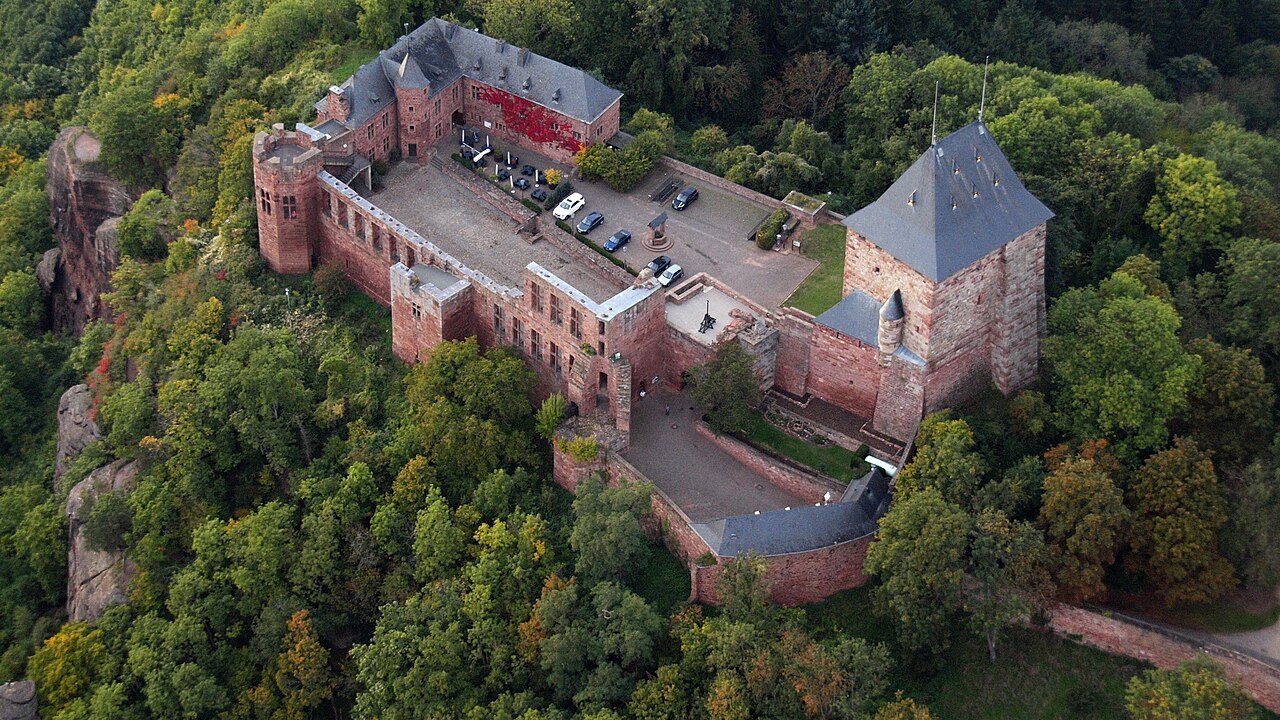
Burgau Castle
Burgau Castle is a notable water castle located in Düren, Germany, nestled within the town forest at the edge of the Niederau district. Its origins trace back to the 12th century, with archaeological findings dating to around the year 1100. Constructed on a motte, this castle's main manor house remains situated on a roughly 50-meter diameter island, surrounded by a moat that emphasizes its defensive water castle design.
Medieval origins and architectural evolution
The core of Burgau Castle includes a keep dating back to the Middle Ages, central to the castle's original fortifications. Following the keep's establishment, the castle expanded with the construction of the southern, eastern, and northern wings of the main castle complex. These additions reflect the typical layout of a medieval water castle, combining defensive features with residential and administrative functions.
The gazebo room and 16th-century enhancements
In the 16th century, a significant architectural enhancement was made with the addition of a bay richly decorated with reliefs to the house tower. This bay, known as the gazebo room, stands out for its artistic and historical importance. It is within this room that the castle today offers a unique historical ambiance, blending medieval and Renaissance ornamental styles.
Baroque transformation and outer bailey development
After suffering damage, a renovation was initiated in 1675, leading to a major transformation around 1730 when the castle was converted into a baroque three-wing building. This architectural evolution reflects broader European trends of the period, emphasizing symmetry, grandeur, and decorative detail.
Simultaneously, from 1685 onward, the construction of the Vorburg or outer bailey began. This outer bailey consists of a three-winged building used primarily for the castle's management and administration. Like the inner bailey, the Vorburg was protected by a water-filled moat, reinforcing the castle's defensive posture while expanding its functional spaces.
Destruction and restoration in the 20th century
Burgau Castle endured severe destruction during World War II in 1944. The damage necessitated a prolonged restoration process that spanned from 1975 to 1998. This extensive restoration aimed to preserve the castle's historical integrity while adapting it for modern use.
Modern use and cultural significance
Today, Burgau Castle functions as a popular tourist attraction and event venue. It is surrounded by a scenic pond and forest, enhancing its appeal to visitors. The castle houses a café and offers approximately 450 square meters of exhibition space, alongside a conference room. The Winkelsaal, a hall in the outer ward, and the courtyard regularly host concerts and cultural events.
The castle also serves a civic role, with the Düren registry office providing marriage services in the historic gazebo room on select Saturdays, blending heritage with contemporary community functions.
Hans Holbein the Younger and Anne of Cleves
A significant historical episode linked to Burgau Castle involves the renowned 16th-century portraitist Hans Holbein the Younger. In 1539, Holbein traveled to Düren to paint a portrait of Anne of Cleves, who was to become the fourth wife of King Henry VIII of England. Holbein's portrait played a crucial diplomatic role, as it led to a delegation being sent to Düren to negotiate Anne's journey to England.
Despite the portrait's success, King Henry VIII was disappointed upon meeting Anne in person. Their marriage was never consummated and was annulled shortly after. Nevertheless, Anne was granted the title "The King's Sister," received a generous settlement, and was frequently invited to the English court, marking a notable chapter in Tudor history connected to Burgau Castle.
Architectural features and defensive elements
The castle's original motte foundation provided a strategic defensive advantage, elevating the keep above the surrounding landscape. The moat encircling the manor house and the outer bailey served as a formidable barrier against attackers, typical of water castles built during the High Medieval period.
The castle's layout, including the three-winged main building and the Vorburg, reflects a blend of military and residential architecture. The baroque renovations introduced elegant façades and interior spaces, contrasting with the medieval fortifications while preserving the castle's historic character.
Surrounding landscape and visitor experience
Burgau Castle is set within a tranquil forested area, with the moat and pond enhancing the picturesque setting. Visitors can explore the castle grounds, enjoy the café, and participate in various cultural events held throughout the year. The combination of natural beauty and architectural heritage makes Burgau Castle a distinctive destination in the Rhineland region.
Preservation and cultural heritage
The castle's restoration after World War II has ensured the survival of its significant architectural elements, allowing it to serve as a cultural hub and historical monument. Its use for exhibitions, concerts, and community events helps maintain public engagement with the site and supports ongoing preservation efforts.
Frequently asked questions (FAQ)
- What is Burgau Castle known for historically?
- Burgau Castle is historically known as a medieval water castle with baroque renovations and for its connection to Hans Holbein the Younger painting Anne of Cleves.
- Can I visit Burgau Castle and attend events there?
- Yes, Burgau Castle is open to visitors and hosts various cultural events, concerts, and exhibitions throughout the year.
- When was Burgau Castle originally built?
- Burgau Castle was originally built in the 12th century, with archaeological evidence dating back to around 1100.
- Is Burgau Castle accessible for weddings or special ceremonies?
- Yes, the Düren registry office offers marriage services in the gazebo room of Burgau Castle on select Saturdays during the year.
- What architectural style characterizes Burgau Castle today?
- Burgau Castle features a baroque architectural style due to extensive renovations completed around 1730.
Information
Loading map...
Visitor reviews
No reviews yet. Been here? Write the first review and help other travelers!
Write the first reviewVisited this castle? Share your experience
Your review helps other travelers and adds first-hand knowledge to our encyclopedia.