Burg Zbiroh
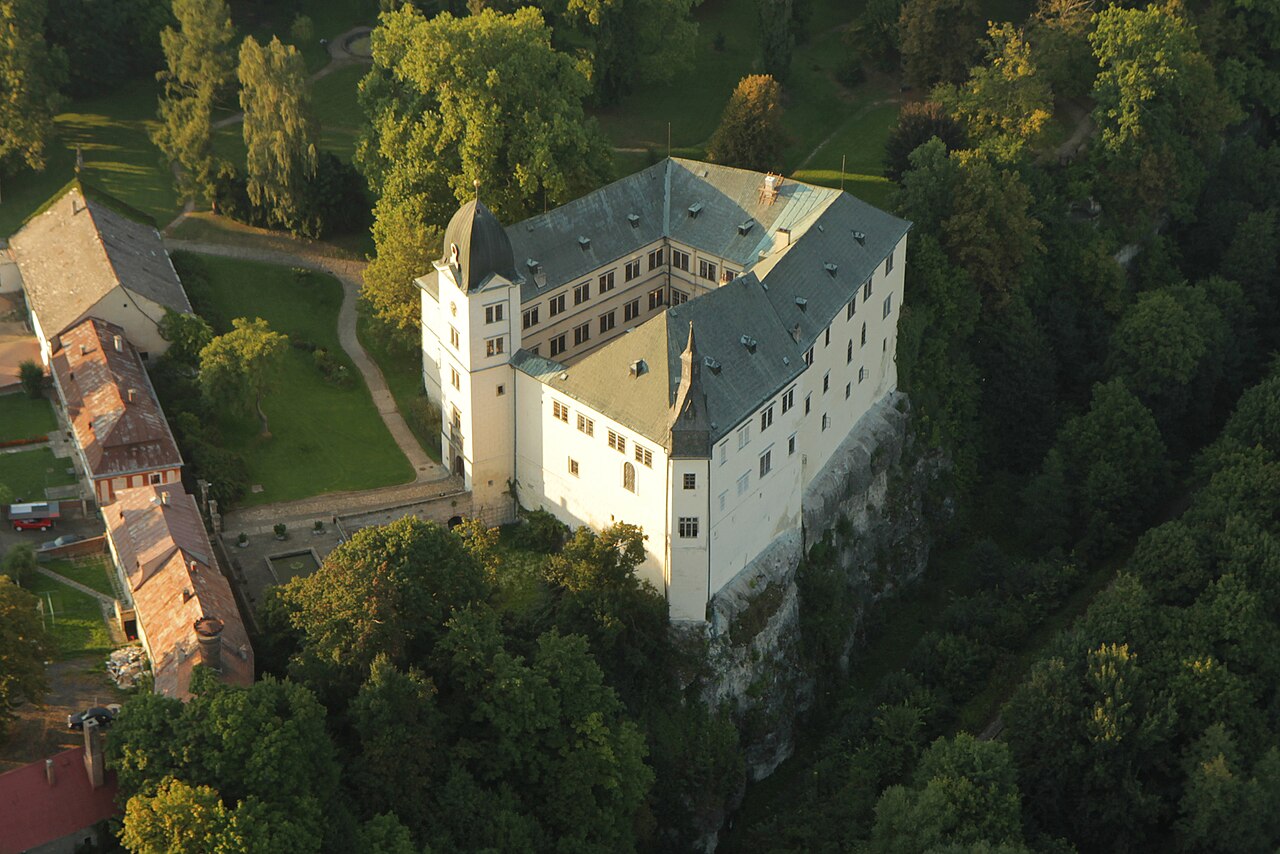
Burg Zbiroh is a historic hill castle located in the municipality of Koberovy-Železný Brod in Czechia. Constructed in the early 14th century by the prominent Markvartic family, specifically the Lemberk and Vartenberk branches, the castle played a significant role in the medieval history of the region. Its strategic placement atop a steep cliff overlooking the Jizera River provided natural defenses and commanding views of the surrounding landscape, crucial for controlling the area during turbulent times.
Historical background and ownership
The first documented lord of Burg Zbiroh was Markvart of Vartenberk. During the reign of King Wenceslaus IV in the late 14th century, Markvart became involved in a rebellion against the monarch. This conflict led to the siege of Burg Zbiroh in 1390, when royal forces captured the castle. Following its conquest, the castle was confiscated and sold to Otto of Berg, who also owned the nearby Trosky Castle. Otto undertook extensive rebuilding efforts and maintained control of the castle throughout the Hussite Wars, a period marked by religious and civil unrest in early 15th-century Bohemia.
Under King Sigismund, Burg Zbiroh served as a royal stronghold. However, its strategic location later made it a refuge for bandits, prompting military intervention. In 1442, royal forces attacked and destroyed the castle to suppress this unlawful activity. By 1458, historical records describe the castle as abandoned and in a state of ruin. Despite this decline, the site remained part of noble estates and was noted as property of Jan Jiří of Vartenberk in 1613. Since then, Burg Zbiroh has not been restored to its former prominence.
Architectural design and layout
Burg Zbiroh was designed as a four-part fortress adapted to the natural rocky terrain atop a narrow, steep cliff at an altitude of approximately 450 to 452 meters above sea level. Its position overlooking a bend in the Jizera River enhanced its defensive capabilities by leveraging the rugged landscape.
Outer defenses
The castle featured an eastern outer bailey, which was lightly fortified and separated from the main complex by a neck ditch, a defensive trench that prevented direct access to the core of the castle. This outer bailey likely served as a preliminary defensive zone and space for auxiliary buildings.
Main fortress and residential structures
The heart of the castle probably included a square tower known as the "Kazatelnice", which functioned as the main residential or lookout tower at the front of the complex. Behind this tower was a water reservoir or cistern, essential for collecting and storing rainwater during sieges.
Adjacent to these features stood an L-shaped palace composed of two wings. The northern wing was notable for its vaulted ceilings and incorporation of the natural rocky ground into its cellar spaces, reflecting sophisticated medieval architectural techniques that maximized the use of the terrain.
Walls and defensive features
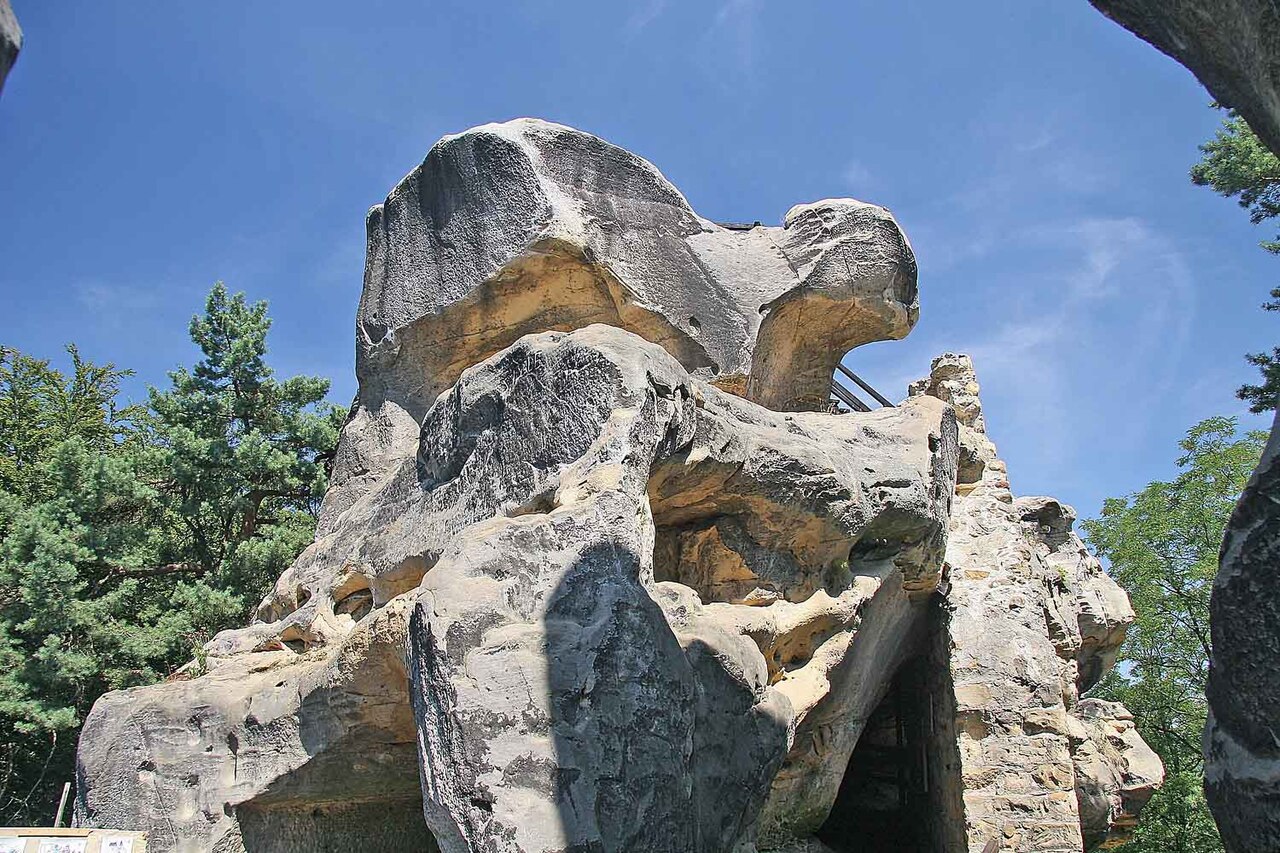
The perimeter of Burg Zbiroh was enclosed by stone walls built directly against the natural rock outcrops, enhancing the fortress's strength. A rounded bastion-like extension projected northward from the western palace wing, providing additional defensive coverage.
On the southern side, the castle's defenses included a barbican, a fortified outpost or gateway that served as the main entrance to the core area. This feature was designed to slow attackers and provide a strong defensive choke point.
West of the central fortress, only fragments of the outer defenses remain, and the exact configuration of these structures is uncertain due to the passage of time and decay.
Present condition and remains
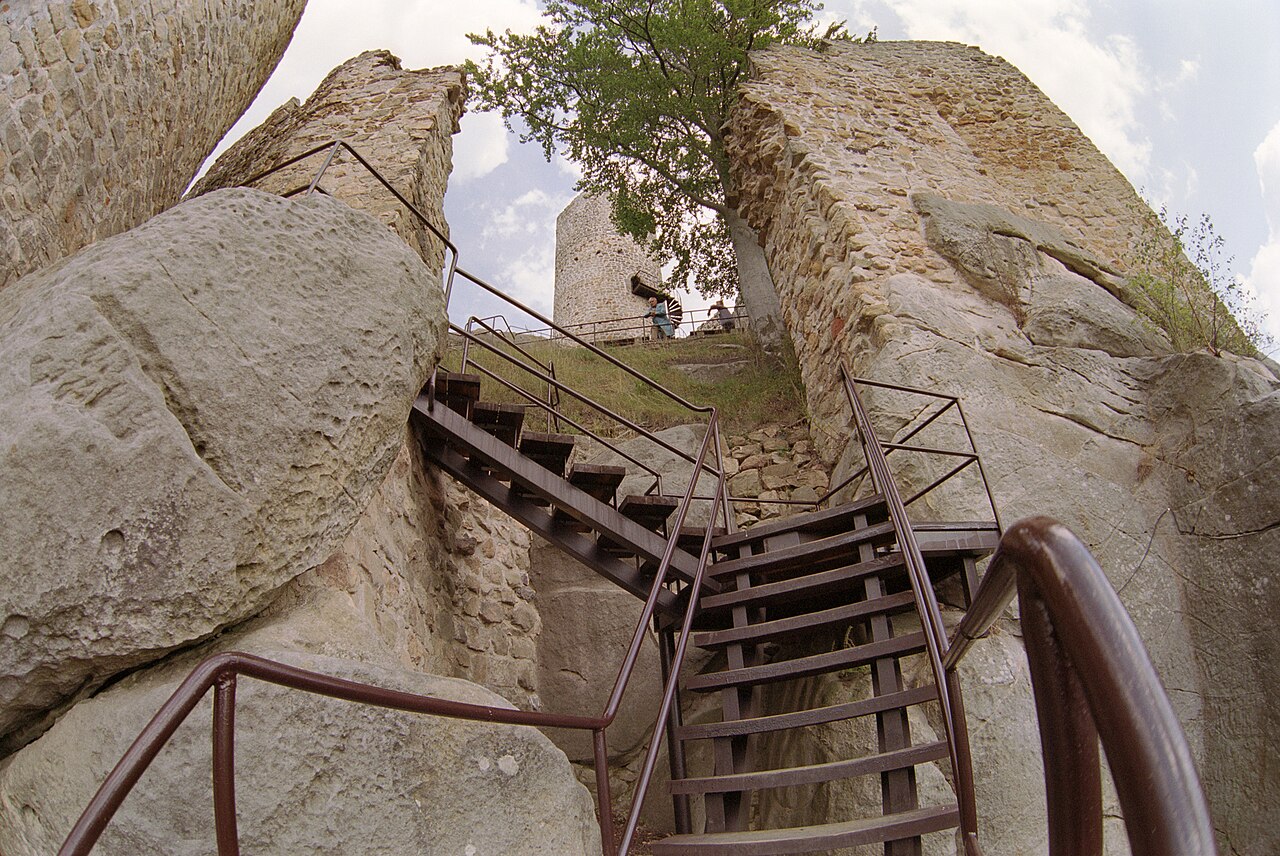
Today, Burg Zbiroh stands as ruins that preserve several key architectural elements. Visitors can observe supporting masonry walls, remnants of the square tower, vaulted cellar rooms, and the cistern that once supplied water to the castle's inhabitants.
Photographic and archaeological evidence highlights the presence of narrow arrow slits in the walls. These openings allowed archers to defend the castle while remaining protected behind the thick stone walls. The ruins exemplify medieval military architecture adapted to a rugged natural environment.
The castle's integration with the natural rock formations and its strategic cliffside position reflect the defensive priorities and architectural ingenuity of the early 14th century. Although Burg Zbiroh never regained its former status after its destruction in the mid-15th century, it remains an important cultural and historical site within Czechia, offering insights into the region's medieval fortifications and noble lineages.
Frequently asked questions (FAQ)
- How do I get to Burg Zbiroh?
- Burg Zbiroh is located near the town of Železný Brod in the Liberec Region of Czechia. Visitors can reach the site by car or public transport followed by a short hike to the castle ruins on the hill.
- What is the best time to visit Burg Zbiroh?
- The best time to visit Burg Zbiroh is during the late spring to early autumn months when the weather is mild and the surrounding landscape is lush. The castle ruins are outdoors and can be affected by winter weather.
- Is Burg Zbiroh accessible for visitors with limited mobility?
- Due to its hilltop location and rugged terrain, Burg Zbiroh is not easily accessible for visitors with limited mobility. The path to the ruins involves steep and uneven surfaces.
- Are there guided tours available at Burg Zbiroh?
- Guided tours are not regularly offered at Burg Zbiroh, but local tourist information centers may provide occasional guided visits or historical information about the site.
- What architectural style characterizes Burg Zbiroh?
- Burg Zbiroh primarily features Gothic architectural elements typical of the early 14th century, including vaulted ceilings, arrow slits, and robust defensive walls adapted to the natural rocky terrain.
Information
Sources & official resources
Verify the information above using these authoritative references.
Loading map...
Visitor reviews
No reviews yet. Been here? Write the first review and help other travelers!
Write the first reviewVisited this castle? Share your experience
Your review helps other travelers and adds first-hand knowledge to our encyclopedia.