Burg Staufen
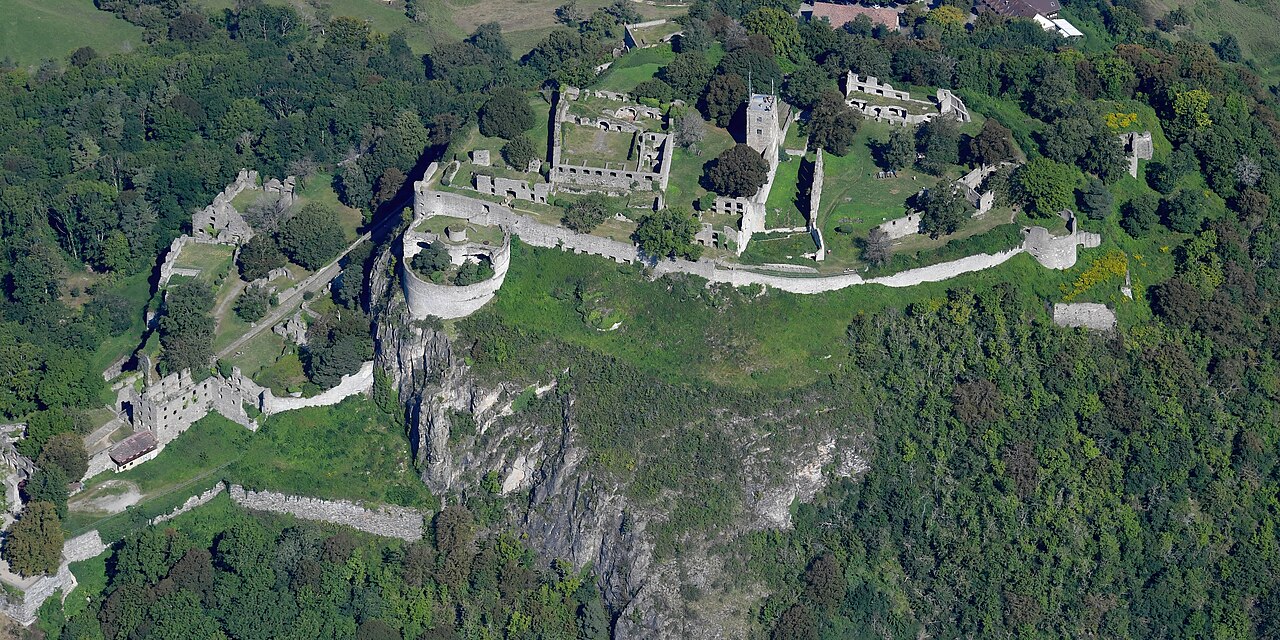
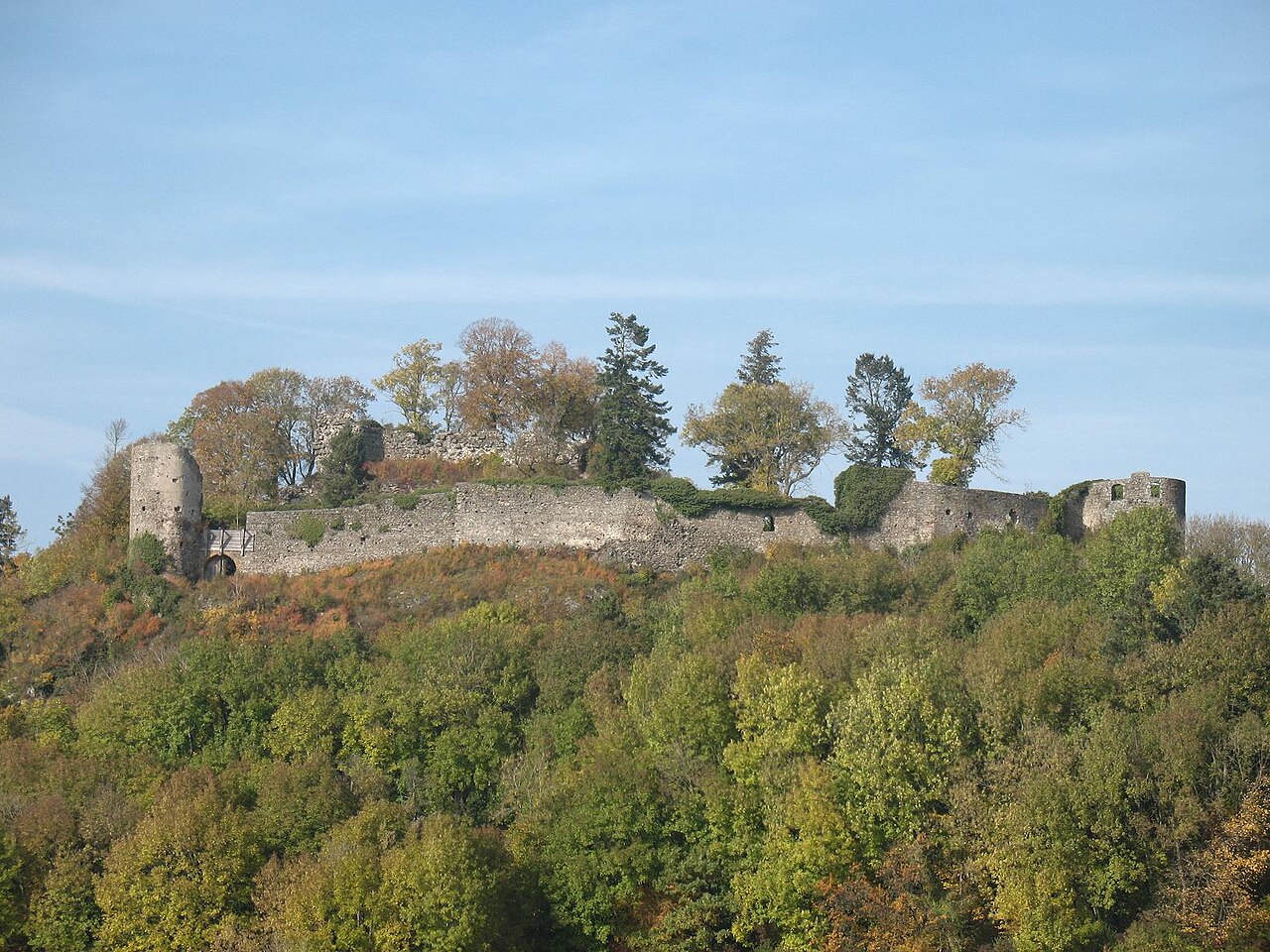
Burg Staufen is a medieval hilltop castle ruin located near Hilzingen in southwestern Germany. Positioned atop the 594-meter-high Staufen mountain, this fortress was constructed during the Middle Ages by a German-speaking feudal society. Its elevated location provided strategic oversight of the surrounding landscape, a typical characteristic of hill castles (Höhenburg), which were designed to control important routes and territories.
Historical background and ownership
The earliest recorded history of Burg Staufen dates back to around 1269, when it came under the control of the Lords of Homburg as a feudal fief. This noble family held the castle for several centuries, with the last known lord, Wolf von Homburg, dying in 1566. During this period, the castle's administration and land tenure were influenced by the Counts of Hohenberg until 1381. In that year, the castle's ownership transferred to the Dukes of Austria, reflecting the shifting political landscape of medieval southwestern Germany and the complex feudal allegiances of the time.
Conflicts and military significance
Burg Staufen endured significant military challenges throughout its history. In 1499, during the Swabian War (also known as the Swiss War), the castle was attacked and set ablaze by forces from the Swiss Confederation. This event marked the beginning of the castle's decline as a defensive stronghold.
The castle suffered further destruction during the Thirty Years' War in the early 17th century. In 1638, troops under the command of Konrad Widerholt, who led the nearby Hohentwiel fortress, deliberately demolished the interior buildings of Burg Staufen to prevent its use by enemy forces. Despite this extensive damage, the castle retained strategic importance and was used twice as a base for troops besieging the Hohentwiel fortress in 1641 and again in 1644.
Architectural features and remains
The surviving ruins of Burg Staufen reveal the outline of a classic hilltop fortress with substantial portions of its original ring wall still standing. This defensive stone wall once encircled the castle, providing protection and controlling access. The construction utilized local stone materials, assembled in a medieval masonry style typical of the period.
Over the centuries, much of the castle's stone was removed by locals for reuse in other buildings, leaving only fragments of the original structures intact. The remaining ruins are structurally vulnerable, with some sections requiring support to prevent collapse. There are no known surviving inscriptions, decorative elements, or archaeological artifacts such as tools or pottery documented at the site, which limits detailed understanding of the castle's interior layout and daily life.
Strategic location and legacy
Situated on the summit of Staufen mountain, the castle's location was chosen for its commanding views and natural defensive advantages. This placement allowed control over the surrounding valleys and routes, a common strategic consideration in medieval castle design. Despite its ruinous state, Burg Staufen remains a significant historical site that illustrates the military and political dynamics of southwestern Germany from the High Middle Ages through the early modern period.
Today, the ruins attract visitors interested in medieval architecture and history, offering insight into the construction techniques and feudal conflicts that shaped the region. The site exemplifies the evolution of hill castles and their role in territorial defense and noble power projection during the Middle Ages.
Frequently asked questions (FAQ)
- How do I get to Burg Staufen?
- Burg Staufen is accessible by car and public transportation, with parking available nearby. The nearest train station is located in the town center, from where you can take a short bus ride or enjoy a pleasant walk to the castle.
- What is the historical significance of Burg Staufen?
- Burg Staufen dates back to the 11th century and served as a strategic stronghold during various conflicts in the region. Its historical importance lies in its role in local governance and defense, as well as its connection to the noble families who inhabited it over the centuries.
- When was Burg Staufen built?
- Construction of Burg Staufen began in the early 11th century, making it one of the oldest castles in the area. Over the years, it underwent several renovations and expansions, reflecting the architectural styles of different periods.
- Can I visit Burg Staufen year-round?
- Yes, Burg Staufen is open to visitors throughout the year, although certain areas may be restricted during winter months for safety reasons. It's advisable to check the official website for any seasonal closures or special events before planning your visit.
- Why is Burg Staufen notable for its architecture?
- Burg Staufen features a blend of Romanesque and Gothic architectural styles, showcasing its historical evolution. Visitors can admire its impressive stonework, defensive towers, and panoramic views of the surrounding landscape, which highlight the ingenuity of medieval architecture.
- Is it possible to take guided tours of Burg Staufen?
- Yes, guided tours are available for those interested in a deeper understanding of the castle's history and architecture. These tours are typically offered in multiple languages and provide insights into the fascinating stories and legends associated with the site.
- What are the opening hours for Burg Staufen?
- Burg Staufen is generally open from 9 AM to 6 PM during the summer months and from 10 AM to 4 PM in the winter. It’s recommended to check the official website for any changes in hours or holiday schedules before your visit.
- What are the ticket prices for visiting Burg Staufen?
- Tickets for Burg Staufen are reasonably priced, with discounts available for students, seniors, and families. Children under a certain age may enter for free, making it an affordable destination for visitors of all ages.
- What nearby attractions can I visit while at Burg Staufen?
- While visiting Burg Staufen, you can explore the charming town of Staufen im Breisgau, known for its historic buildings and vibrant local culture. Additionally, the scenic Black Forest and the wine regions of Baden are just a short drive away, offering excellent opportunities for outdoor activities and wine tasting.
Information
Loading map...
Visitor reviews
No reviews yet. Been here? Write the first review and help other travelers!
Write the first reviewVisited this castle? Share your experience
Your review helps other travelers and adds first-hand knowledge to our encyclopedia.