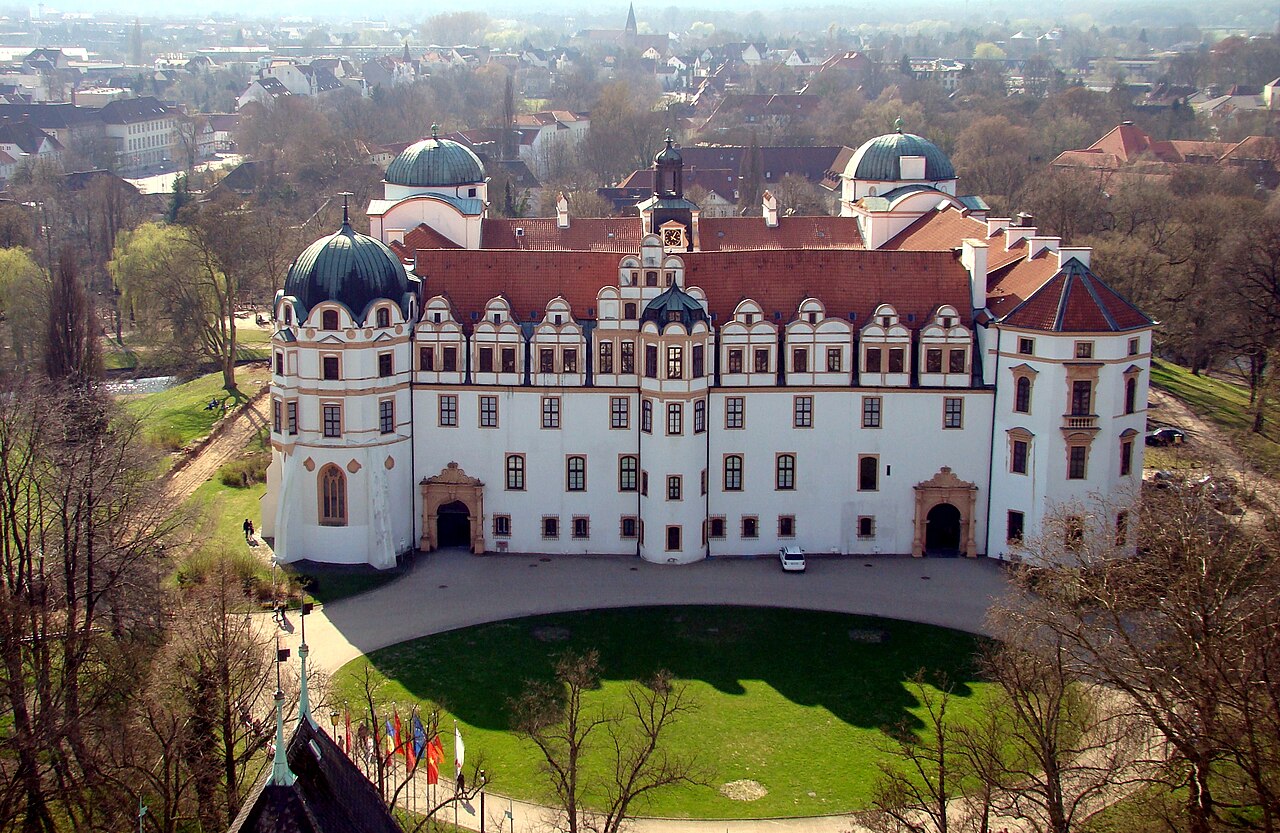
Burg Rethem
Burg Rethem stands as a significant hill castle in the town of Rethem, located in the federal state of Lower Saxony, Germany. Constructed in the early 14th century by the dukes of Brunswick-Lüneburg, this fortress was strategically positioned to guard the border against the neighboring counties of Hoya. Its location near an important crossing over the Aller river allowed it to control a key segment of the regional salt trade route from Lüneburg, one of the most valuable commodities of the medieval period.
The site of Burg Rethem has a history that predates the 14th century castle. Around the year 1200, an earlier fortification known as Altenburg existed in the area. This earlier castle was transferred by the influential Duke Henry the Lion to the Counts of Wölpe and later granted as a fief to the local Rethem family, demonstrating the area's longstanding strategic importance. The construction of the new castle in the 1300s marked a development in fortification architecture and regional power dynamics.
Historical significance and political context
The castle first appears in historical documents in the early 14th century, with a 1311 record mentioning a castle captain and guards stationed there. In 1314, Duke Otto II used Burg Rethem as a venue for a regional dispute settlement meeting, highlighting its role as a political center. By 1371, the castle was temporarily pledged to the Bishop of Verden, who undertook construction work to strengthen its defenses.
During the Lüneburg War of Succession (1370-1388), Burg Rethem and the surrounding town endured significant hardship. The castle was placed under an imperial ban in 1371, and control shifted in 1373 when Duke Albert of Saxony took possession. From Burg Rethem, he launched campaigns against local knights and the Count of Hoya. Construction records from 1383 indicate substantial stonework enhancements during this turbulent period.
Starting in 1386, the castle and town were pledged long-term to the city of Lüneburg, a relationship that lasted over two centuries. Throughout this time, Burg Rethem maintained its critical role in protecting the lucrative salt trade route. The castle's strategic importance was underscored during the Schmalkaldic War in 1548, when it was captured and plundered, suffering damage to its buildings and bridge, though repairs were promptly undertaken.
Architectural features and fortifications
Burg Rethem was originally designed as a water castle, surrounded by a moat that enhanced its defensive capabilities. The 16th-century fortifications included bastions, walls, ditches, and possibly wooden palisades, reflecting advances in military architecture to counter artillery threats. A bridge spanned the moat, providing controlled access to the castle.
The castle complex featured a zwinger—an enclosed defensive courtyard—alongside three towers that provided vantage points for surveillance and defense. Two significant stone buildings stood within the walls: the Reisigenstall, a smaller structure used as stables, and a larger building that served both residential and defensive purposes.
Archaeological excavations have uncovered substantial foundations approximately 2.4 meters wide, built from large rounded stones known as glacial erratics. These supported the main residential and defensive building. Traces of brick walls and stone foundations remain preserved and have been incorporated into the modern cultural center on the site.
Defensive walls and moat
A large ring wall, measuring about 50 meters in length and up to 2 meters thick, once enclosed the castle. Portions of this wall, reaching heights of up to 5 meters, were stabilized and preserved during recent construction efforts. The moat surrounding the castle added an additional layer of defense, making direct assaults more difficult.
16th-century fortification enhancements
In the mid-1500s, the castle's defenses were upgraded with bastions and other fortifications to adapt to evolving military technology. These enhancements included walls and ditches designed to resist cannon fire and siege tactics common in the Renaissance period.
Administrative role and later history
In 1565, Burg Rethem became the seat of the newly established Amt Rethem, an administrative district created by Dukes Ernst and Wilhelm of Lüneburg. This administrative function continued until the Amt's dissolution in 1859. During this period, the castle's military importance declined, and parts of the structure were repurposed for civil uses.
The 18th century saw significant changes as older castle buildings were demolished to make way for a new administrative building known as the Amtshaus. The Reisigenstall was converted into stables, and the main residential and defensive building was eventually used for storing agricultural harvests before being demolished in the early 19th century. These changes marked the end of Burg Rethem's role as a military fortress.
After the administrative seat moved in 1865, the castle site gradually fell into ruin. By 1874, only scattered buildings remained. The site suffered further damage from fires and warfare, notably in 1930 and during World War II in 1945, reducing the ruins to a few wall fragments.
Archaeological discoveries and modern preservation
In 1974, the town of Rethem took ownership of the castle site, using it for municipal storage and maintenance. Archaeological investigations conducted in 2000–2001 uncovered foundations, artifacts, and structural remains that provided valuable insights into the castle's history and architecture.
Findings included old wells, fragments of late medieval pottery and glass, animal bones, roof tiles, and a crossbow bolt, illustrating daily life and defensive activities at the castle. Beneath the Reisigenstall, archaeologists discovered complete horse skeletons and butchery waste from cattle, pigs, and poultry, confirming the building's use for animal husbandry and food preparation.
Before the construction of the Kulturforum Burghof cultural center in 2004, a large ring wall was stabilized through ground injections and masonry repairs. This wall remains visible today, integrated into the modern building.
Integration into the kulturforum burghof
The Kulturforum Burghof, completed in 2005, incorporates several architectural elements that pay homage to the castle's medieval heritage. Features include a small observation tower atop the roof, stepped gables reminiscent of traditional fortifications, battlement-like parapets, and natural stone corner accents. Historic emblems and old hollow roof tiles further connect the new structure to Burg Rethem's past.
The site covers approximately a 50 by 50-meter area located about 50 meters west of the Aller river, with the main road and river crossing nearby to the north. This location underscores the castle's historical role in controlling key transportation routes.
Cultural and heritage significance
Burg Rethem exemplifies the evolution of medieval fortifications in northern Germany, reflecting changes in military architecture from the early 14th century through the Renaissance period. Its role as a border fortress, administrative center, and protector of vital trade routes highlights its multifaceted importance in regional history.
Today, the castle site serves as a cultural hub, with the Kulturforum Burghof providing a space for community events while preserving and showcasing the archaeological heritage of Burg Rethem. The integration of historic elements into the modern building allows visitors to connect with the site's rich past while enjoying contemporary cultural offerings.
Frequently asked questions (FAQ)
- What is the historical significance of Burg Rethem?
- Burg Rethem is a significant medieval castle that dates back to the 13th century. It has played an important role in the history of the region, serving as a noble residence and a military stronghold during various conflicts.
- When was Burg Rethem built?
- Burg Rethem was constructed in the early 13th century, with its first documented mention occurring in 1230. The castle has undergone several renovations and restorations throughout the centuries, preserving its historical charm.
- Can I visit Burg Rethem?
- Yes, Burg Rethem is open to visitors. You can explore its impressive architecture and learn about its rich history through guided tours available during the visiting season.
- What are the opening hours for Burg Rethem?
- Burg Rethem typically opens to visitors from April to October, with varying hours depending on the day of the week. It is advisable to check the official website for the most current opening hours before planning your visit.
- Is it possible to access Burg Rethem with limited mobility?
- Burg Rethem has some accessibility features; however, the castle's medieval structure may present challenges for visitors with limited mobility. It is recommended to contact the castle administration for specific accessibility information before your visit.
- What is the best time to visit Burg Rethem?
- The best time to visit Burg Rethem is during the late spring and summer months when the weather is pleasant, and the castle hosts various cultural events. Visiting during this time allows you to enjoy the beautiful surroundings and participate in guided tours.
- Are there any nearby attractions to visit?
- Yes, there are several attractions near Burg Rethem, including the picturesque town of Rethem, which features charming architecture and local shops. Additionally, the surrounding countryside offers beautiful walking trails and nature parks for outdoor enthusiasts.
- What are the ticket prices for visiting Burg Rethem?
- Ticket prices for Burg Rethem are generally affordable, with discounts available for children, students, and seniors. It is best to check the official website for the latest pricing information and any special offers that may be available during your visit.
Information
Website
Visit websiteSources & official resources
Verify the information above using these authoritative references.
Loading map...
Visitor reviews
No reviews yet. Been here? Write the first review and help other travelers!
Write the first reviewVisited this castle? Share your experience
Your review helps other travelers and adds first-hand knowledge to our encyclopedia.