Burg Lauenstein
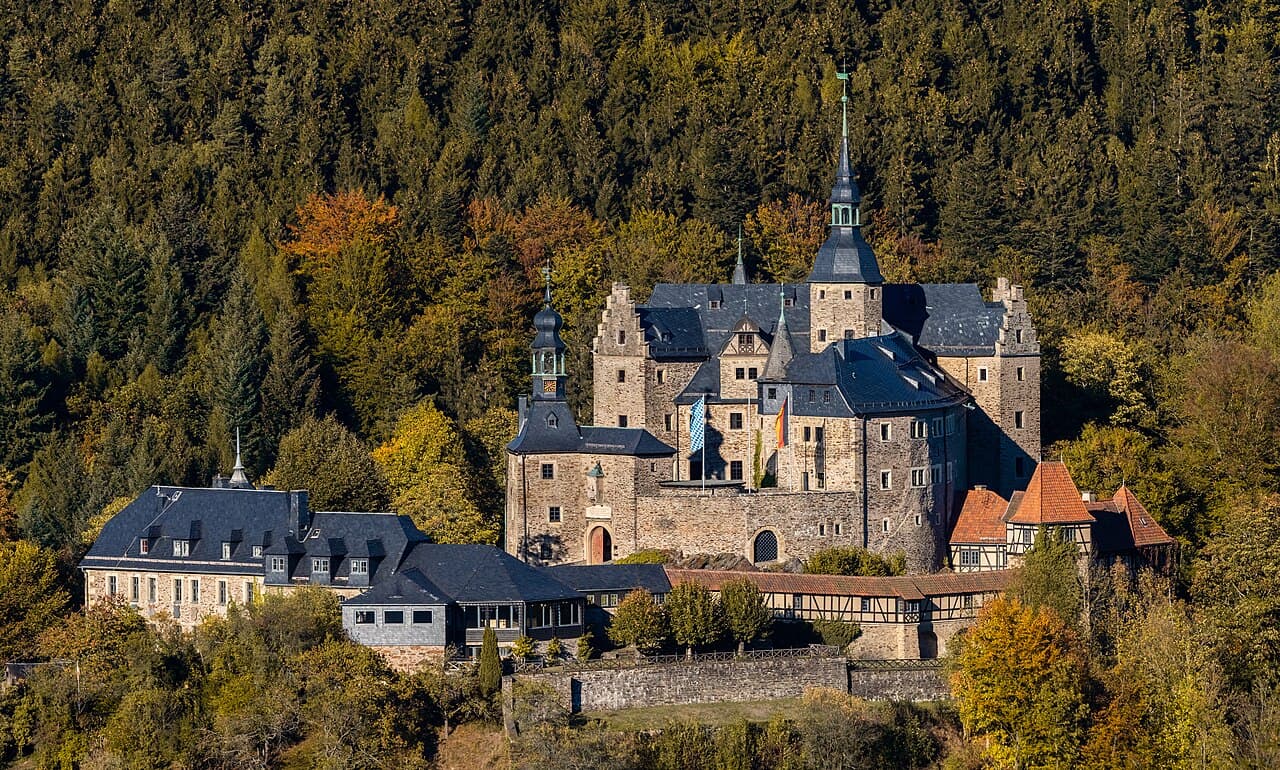
Burg Lauenstein is a captivating medieval hill castle located in the northern part of the Franconian Forest within the Franconian Rennsteig region of Bavaria, Germany. Nestled in the Thuringian-Franconian Slate Mountains, the castle stands as a significant historical monument reflecting centuries of architectural evolution and regional power struggles. Its picturesque setting atop a hill offers commanding views of the surrounding landscape, which once formed part of the medieval clearing area governed by the Orlagau territory.
The castle's origins are steeped in legend and history. According to local lore, Burg Lauenstein was initially established as a defensive bulwark by King Konrad I around the year 915 to protect against invasions by the Sorbs and Wends. While this early founding remains part of the castle's mythos, the oldest surviving structures date from the 12th century. The first documented mention of the castle appears in 1222, referencing "Henricus de Lewinstein," likely a noble named Henry of Könitz. By the mid-13th century, the castle came under the control of the Counts of Orlamünde, who played a pivotal role in the region's medieval history.
Architectural evolution and renaissance transformation
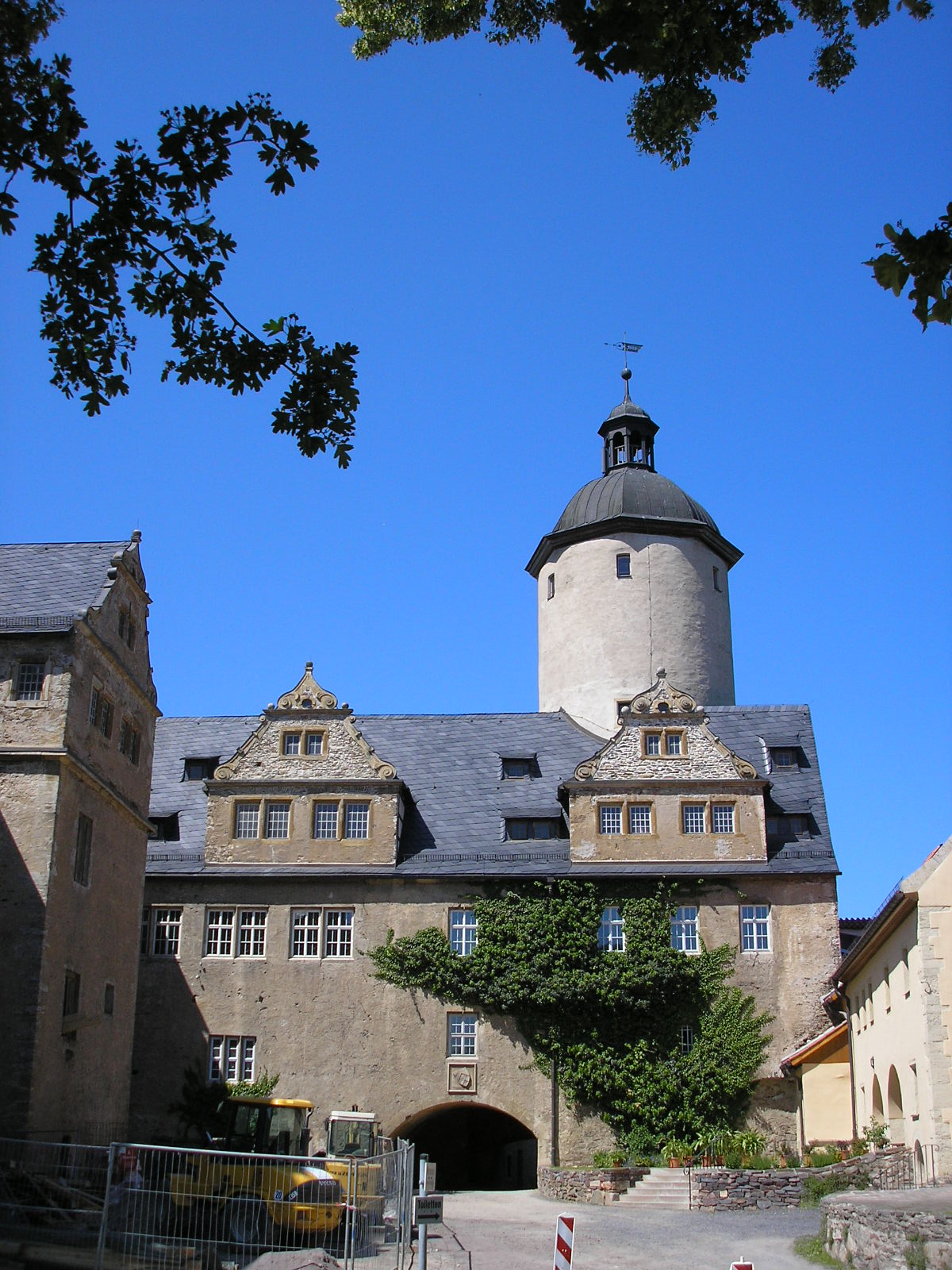
The most significant architectural phase of Burg Lauenstein occurred between 1551 and 1554 under the ownership of Christoff von Thüna. During this period, the castle underwent extensive rebuilding, resulting in the construction of the renowned Thünabau, a prime example of Central German Renaissance architecture. This transformation introduced elegant Renaissance elements to the medieval fortress, including refined stonework, ornamental facades, and enhanced residential quarters, reflecting the changing tastes and increased comfort sought by the nobility of the time.
Despite later changes in ownership, including acquisition by the Margrave of Brandenburg-Kulmbach-Bayreuth in 1622, and subsequent transfers to Prussia in 1791 and Bavaria in 1803, the castle retained much of its Renaissance character. By the late 19th century, however, Burg Lauenstein had fallen into neglect until it was romantically restored in 1896 by Dr. Erhard Messmer, who undertook comprehensive renovations to preserve its historical integrity and revive its grandeur.
Historical significance and ownership lineage
Burg Lauenstein's history reflects the complex feudal dynamics of medieval and early modern Germany. Initially part of the Orlagau territory, the castle's control shifted among notable noble families, including the Counts of Orlamünde, the Knights of Thüna, the Counts of Schwarzburg, and the Counts of Mansfeld. Each ownership period contributed to the castle's architectural and cultural development.
The castle's strategic location made it a vital defensive and administrative center. Its proximity to the upper reaches of the Saale River and the Loquitz tributary underscored its importance in controlling regional trade routes and territorial boundaries. The Benedictine monks from the Saalfeld Monastery also played a role in the early colonization and development of the surrounding lands, adding a religious dimension to the castle's historical context.
Cultural heritage and legends
Burg Lauenstein is famously associated with the legend of the "White Lady," a ghostly figure believed to be Katharina von Orlamünde, born in the 14th century at the castle. Local folklore tells of this restless spirit, dressed in white, who is said to appear on certain occasions, adding an air of mystery and allure to the castle's history. This legend contributes to the castle's cultural significance and attracts visitors interested in medieval myths and supernatural tales.
The castle also hosts the Lauenstein Castle Festival, held biennially on the fourth weekend of June. This event transforms the small town of Lauenstein into a vibrant medieval setting, featuring jugglers, mercenaries, and other period entertainers, providing an immersive historical experience for visitors and locals alike.
Current use and visitor experience
Today, Burg Lauenstein is owned by the Free State of Bavaria since 1962 and functions as both a museum and a hotel complex. The main castle houses a museum with over 20 showrooms open to the public through guided tours. These exhibition rooms are richly furnished with collections of locks and keys, lighting fixtures, furniture from the 15th to 19th centuries, as well as weapons and armor, offering a comprehensive glimpse into the castle's historical lifestyle and craftsmanship.
The outer bailey has been converted into a hotel with more than 30 accommodation options, allowing guests to experience the ambiance of a medieval fortress firsthand. This blend of historical preservation and modern hospitality ensures that Burg Lauenstein remains a living monument, continuing to engage visitors with its rich heritage.
Visiting information
- Opening hours: From April 1 to September 30, the castle is open from 9:00 am to 6:00 pm, with the last tour starting at 5:00 pm. From October 1 to March 31, visiting hours are from 10:00 am to 4:00 pm, with the last tour at 3:00 pm. The castle is closed on Mondays.
- Ticket prices: Admission costs €4 for adults, €3 for reduced tickets, and is free for children under 18 when accompanied by an adult. Groups of 15 or more pay €3 per person, with prior registration required.
Burg Lauenstein stands as a remarkable example of a well-preserved hill castle that encapsulates the architectural and historical evolution from the medieval period through the Renaissance. Its rich collection, legendary tales, and vibrant cultural events make it a must-visit destination for enthusiasts of history, architecture, and folklore.
Frequently asked questions (FAQ)
- What are the visiting hours for Burg Lauenstein?
- Burg Lauenstein is open from April 1 to September 30 between 9:00 am and 6:00 pm, with the last tour at 5:00 pm. From October 1 to March 31, it is open from 10:00 am to 4:00 pm, and the last tour starts at 3:00 pm. The castle is closed on Mondays.
- How much is the entrance fee to Burg Lauenstein?
- Admission to Burg Lauenstein costs €4 for adults and €3 for reduced tickets. Children under 18 years accompanied by an adult enter for free. Groups of 15 or more pay €3 per person, with prior registration required.
- What is the legend of the White Lady at Burg Lauenstein?
- The White Lady is a ghostly figure believed to be Katharina von Orlamünde, born in the 14th century at Burg Lauenstein. Local folklore says she appears in a white robe on certain occasions, adding a mysterious allure to the castle's history.
- Can visitors tour the interior of Burg Lauenstein?
- Yes, visitors can explore over 20 showrooms inside the main castle through guided tours. The museum features collections of locks and keys, lighting fixtures, furniture from the 15th to 19th centuries, weapons, and armor.
- Is there accommodation available at Burg Lauenstein?
- The outer bailey of Burg Lauenstein has been converted into a hotel with over 30 accommodation options, allowing guests to stay within the historic castle complex and enjoy a unique medieval atmosphere.
- When is the Lauenstein Castle Festival held?
- The Lauenstein Castle Festival takes place every two years on the fourth weekend of June. It features medieval-themed entertainment such as jugglers and mercenaries, creating a lively historical atmosphere in the town of Lauenstein.
Photo gallery

Information
Opening hours
April 1 to September 30 from 9:00 am to 6:00 pm (last tour at 5:00 pm); October 1 to March 31 from 10:00 to 16:00 (last tour at 15:00). Closed on Monday.
Ticket prices
Adults 4, - Euro; reduced 3, - Euro; Children under 18 years accompanied by adult free. Groups of 15 persons 3, - Euro per person. Registration for groups (from 15 persons).
Current owner
Free State of Bavaria
Loading map...
Visitor reviews
No reviews yet. Been here? Write the first review and help other travelers!
Write the first reviewVisited this castle? Share your experience
Your review helps other travelers and adds first-hand knowledge to our encyclopedia.