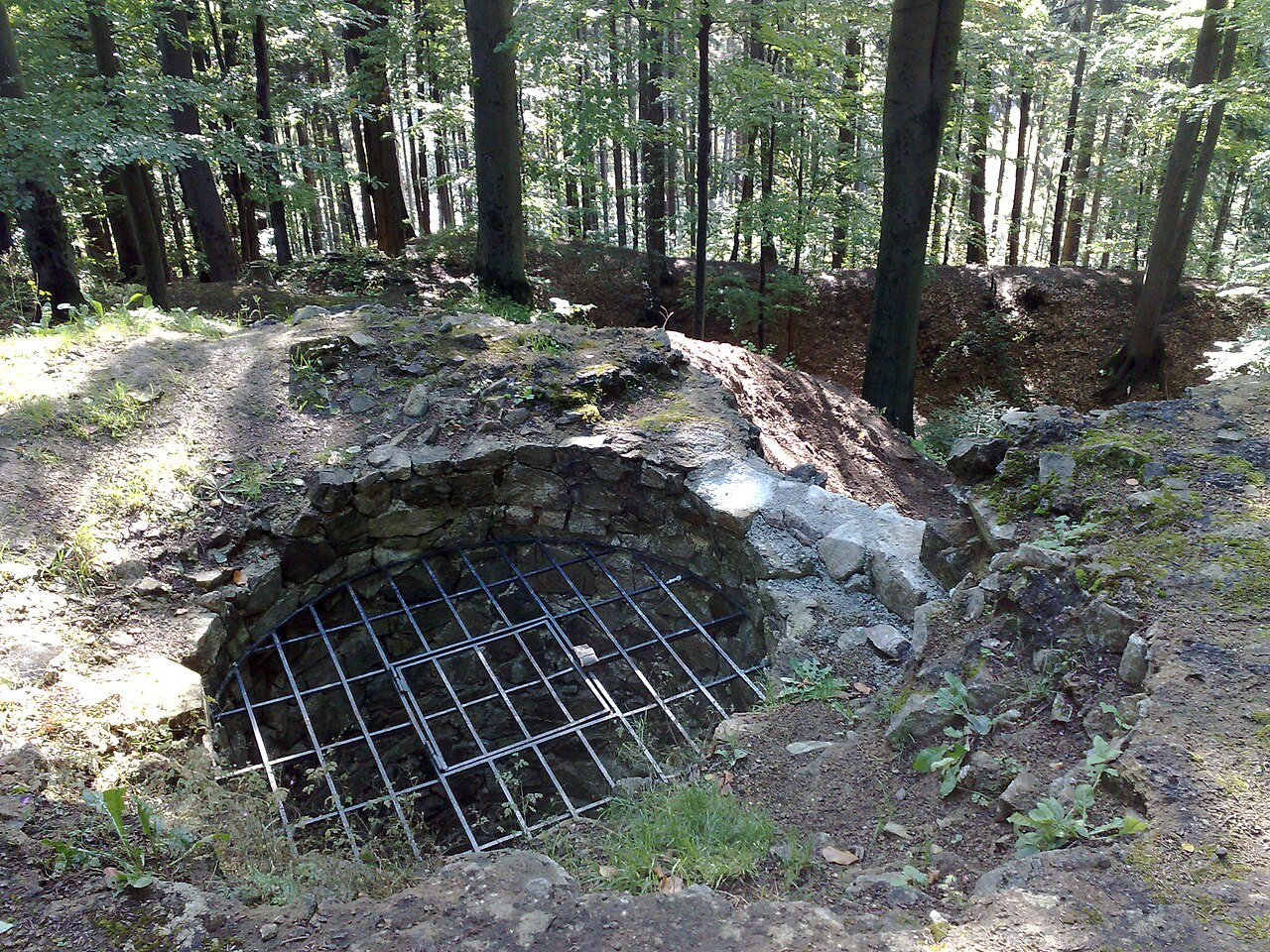
Burg Körse
Burg Körse stands as a significant medieval hill castle located near the municipality of Kirschau in the Upper Lusatia region of modern Germany. The castle's origins reach back to a Slavic fortified settlement known as Korzym, established around the 10th to 11th century by the Lusatian Sorbs, a Slavic people inhabiting this borderland area. Strategically perched on a hill encircled on three sides by the Spree River, the site offered a naturally defensible position that was ideal for controlling vital trade routes.
During the early medieval period, the original fortification was likely composed of wooden structures and earthworks typical of Slavic strongholds. Around the turn of the 12th century, the region experienced significant demographic and political change with the arrival of German settlers. By approximately 1100, these settlers began to displace the native Slavic population, leading to the destruction of the original wooden fortification.
The transition to a stone castle and its strategic importance
Between 1200 and 1250, the German settlers constructed a new stone castle on the same hilltop, retaining the historical name Körse, derived from the original Slavic name Korzym. This new stone castle became the largest and most formidable stronghold in Upper Lusatia during the high medieval period. Its primary function was to protect important trade routes, notably the Bohemian Steig or Old Prague Road, which connected Upper Lusatia with Bohemia. Additionally, the castle guarded a crucial salt trade route intersecting this artery, underscoring its economic and military significance.
Architectural features and layout
The castle's layout reflects typical medieval defensive architecture. At its core was a bergfried, a tall main tower characteristic of German castles, serving both as a lookout and a last refuge during sieges. Surrounding the main castle was a semicircular ring wall approximately 100 meters in length, originally standing between six and seven meters high. This wall followed the natural contours of the hilltop, enhancing its defensive capabilities.
The castle was accessed through four gates integrated into the defensive walls. The principal entrance featured a drawbridge, which could be raised to prevent enemy access. Defensive bastions were strategically positioned along the curtain walls to enable defenders to repel attackers effectively. The forecourt, an outer defensive area before the main castle, had its own walls and gate structures, portions of which remain visible today.
Construction materials and techniques
Burg Körse was constructed using locally sourced stone materials. The primary building stone was granite quarried near the site, complemented by basalt from Halbendorf im Gebirge, a nearby location. The masonry was bound with a durable mortar made from sand mixed with carefully washed river sand, free from organic impurities and acidity, which contributed to the longevity of the walls. Some granite blocks within the ring wall bear traces of fire damage, likely resulting from the castle's violent destruction during the mid-14th century.
The castle's decline and destruction
In the early 14th century, the lords of Burg Körse began to abuse their strategic position by engaging in raids against merchants traveling along the vital trade routes they were meant to protect. This piracy disrupted commerce and provoked a strong response from the regional powers. The Lusatian Six-Cities Alliance, a coalition formed to maintain order and protect trade interests in the region, laid siege to Burg Körse in 1352. After a period of combat, the alliance succeeded in capturing the castle.
The siege inflicted significant damage on the castle, and in 1359, Burg Körse was deliberately destroyed to prevent its further use as a base for raiders. The castle was never rebuilt or reoccupied, marking the end of its role as a defensive and administrative center in Upper Lusatia.
Archaeological rediscovery and preservation
Archaeological excavations began at the site in 1922, revealing the castle's layout, construction details, and artifacts that shed light on its history and the daily life of its inhabitants. Since 1995, many of these findings have been displayed at the Burgmuseum Kirschau, located at the northern base of the castle hill. The museum plays a vital role in preserving and interpreting the history of Burg Körse for visitors and scholars alike.
Current condition and visitor experience
Today, the remains of Burg Körse stand largely in situ on the 275-meter-high Schlossberg hill, surrounded on three sides by the Spree River. The surviving sections of the semicircular ring wall and gatehouses offer a tangible connection to the castle's medieval past. Portions of the walls still rise to about three meters, providing a sense of the original imposing defenses.
Informational signage around the site and at the Burgmuseum helps visitors understand the castle's historical context, architectural features, and significance in regional defense and trade control. The site is an important cultural heritage landmark in Upper Lusatia, reflecting the complex interactions between Slavic and Germanic peoples during the Middle Ages.
Frequently asked questions (FAQ)
- When was Burg Körse originally established?
- Burg Körse originated as a Slavic fortified settlement called Korzym around the 10th to 11th century, established by the Lusatian Sorbs.
- What was the strategic importance of Burg Körse?
- The castle protected vital trade routes, including the Bohemian Steig and a salt trade route, making it a key stronghold in Upper Lusatia during the high medieval period.
- Why was Burg Körse destroyed?
- In the 14th century, the castle's lords engaged in raiding merchants, prompting the Lusatian Six-Cities Alliance to besiege and capture it in 1352, leading to its destruction in 1359.
- What remains can be seen at the site today?
- Visitors can see the semicircular ring wall, gatehouses, and the bergfried's foundations, with the castle ruins situated on Schlossberg hill surrounded by the Spree River.
- Where can I learn more about Burg Körse's history and artifacts?
- The Burgmuseum Kirschau, located at the northern base of the castle hill, exhibits artifacts and provides detailed information about Burg Körse's archaeological findings.
Information
Current owner
Municipality
Loading map...
Visitor reviews
No reviews yet. Been here? Write the first review and help other travelers!
Write the first reviewVisited this castle? Share your experience
Your review helps other travelers and adds first-hand knowledge to our encyclopedia.