Burg Finstergrün
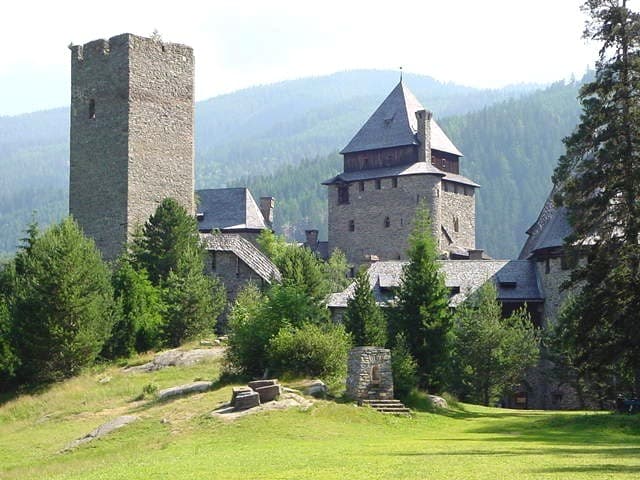
Finstergrün Castle (German: Burg Finstergrün) stands prominently in the Austrian state of Salzburg at an elevation of 1,087 metres (3,566 ft) above sea level. This hill castle was constructed in the late 13th century, with its origins traced to around 1296/97 when it was built by Rudolf von Fohnsdorf. Strategically positioned, the castle was first described in historical records circa 1300 as a border fortress delineating the territories of the Archbishopric of Salzburg and the Duchy of Styria. This location underscored its military and administrative importance during the High Medieval period.
Medieval origins and strategic significance
The castle's initial role was primarily defensive, guarding the frontier between two powerful medieval states. Its elevated position on a hill provided commanding views of the surrounding valleys and routes, making it a critical point for monitoring and controlling movement across the border. The name "Finstergrün," meaning "dark ditch," was first documented in 1629, though the castle itself predates this by several centuries.
Administration of mining operations
During the 14th and 15th centuries, Finstergrün Castle evolved beyond its military function to become the seat of the administrator responsible for overseeing the silver mines in Ramingstein. This role reflects the castle's integration into the economic infrastructure of the region, linking it to the lucrative mining industry that was vital to the area's wealth and development. The castle housed officials and served as a center for managing mining operations, including the collection of taxes and regulation of mining activities.
Destruction and reconstruction in the 19th century
In 1841, a devastating forest fire destroyed much of the castle complex, reducing it to ruins. The site remained in this state until the late 19th century when Count Sándor Szapary acquired the property in 1899. He undertook a significant rebuilding effort, transforming the ruins into a comfortable residence rather than restoring it as a fortress. This reconstruction reflected the changing function of castles in the modern era, shifting from military strongholds to noble residences and leisure homes.
20th-century ownership and uses
Following Count Szapary's death in 1904, the castle passed to his son and later to his widow, Countess Margit Szapáry, who maintained the property through the 1930s and 1940s. During this period, the castle was opened to selected paying guests, indicating its role as a private retreat and a place of hospitality. After the upheavals of the Second World War, Burg Finstergrün found a new purpose as a center for the Evangelical Youth movement, hosting activities and gatherings that contributed to its cultural significance in the post-war era.
Architectural features and current condition
Although the original medieval fortress was largely destroyed, the rebuilt structure retains elements of its historical character combined with 19th-century residential architecture. The castle's hilltop location remains a defining feature, offering panoramic views and a sense of seclusion. Today, Finstergrün Castle is recognized for its layered history, reflecting medieval military architecture, economic administration, and later adaptations for residential and community use. Its preservation status is considered partially preserved, with the main buildings standing as a testament to its varied past.
Frequently asked questions (FAQ)
- How do I get to Burg Finstergrün?
- Burg Finstergrün is located in Austria, easily accessible by car or public transport. If you are driving, you can follow the signs from nearby towns, and ample parking is available on-site. Public transport options include regional trains and buses that connect to local transit.
- What is the historical significance of Burg Finstergrün?
- Burg Finstergrün dates back to the 13th century and is rich in history, serving as a strategic fortress in the region. Over the centuries, it has witnessed numerous historical events and changes in ownership, contributing to its unique architectural style. Today, it stands as a testament to medieval engineering and cultural heritage.
- When was Burg Finstergrün built?
- Construction of Burg Finstergrün began in the early 1200s, making it one of the oldest castles in Austria. Its architecture reflects the transition from Romanesque to Gothic styles, showcasing the evolution of castle design over the centuries. The castle has been restored several times, preserving its historical integrity.
- Can I take guided tours of Burg Finstergrün?
- Yes, guided tours are available at Burg Finstergrün, providing visitors with insights into its history and architecture. Tours are typically offered in multiple languages, ensuring a comprehensive experience for all guests. Be sure to check the schedule in advance, as tour times may vary by season.
- Why is Burg Finstergrün a popular tourist destination?
- Burg Finstergrün is popular for its stunning views of the surrounding landscape, as well as its rich history and well-preserved architecture. Visitors can explore its majestic towers, ancient walls, and beautiful gardens. The castle also hosts various cultural events and festivals throughout the year, enhancing its appeal.
- Is it possible to visit Burg Finstergrün year-round?
- Yes, Burg Finstergrün is open to visitors year-round, though opening hours may vary by season. During the summer months, the castle tends to attract more visitors, while winter offers a unique, tranquil atmosphere. Always check the official website for the most current visiting hours and any seasonal events.
- What are the ticket prices for visiting Burg Finstergrün?
- Ticket prices for Burg Finstergrün vary depending on age and group size, with discounts available for children and seniors. Generally, general admission is reasonably priced, making it accessible to a wide audience. Special rates may apply for guided tours or events, so it’s advisable to check in advance.
- What is the best time to visit Burg Finstergrün?
- The best time to visit Burg Finstergrün is during the spring and autumn months when the weather is mild and the surrounding scenery is particularly beautiful. Summer can be busy with tourists, while winter offers a peaceful atmosphere, especially if you enjoy a snowy landscape. Regardless of the season, each visit provides a unique experience.
- Are there any nearby attractions to Burg Finstergrün?
- Yes, there are several nearby attractions worth exploring, including beautiful hiking trails and picturesque villages in the region. The surrounding area also offers opportunities for outdoor activities such as skiing and cycling. Local museums and cultural sites can further enrich your visit to Burg Finstergrün.
Photo gallery

Photo by The original uploader was M.Dufek at German Wikipedia. (Original text: Michael Dufek)•CC BY-SA 3.0
Information
Loading map...
Visitor reviews
No reviews yet. Been here? Write the first review and help other travelers!
Write the first reviewVisited this castle? Share your experience
Your review helps other travelers and adds first-hand knowledge to our encyclopedia.