Brodick Castle
Brodick Castle is a remarkable example of a Renaissance castle that evolved over several centuries into a grand stately home. Situated on a south-east facing slope overlooking the north side of Brodick Bay and beneath the imposing presence of Goatfell, the highest peak on the Isle of Arran, the castle commands a strategic position with sweeping views of the Firth of Clyde. Its origins trace back to the early medieval period, with the site likely first utilized by Vikings as a defensive stronghold until their defeat at the Battle of Largs in 1263.
The initial structure of Brodick Castle was constructed for the Stewarts of Menteith in the late 13th or early 14th century. The original fortress featured a tower keep which formed the eastern end of the later expanded castle. This keep was protected naturally by a steep slope descending towards the sea, while a water-filled ditch or moat defended the landward side. Adjacent to the tower was a walled enclosure housing essential domestic buildings such as a kitchen, stables, and a chapel, reflecting the castle's role as both a military and residential site.
The turbulent medieval history of Brodick Castle
During the Wars of Scottish Independence, Brodick Castle was initially held by English forces but was reclaimed by the Scots in 1307. The castle's strategic importance made it a frequent target in subsequent conflicts. In 1406, it suffered damage from English naval attacks. Later, in 1455, it was assaulted by John MacDonald II, Lord of the Isles, during clan rivalries that marked the western Scottish isles.
Ownership of Brodick Castle changed hands multiple times before it was acquired by the Hamilton family in 1503, who would become the Marquesses and Dukes of Hamilton. The Hamiltons undertook significant rebuilding in 1510, reflecting Renaissance architectural influences of the period. However, the castle endured further strife, including damage during clan battles between the Campbells and MacLeans in 1528, and again in 1544 when it was attacked by forces loyal to Henry VIII during the Rough Wooing wars.
Further expansions and repairs were carried out in the 1550s, but the castle's turbulent history continued. In 1639, it was captured by the Campbells, only to be retaken by the Hamiltons shortly thereafter. The mid-17th century saw Brodick Castle surrender to the English Parliamentary troops under Oliver Cromwell in 1652. During this occupation, the castle was used as a barracks, and a battery was constructed to the east of the main building, remnants of which remain visible today. The castle was also extended westward by two bays, nearly doubling its size.
Architectural evolution and restoration
Today, the original medieval and Renaissance elements of Brodick Castle are partially obscured by later additions, but careful restoration has revealed fascinating features. In 1977, a hidden staircase was uncovered, leading to a room embedded within the castle walls, now interpreted as the dungeon. This discovery offers a rare glimpse into the castle's defensive and punitive functions during its early history.
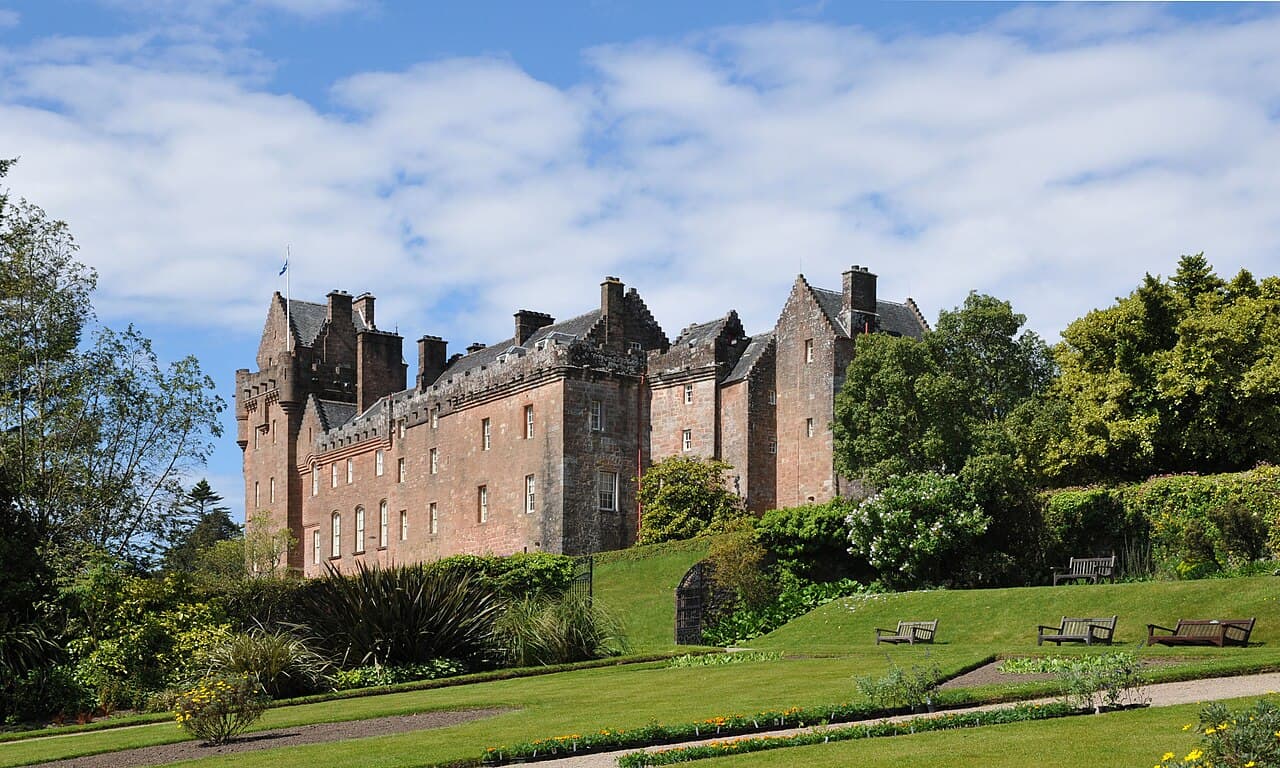
The most visible transformation of Brodick Castle occurred in the 19th century when the Hamilton family sought to convert it into a prestigious stately home. This major expansion was commissioned after 1844, following improved transportation links to the Isle of Arran and the advantageous marriage of the Hamilton heir to Princess Marie of Baden. The Edinburgh architect James Gillespie Graham was tasked with nearly doubling the size of the main block by extending it southwestwards and adding the imposing southwest tower, a defining feature of the castle's current silhouette.
The stately home and its interiors
Visitors today enter through the 1840s southwest tower, stepping into the grand main hall and staircase. The hall is notable for its extensive collection of mounted stag heads—87 in total, with 86 hunted on Arran—reflecting the family's passion for hunting and sport. The first floor presents two linked sets of rooms: the private apartments in the southwest corner featuring a dressing room, bedroom with a four-poster bed, boudoir, and a bathroom with a distinctive bath shower; and the main reception rooms including the drawing room, library, and dining room. These rooms span the Victorian extension, the Cromwellian addition, and the original castle, showcasing a blend of architectural styles and periods.
The ground floor includes a large kitchen and scullery, and a service passage leading to the tearoom. Along the way, visitors can explore "Bruce's Room," the rediscovered dungeon, and a former wine cellar now housing part of the Hamiltons' silver collection.
Gardens and country park
The castle is set within extensive grounds that include formal gardens and a country park. Some garden features date back to at least 1710, with significant development in the early 19th century and major enhancements following the castle's 19th-century transformation. The gardens were a particular passion of the Hamilton family, especially the Duchess of Montrose in the late 19th and early 20th centuries, offering visitors a window into historical horticultural styles and tastes.
The surrounding country park extends over the hillside north of Brodick Bay, with waymarked walking routes ranging from half a mile to a mile. Highlights include an ice house with a turf roof and the unusual Bavarian Summer House, notable for its exterior mimicking tree roots and an interior lined with pine cones, creating an eerie yet fascinating atmosphere.
Legacy and visitor experience
Brodick Castle remains one of the Isle of Arran's premier attractions, offering a rich blend of history, architecture, and natural beauty. The castle's layered history—from its Viking defensive origins, through medieval conflicts and Renaissance rebuilding, to its 19th-century stately home transformation—provides a compelling narrative for visitors. The National Trust for Scotland now manages the castle, its contents, gardens, and parkland, ensuring preservation and public access.
Visitors can explore the castle's historic interiors, extensive collections, and beautifully maintained grounds, complemented by a modern visitor centre. Brodick Castle stands as a testament to Scotland's complex history and architectural heritage, making it a must-see destination for those interested in castles, history, and landscape.
Frequently asked questions (FAQ)
- When was Brodick Castle originally built and by whom?
- Brodick Castle was originally built in the years following 1263 for the Stewarts of Menteith, with significant rebuilding by the Hamilton family in 1510.
- What architectural styles are represented in Brodick Castle?
- Brodick Castle features a mix of architectural styles including Renaissance elements from the 16th century and 19th-century Victorian expansions by James Gillespie Graham.
- Can visitors explore the gardens and country park at Brodick Castle?
- Yes, visitors can enjoy the historic gardens dating back to the early 18th century and extensive country park with walking trails and unique features like the Bavarian Summer House.
- Is Brodick Castle managed by a heritage organization?
- Yes, the castle, its contents, gardens, and parkland are managed by the National Trust for Scotland, ensuring preservation and public access.
- Are there any ghost stories associated with Brodick Castle?
- Brodick Castle is said to be haunted by several ghosts, including a man seen in the library, a white deer appearing near the Clan Chief's death, and a grey lady believed to be one of three plague victims.
Photo gallery

Information
Architect
James Gillespie Graham
Current owner
National Trust for Scotland
Loading map...
Visitor reviews
No reviews yet. Been here? Write the first review and help other travelers!
Write the first reviewVisited this castle? Share your experience
Your review helps other travelers and adds first-hand knowledge to our encyclopedia.