Brod Fortress
Brod Fortress in Slavonski Brod, Croatia, is a prominent example of 18th-century bastioned fortress architecture constructed between 1715 and 1780 by the Archduchy of Austria as a strategic defense against the Ottoman Empire. Its location was crucial, situated at an important border crossing and a hub connecting major commercial routes of the time. This fortress reflects the military engineering principles of the post-Renaissance period, particularly influenced by the Vauban system, known for its star-shaped fortifications designed to maximize defensive capabilities.
Strategic importance and historical context
The city of Slavonski Brod held significant strategic value during the 18th century due to its position controlling the border between the Habsburg Monarchy and the Ottoman Empire. The fortress was built to secure this vital gateway and to protect the region from Ottoman incursions. It served both military and commercial purposes, overseeing traffic and trade routes that were essential for the economic and political stability of the area.
Architectural design and construction
Layout and defensive features
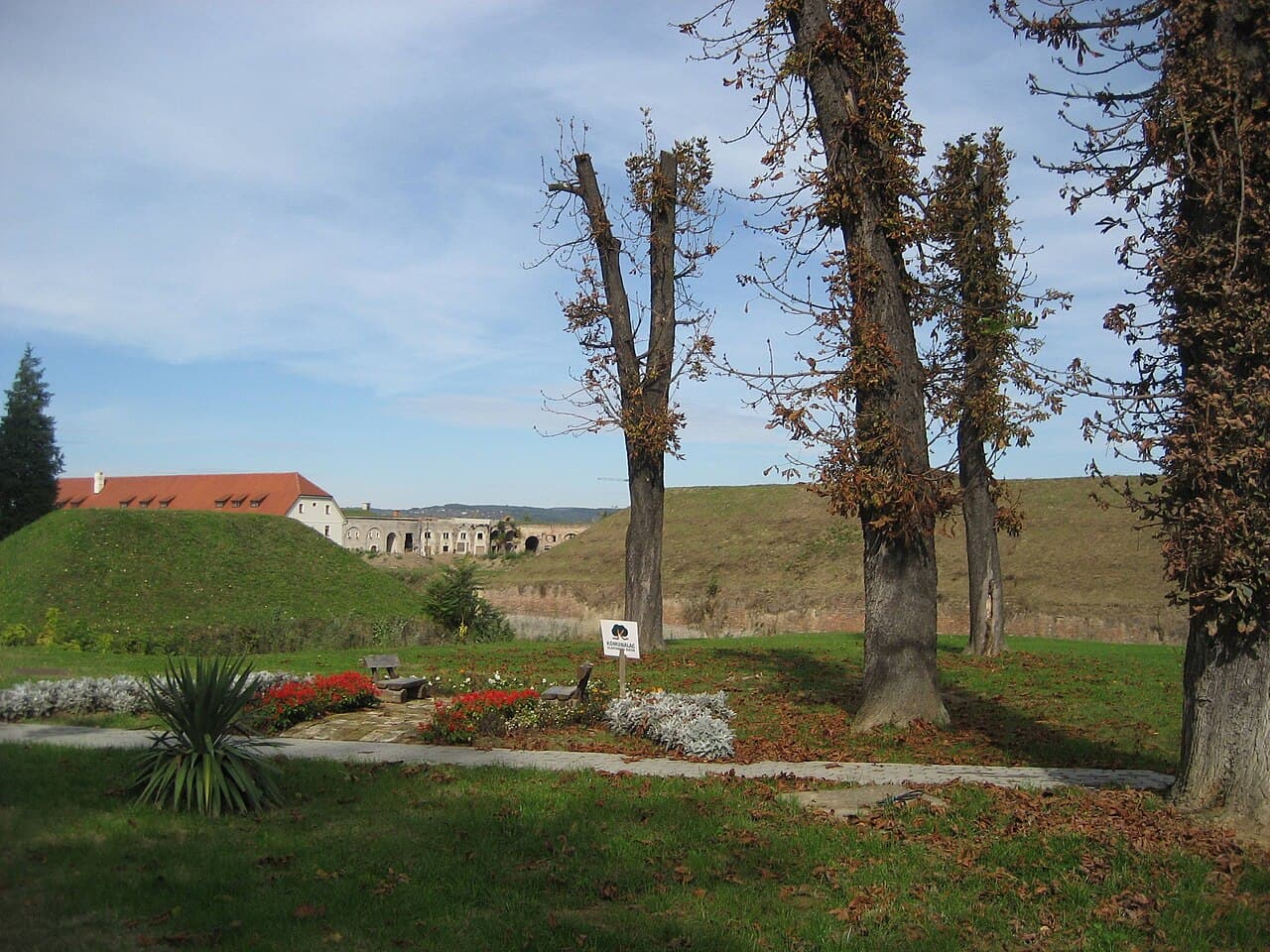
The fortress exhibits a regular star-like form which was adapted to the flat terrain of the surrounding region. This design is characteristic of the Vauban-style bastioned fortresses, which utilized angular bastions and layered defensive walls to eliminate blind spots and provide overlapping fields of fire. The fortress is essentially rectangular in its core plan but achieves its star shape through a system of defensive channels and moats.
Materials and structural elements
Construction materials included rammed earth, bricks, wood, and stone, chosen for their availability and defensive qualities. The fortress was engineered to accommodate a garrison of approximately 4,000 soldiers, primarily infantry, and to mount around 150 cannons. The robust fortifications included multiple layers of defense: an internal zone, an external zone, and a southern defense zone. Two moat areas, fed by a nearby stream, added an additional layer of protection, hindering enemy approach and siege efforts.
Defensive system and military function
The fortress's design reflects the military doctrines of the post-Renaissance era, emphasizing the importance of bastioned fortifications to withstand artillery sieges. The Vauban system incorporated angled bastions and complex moat systems to create overlapping fields of fire and hinder attackers. Brod Fortress's three defense zones and dual moats exemplify this approach, allowing defenders to repel assaults effectively while maintaining strong internal security.
Cultural and historical significance
Today, Brod Fortress stands as a significant cultural heritage site in Croatia. It represents the military architecture and border conflicts of the 18th century and the broader geopolitical struggles between the Habsburg Monarchy and the Ottoman Empire. The fortress's preservation provides insight into the Vauban-style bastioned fortifications and the strategic military thinking of the time.
Current condition and preservation
While the fortress remains a well-preserved example of its type, it has undergone various restoration efforts to maintain its structural integrity and historical authenticity. Its enduring presence allows visitors to explore the complex defensive systems and appreciate the scale and sophistication of military architecture from the post-Renaissance period.
Visiting brod fortress
Visitors to Slavonski Brod can explore the fortress grounds, which offer a tangible connection to the region's turbulent history. The fortress's layout, bastions, moats, and defensive channels provide a comprehensive view of 18th-century military engineering. It also hosts cultural events and exhibitions that highlight its historical importance and architectural features.
Architectural highlights for visitors
- Star-shaped bastions: Designed to provide comprehensive defensive coverage.
- Moats and water defenses: Fed by a nearby stream to enhance protection.
- Defense zones: Internal, external, and southern zones illustrating layered security.
- Rammed earth and brick walls: Typical construction materials of the era.
- Artillery placements: Designed for 150 cannons, reflecting the fortress's offensive and defensive capabilities.
Historical tours and educational programs
The fortress often features guided tours that explain its historical context, architectural design, and role in regional defense. Educational programs and exhibitions provide deeper understanding of the military strategies employed and the daily lives of soldiers stationed there.
Frequently asked questions (FAQ)
- What is the historical significance of Brod Fortress?
- Brod Fortress was built in the 18th century by the Archduchy of Austria to defend against the Ottoman Empire, marking an important military and strategic site on the border of the Habsburg Monarchy.
- Can I visit Brod Fortress year-round?
- Yes, Brod Fortress is open to visitors throughout the year, with guided tours available to explore its extensive fortifications and historical exhibits.
- How is the fortress designed to defend against attacks?
- The fortress uses a star-shaped bastioned design based on the Vauban system, featuring multiple defense zones, moats, and angled bastions to provide overlapping fields of fire and strong protection.
- Are there any cultural events held at Brod Fortress?
- Yes, the fortress hosts various cultural events and exhibitions that highlight its historical and architectural significance, attracting visitors interested in military history and heritage.
- What materials were used in the construction of Brod Fortress?
- Brod Fortress was built using rammed earth, bricks, wood, and stone, materials typical for fortifications of the post-Renaissance period, chosen for durability and defensive strength.
Photo gallery

Information
Current owner
State museum
Loading map...
Visitor reviews
No reviews yet. Been here? Write the first review and help other travelers!
Write the first reviewVisited this castle? Share your experience
Your review helps other travelers and adds first-hand knowledge to our encyclopedia.